Two years after law passes, West Virginia has nation’s third lowest average marital age

By Matthew Young, RealWV
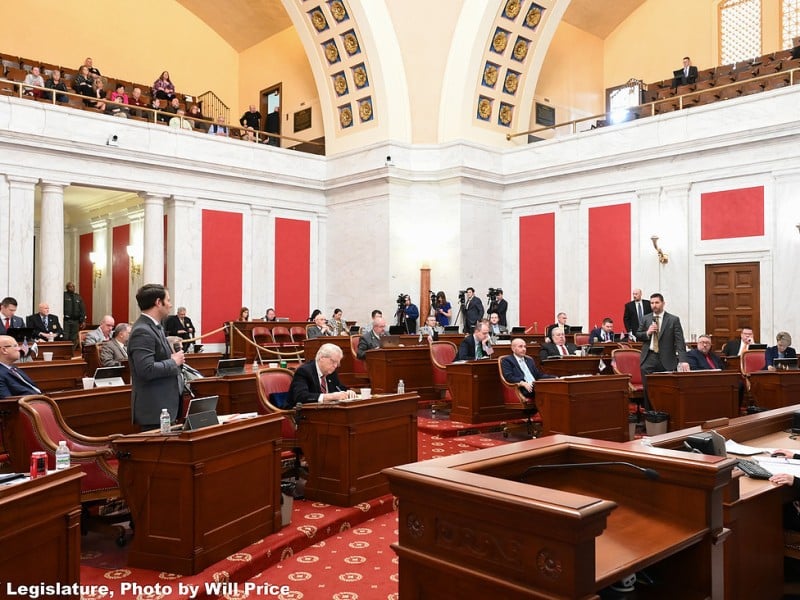
Less than 24-months ago, lawmakers officially legalized underage marriage in the State of West Virginia. While the baseline expectation is that both parties should be at least 18-years-of-age, the new law creates exceptions for those up to two-years younger. With parental-consent, children may get married, provided that the age gap is no more than four years.
By enacting this law, the legislature has made it both legal and acceptable for a 20-year-old adult to marry a 16-year-old child within the borders of the Mountain State.
The legislature’s debate over underage marriage began with the proposal of House Bill (HB) 3018. Initially introduced by Del. Kayla Young, D-Kanawha, HB 3018 was intended to legally establish West Virginia’s marital-age at 18. And although the bill was eventually passed, an amendment created the underage exception, thus altering its intent.
While defending the exception, Del. Keith Marple, R-Harrison, argued that, “People under 18 are going to go out of state to get married, or they’re going to go out of state to get an abortion.”
Marple’s argument, while successful, was lacking any significant corroborating evidence. Although it is possible for a person under the age of 18 to acquire a marriage license in another state, the evidence would suggest that it is highly improbable. Only four of West Virginia’s five border states will consider a marriage application from individuals as young as 17-years, but each requires judicial intervention.
According to the United States Census Bureau, West Virginia’s average marital age is 27.1 years. This ranks as the nation’s third-lowest marital-age, with only Utah and Idaho slightly lower. A more substantiated argument from Marple would have perhaps centered around West Virginia’s relatively-low divorce rate of 2.9 per 1,000 residents, which sits slightly lower than the national rate of 3.2.
On Thursday, the state’s Bureau for Medical Services (BMS) announced that it will be participating in a new initiative designed to improve health outcomes for mothers and infants enrolled in either WV Medicaid, or the Children’s Health Insurance Plan (CHIP). The Transforming Maternal Health (TMaH) Model is a nationwide, government program, facilitated through the Centers for Medicare & Medicaid Services (CMS), and will include a total of 15 states and territories.
While the state’s participation does not directly address West Virginia’s low marital-age, it does hope to positively impact the health and well-being of many within that demographic.
According to the March of Dimes, the average age to give birth in West Virginia is 27.5 years, or, three months older than the average age to get married. West Virginia recorded 16,606 live births in the year 2023. Of that number, 58.7% – nearly 9,400 – were from the 20-29-year-old demographic. The data also shows that just under 1,000 babies were delivered by mothers younger than 20-years. As confirmed by resources available through the Mayo Clinic, “pregnancy risk tends to be higher” for those who are younger than 20-years-old.
A study from the National Library of Medicine reveals that, between the years of 2018 and 2022 in West Virginia, 4,347 pregnancies occurred in mothers age 19 or younger, with another 19,969 pregnancies for women between the ages of 20 and 24. These two groups combined represent the largest demographic of pregnancies within the state, and approximately 42% of those pregnancies were paid for by West Virginia Medicaid.
West Virginia joins Alabama, Arkansas, California, Illinois, Louisiana, Maine, Kansas, Minnesota, Mississippi, New Jersey, Oklahoma, South Carolina, Wisconsin, and the District of Columbia in the TMaH initiative, which is expected to continue through 2035. The program will focus its attention on what is considered to be the state’s most vulnerable demographics. However, beyond making use of WV Medicaid or CHIP, no definition of “vulnerable” has been provided.
“This selection reflects West Virginia’s dedication to ensuring that every mother and infant has access to the highest quality care,” BMS Commissioner Cindy Beane said, in a Thursday press release. “Through the TMaH Model, we have the opportunity to transform maternal health care in our state, eliminating barriers, and providing comprehensive, compassionate care to families who need it most.”
According to the Charlotte Lozier Institute, 16 abortions were performed in West Virginia in 2023. This is down 98% from the 831 abortions performed in West Virginia in 2022 – the year which saw the U.S. Supreme Court overturn Roe V. Wade, and West Virginia lawmakers enact a nearly-total ban on abortion. Conversely, Maryland – West Virginia’s border state to the north east – experienced an abortion-rate increase of nearly 30% in 2023. In this aspect, it would seem, Marple’s underage-marriage argument displayed validity.
Last July, the Department of Human Services (DoHS) reported that 5,991 children were in the West Virginia foster care system, marking the lowest number of minors within the state’s custody in more than seven years. However, according to child-placement agency West Virginia KVC, that number shot back up to 6,135 children by October. While specific data related to age is inconsistent, it would seem that the average age of a child in the state’s foster care system is nine-years-old.
The 2025 West Virginia Legislative Session resumes on Wednesday, February 12. It remains to be seen if lawmakers will revisit the matter of underage-marriage, or any other related concerns.
RealWV will provide updates regarding the actions of the state’s lawmakers throughout the duration of the upcoming Legislative Session.