
Senate Workforce Committee approves expanded requirements for SNAP recipients
By Matthew Young, RealWV
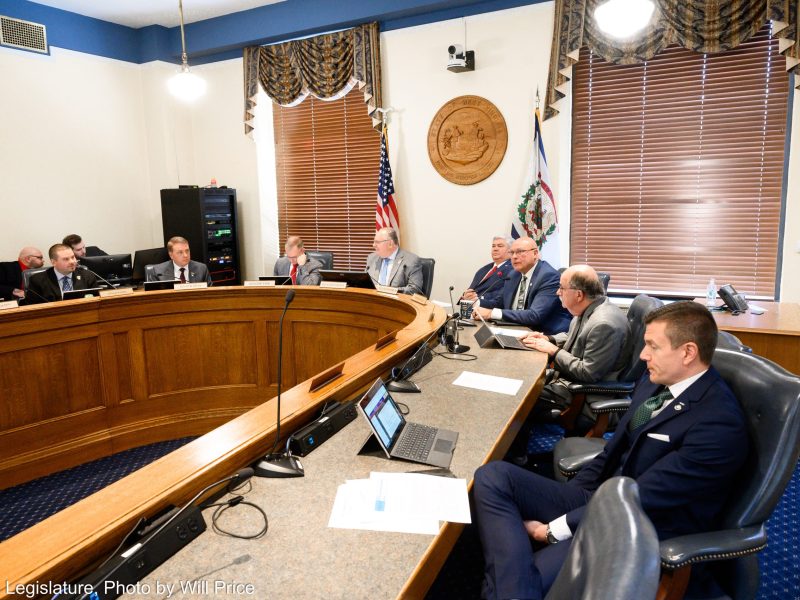
CHARLESTON, W.Va. – The Senate Workforce Committee, on Monday, considered a bill intended to increase the requirements for obtaining SNAP (Supplemental Nutrition Assistance Program) benefits.
Introduced by Committee Chair Rollan Roberts, R-Raleigh, Senate Bill (SB) 249 would require able-bodied SNAP recipients who are between the ages of 18 and 59 (up from the current age of 54) – and who have no dependents other than themselves – to participate in employment training programs (EMT) through the Department of Human Services (DHS).
According to Committee Counsel Lincoln Wolfe, “There are several exceptions to the requirement in the bill – those including if a person is subject to work requirements for the TANF (Temporary Assistance for Needy Families) program. In that case the TANF requirements take the place of the SNAP work requirement.”
The second exception, Wolfe continued, consists of several possibilities, including:
- Those caring for a child under the age of six, or is otherwise caring for an incapacitated person.
- Students who are enrolled in school at least part-time.
- Individuals participating in a drug or alcohol addiction program.
- Individuals working a minimum of 30 hours per week.
- Individuals between the ages of 16 and 18, who are either not a head of household, are attending school, or are enrolled at least part-time in an employment training program.
“The last exception is if the person is otherwise exempt from SNAP work requirements under the series of federal exemptions that are rolled into the bill by reference,” Wolfe added.
In addition, according to Wolfe, SB 249 authorizes the DHS to create additional exemptions based upon the particular challenges of benefit recipients. The bill further requires DHS to provide the Legislative Oversight Committee on Health and Human Resources Accountability (LOCHRA) copies of any documentation filed with the federal government.
“Finally, the [DHS] is required to submit an annual report to LOCHRA,” Wolfe added. “This occurs over a three year span provided for in the bill. It includes a series of findings from the EMT programs, such as the number of SNAP recipients that have been referred to the EMT programs, and the quantity of people who have removed from SNAP by virtue of increases in household income.”
At the request of Vice Chair Jack David Woodrum, R-Summers, the West Virginia Lobbyists Group’s Jeremiah Samples made himself available for questioning.
“Do you have any understanding if there will be a fiscal note attached to this bill this session?” Woodrum asked.
Samples stated his understanding is that DHS is currently working on a fiscal note, further noting that DHS advised him of their intention to work with the Legislature on its creation.
Woodrum then asked Samples for his general thoughts on the bill, prompting Samples to point out that some form of this legislation has been heavily discussed within the state for several years.
“Ultimately this legislation implements a mandatory SNAP education and training program,” Samples said. “Work gives individuals dignity. Employment gives an individual community. We’re talking about giving people hope, and an opportunity to better their lives.”
“In West Virginia, you all know many of our statistics,” Samples added. “We struggle with a lack of hope.”
While the Workforce Committee ultimately approved the bill, SB 249 has been double-referenced, meaning it must also be approved by the Finance Committee. If Finance proves to be in agreement with the Workforce Committee, the bill will then be referred to the full Senate with a recommendation for passage.
RealWV will provide continual updates regarding SB 249 throughout the duration of the current Legislative Session.
Related Articles

Plants Etc. and The Bookstore carry on a longtime Lewisburg tradition
Darlene Fife remembers the time before Walmart and Lowe’s arrived in Lewisburg, when there was a pharmacy and a grocery store downtown and traffic was a lot lighter.
Marvelous Moths Event shines light on nighttime nature at Cool Springs Preserve
Crickets and katydids make a symphony of sound at the Cool Springs Preserve in Jefferson, County on the night of Monday, July 27.
Will Pritt remain on the ballot this fall?
At issue is when and for what reason the State Election Commission could disqualify Pritt.