Senate votes to expand child vaccination exemptions
By Stephen Baldwin, RealWV
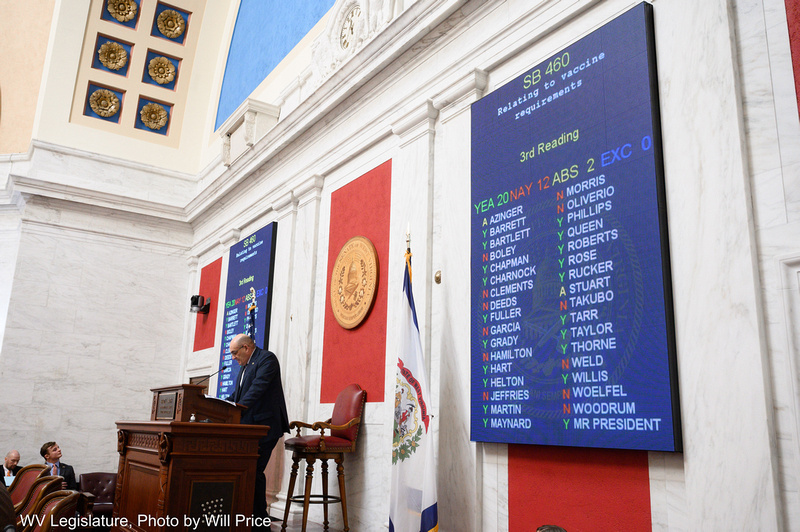
CHARLESTON, W.Va. – After a lengthy debate on Friday, the West Virginia Senate voted 20-12 to add three exemptions to the state’s mandatory childhood vaccination laws.
Public health officials including Sen. Tom Takubo, R, Kanawha, say the measure is “putting the lives of our children at risk for preventable death.”
What’s in Senate Bill 460?
The bill, SB 460, codifies an executive order from Governor Patrick Morrisey, which was issued last month on his first day in office.
According to Senator Laura Chapman, R, Ohio, who is Chair of Senate Health, “The purpose of this bill is to promote religious and philosophical exemptions to existing mandatory vaccination requirements that apply to public, private, and parochial schools.” In total, the bill adds three new exemptions.
First, it adds a religious and philosophical exemption. Neither of those exemptions currently exist under state law. In order to receive these exemptions, a citizen simply makes a written request. Then, according to the language of SB460, a vaccine exemption on religious or philosophical grounds must be granted by the state.
Second, it adds a medical exemption. Under current state law, a medical exemption is lawful but rarely requested. For example, according to the Bureau for Health in 2023 there were 53 requests for medical exemptions with 19 denials and 31 granted temporarily or permanently. In the current system, a state official must sign off on a recommendation from the patient’s physician. Under SB 460, a patient’s physician may grant the vaccine exemption directly.
Numerous amendments, including one to keep the polio vaccine mandatory for everyone, were rejected on Tuesday.
Arguing in support of the bill on Friday, Chapman said, “Who wants this bill?…mothers whose children have been harmed by vaccines.”
“There are still mandates to attend school,” Chapman clarified. “We are talking about exemptions. The mandatory rules are still there unless you have an exemption.”
Chapman also argued that the bill provides religious liberty.
“We have no business trampling on a child’s religious rights for a fundamental right to have an education,” Chapman said, making the case that children who have religious or philosophical objections to vaccines are being denied their religious rights by having to refrain from attending schools.
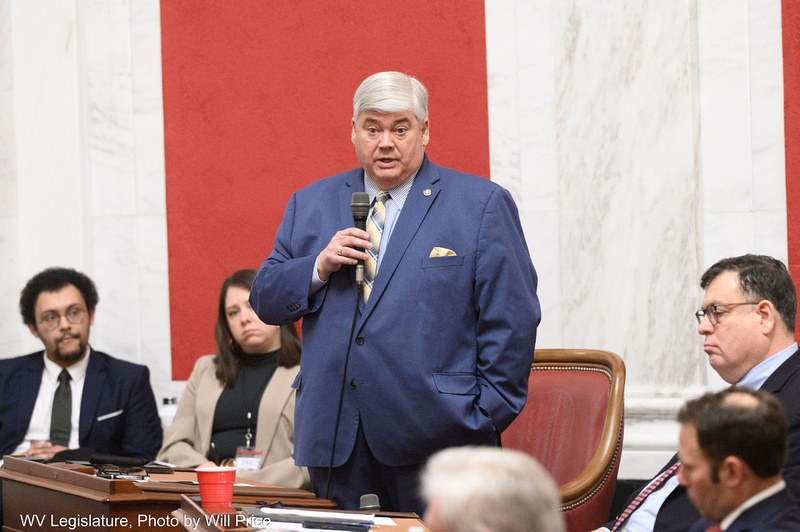
Her colleague, Sen. Jack David Woodrum, R – Summers, took exception to that argument.
“I find it offensive that this bill has been packaged as some sort of religious exemption,” Woodrum said during debate.
“Religious liberty for me, but not for thee,” added Senator Ryan Weld, R – Brooke. Weld said that in other states with religious exemptions to vaccine laws, religious schools are allowed to determine their own vaccine policies. For example, if they want to require all students to be vaccinated, as the Diocese of Wheeling-Charleston has indicated they want to do for their 4,000 students in West Virginia, other states allow them to do so. Under SB 460, religious schools would be required to grant exceptions.
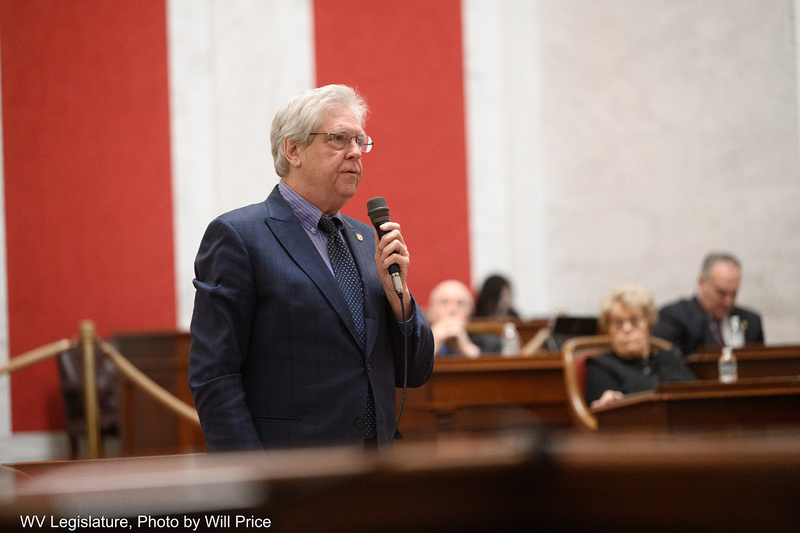
“We know there’s gonna be a lawsuit over this bill,” said Sen. Mike Woelfel, D – Cabell, due to religious schools not being able to set their own policies. “We know the Diocese of Wheeling-Charleston will go to court to protect its religious freedom.”
“Last chance, everybody,” Woelfel said to his colleagues. “Tell the world what the compelling state interest to impose the will of the government on aa religious institution is. Let’s get up and say that.”
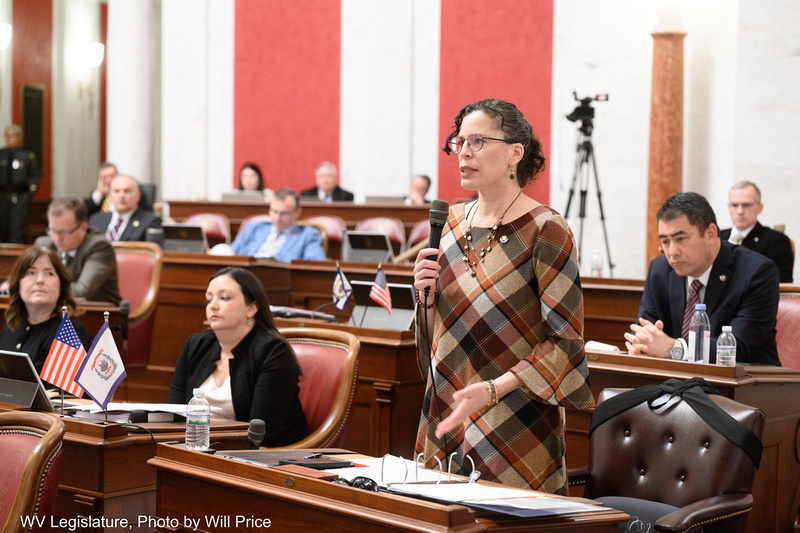
Besides Chapman, the only senator to speak in favor of the bill was Sen. Patricia Rucker, R – Jefferson.
“Right now we are prohibiting a private and public education to individuals,” Rucker said, of students who do not receive vaccine exemptions, and therefore do not attend school. “We are prohibiting kids from participating in sports and summer camps and FFA and 4-H.”
Against doctor’s orders
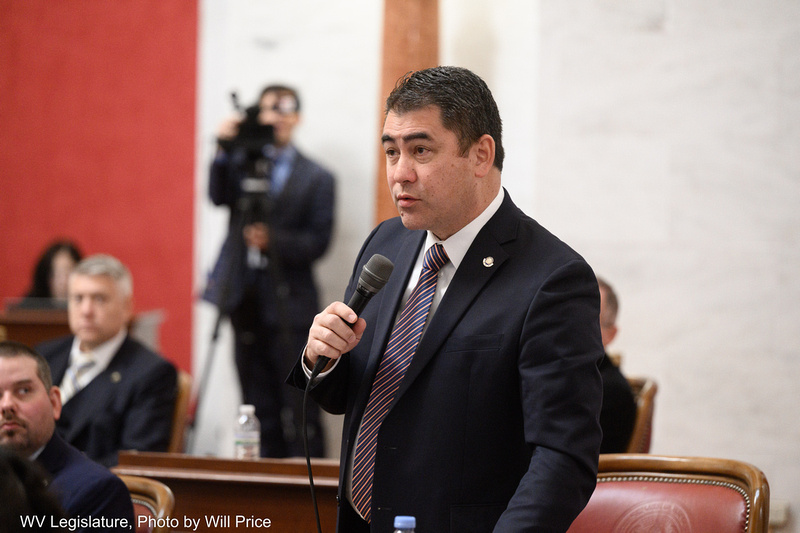
Sen. Tom Takubo, R – Kanawha, is the only medical doctor in the Senate. He spoke for more than 15 minutes in opposition to the bill.
“There are a lot of things where we rank near the bottom,” Takubo shared. “But we rank #1 in the country (in protecting our children from preventable diseases.)” He argued we ought to maintain that status not only for the sake of public health but also because citizens want to maintain it.
He cited a poll from July 2024 showing 86.6% of West Virginians support mandatory childhood vaccines, including 80.6% of Republicans. According to the poll, more than 70% of respondents said we should rely on medical professionals when making public policy decisions about vaccinations.
“All three physicians who testified said this was a bad idea,” Takubo said. “You’re putting the lives of our children at risk for preventable death.”
““Who wants this bill,” Takubo asked? “In Senate health, the only proponent was a trial attorney from Los Angeles…It’s not our churches, not our people, not our medical community who want it.”
Takubo said when policymakers make a mistake, it can usually be fixed. But he believes this issue is different. “You can’t bring back a child. You will never take that pain away from a parent who’s lost a kid to a preventable childhood disease.”
Bill passes 20-12
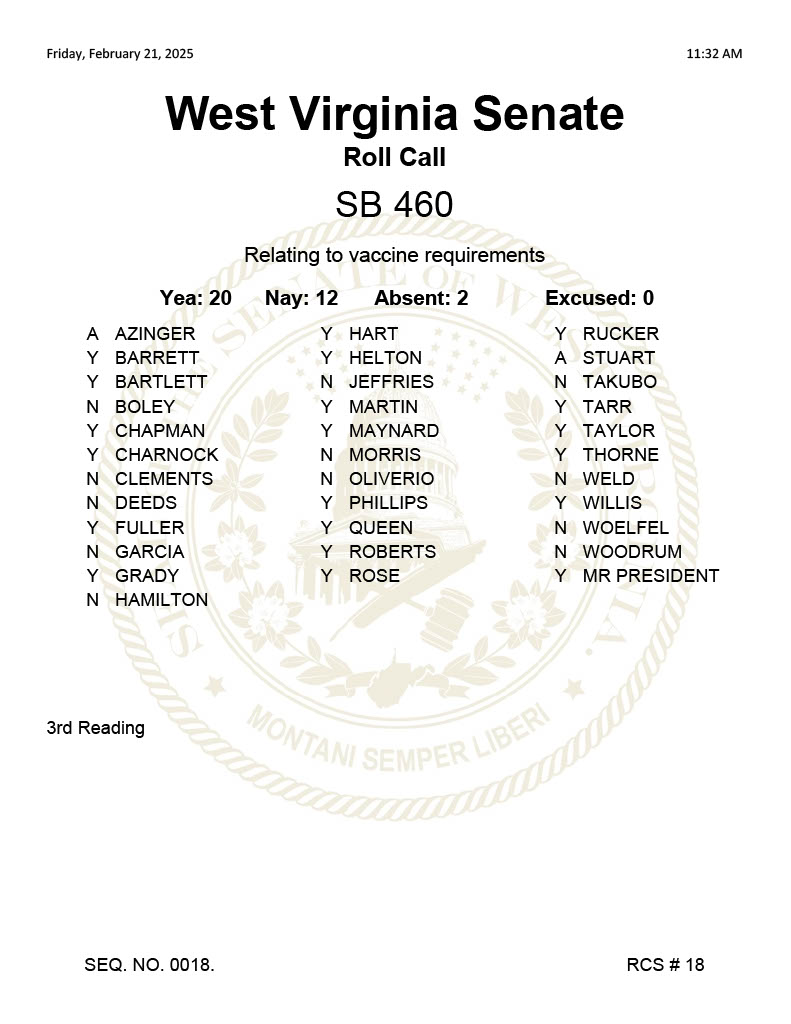
After debate concluded, the bill passed by a vote of 20-12, with two senators absent. Ten Republican senators joined the chamber’s two Democrats in voting no.
Sen. Mike Stuart, R – Kanawha, was absent from consideration of SB 460 on second reading Tuesday and again on final reading Friday. Stuart announced recently that he’s been nominated to serve as General Counsel for newly-confirmed Secretary of Health and Human Services Robert F. Kennedy, Jr.
Sen. Mike Azinger, R – Wood, was also absent on Friday.
The bill now heads to the House of Delegates for consideration. Several senators indicated in floor debate on Friday that they expect the House to pass it with changes and send back a revised version.
Stay tuned to RealWV for updates.
Related Articles

Irons & Porter open ‘The Fancy Pheasant’ in Lewisburg
The store is a men’s and children’s clothing and home goods store.
‘Like a dagger’ – Lewis County reacts to Vandalia’s closure of labor & delivery
This is the second labor & delivery unit being closed by Vandalia Health in West Virginia.