Natalie Cochran denied acquittal, Raleigh County Delegates introduce “Michael Brandon Cochran Act”
By Autumn Shelton, RealWV
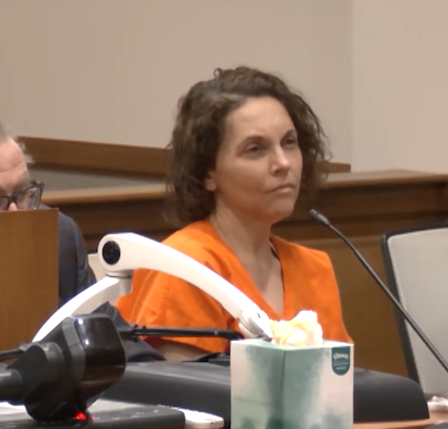
In his Raleigh County Courtroom on Tuesday, Judge H.L. Kirkpatrick denied Natalie Cochran’s request for an acquittal after she was found guilty in January of First Degree Murder for the death of her husband, Michael Brandon Cochran.
Following weeks of trial testimony, a jury determined that Natalie Cochran injected her husband with insulin at their Daniels home on Feb. 6, 2019, leaving him unresponsive.
When Michael was finally taken to a local hospital, after collapsing and spending the day unresponsive on the couch, his blood glucose level was 21. He was intubated at the hospital, yet never regained consciousness. Michael passed away in hospice care on Feb. 11, 2019, at 38-years-old.
During the trial, Raleigh County prosecutors argued that Natalie had orchestrated a Ponzi-scheme involving her and Michael’s business Tactical Solutions Group (TSG). It was the discovery of this Ponzi-scheme, which may have been the reason for Natalie, trained as a pharmacist, to inject Michael with insulin in order to cause his death.
After being found guilty for her crime, the jury, on Jan. 30, determined that Natalie Cochran would receive no mercy, meaning that she will spend her life in prison without the possibility of parole.
On February 4, Cochran’s attorneys, Matthew A. Victor and Stanley Selden, filed paperwork for a Judgement of Acquittal in Raleigh County Circuit Court. In that paperwork, they also requested a new trial stating that “there was insufficient evidence to convict the Defendant, beyond a reasonable doubt, of First-Degree-Murder.”
Additionally, they stated that the court denied them a change of venue, denied oral motion for jury sequestration, denied their motion “to suppress the bottle of insulin seized by law enforcement officers from the Defendant’s residence,” denied to exclude from evidence the “irrelevant” bottle of insulin, erred in allowing the state to “re-litigate the federal Ponzi-scheme,” and more.
Seldin argued during Monday’s hearing that the community, and the the jurors, were prejudicial against their client because of a prior plea agreement and prison sentencing for her involvement in a multi-million dollar ponzi scheme, and for the mass media attention surrounding her – which he said became even more evident when ABC 20/20 presented a documentary on Cochran that aired on Feb. 14.
However, Judge Kirkpatrick stated that he believes the jury did their job well.
“The court was convinced, after watching these shows, that the jurors were excellent – that they did exactly what was required of them, and that’s not to touch on their verdict,” Kirkpatrick said. “I’m not saying anything about their judgement because they are the judges of the facts and I’m the mere judge of the law.”
Kirkpatrick said that the jury acted with fairness and impartiality.
“The Court is constrained to deny the defense’s motion based upon this ground,” Kirkpatrick concluded.
THE MICHAEL BRANDON COCHRAN ACT
On Feb. 21, Raleigh County’s Delegates Carl “Bill” Roop, Jordan Maynor and Eric Brooks introduced legislation (HB 2789) titled “The Michael Brandon Cochran Act.”
According to the bill’s text, this act would require certain medical testing for intensive care patients, including administering a C-peptide test for patients that are unconscious or have a blood glucose level at 49 mg/dl or less.
When Michael Cochran was hospitalized he was unresponsive, and Natalie was not under suspicion for his death. It wasn’t until a later investigation conducted by members of the West Virginia State Police, which became public during the trial, that Natalie did come under suspicion for his death.
This led to the ultimate exhumation of Michael’s remains from a Raleigh County cemetery in September 2019 for forensic testing.
The following is an excerpt from the bill from the West Virginia Legislature’s website. The entire bill can be read here.
§16-4G-3. Required medical testing.
(a) A hospital intensive care unit in which a patient presents as unconscious or presents with hypoglycemia and a blood glucose level of 49 mg/dl or less, shall administer a C-peptide or connecting peptide insulin test to such patient, regardless of whether he/she diagnosed with diabetes, insulin resistance, or pancreatic disease.
(b) In the event of a patient death after intensive care unit treatment where the patient exhibited suspected brain damage, an extended period of unconsciousness, seizures, disorientation, blurred vision, shakiness, paleness, or lack of coordination, a hospital shall administer a post-mortem C-peptide or connecting peptide insulin test.
§16-4G-4. Penalty
A hospital that fails to administer a C-peptide or connecting peptide insulin test consistent with this article shall be subject to a fine by the Office of Health Facility Licensure and Certification (OHFLAC) of $10,000 for each violation.
§16-4G-5 Michael Brandon Cochran Grant Program; fund.
(a) The Michael Brandon Cochran Grant Program is hereby established. The grant program shall be administered by the Department of Health Facilities. The department shall provide application forms and procedures to administer the grant.
(b) Hospitals may apply to the grant program for funding to cover all or some of the costs associated with administering the C-peptide tests required under this article and training healthcare staff on the signs and symptoms of hypoglycemia and the purpose of C-peptide or connecting peptide insulin tests.
(c) The department shall set the amount of grants based on the funds available. Grants shall be issued on first-come-first-serve basis.
(d) There shall be created in the State Treasury a special revenue fund designated the Michael Brandon Cochran Fund.
(1) The fund shall be administered by the Department of Health Facilities. Expenditures from the fund shall be made solely for the purpose of providing grants to hospitals consistent with this article.
(2) The fund shall also consist of moneys received from private donations, grants, bequests, and all other moneys received from all sources for the purposes stated herein.
(3) Any funds remaining in the Fund at the end of the fiscal year shall not revert to the general revenue but shall remain in the fund solely for the purposes stated in this article.
(4) The moneys accrued in the fund, any earnings thereon, and any yields from investments by the State Treasurer or West Virginia Investment Management Board are reserved solely and exclusively for the purposes set forth in this section.
There has been no movement on the bill as of this writing.