
SUNDAY SERMON: God does not give up
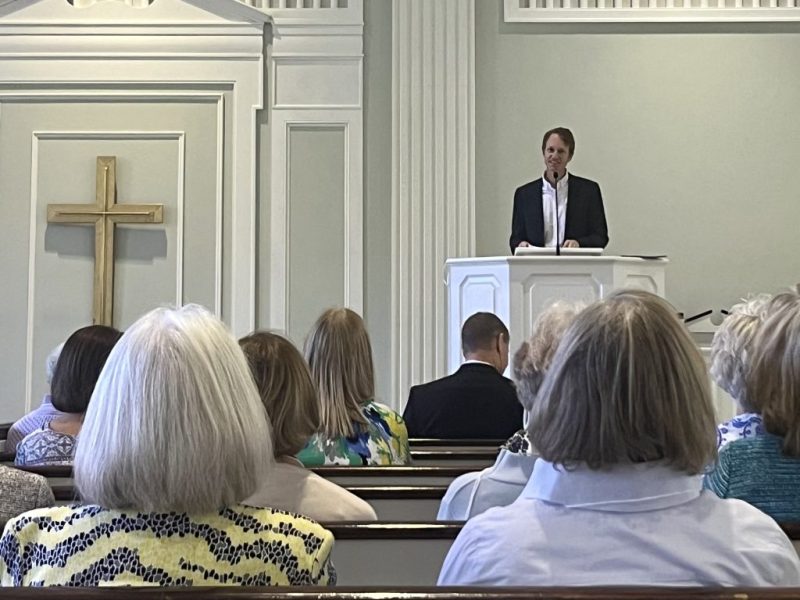
By Rev. Stephen Baldwin
OT: Isaiah 55.1-9
NT: Luke 13.1-9
Don’t you wish those EASY buttons from the commercials were real? For the time when your wife has spent two hours getting ready to go out for dinner, it’s time to leave, and she holds up two dresses asking which one she should wear? Just hit the easy button, and you make the right choice.
For the time when your kid finds their fish, that died six months ago, in the freezer and wants to know if heaven is by the popsicles? Just hit the easy button, and the right answer emerges.
Those easy buttons sure would come in handy. We got a new sound system at Ronceverte last week, and it has something that is very similar.
You see, the sound board has all these different buttons and knobs and controls, for each thing that’s plugged into it–the microphones, the camera, the CD player. The tech showed us how to use each one and adjust it as needed.
Then he said, “Sometimes people like to come along and turn a knob here or a dial there. You turn on your sound system, and something is off. You don’t know what, because you didn’t change anything. But somebody else did. We’re gonna fix that. If that happens to you, just this button.”
It is a reset button, which takes all the knobs and dials back to the original setting with one touch. I’m calling it the REPENT button, because it can take away all your sins with just the touch of a button.
Today’s passage is about repentance. In order to understand what Jesus was saying when he called on his followers to repent, some context is necessary.
(Verse 1) At that very time there were some present who told him about the Galileans whose blood Pilate had mingled with their sacrifices.
Pontius Pilate, the Roman governor, executed a number of Galileans. We don’t know exactly why. The scripture doesn’t say, and no other historical records from the time mention it. That’s probably because it wasn’t unusual. Pilate was a violent man, who often employed violence as part of his rule. He executed people regularly. This time, he executed a group of Galileans. Jesus too was a Galilean. These were his people, whom he likely knew or knew of.
When people suffer, we are quick to assume they sinned. We assume they deserved what they got. For Jesus, suffering is not a result of sin. He flat-out asks them if those who suffered are worse sinners than others? No, he answers his own question. “But unless you repent, you will all perish as they did.”
What does he mean by that? Repent literally means “to turn around”. To change your mind. To go back.
If repentance sounds too highfalutin, just thing about the last time you were lost and needed directions. If you kept going, even though you knew you were lost, and figured you’d find your way eventually, then you aren’t repentant. You’re stubborn.
Most of us are not repentant. Most of us are stubborn. Because if I got us lost, then I don’t want to admit that. I want to be the one who gets us found, never mind it was my fault we got lost in the first place.
If you’re repentant, then you turn around as soon as you realize you’re lost. You admit your mistake, you go back to that point, and then you proceed differently. Or that’s what I’m told, because I’m not very repentant.
Jesus calls on his brothers and sisters to repent and return to God. And because of our nature, it sure would be nice to have a repent button like our sound system has. Because whether we are talking about repenting individually or as a community, we are not inclined to admit our mistakes and turn them around.
To make his point, Jesus then tells them a parable about a disappointed man. “A man had a fig tree planted in his vineyard; and he came looking for fruit on it and found none. So he said to the gardener, ‘See here! For three years I have come looking for fruit on this fig tree, and still I find none. Cut it down! Why should it be wasting the soil?’ He replied, ‘Sir, let it alone for one more year, until I dig around it and put manure on it. If it bears fruit next year, well and good; but if not, you can cut it down.'”
The story makes sense. It’s understandable the man would be disappointed. He’s put in three years of work and expects some results. It’s also understandable that the gardener would counsel patience. Let me add some fertilizer. These things take time.
Who do you most relate to in the story? Perhaps it’s the disappointed man, who has put your heart and soul into a project for three years, and you’re still waiting to see results? Perhaps it’s the gardener, unable to throw away those plants you got in the clearance section and tried to bring back to life, still hoping they will make it if they just have more time? Or perhaps it’s the tree, wondering how long it will take you to realize your potential?
When I read this story as a child, the kind of fruit it produced in me was shame and guilt. It made me feel guilty. God needed to be so gracious and patient because I was so stubborn and impatient. But the older I get, the more I’ve repented of that notion.
Jesus told this parable to people who were trying to figure out why bad things happen to good people? “Why did our friends die at Pilate’s hand?” they wondered. And Jesus’ answer is clear as mud. It doesn’t provide an answer, but it does provide an assurance.
That God does not give up, and neither should we.
Even when we suffer. God does not give up. Even when bad things
happen. God does not give up. Even when we do the bad things. God does not give up. Even when we are stubborn. God does not give up. Even when we won’t turn around. God does not give up. Even when we make things worse. God does not give up, and neither should we. Keep trying.
Maya Angelou once said people will forget what you say and forget what you do, but they will never forget how you make them feel.
How does it make you feel that God will never give up on you? Repentant? Grateful? Beloved. You are God’s beloved. Trust that, this Lent. Amen.