Lawmakers’ plan to create free legal-ad publishing option stalls in Senate Finance Committee
By Matthew Young, RealWV
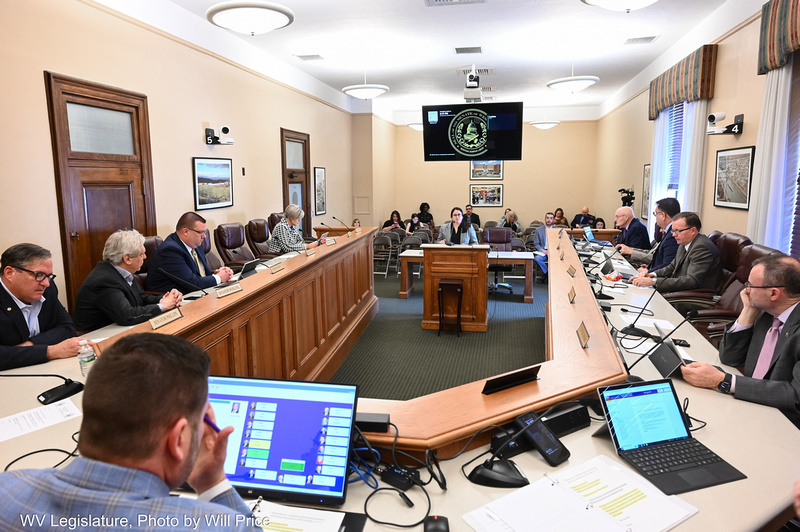
CHARLESTON, W.Va. – Lawmakers’ plan to add additional methods for satisfying the legal-ad posting requirement came up short on Tuesday, as members of the Senate Finance Committee failed to approve the measure.
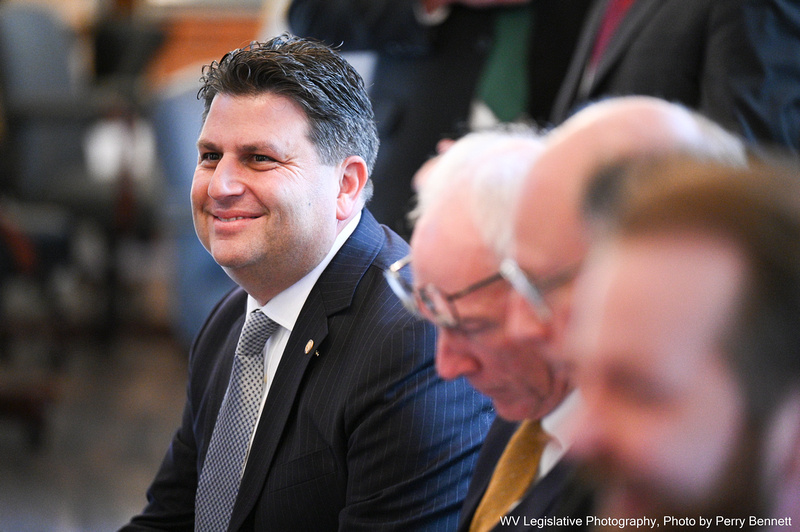
Under SB 891 – introduced by Sen. Brian Helton, R-Fayette – the state auditor would be tasked with creating and maintaining a dedicated website for the posting of all legal ads throughout West Virginia. While the bill did not seek to make use of the website for posting legal ads mandatory, doing so would present a no-cost alternative to publishing such ads in local newspapers.
As explained by Committee Counsel Jeff Johnson, “(Use of the website) would meet the requirements for Class 2 and Class 3 required legal advertisements.”
As outlined in W.Va. state code, Class 2 legal ads must be published in a “qualified newspaper” once a week for two consecutive weeks. A Class 3 legal advertisement must be published once a week for three weeks. A “qualified newspaper” is one which meets the secretary of state’s publication frequency and circulation requirements.
“Placing the ad would be free of charge,” Johnson continued. “Persons who want to access the website can also do so for free. Both Class 2 and Class 3 legal ads would be required to be published for one week. Publishing on the central legal advertising page would substitute for the current process, but it is at the option of the person with the obligation to publish which type of publication process they would use.”
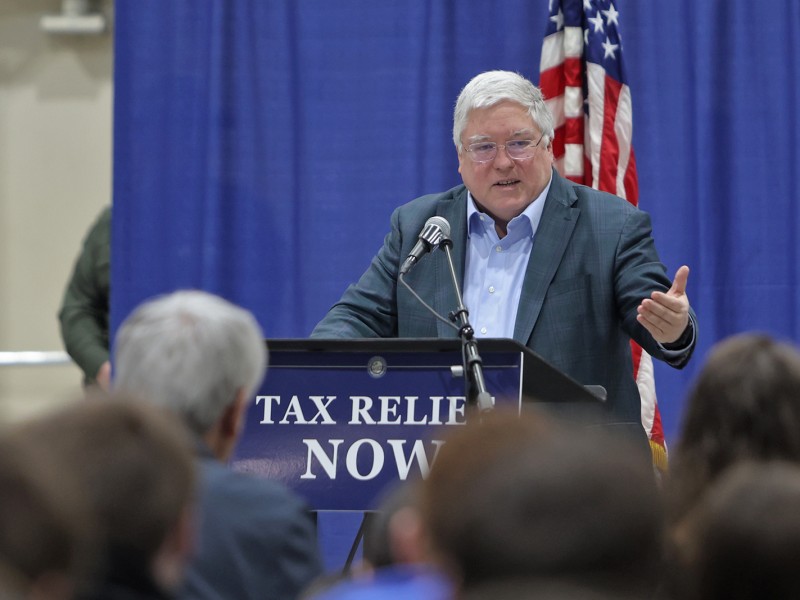
Appearing before the committee to express his opposition to the bill was former House Minority Leader, current President of HD Media, and Interim Director of the WV Press Association (WVPA) Doug Skaff, who said, “In full transparency, I own 14 publications (newspapers) across West Virginia, a couple in Virginia, and one in Ohio.”
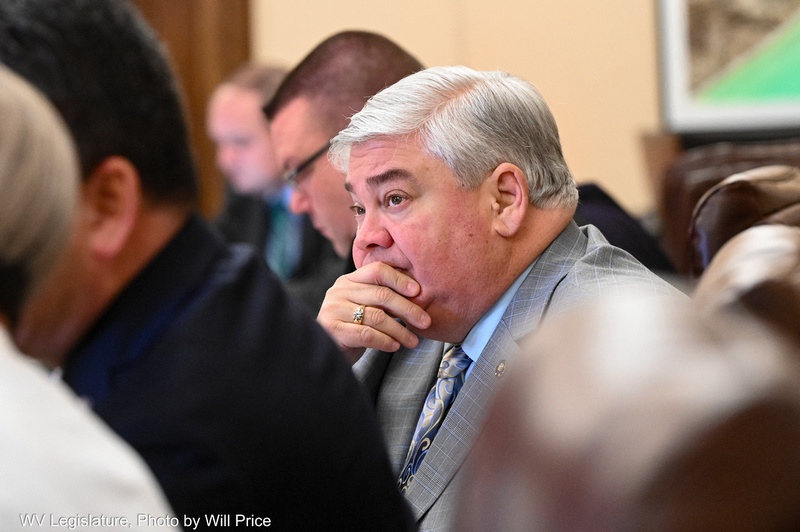
Sen. Jack David Woodrum, R-Summers, who requested that Skaff be permitted to testify before the committee, asked the former minority leader to elaborate on the “arrangement we’d worked out previously with regard to the newspaper advertisement.”
“The last two years we worked with then-Senate President Craig Blair to come to a compromise bill where all parties took numerous days, hours, times,” Skaff replied. “Representatives from county commissions, local and state entities came together with newspaper officials, as well as the secretary of state. All parties involved (to talk about) how do we deal with public notices.”
“We actually drafted a bill,” Skaff continued. “The bill was sitting in the Senate President’s lap for two years. It was all agreed to. It was supposed to be ran last year, and the year before. For whatever reason, it never ran.”
The agreement between lawmakers and the WVPA
As explained by WVPA Vice President Scot Refsland during the Press Association’s convention last August, this “arrangement” had allegedly been reached “last winter,” during a closed-door meeting between several representatives of the state’s newspaper industry, Woodrum, and former Senate President Craig Blair.
“That was very fruitful,” Refsland said at the time. “We actually came up with a resolution, a draft resolution. This has been a joint collaboration between the West Virginia Legislature and Andy Kniceley (publisher of WVNews), who’s been driving a lot of that. Doug Skaff has also been driving a lot of that.”
“I’m more of a computer person and a tech person to get it kind of into the digital worlds of things,” Refsland added.
During his response to Woodrum, Skaff further explained that all but three of the state’s newspaper-members of the WVPA anticipated the bill’s passage, and have begun to act on what was discussed when the “arrangement” was agreed to.
The “agreement” in question was actually a proposed substitute for the Woodrum-sponsored SB 264. The substitution maintains many elements from the original bill, with the first of two significant changes coming in the rate structure. Under the WVPA’s proposed substitution, newspapers could charge between four and 11 cents per-word based upon their circulation.
The second proposed change would have taken away the state auditor’s authority for the website, and transferred it to the WVPA.
As stated in Woodrum’s proposal: “Beginning January 1, 2025, newspapers that have searchable legal advertisements on the newspaper’s archived website and submit the newspaper’s statewide, searchable website maintained by the West Virginia Press Association may adhere to the rate structure set forth (in the proposal): Provided, that the legal advertisements on the newspaper’s archived website may not be subject to a paywall and must be free to search. The West Virginia Press Association will monitor all newspaper legal advertisements for compliance and shall inform the Secretary of State’s Office of the rates that each newspaper in West Virginia may charge and receive based on their searchable status.”
To simply this explanation, in order to charge top rate, the bill would require newspapers to make their legal notices free to search and view on their website, while simultaneously posting them to the WVPA’s wvlegals.com. The WVPA would then act – on behalf of the Legislature – to determine each publication’s rate structure and monitor their compliance. According to Skaff, this process has already been implemented by the majority of the state’s newspapers.
The original proposed effective date for SB 264 of January 1, 2025 would have seen the “arrangement” become law prior to the start of the current Legislative Session, and the selection of new leadership to oversee it.
“He (Blair) and Roger Hanshaw (House Speaker, R-Clay) have more clout about putting stuff into that,” said WVNews Publisher Andy Kniceley, while also speaking at last August’s WVPA convention. “Those two are the most important people to get it done, next to the governor.”
“I say we let Senator Craig Blair tell us what we need to do,” Kniceley continued. “I think he’ll probably caucus with the Senate again and see how they feel about it. Then we probably should help on the House side and get their support. After that it’s the governor.”
“It behooves us to get this passed before a changing of the guard,” Kniceley added.
Why the WVPA prefers Woodrum’s plan to Helton’s
As ultimately SB 264 was not passed, the door was opened for Helton to propose his plan to offer no-cost, alternative legal ad publishing options, in the form of SB 891.
“The newspapers have been around for decades, providing these to the people of West Virginia,” Skaff told committee members. “People know to go to newspapers if they want to learn about their property, or if Grandma Suzie-Q forgot to pay their taxes. The last thing they want to do is go to a government state agency, and check it everyday to see if they missed something.”
“If you’re gonna tell me that Suzie-Q is gonna go to a government-run website everyday to see if her trailer is gonna be repossessed because she forgot to pay her taxes, you got another thing coming,” Skaff added.
At Woodrum’s prompting, Skaff then spoke briefly about the financial benefits to newspapers for the publication of legal ads.
“It’s no secret that a lot of these small town newspapers benefit from having legal notices in their paper,” Skaff said. “They do benefit, I’m not gonna hide that. […] Would newspapers go away – I believe that’s what you’re asking me. If you want me to be candid, absolutely they would go away. Jobs would go away and newspapers would go away, especially in those smaller communities.”
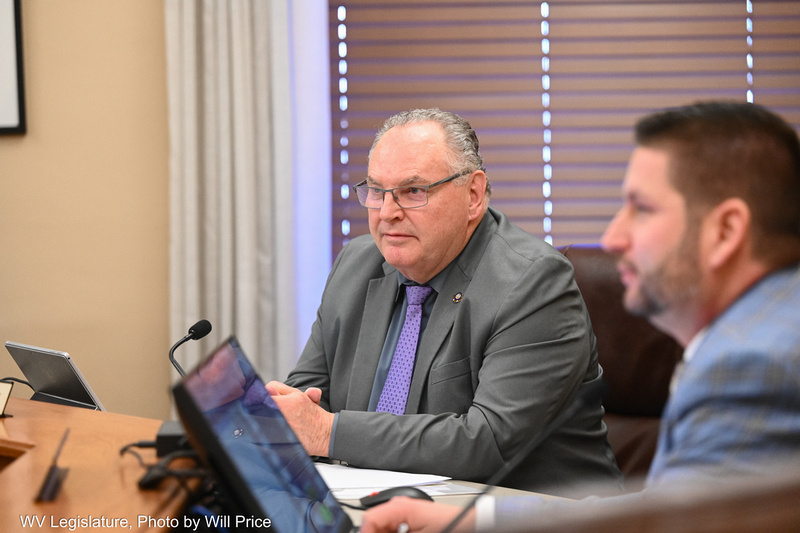
Speaking in favor of the bill was Sen. Rollan Roberts, R-Raleigh, who told colleagues that, “I don’t think we’re taking anything away – I think we’re adding to.”
“Testimony has been given that the current website isn’t doing anything, so I’m not sure why there’s alarm,” Roberts continued. “Apparently if this is implemented, according to history, it’s not going to do anything, but it does give an option for our counties to be able to stretch their tax dollars farther.”
“I think a lot of those (people) who do not have access to (going) online, they don’t have access to a newspaper being delivered to their house either,” Roberts added.
Despite Roberts’ support, and an approved amendment which would prohibit counties utilizing the free website from charging their residents, SB 891 was defeated by a fairly evenly divided vote. As Woodrum has not introduced any further proposals regarding legal advertisements during the current Legislative Session, the procedure for publishing required legal advertising will not change.
RealWV will provide continual updates throughout the duration of the Regular Session.