Jefferson County residents push to reject ‘Mountain Pure’ bottling facility
By Vanta Coda III, RealWV
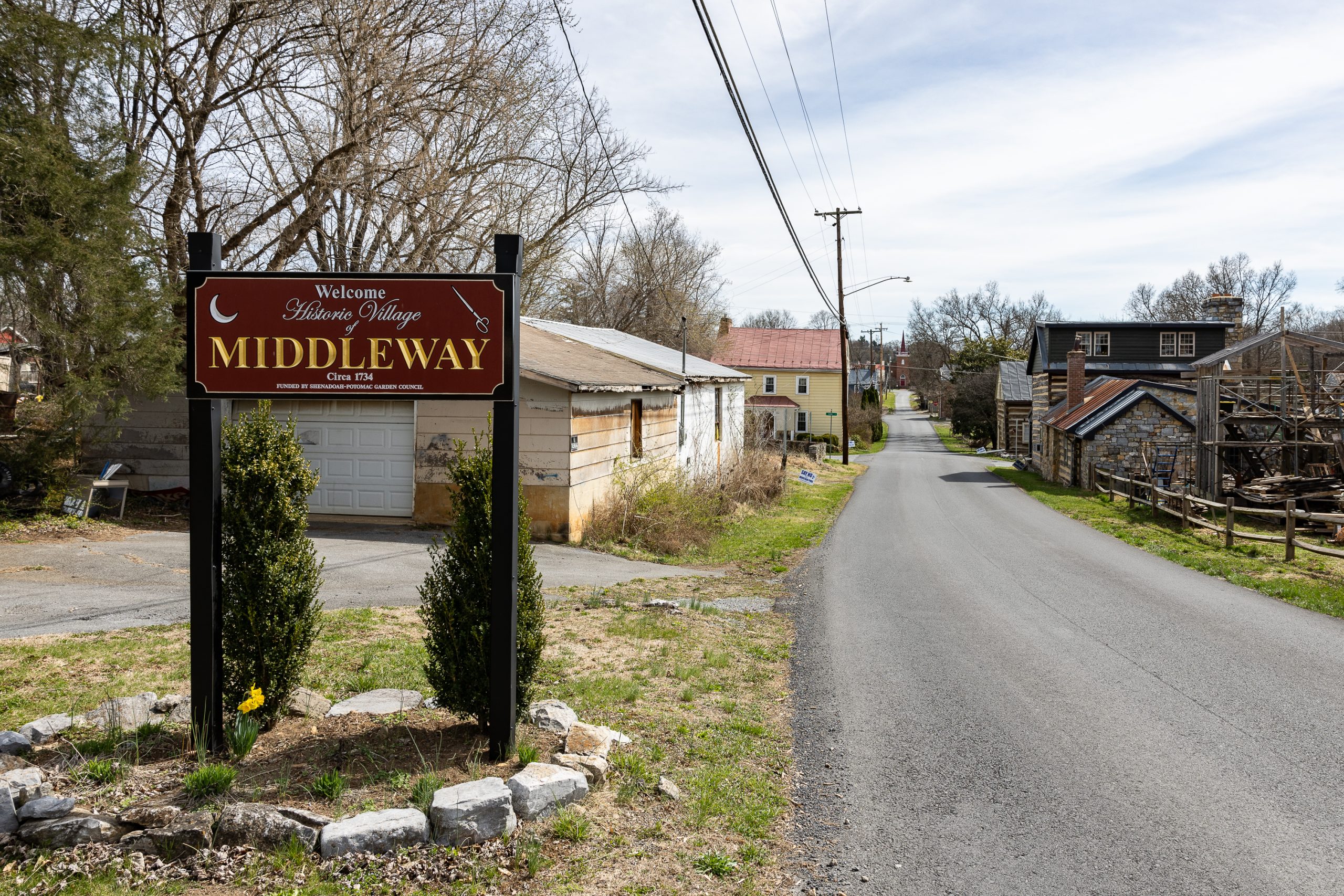
On the morning of Mar. 12, hundreds of concerned citizens sat in the auditorium of Washington High School to await the Jefferson County Planning Commission’s vote on the proposed bottling site, ‘Mountain Pure’, and its parent company for the project, Sidewinder Enterprises LLC, in the historic town of Middleway, WV. The Planning Commission ultimately voted unanimously to reject the revised concept plan proposed by Sidewinder Enterprises LLC. While this decision was just the beginning of further actions to come, it brought temporary relief and joy to the residents of Middleway and Jefferson County.
The recent concept plan submitted to the Jefferson County Planning Commission proposed the construction of a one-million-square-foot bottling facility in different phases. This facility would be built on a remediated brownfield industrial site that borders the village of Middleway, which was previously owned by 3M/Kodak. According to both previous and newer concept plans, the facility would require the extraction of thousands of gallons of water per minute from the local aquifer that feeds Lake Louise, located just outside of Middleway.
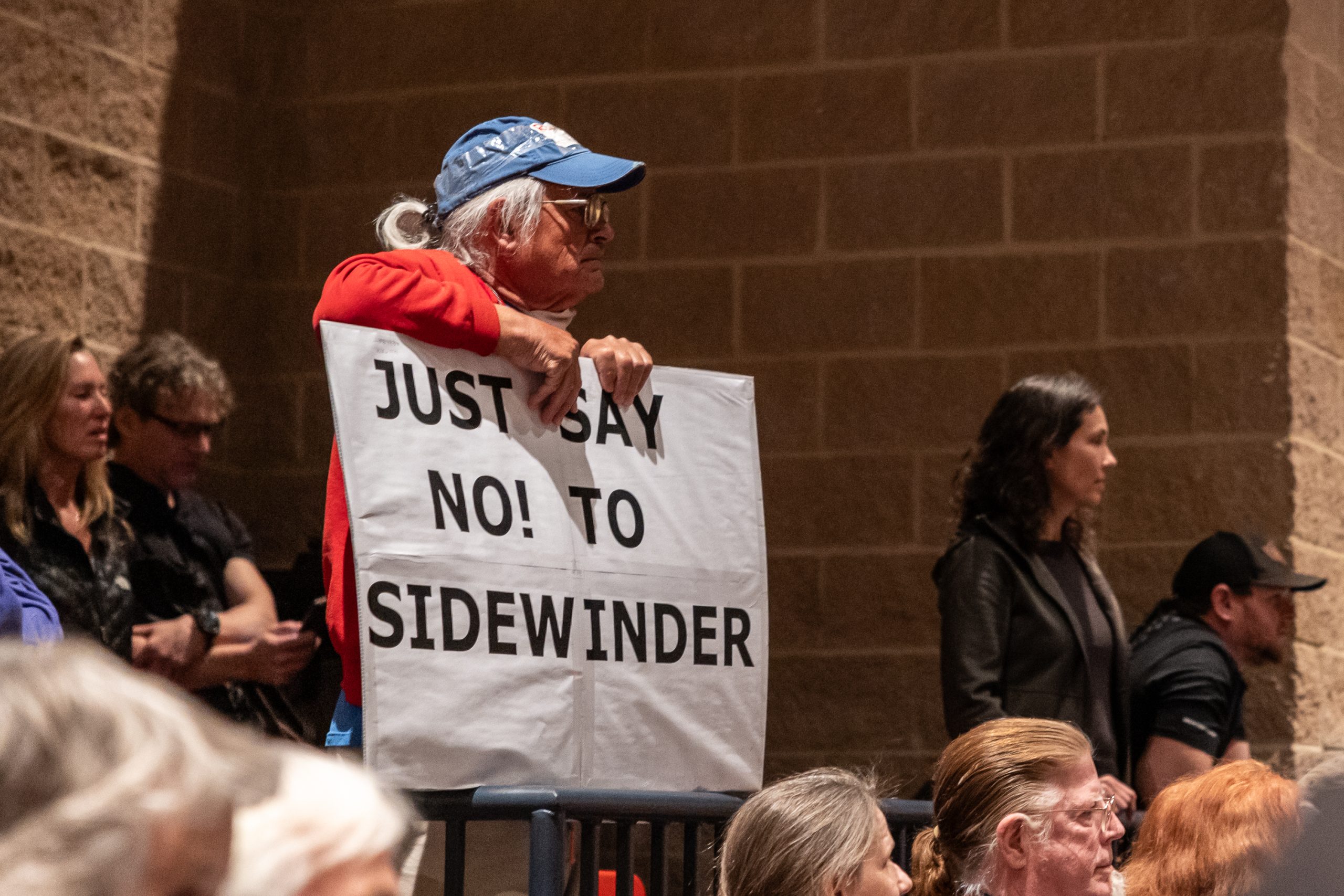
Sidewinder Enterprises LLC owns the properties of the 3M/Kodak site, as well as several other sites that provide access to the Lake Louise aquifer. Currently, the company is exploring various options and has recently begun lobbying at the West Virginia Capitol for their Middleway project, following the rejection of their previous concept plan by the Jefferson County Planning Commission on Mar. 12.
On Mar. 27, Delegates Joe Funkhouser, R-Jefferson; Bill Ridenour, R-Jefferson; Bill Flanigan, R-Ohio; and Daniel Linville, R-Cabell; proposed HB 3026 – a bill that highlights zoning ordinances and their effects. The bill defines the term “use” to mean “domestic use, farming, or activities on the land from which the water was drawn, and not extraction for transport to another jurisdiction via bottling, storage, pipeline, or other means.” This bill is encountering significant opposition from Sidewinder Enterprises LLC and its supporting representatives.
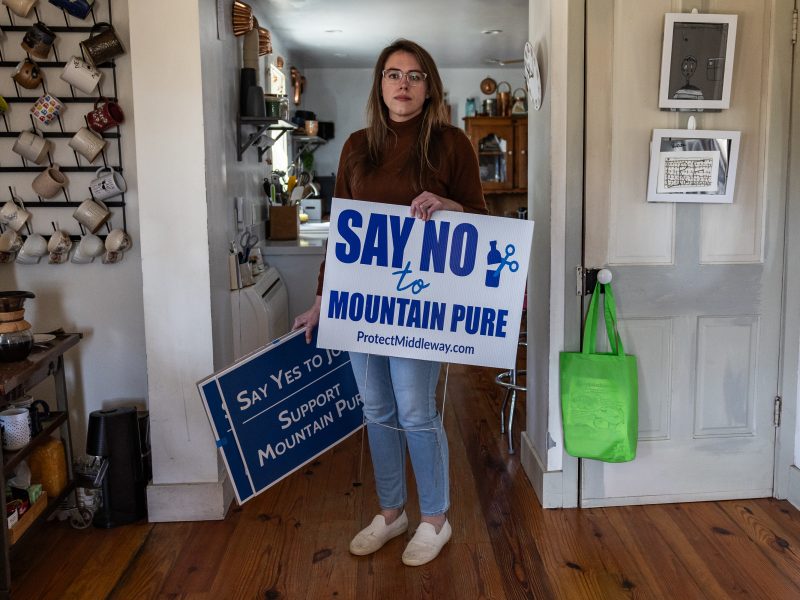
As the bill makes its way through the legislative process, Middleway farmers and townsfolk reflect on the damage, uncertainty, and unity that have impacted their historic town since October 2024. Jessie Norris, President of the Middleway Conservancy Association, recalls the day she received the news about the ‘Mountain Pure’ bottling facility.
“A newspaper published an article on a Sunday in mid-October, right after our annual town celebration, Middleway Day. Almost immediately, I started receiving a lot of calls and texts,” said Norris. “Within a couple of days, we went door to door, handing out flyers and informing people about a meeting we were organizing in three days. We were expecting about 10 to 15 people to show up, but 70 people came, all concerned and talking about the project.”
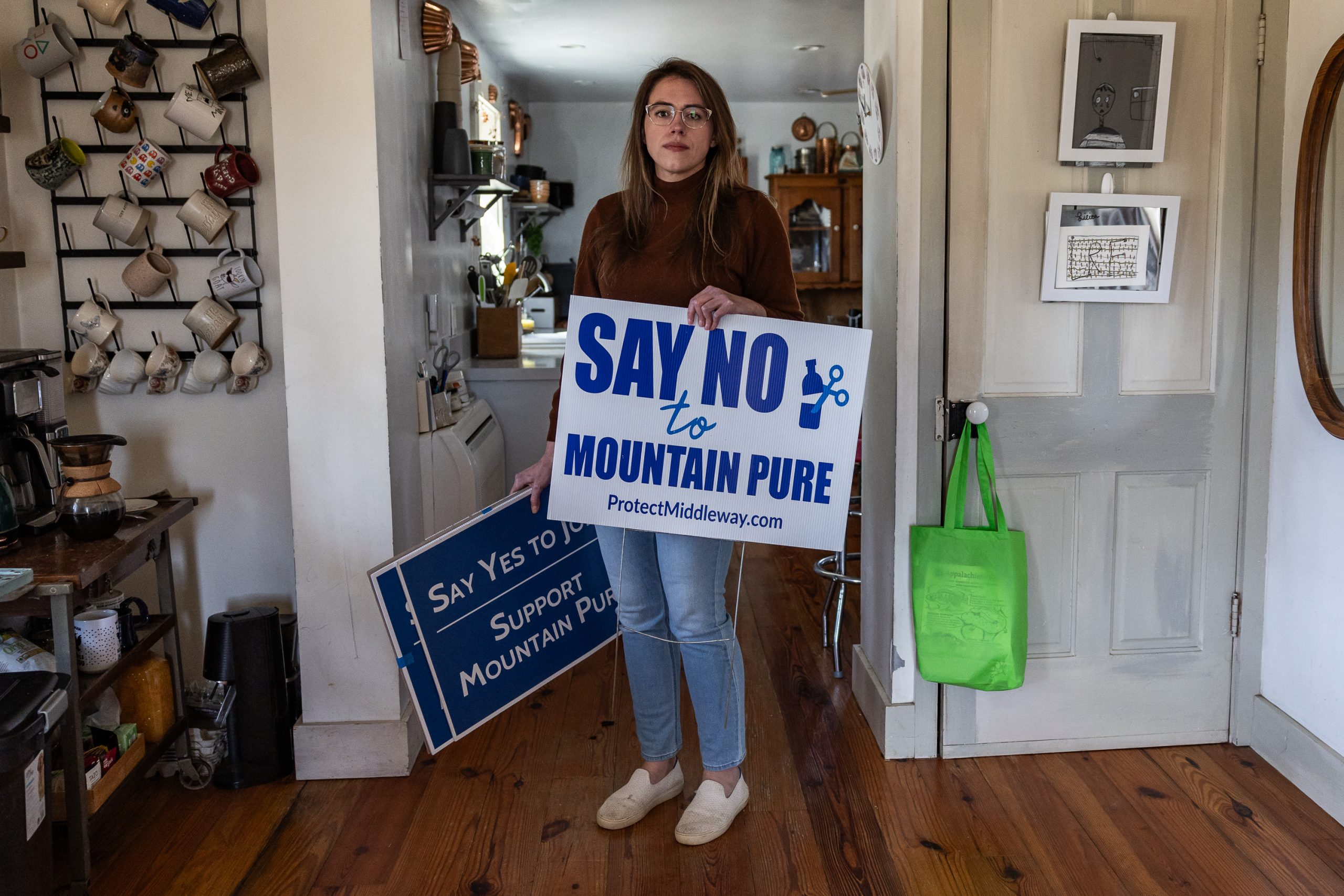
Shawn Franklin, Norris’ partner, expressed concerns about the logistical issues surrounding the community if the project were to move forward. He highlighted that one of the main worries for the central part of the village was the 160 truck trips estimated per day by Sidewinder Enterprises LLC for the ‘Mountain Pure’ bottling facility, which would navigate through the narrow streets of the historic village.
“I’ve done supply chain and logistics for 15 years, and unfortunately, even if you’re 24 hours seven days a week, the likelihood of you having trucks spread out evenly, 24 hours, seven days a week, is exactly zero. Meaning that they’re gonna come in clumps and generally they all come in close whenever their hours reset,” said Franklin. “Our roads are not very large, certainly not large enough to facilitate trucks turning safely, and one of the things that we don’t have either is curbs, as you notice on the road. So every time those trucks run by, they’re compressing the pavement. It chips out, and there goes your tax dollars just getting eaten up by having to repave roads every year.”
Since October 2024, Middleway residents have started a grassroots movement by the name ‘Protect Middleway’. It wasn’t just the townsfolk who reached out to organizers Norris, Franklin, and Stacy Chapman; it was also farmers like Bill Grantham, Tamar Kavaldjian-Liskey, her father-in-law, David Liskey, and Bill Hewitt, whose properties each border Lake Louise.
“I’m concerned about my wells losing their water flow,” said Grantham. “You just don’t know what’s being drawn from either the housing developments that are in the area, from the underground water table, because you just can’t get down there and see what’s going on, there needs to be groundwater studies.”
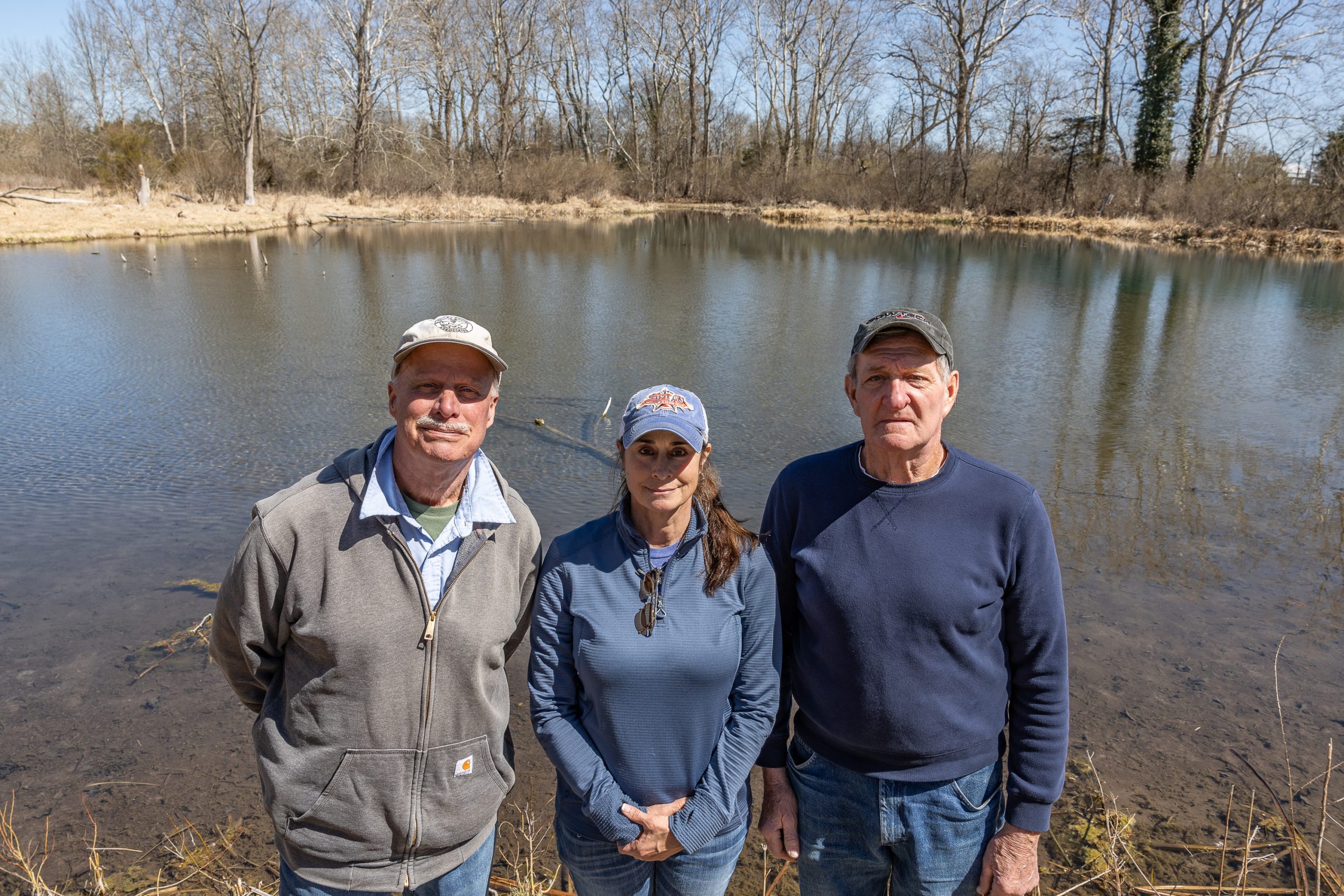
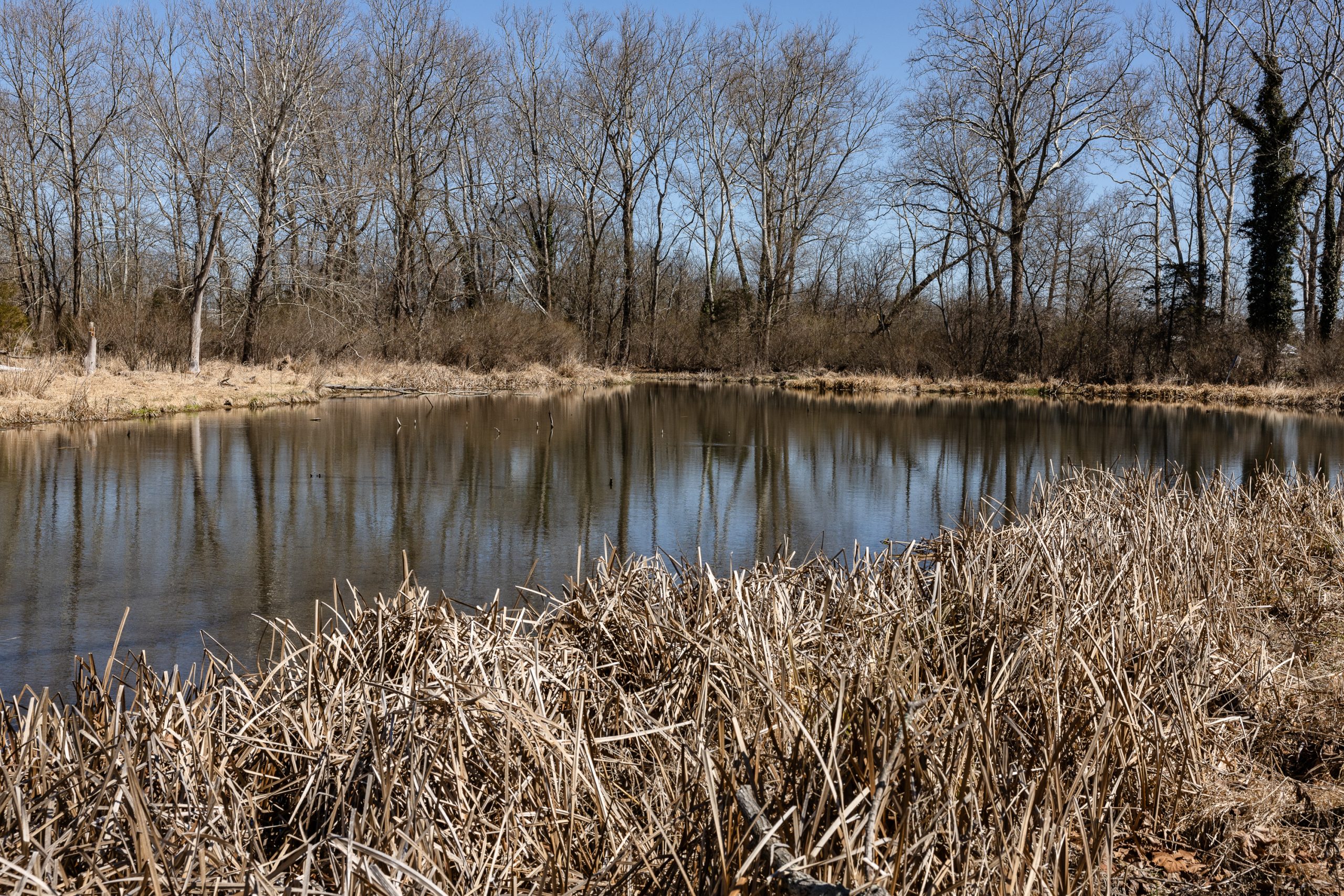
Lake Louise is home to a rare marl-protected wetland that surrounds the lake, making it one of only a few in the state of West Virginia. Tamar Kavaldjian-Liskey emphasizes that these wetlands are vital not only for the unique and rare organisms that inhabit them but also for the communities nearby, as they play an important role in the natural filtration of water.
Recent droughts have negatively impacted West Virginia’s agricultural sector for the past three years, and there are concerns that this summer may see more drought conditions. During Sidewinder Enterprises LLC’s test pumping, landowners reported that Lake Louise saw a several-foot drop in water level. Farmers’ biggest worry is that if the water bottling did occur from the aquifer piped to the facility, it could become severely depleted and struggle to replenish naturally, damaging both the rare wetlands and water supply of farming operations in the area.
“Pulling water right out from underneath Lake Louise will have detrimental effects on the wetland and water flowing down the run on the farmers around it,” said Kavaldjian-Liskey. “A hydrologist said the recharge area within Sidewinder’s property has within their land is 3%, the 97% of the recharge is coming from these farmers. Why is that fair that you pull all this water when we’re really supplying it from free charging from rain and runoff?”
“We’ve had three years of extremely dry weather. And whenever they tested these wells, they said, “Oh, they’re great,” said Hewitt. “They tested them in the off-growing season in February, when the water was up the highest, they had no clue what those wells would do whenever summertime is here.”
During the process of Sidewinder Enterprises LLC’s well testing process, one of the wells had a blowout onto one of the neighboring Lake Louise properties. This resulted in damage to protected wetlands on Bill Hewitt’s property.
“They brought gravel in there, truckload after truckload to put it in the wetlands,” said Hewitt. “Then they were made to dig it all back out, because these wetlands are protected by the state.”
Hewitt has expressed concerns about the toxic plume located beneath the brownfield site where the proposed bottling facility is to be built. This toxic plume contains Trichloroethylene and Cis-1,2-Dichloroethane. Due to the karst geography of the region, which features interconnected aquifers and groundwater systems, neither Sidewinder Enterprises LLC nor any state, federal, or non-profit organizations has solidified data that the plume may migrate and contaminate wells of individual citizens and the community if piping water from Lake Louise’s aquifer to the bottling facility were to happen. This uncertainty raises significant concerns, especially considering the volumes of water that Sidewinder Enterprises LLC proposed to pump in their concept plan.
Ultimately, this risk was one of the main reasons the project was unanimously voted against by the Jefferson County Planning Commission. All of Jefferson County’s water supply is drawn from wells, no matter whether they are subject to private ownership, public housing developments, neighborhoods, or municipalities.
Trichloroethylene is carcinogenic to humans through all routes of exposure and poses a potential health hazard due to its non-cancer toxicity effects on the central nervous system, kidneys, liver, immune system, male reproductive system, and developing embryos. In contrast, while there is less documentation of the effects of Cis-1,2 Dichloroethane in humans, studies in animals have shown that it can cause irritation to the eyes, scaling and cracking of the skin, changes in the immune system, and drowsiness.
“We want business, but we don’t want bad business, or like this, because this is temporary business,” said Franklin. “The ground is like Swiss cheese and stuff can move from one mile to, five miles and no one really knows what this geology can really do, and putting that at the expense of human life is a really up-in-the-air question.”
With citizens setting the record straight on the risks and concerns of the bottling facility, the strength and power of community voices can be noted not only within Middleway, WV, but the entirety of Jefferson County, WV.
Related Articles
Residents press Greenbrier County Commission for answers on proposed zoning changes
The Greenbrier County Commission held the public hearing Sept. 15 as it continues considering a new zoning ordinance.