‘Easy preachin’ & hard livin’ – Meet the Helmicks, family farmers forging a new path
By Stephen Baldwin, RealWV
When despair for the world grows in me
and I wake in the night at the least sound
in fear of what my life and my children’s lives may be,
I go and lie down where the wood drake
rests in his beauty on the water, and the great heron feeds.
I come into the peace of wild things
who do not tax their lives with forethought
of grief. I come into the presence of still water.
And I feel above me the day-blind stars
waiting with their light. For a time
I rest in the grace of the world, and am free.
–Wendell Berry, The Peace of Wild Things
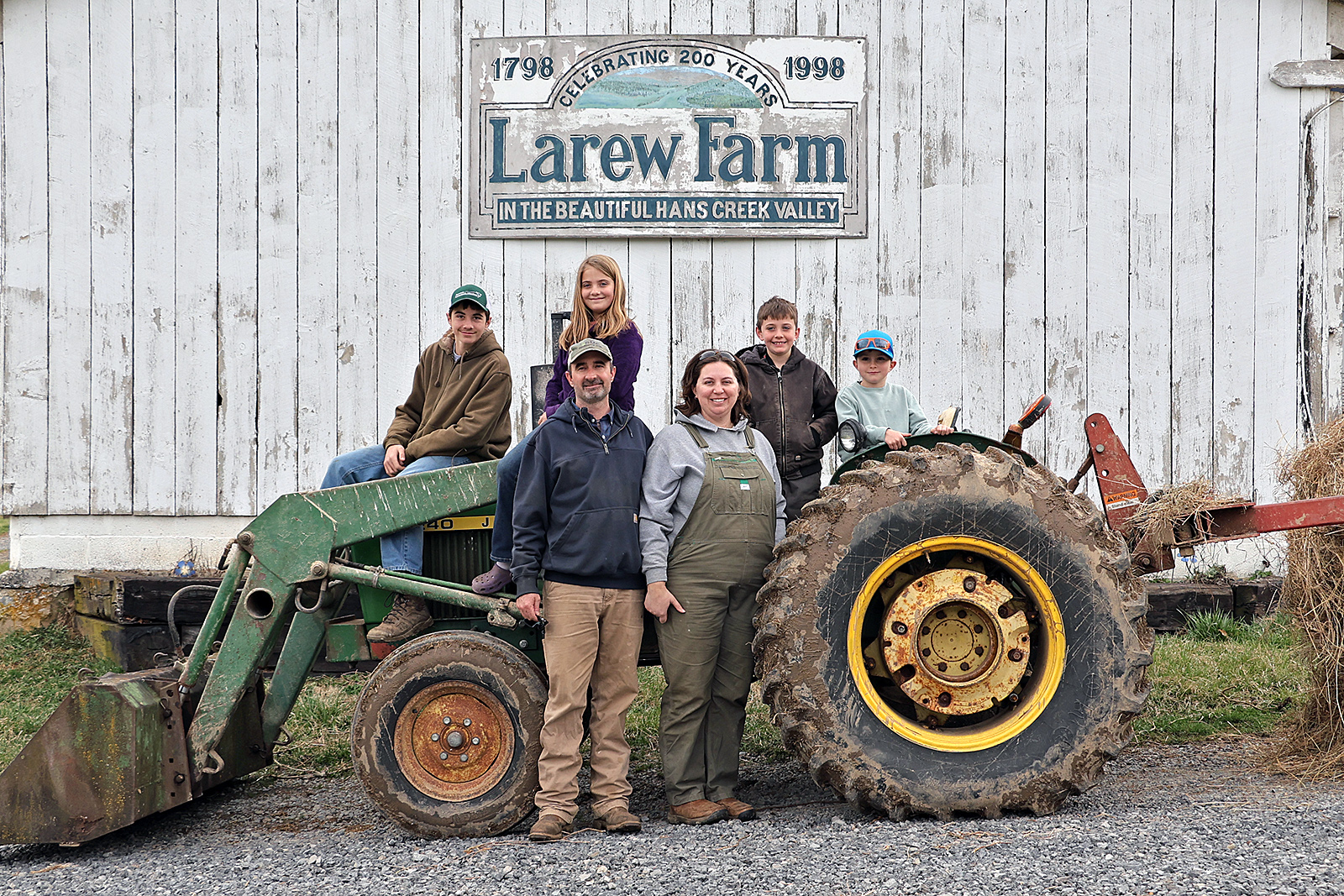
The clouds hang low in the valley on an early spring day, as we meander along Hans Creek on the way to visit Aaron and Tara Helmick. They took over the Larew Family Farm several years back, which has been in operation since the 18th century.
It’s located in Monroe County, where farming is the top employer, cows outnumber people, and agriculture is a way of life handed down for generations.
“Everybody in this valley lives to be really old,” Tara observes. “We respect the old ways and use some of them, but we also aren’t stuck on doing it the same way.”
After descending from the road along the steep driveway to the farmhouse, we’re greeted by two working dogs. They know every car, every person, and every animal in the valley; we are strangers.
They circle my truck, as if I’m just another lost sheep they’ve been sent to rescue.
“Good morning,” Aaron says as he emerges from his office, “I see you’ve met the greeters.”
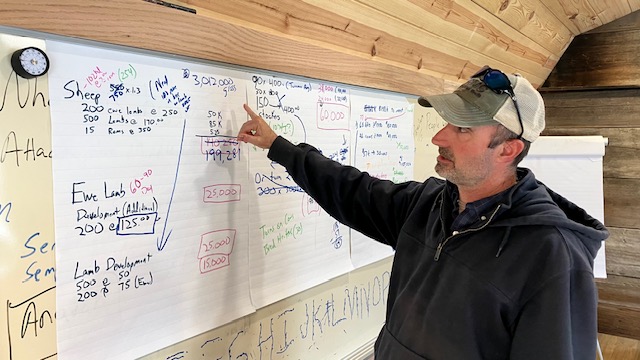
That’s right. Aaron, the family farmer, has an office where he spends a couple of hours per day. Four whiteboards hang on the walls, filled with plans, prices, equations, and goals.
“One of the ways we overcome the difficulties of this profession is that we treat it as a profession,” Tara says. “Just the way you would if you’re a CEO, you spend time and money on always trying to do things better in your profession.
‘Burn the boats’
The road has never been easy for Aaron and Tara. When they met and started dating in their early 20s, they lived several hundred miles away from each other.
“Even when we first got married, we still never lived closer than three hours apart,” Tara jokes. “Until we moved here (to Monroe County).”
But the connection was so deep that the distance didn’t matter.
“Aaron and I knew after dating for a long time that we had a lot in common and that included how we wanted to raise a family,” Tara explains. “When we started out our business, it started with that goal in mind.”
The big question was: Where?
“We’re big believers in, ‘He’ll lead you to it; he’ll lead you through it,’” Aaron says of the couple’s faith in God.
They were both working in different parts of West Virginia. Aaron did not come from a farming family, and Tara would not be able to continue the farms her family operated for various reasons.
“There wasn’t a family legacy to fulfill,” Tara says. “There’s a lot of freedom in that.”
They knew they needed to build their own operation before beginning their family, and they trusted the right opportunity would present itself.
“We always knew we wanted to farm but were looking for the right place,” Tara remembers. “Brian Wickline (Monroe County WVU Extension Agent) called one day and said, ‘I think I’ve got somebody that is willing to rent a farm.’”
Brian knew that Wib and Irene Larew were transitioning out of their longtime, successful dairy operation in the community of Greenville, and were looking for someone to take over the operation.
Looking back on it now, Aaron still can’t believe Wib and Irene entrusted them with the Larew Family Farm.
“This farm has been in their family since 1798,” Aaron explains. “I give this the full credence at the time–for them to be that open and let us come and begin our family’s life here, my hat is off to them.”
Aaron pauses and looks at the ground as a wave of emotion comes over his face. He glances at Tara and says, “That’s easy preachin’…”
And she finishes his sentence with a soft smile, “…and hard livin’.”
It took a year for the Helmicks and Larews to work out all the details of the arrangement. The Helmicks wanted a family farm to run as a business, not a hobby. And the Larews wanted someone to carry on the family legacy. Both managed to get exactly what they wanted from the other.
“Every time I see the (Larew Family Farm) sign, I think about how difficult it was for them,” Aaron says. “It was more important for them that someone farm than they do it. I think that’s the reason.”
That sacrifice made by the Larews drives Aaron and Tara each and every day as they go about their busy schedules, from before the sun comes up to well after it goes down.
“When Aaron commits to something, it’s ‘Burn the boats,’”says Tara. “We’re gonna make it work.”
And they have. Spend a few hours on the farm with their kids like we did, and you will see that have made it work in beautiful ways.
To be a kid on a farm…
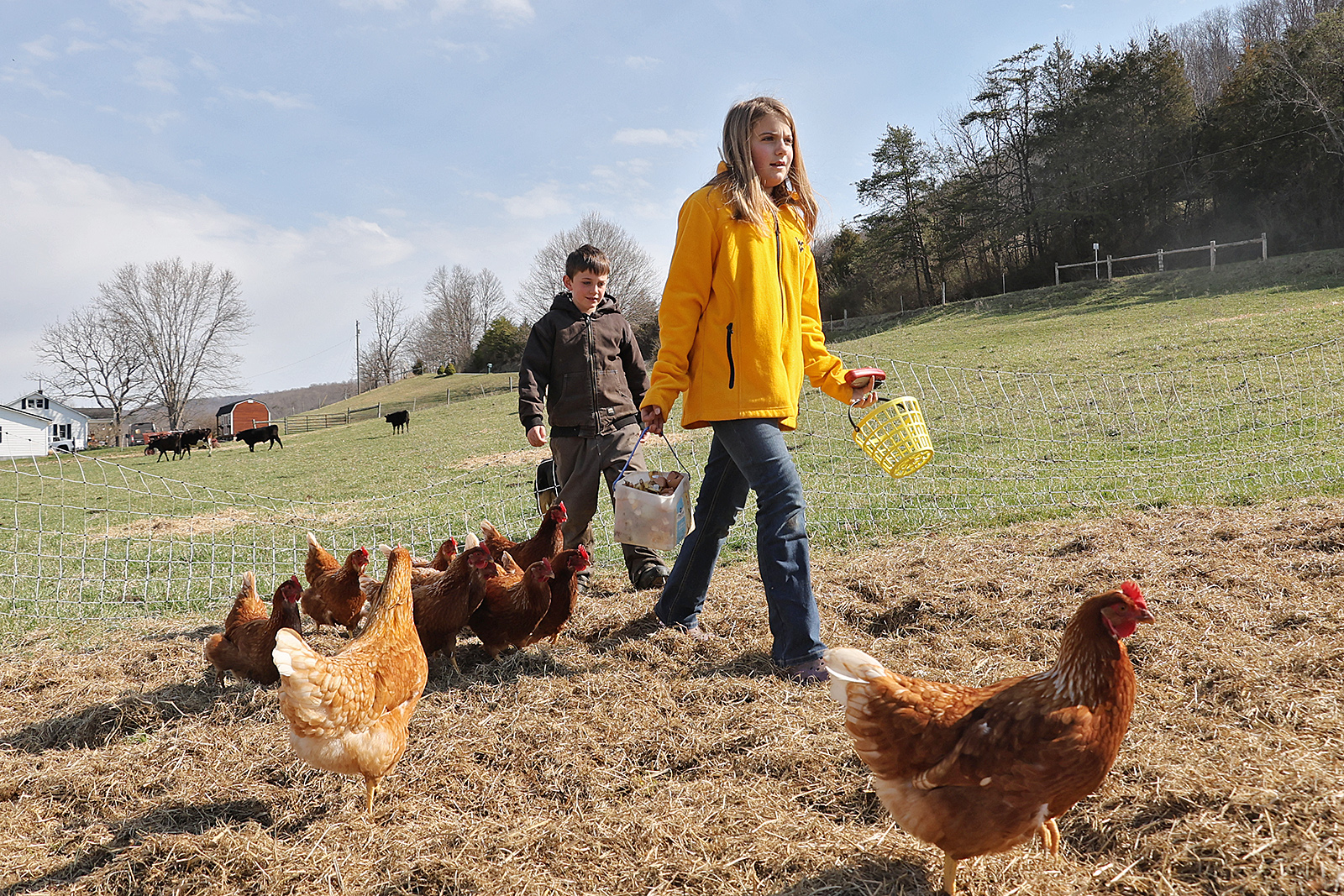
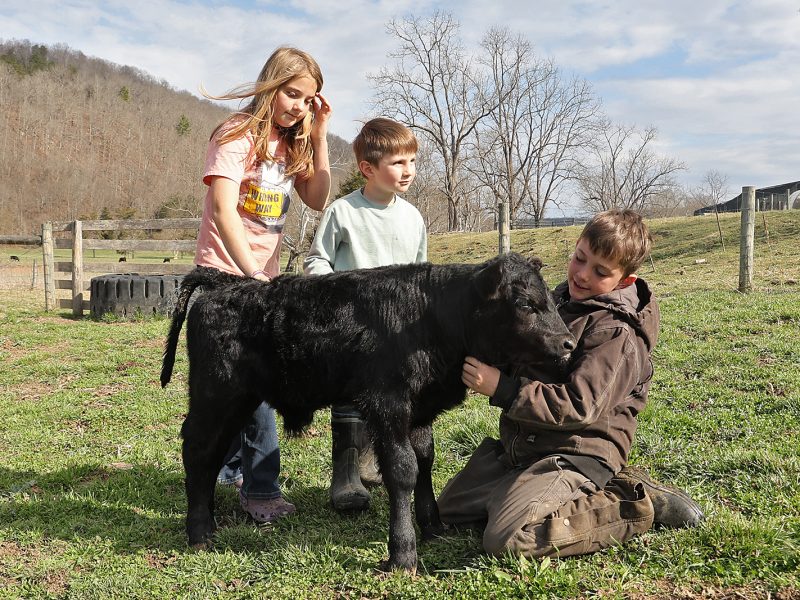
When Tara was a child, her cousin remembers her saying a prayer. Tara wanted to live on a farm with a creek running through it with three boys and one girl.
“I ended up with that here,” she says, with tears in her eyes. “I don’t want to squander that.”
“Our kids are happy kids. They get to be kids here and learn how to be responsible.”
Aaron says Tara always tells them, “If I do my job properly here, when you leave home things should be easy.”
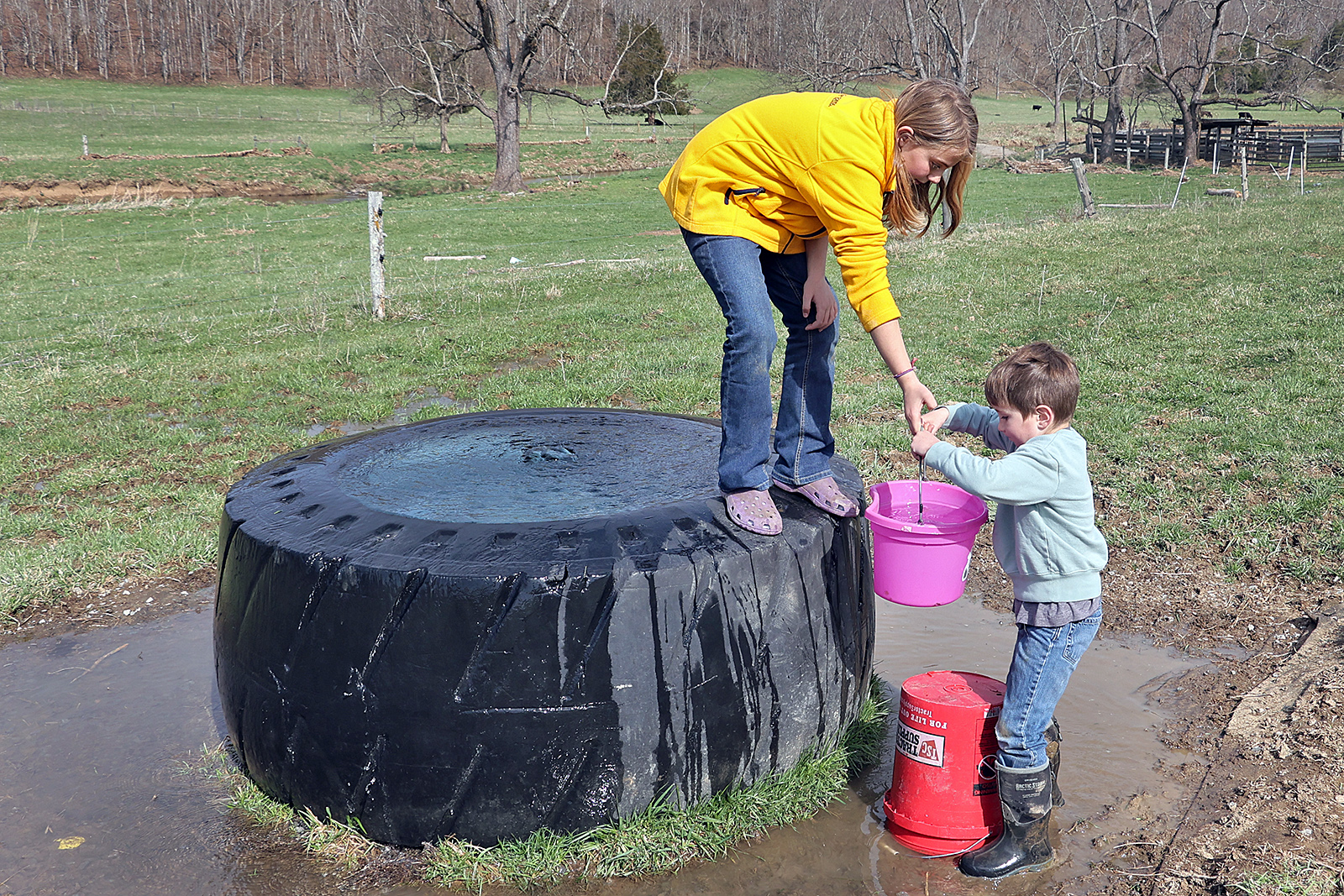
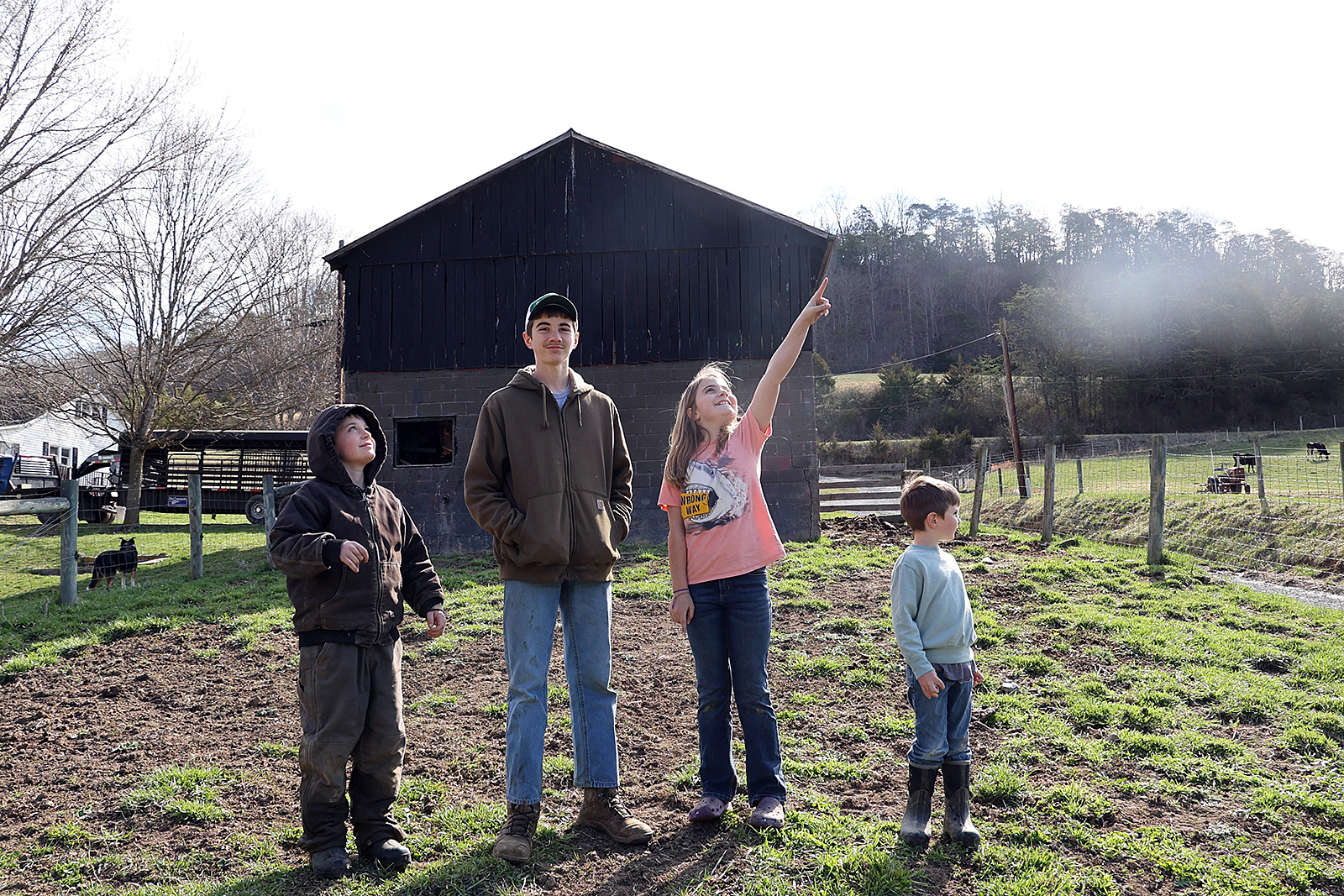
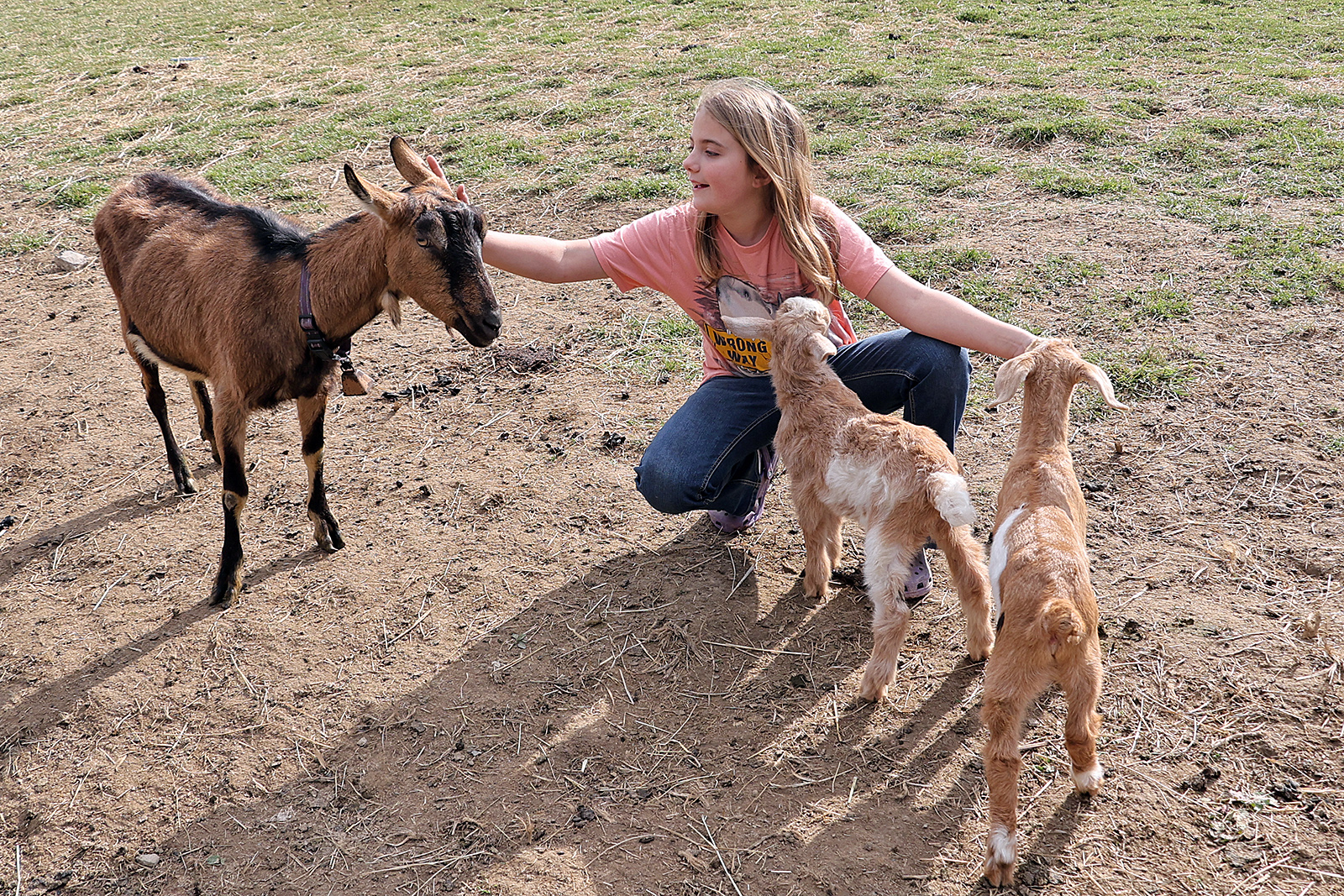
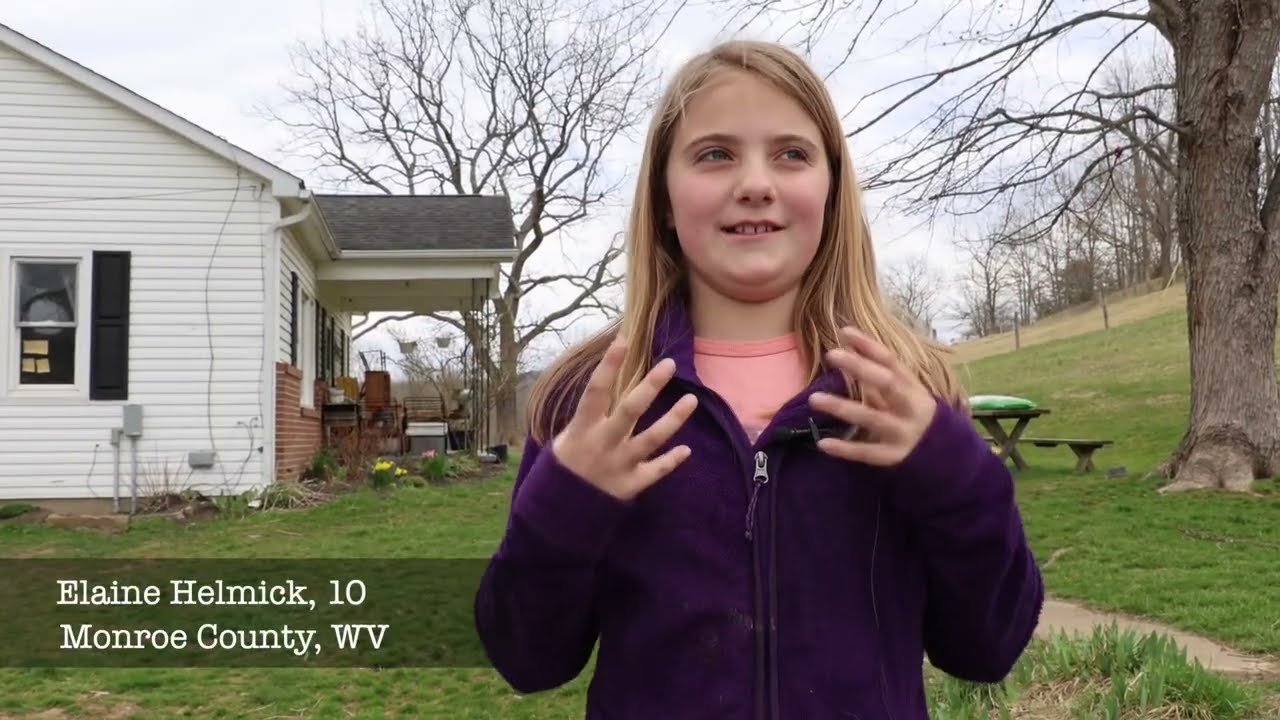
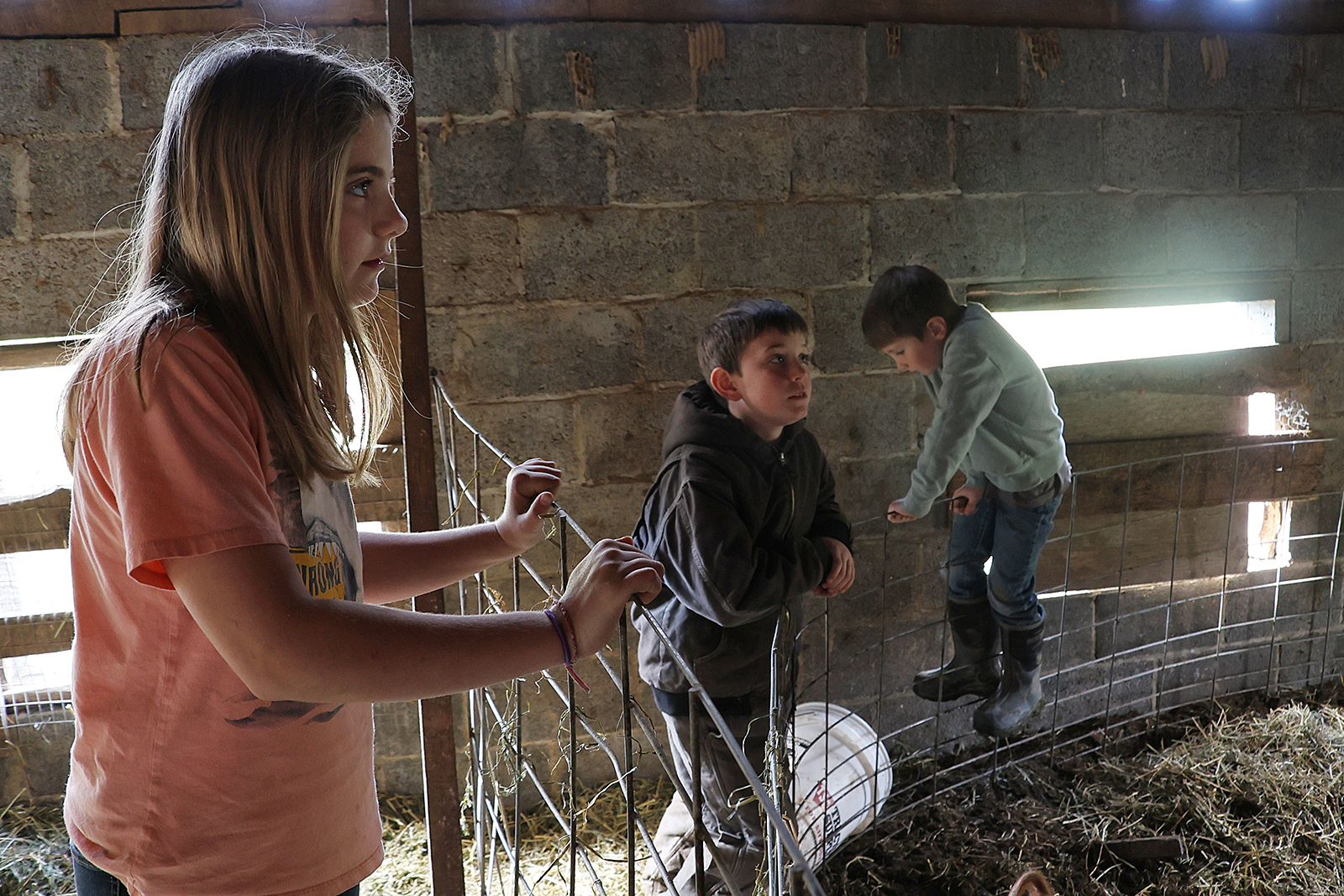
Growing up on a family farm is hard work, but the kids–Andrew, Elaine (who goes by Lainey), Graham, & Emory–told us they wouldn’t have it any other way.
“I like it,” Andrew, the oldest brother, says. “Getting out and working every day with the animals is special.”
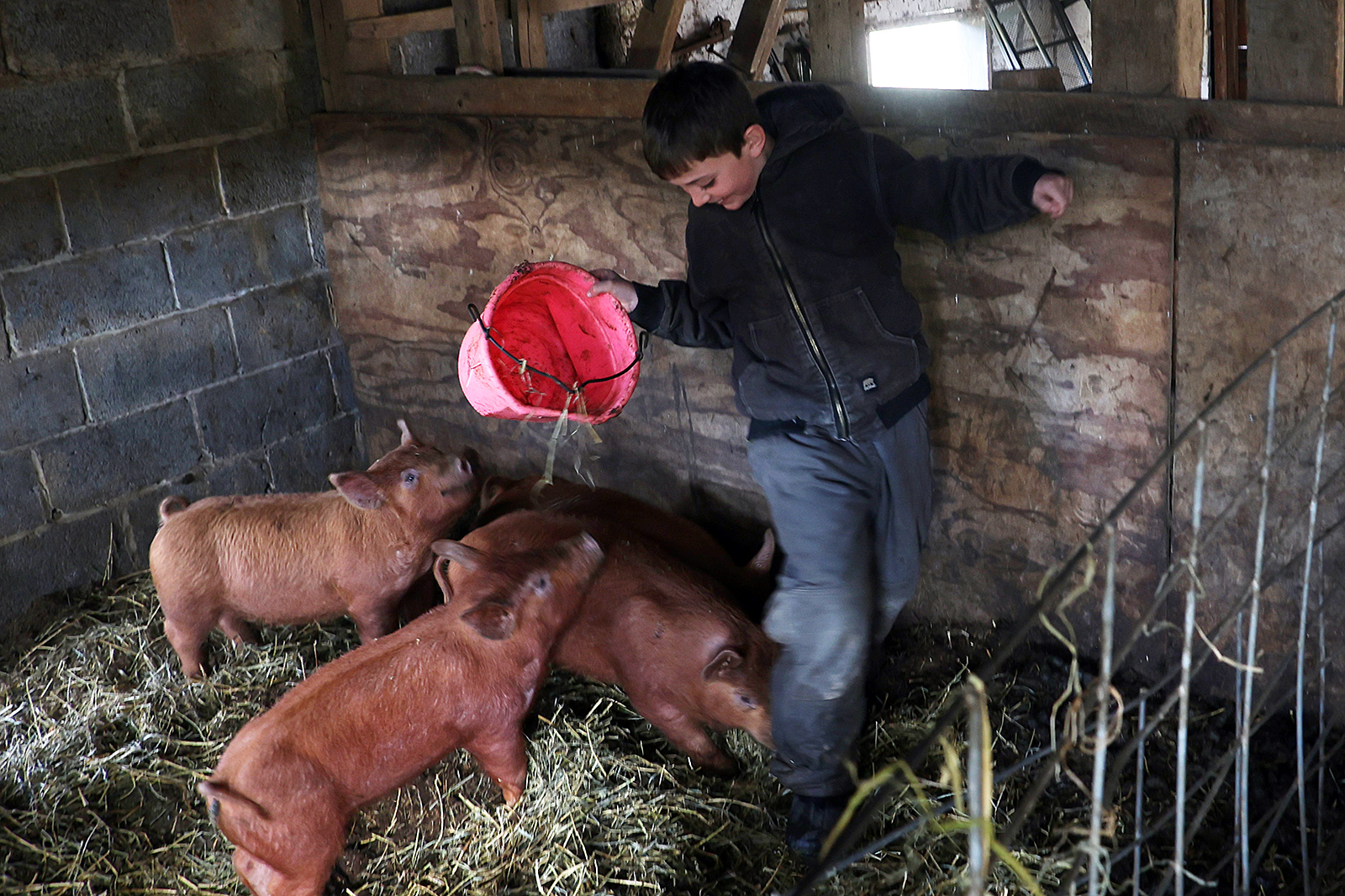
“One of the reasons we have the business is we wanted to raise the kids on a farm,” Tara explains. “That extended into learning about food. We grow almost all of our protein and dairy. All the chores they do are centered around providing that for us seasonally.”
A typical day in the life of a Helmick kid on the farm looks like this:
- Breakfast (animals first, then the family second)
- School work (taught by Tara)
- Chores outside (led by Aaron)
- Lunch
- Back to school
- Another round of farm chores
- Evening sports/activities (which include soccer, baseball, 4-H, and horse judging)
Our videographer, Jenny Harnish, spent a morning with the Helmick kids as they performed their daily chores and talked about what it’s like to grow up on the farm. Here’s a video recap:
“Profitability is a choice”
In “The Peace of Wild Things,” Kentucky farmer and poet Wendell Berry celebrates the freedom of life on the farm. Streams that flow wherever they want, stars that glow for all to see, and animals that live every moment to their fullest.
Aaron and Tara are big fans of Berry’s work. But they have a unique take on the work involved in earning that freedom. They believe it takes rigid discipline.
“A lot of times you’ll run into farmers and they’re either complainin’ about the weather or they didn’t get a good price for what they’re sellin’,” Tara says. “The mentality we had going in was profitability is a choice.”
According to the US Department of Agriculture, about 40% of farmers nationally work full-time off the farm. The Helmicks tried that approach early on, with Tara working in town and Aaron running the farm in order to have two streams of income. But they found it didn’t work for them.
“Treating it as a business allows it to be a business,” says Tara. “If you treat it as a lifestyle, it will never be a business. There’s nothing wrong with either. You’re always making a choice. Profit is a choice. When that is your goal first, that is how you can make a living and do the things we hope are valuable for our children. We can have this lifestyle because we choose profit and run it as a business.”
Both the Helmicks pursued and attained college degrees. Tara has a master’s degree in agriculture as well.
“We could do other things,” she says, “but we feel like this is where we are supposed to be.”
In order to stay grounded with each other and the farm, they make a decision–together–each year about whether they will continue. They ask themselves if having the farm is meeting their family goals? Is it keeping them on the right path?
So far, the answer has been “yes” to those questions year after year. Their decision to run a farm like a business has afforded them the lifestyle they really want. But they are facing enormous pressures.
How’s business?
According to Brian Wickline, WVU Extension Office Agent for Monroe County, livestock markets are pretty good these days. Prices for beef are sky high and prices for lamb are on the rise as well. Does that translate down to the local farm, I ask the Helmicks?
“Business is not good,” Aaron responds definitively. “Let me rephrase that–we do not flourish in high markets. We actually do well at the lower end of the market. That’s how our business is set up to operate.”
How can a successful, local farming family be struggling when market prices are high?
“Here’s an example,” Aaron explains. “If I have $100,000 to buy livestock today, with the high market I can only buy one-third as much I could three years ago. I’m basically running a tractor trailer that’s only got two bushel in it.”
Tara adds that most of the land they farm is rented. While many young farmers operate on such a model to keep overhead down, the high market prices make it hard to fully stock the land.
“We’re not broke yet,” Aaron says with a chuckle, “but we are setup to do much better in a down market.”
Aaron spends a couple hours per day in his office, and this is why. On a daily basis, he is running the numbers in order to keep the farm profitable. In the short term, that means keeping cash flow moving. In the long term, that means building up the sheep herd as prices rise.
Take the pandemic for example. Business was very good for the Helmicks, as the sheep market exploded. “When people couldn’t travel, the ethnic meat market went way up,” Tara explains. “We couldn’t get enough sheep to feed that market.”
They also try to play the odds, just like a stockbroker would.
“From a financial standpoint, there’s only x amount of margin you have in a cow,” Aaron says as he stands in front of his office whiteboard. “When you start wintering a cowherd and feeding a bunch of hay, your margin goes away quickly. Depreciation and feed are the two biggest expenses. Most people will not harvest the appreciation nor deflect the depreciation. So we buy something undervalued and try to make it overvalued.”
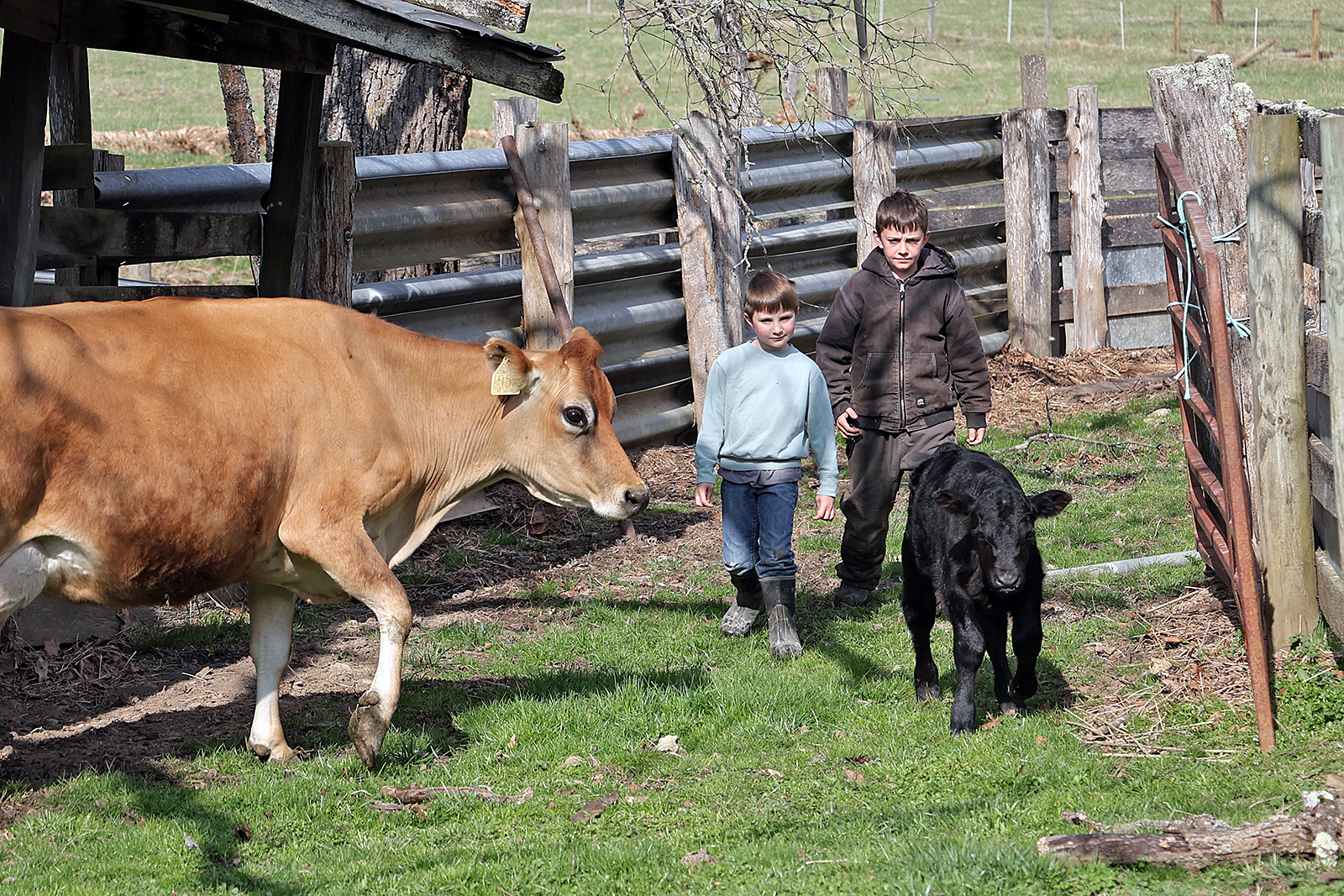
“We buy old cows,” Tara says, “let them calve once and then let them go and keep or sell the calves. We’re getting them to their most valuable stage or buying them after their most valuable stage and trying to get something out of them.”
It’s a sight to behold, watching Aaron and Tara fit all the pieces of the business together. They have to be Warren Buffet and Wendell Berry at the same time.
But finances aren’t the only worry for family farms like theirs.
Mental health – a silent killer
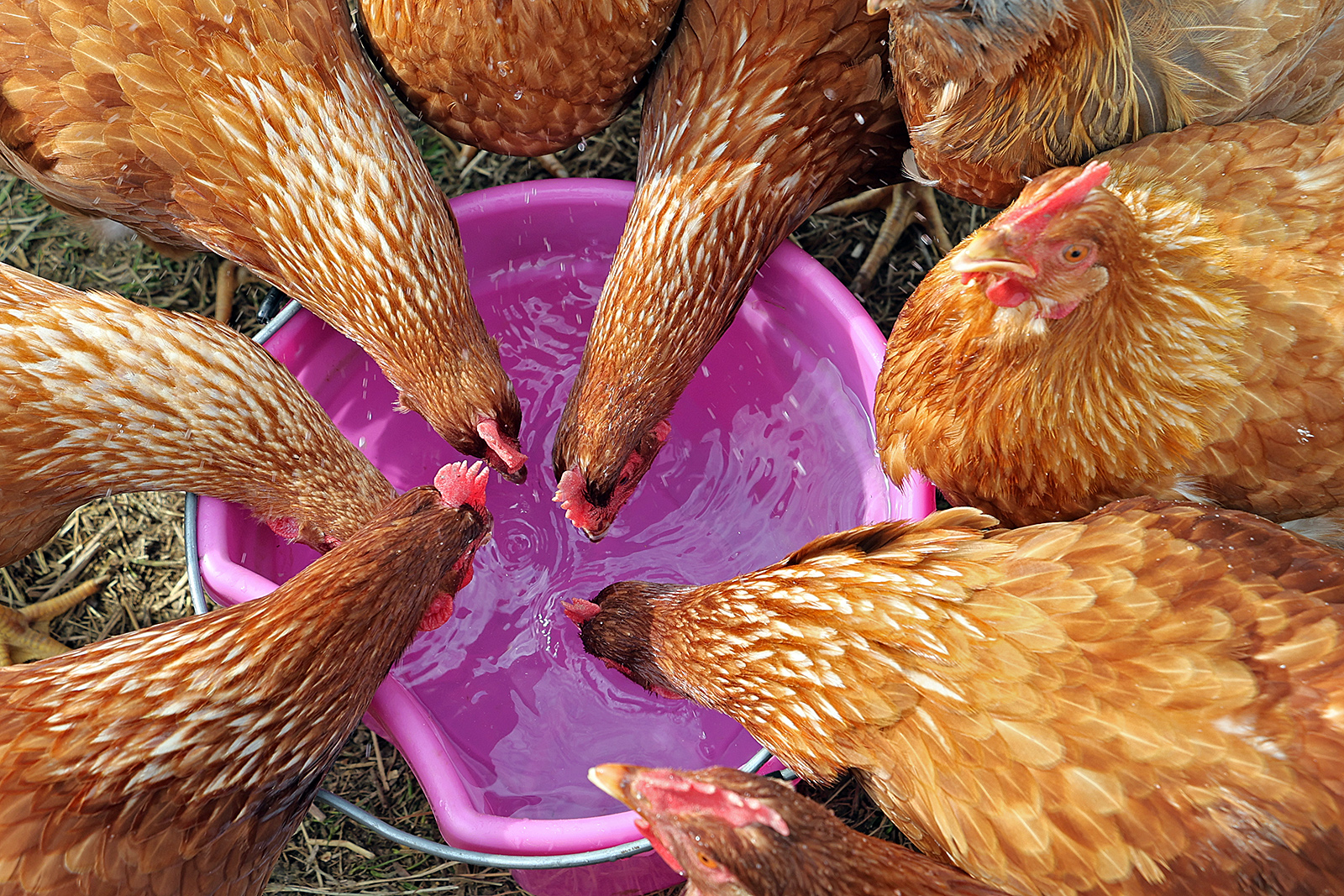
Farmers are three and half times more likely to commit suicide than the general population, according to a new study by the National Rural Health Assocation. It’s a fact of farming life Aaron and Tara raised in our interview.
“Health and wellness are very overlooked in the farming community,” Aaron says. “Farmers put their heads down and work through it. That’s the mentality.”
Add to that mentality the uncertainties of life–drought, disease, market prices, and consumer patterns–and it’s enough to make anyone a little mad.
“Everybody should be doing more of the keeping health things like watching your diet, getting enough sleep, etc,” Tara adds. “But farmers take it to a new level. They work daylight to dusk every week, every year, no rest.”
It’s one reason the Helmicks treat the farm like a business. They say that doing that helps provide a better sense of balance and health on the farm. One thing they’ve begun doing is taking a family vacation each year. It may seem like something normal for an American family to do, but it’s rare for farming families.
“Vacation costs us differently than it does most people,” says Aaron. “We have to pay someone to be here and inevitably something goes wrong. We budget $3,000 for things to go wrong on vacation. In our 15 years, that budget has been realistic.”
Tara grew up taking a family beach vacation each year. It was an opportunity Aaron never had, as his family couldn’t afford the leave paying work behind.
“I had never been on vacation until I met her,” Aaron confesses.
“You had never been to the ocean,” Tara responds.
“I had definitely never been to the ocean,” he concedes with a smile.
The Helmicks talk a lot about “practices and principles.” It’s a concept they use to ensure they are aligning their vision with their reality on a daily basis.
“The answer is always in the team,” Aaron proclaims. “A lot of people have helped us along the way, and we want to help others as much as we can.”
Death of the family farm, or a rebirth?
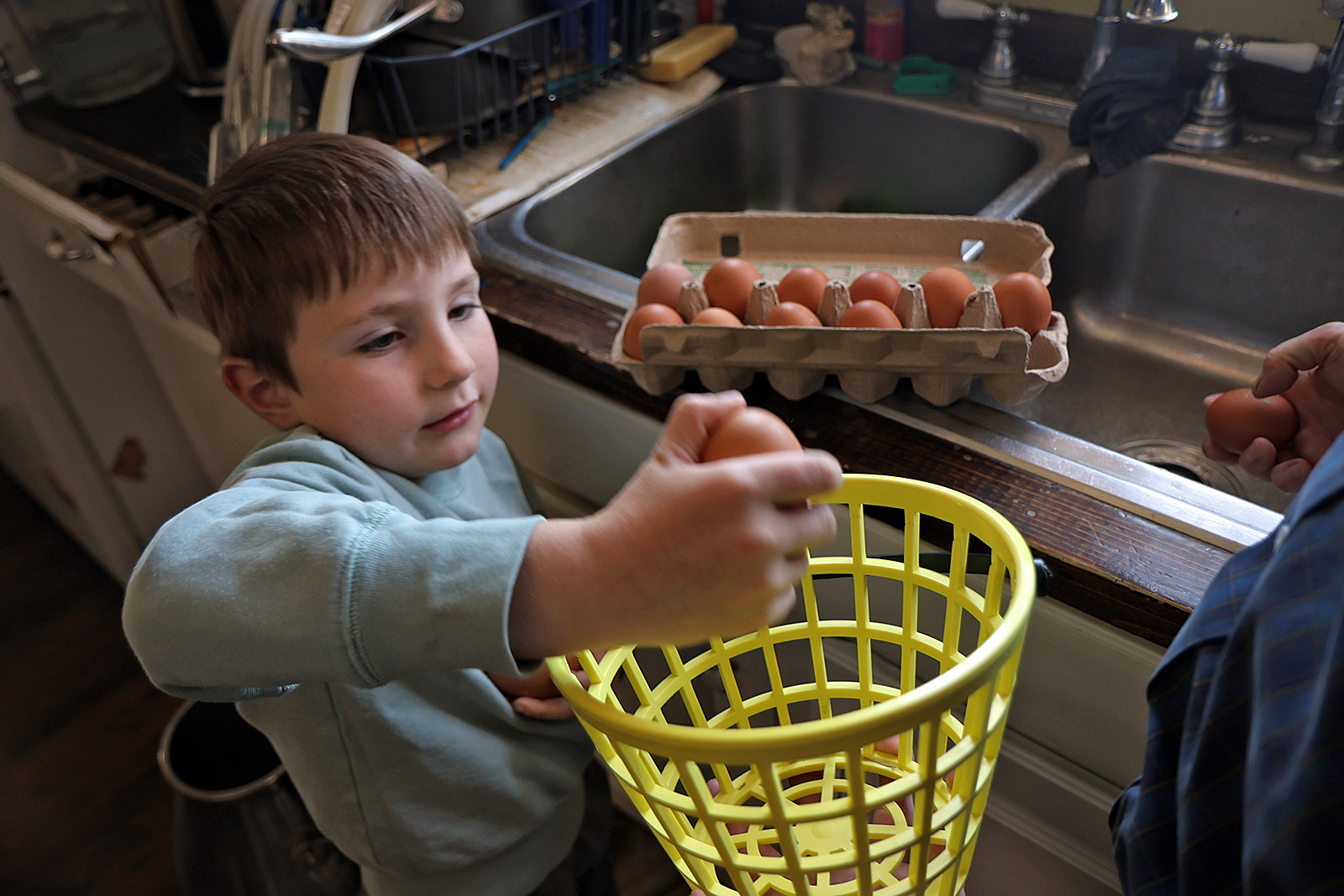
Farm livin’ ain’t for the faint of heart. The Helmicks run their washer & dryer three times a day. It takes hard work to build the business and lifestyle to which they’ve committed. And from my perspective on the outside, they’ve built something beautiful. Something adventurous. Something fulfilling. Something very American.
We talk about Wendell Berry. I’m surprised they read him; they’re surprised I do. Is the “peace of wild things” something that is on the comeback trail in our country?
I’m not sure, and neither are the Helmicks. “I don’t know if family farms will become more prevalent or not,” Aaron confides.
“We have limits to what we can do,” Tara says.
“Most pieces of food in the United States travel 1,700 miles,” Aaron adds. “Andrew’s friend brought him a fast food burger the other day. He took one bite and said he said he couldn’t eat any more of that. We joke we’ve created food snobs.”
In a time of conglomerates and chains, most folks probably think the death of the family farm is nearer now than in the past. I’m not so sure.
The Helmicks, and farming families just like them, are running profitable businesses all across the state and country, nurturing a connection with the land and their animals who graze it each day.
As Berry writes in Jayber Crow,
“You have been given questions to which you cannot be given answers.
You will have to live them out – perhaps a little at a time.’
And how long is that going to take?’
I don’t know. As long as you live, perhaps.’
That could be a long time.’
I will tell you a further mystery,’ he said. ‘It may take longer.’”
This is part one of three in a series of stories about family farms across West Virginia, funded in part by the WV Humanities Council.