Photographer Rick Barbero retires after 45 years with The Register-Herald
By Michelle James, for RealWV
Rick Barbero swears he pushed the button for the third floor.
“I know I did,” he said with a laugh. “I’d been getting off on the same floor for two years, but for some reason that day the elevator opened, and it was the second floor.”
It was August 1980 and Barbero was two weeks away from graduating from the Art Institute of Pittsburgh.
The plan was to take his photography degree and look for a newspaper job in his hometown of East Rochester, N.Y.
“I was all packed up and ready to go,” he said. “Then that elevator stopped on the second floor.”
He was in the hallway before he realized he was in the wrong place. But right before he turned to leave, something caught his eye.
“There was a sign on the wall that said, ‘Photographer position open at Beckley Newspaper,’” he recalled. “I was like, ‘Woah!’ and I picked up the phone to call.”
Barbero had never been to West Virginia, and had no idea where Beckley was before he traveled down the next week to speak to former Beckley Newspapers Executive Editor Keith Walters.
When he started as a staff photographer the following week – two days after graduation – his only real plan was to leave the Mountain State.
“My father was disappointed that I wasn’t coming back home after graduation,” he said. “I remember saying, ‘Dad, how about I just go there for a year or two and then come back home?’ I told him, ‘It will be like another year or two of school, but this time I’ll be getting paid.’”
That was the plan, anyway.
“Boy, was I wrong!” Barbero continued with a laugh. “If someone had told me back then that I’d be here retiring 45 years later, I would have told them they were crazy.
“I guess this is just where I was meant to be.”
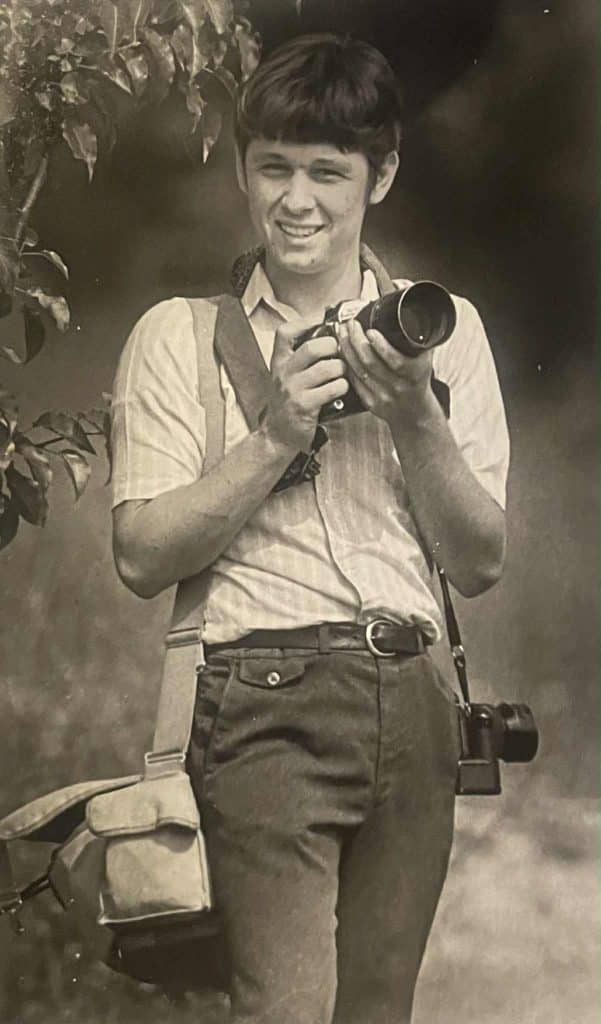
Barbero can’t remember the first photo he took, but he does remember the day he fell in love with photography.
“My cousin Mark had a darkroom in his basement, and he took me down to see it,” he recalled. “I said, ‘Oh, wow. This is really cool.’”
He was familiar with the concept of a darkroom but had never seen one in person. When Mark turned the light off and began processing a photo, Barbero said his life changed.
“He’s got this white piece of paper and he sticks it in this chemical and starts swishing it around and here comes this image,” he said. “I was just watching as he moved it from one tray to the next and you could just see this image form. To me, it was magical and something inside me just sparked.
“From that moment, it kicked in and I remember saying, “This is what I want to do,”
Barbero was a freshman in high school when his dad bought him a kit that he used to create a makeshift darkroom in the family’s only bathroom.
“I tried to do it when no one was around,” he said with a laugh. “But it was the best place for it. There weren’t any windows, and I put towels under the door so no light would leak in.”
He wasn’t really concerned about taking good photos at that point. He just enjoyed the process.
The next year, as his interest in photography deepened, his best friend’s father constructed a darkroom in the basement of their families’ shared duplex.
By the time his junior year rolled around, he decided it was time to learn from a professional.
“I had gotten beyond that initial excitement, and decided I wanted to get more serious about learning how to take good photos,” he said. “That’s when I learned how to compose and frame and properly expose a photo.”
Barbero knew some form of photography was his future, but it wasn’t until he started at the Art Institute of Pittsburgh that he discovered photojournalism.
“I started taking photos all over town at baseball and football games and other special events,” he recalled. “But I knew for sure I wanted to work at a newspaper when I took a photo of a house explosion.”
Barbero snapped what he believed could be the best photo of his young career.
“I got back to my house, processed the image and sure enough, I had this awesome picture of the house fully engulfed in flames,” he said. “I was so excited that I decided to take it to The Pittsburgh Press to see if they could use it.”
The next morning, he said he ran a half mile to the closest newsstand in hopes of seeing his photo in print.
“And there it was on the front, all the way across the top of the page,” he said, still in awe more than 45 years later. “And it was like, ‘I did that. I took that photo. I created that and now everybody in Pittsburgh is going to see my photo with my name on it.’”
Though Barbero had only known Beckley existed for two weeks prior to his move, he said there was no doubt he had done the right thing.
“I was miserable that first day though,” he said with a laugh. “It was the loneliest day of my life.”
His parents drove from Pittsburgh to Beckley with him the day he graduated. When they went home the next morning, Barbero decided to explore his new town.
“I didn’t know anyone, so I went downtown,’” he recalled. “I parked my car and walked from Neville Street to Main Street, looked around and said, ‘Where’s the rest of it?’
“I was 20 years old and had always lived in a big city,” he continued. “It was an adjustment.”
The next day, his first on the job, wasn’t quite as lonely.
“I shot 12 assignments,” he said. “I can’t remember all of them, but I remember shooting a dog show at 5 p.m. at New River Park and I know I ended my day at a band festival at what was then Park Junior High.
“It was a long day, but I remember Keith Walters telling me I had done a great job, so it was a good day.”
Barbero said he looks back on most days on the job as “good days.” And sometimes, he said, there were days when he was convinced he might not make it out alive.
He hadn’t been on the job long when he was sent to the UMWA Headquarters in Beckley to get pictures of striking miners.
“I hadn’t been around a strike before, so I had no idea how intense that was,” he said. “So, I get out of my car at the headquarters, and I’m taking a few pictures when a guy comes over and tells me to get my camera out of there right now.”
Determined to get a shot, he moved across the street and out of harm’s way.
“But the guy saw me and yelled, ‘Buddy, if you don’t want that camera to be part of your face, you better get your ass out of here,” he recalled. “There were miners with baseball bats in their hands and balls and chains, so I wasn’t going to argue.”
Ultimately, however, he decided he was more afraid of returning without a photo than of what the miners might do to him, so he found a nearby hill with a clear view of the scene.
Back at the paper, the 20-year-old who had just recently celebrated seeing his photo credit in print, begged his editor to leave his name out of the newspaper.
“But he ran it,” Barbero said with a laugh. “And later that night, he called me and said I needed to go back out to the scene because the guards were taking pot shots at the miners.”
That time, he said, the men welcomed him into the fold.
“They wanted me to show what was going on then,” he said. “And I got some really good images that night.”
Barbero’s plan to leave West Virginia after a year or two shifted quickly, as he met his former wife just three months after his arrival and married the next summer.
In 1983, just as he was named chief photographer, the couple welcomed their daughter Shannon. Their son Brandon was born in 1986.
“By then I knew I really wasn’t going to leave Beckley,” he said.
He did, however, come quite close to leaving the newspaper when members of his former church began criticizing some of the places and events he was required to photograph.
“And it got to the point that it was weighing very heavily on me,” he said. “I just wanted to do right by God, and I was worried that I wasn’t.”
His struggle, he said, became so intense that he was ready to take a job driving a potato chip truck.
“It was offered to me, and I was two weeks away from taking it,” he said. “But then I was at church one Sunday and one of the church members came over, put his hand on my head and prayed for me. After church was over, he came over and said, “’Rick, I don’t know what it is, but the Spirit told me to tell you not to go.’
“I was ready to give everything up, but when he told me that, I really felt this sense of relief like, ‘OK. This is going to be all right.”
Barbero said he hasn’t questioned his career choice since that day.
“I absolutely know I made the right decision,” he said, reflecting on his career, during which, among other honors, he received 37 1st place awards from the West Virginia Press Association and was named West Virginia AP Photographer of the Year. He also was named CNHI Photographer of the Year twice and received the same honor for best videographer three times.
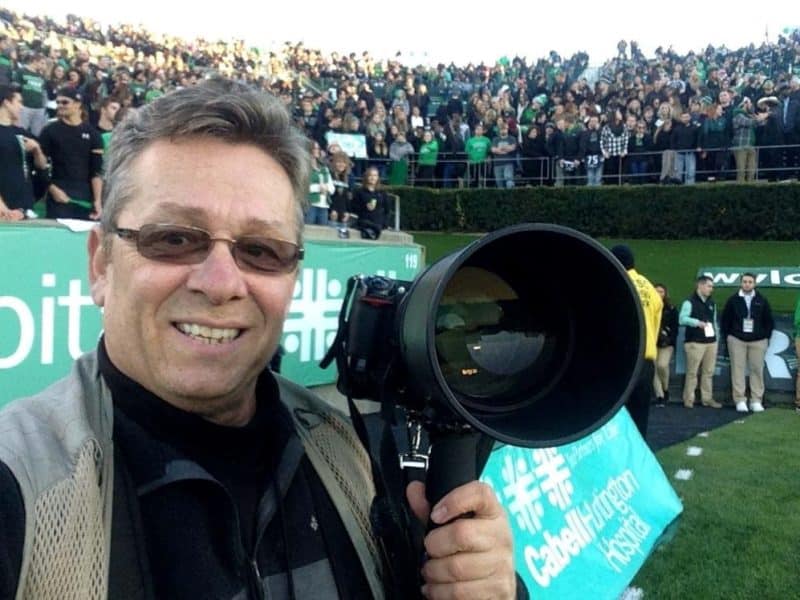
“I’ve photographed seven U.S. Presidents, multiple celebrities and professional athletes,” he said. “I’ve gone to the top of the Green Bank Telescope, crawled through caves and gone underground in the mines and walked the catwalk under the (New River) Gorge Bridge.”
He’s taken photos of people at their happiest – celebrating birthdays and milestones – and people at their worst.
“I’ll never forget UBB,” he said of the 2010 Upper Big Branch Mine explosion that claimed the lives of 29 men. “You don’t forget things like that. That sadness. I felt those families’ grief from the top of my head to the bottom of my feet, and I cried with them.”
He said he’s always tried his best to treat each person and each event he covers as though they’re the most important things he’ll ever photograph.
“It’s important to the people we cover and so it should be important to us,” he said.
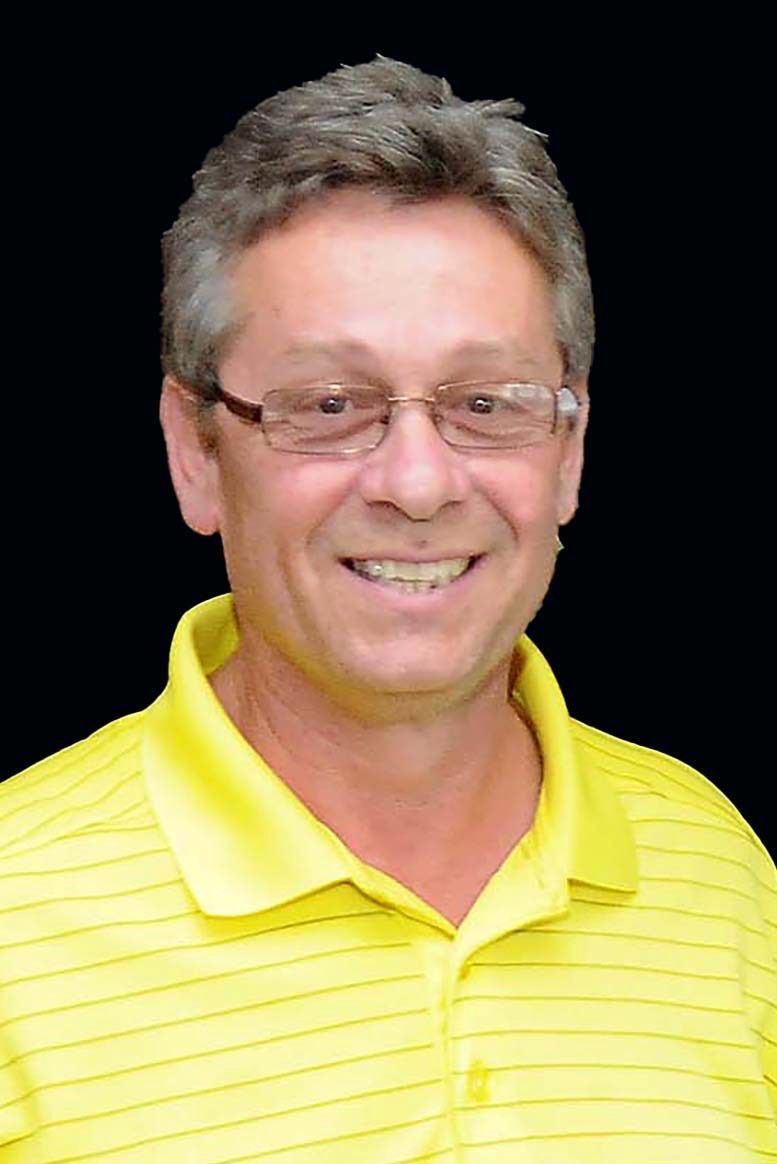
Barbero still loves photography. He still loves venturing out in the community and telling stories with his camera.
But at 65, he said he’s ready for other things, too.
“I have three grandchildren, Kaleb, who they call Chev, is 15, Gemma is 12, and Lucca is 2,” he said. “They’re my life. I just want to be able to spend more time with them, play golf, camp, fish and travel.
“It’s just time.”
He’s stepping away from newspaper, but not from photography.
“I don’t think I’ll ever do that,” he said. “I’ll always have a camera with me.”
He said he sometimes thinks back to the circumstances that led him to where he is today – to that day on the elevator and that Sunday in church.
“I don’t know what would have happened if that elevator hadn’t stopped on the second floor,” he said. “Or if that man hadn’t prayed for me that day. I could be retiring from driving a potato chip truck.
“All these little things that led me here,” he said. “I really think God had a plan for me.
“It’s almost like I was destined to be here.”