OPINION: The cost of your healthcare
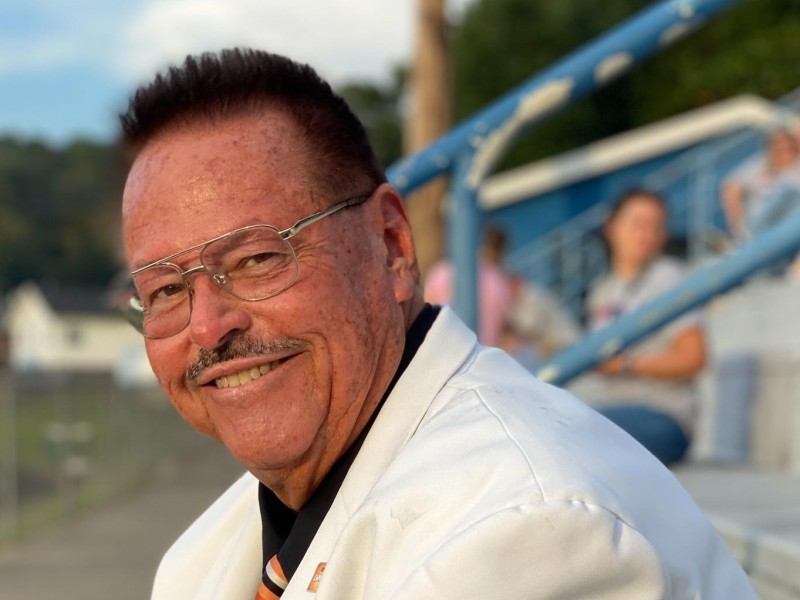
By CEO Jim Nelson, Monroe Health Center
On January 1, 2030, all members of the Baby Boomer generation will be over the age of 65. This generation has worked as hard as any I’ve encountered in my lifetime. Many of the boomers I know continue to work well beyond their “traditional” retirement age, and I believe we often overlook how important that is for our society.
However, the law of averages and the circle of life reveal an inevitable truth: we are poised to lose a valuable “workhorse” generation soon. As the demand for healthcare services rises with age, this demographic shift is already placing significant strain on the healthcare system. To add to the burden, many boomers are also raising their grandchildren—often because younger generations are facing their own struggles. A large share of these struggles are rooted in healthcare needs, particularly substance use disorder. These are often accompanied by neurological, infectious disease, cardiovascular, gastrointestinal, and overdose-related conditions, to name a few. The sad reality is that specialty care for these issues remains largely inaccessible, especially in rural communities. This brings me to a difficult but necessary question:
Where did we go wrong?
Having spent more than 20 years in healthcare, I can remember a time when vital signs were the cornerstone of clinical care: pulse, respirations, blood pressure, and temperature. That began to change in the mid to late 1990s, when the concept of a “fifth vital sign” — pain — gained national traction. In November 1995, Dr. James Campbell delivered his presidential address to the American Pain Society, famously saying that “if pain were treated with the same priority as other vital signs, it would have a much better chance of being treated properly.”
In October 2000, the Department of Veterans Affairs published the Pain as the 5th Vital Sign Toolkit. That initiative drew on Campbell’s remarks and broader concerns about the under-treatment of pain, and it led to nationwide implementation of pain assessments during routine clinical encounters in VA facilities — and the rest of healthcare followed. While the intent was to improve patient care, experts now widely agree that this shift also contributed to a new prescribing culture—one that, along with other factors, helped fuel the opioid crisis. The government often celebrates the crackdown on “pill mills” today, but it rarely acknowledges that earlier federal policy shifts unintentionally helped create the conditions for their rise.
Around the same time, another major healthcare change was taking place. In 1992, President George H. W. Bush signed into law the 340B Drug Pricing Program as part of the Public Health Service Act and simultaneously the Veterans Health Care Act. The law explicitly stated that its purpose was “to enable covered entities to stretch scarce Federal resources as far as possible, reaching more eligible patients and providing more comprehensive services.” This gave safety-net providers, including Federally Qualified Health Centers, access to discounted drug pricing—allowing them to stretch their budgets, serve more patients, pass savings on to patients, and expand services. At the same time, veterans gained similar access through the Federal Ceiling Price formula. Additional expansions came in 2003, when Children’s and Cancer Hospitals were added, and it expanded to other healthcare providers again in 2010 with a major expansion under the Affordable Care Act.
To appreciate how far we’ve come, consider Dr. J. W. Stokes of Hinton. From 1930 to 1977, Dr. Stokes made house calls because many rural residents couldn’t access an office visit. He was so important to the town of Hinton that they named Stokes Drive in his honor. Programs like 340B have allowed rural healthcare to survive—and in many cases, thrive—funding clinics that once would have struggled to keep their doors open.
But now we are at an impasse. We need to get drug pricing under control. Yet, the 340B program and the patients it serves are caught in the crossfire. If 340B is dismantled under the banner of lowering drug costs—even though the program already provides 20–50 percent discounts—what will replace that critical funding?
For me, the question isn’t just about whether health centers can stay resilient. It’s about who stands to gain and lose if those funds disappear. I fear the answer isn’t one in which the patient gains anything. We do not need to eliminate 340B to lower drug costs. 340B already accomplishes that goal to some degree. I believe we can address pricing reform without dismantling a program designed to stretch resources and reach those who need care most. If we do choose to allow the 340B program to be dismantled, then how does healthcare replace that funding mechanism that has been in place since the 1990s?
I offer this opinion for your consideration—not to push a political agenda, but to sound an alarm. When I read articles about prescription drug pricing and watch attacks on the 340B program unfold, I worry we’re being led down the wrong path. No alternative solutions are being proposed, and without one, we risk destabilizing care for millions of rural Americans.
This is not just a policy issue. It’s a human one. An entire generation is aging into a fragile system, and we are poised to weaken the very safety net that was built to support them. I politely ask that you recognize and familiarize yourself with the difference between truly lowering prescription drug costs and simply shifting where the money goes. Eliminating a program that already provides significant discounts is not a solution—it’s a step backward. For communities like ours, rural and resource-limited, 340B is not just important. It’s essential.
*According to visualcapitalist.com, the pharmaceutical industry pumped $383 million dollars into lobbying efforts. The largest lobbying group by over $139 million.