‘Hail Mary’ – When a coal miner was trapped underground, a group of volunteer cave divers were called to the search
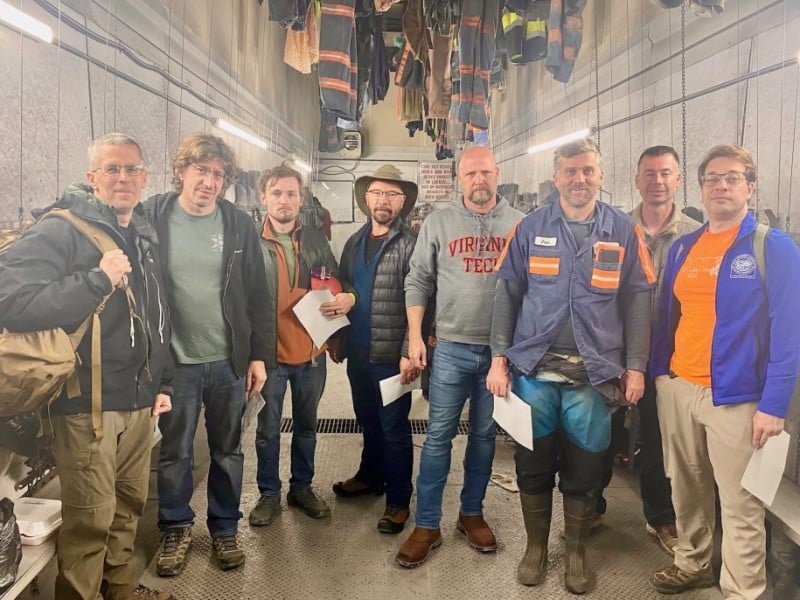
By Stephen Baldwin, RealWV
A preliminary report from the Mine Health and Safety Administration says that section foreman Steve Lipscomb died minutes after the coal mine in which he was working was suddenly inundated with flood waters on Saturday, November 6.
Lipscomb was awarded a Purple Heart while serving in Iraq after 9/11 and worked for Alpha Natural Resources as a coal miner since returning home in 2006. He has been lauded by his co-workers as a hero for placing the lives of his fellow miners above his own in getting them to safety when the mine flooded last month.
At the time of the accident, Lipscomb’s condition was unknown. Mine leaders worked with government officials to develop a multi-pronged rescue effort in hopes of saving Lipscomb’s life. In addition to pumping water from the mine as quickly as possible and calling in a capsule rescue team, they also threw a “Hail Mary” by calling a group of volunteer cave divers to join the search and rescue operation.
This is their story.
The Call Comes In
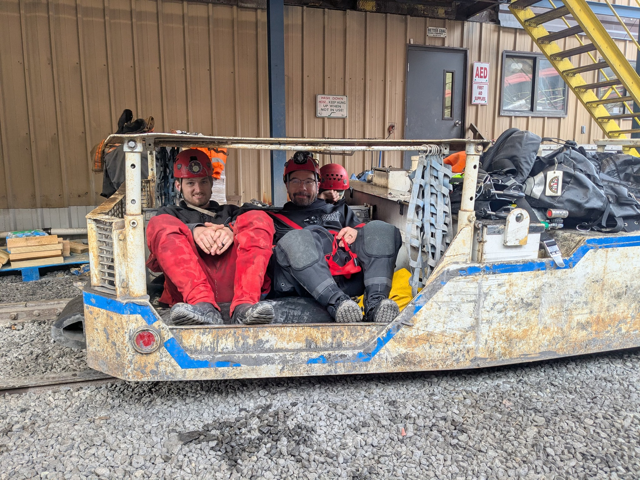
On Saturday, November 6, the National Speleological Society (NSS) was hosting an annual training session in Tennessee. Volunteer cave divers from states including Alabama, Minnesota, and West Virginia were on hand to hone their technical skills.
The NSS began offering these training sessions as a safety precaution, after a youth soccer team was trapped in a cave in Thailand for 18 days before being rescued by divers.
“A couple people in the organization said if that ever happens around here, we want to have a network and have the right skills and qualifications to help,” recalls Tucker Palmatier, a resident of White Sulphur Springs, WV, and member of the group. “Everyone involved is a very experienced cave diver. We practice moving patients, going in and out of water, things that would come about in a sump rescue. In-cave diving is a very high-risk activity.”
(A sump rescue occurs when divers must enter a flooded cave and traverse underwater in search of dry cave passages where survivors may be sheltering.)
During their training that Saturday, Tucker and the group discussed their perception that while the likelihood of ever being called upon was low, they wanted to be ready.
After eating dinner together at a local Mexican restaurant that evening, the call came: A coal miner was thought to be trapped underground in a flooded West Virginia mine, and they wanted a team of divers to perform a sump rescue.
(The call came from the National Cave Rescue Commission, NCRC, a subgroup of the NSS which operates as a call-list for emergency situations.)
“The stars aligned on this one,” Tucker says. “We got the call while training for that very situation.”
Within four hours, two teams arrived on scene. By 3AM, the first team of three divers suited up and entered the mine in hopes of finding Steve Lipscomb, the section foreman.
The Dive
Jon Lillestolen is a software engineer from Virginia who also belongs to the NSS. He had been unable to join the training session in Tennessee and was grocery shopping at home on Saturday night when he got the call. He immediately went home, packed his gear, and met the team in Nicholas County, WV.
“The MSHA (Mine Safety & Health Administration) guys told me on scene they had spent a lot of time looking at old mine rescue incidents in order to better handle new ones,” Jon recalls. “They had discussed over the years if a team of divers could have helped with the Quecreek mine rescue in Pennsylvania.”
This would be the test, and there was no time to waste. It had been twelve hours since the mine flooded, and the divers wanted to be safe but also time wasn’t on their side. They put together a plan with which they were all comfortable, and began executing it.
Tucker, Jon, and Christopher Howell would enter first as Team 1. They were all volunteers, carrying their own personal equipment working side-by-side with the mine and government officials.
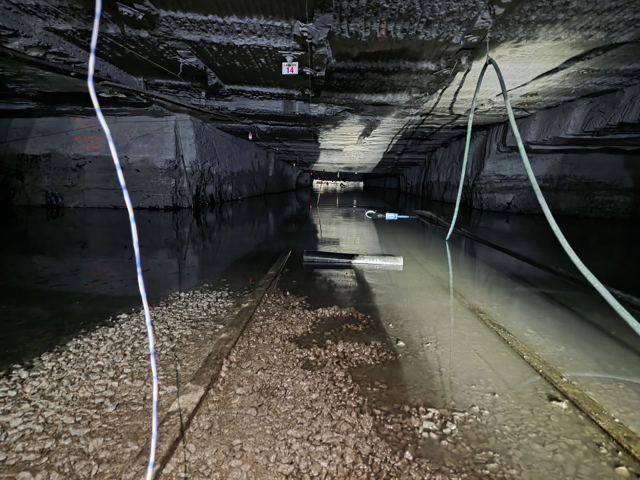
“When we got in the water, there was zero visibility with the coal slurry (coal dust mixed in with the water),” Tucker explains. “You couldn’t see in front of your face.”
That wasn’t necessarily new for the team, though, as they were used to diving in caves by following rope lines. They followed the same principles and explored the flooded mine, channel by channel.
Along the way, they traversed two sumps in order to access areas where they believed, based on maps, that a person might have been able to access above water.
“We were half-expecting to pop our heads out (of the water) and he was sitting there waiting for us,” Tucker says. “It was gonna be a big hug moment, happy tears all over the place. But when we popped our heads out and he wasn’t there, we knew there was something more to it.”
Tucker and Jon spent more than eight hours over a mile inside the mine. “It was a stair step of emotions as we came to one dead end after another,” says Tucker.
When they finished that first dive, they were surprised to find out it was 11AM on Sunday, now almost 24 hours since the initial flood event. Team 2 was composed of other divers then entered the mine and explored further, but their search also came up empty.
‘Hail Mary’
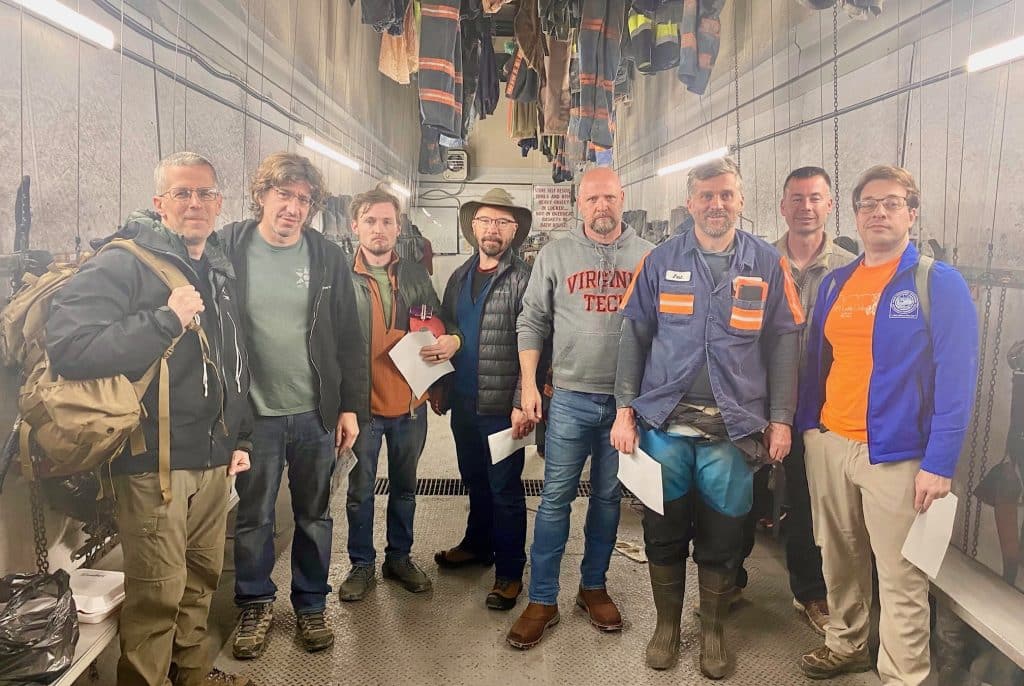
While Tucker, Jon, and the other divers were disheartened, they knew they were only one phase of the rescue efforts. An unconventional one at that.
“There were multiple parallel activities going on,” Tucker says. “We got in there faster than anyone else to try and answer some questions. Was there a survivable space with breathable air inside? What did it look like? Was he alive? There were some of the many questions with unknowns.”
“The companies and MSHA do their own rescues,” Jon explains. “We were an alternative plan. It was unprecedented. Nobody had called in volunteers like this in the past. How this aligned was a super unique story. Their standard plan was to pump. They saw how long it was gonna take to remove all that water. Somebody called somebody who mentioned us a resource, and we got called in as a Hail Mary plan.”
Both divers were complimentary of the cooperation among officials on the scene, all of whom were working together to find Steve Lipscomb.
“I got there first and was escorted into the mine to scope things out by some of the miners,” Jon says. “Those are some of the nicest, most humble, harvest working people I’ve met. Even in the face of their co-worker being in that situation, I was thoroughly impressed. Everyone had the same goal.”
‘This is what we practice for’
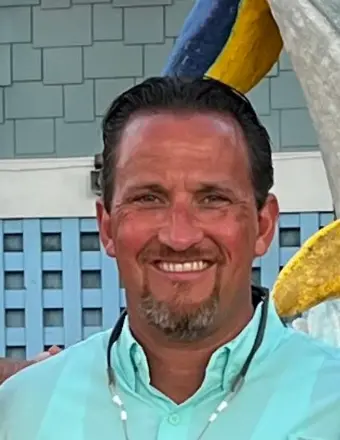
Five days later, Steve Lipscomb’s body was found after enough water had receded to make the retrieval possible. The preliminary report says that he died a few minutes after the flood happened. His family and community gathered fora large funeral the week before Thanksgiving, where Steve was honored as an everyday hero to those who knew him best.
Would Tucker and Jon do it all over again if called upon? Absolutely.
“This is what we practice for,” Tucker says. “We love what we do. We love the technicalities of it and the challenges. It’s a unique set of skills and not many people do it. It was an honor to be asked to assist.”
For more information on the National Cave Rescue Commission or the National Speleological Society, visit their joint website.