Senate Education votes to place Aitken Bibles in school classrooms
By Stephen Baldwin, RealWV
On the “Day of the Bible” in the West Virginia Senate, members of the Education Committee passed SB 388 requiring public schools and charter schools to place Aitken Bibles in social studies classrooms of 4th, 8th, and 10th grade students. Public dollars could not pay for the Bibles; private donations would have to be received for that purpose.
“Would they be displayed? How does that work that they’d be made available?” asked Sen. Mike Azinger, R-Wood.
“I guess it would just be in the classroom,” the committee lawyer responded.
“How were those ages (chosen)? Is there any rhyme or reason?” Azinger asked.
Committee counsel did not respond before Azinger continued, “It doesn’t matter. I love the bill.”
Grady then said, as the sponsor of the bill, that those grade levels were chosen to correspond with teaching standards regarding the American Revolution.
Sen. Craig Hart, R-Mingo, was the only other committee to speak during consideration of the bill. Hart said, “This is a great bill. I’ve very much in favor.”
With no further discussion, Grady called for a vote and the bill passed.
‘Day of the Bible’
Following the early morning Education Committee meeting on Thursday, senators then passed Senate Resolution 10 proclaiming the “Day of the Bible.” It reads, in part:
“Whereas, September 12, 1782, marks a historic milestone in American history when the Congress of the United States, during the American Revolutionary War, officially approved the publication of the first complete English-language Bible printed in America, known as the “Aitken Bible” or “The Bible of the Revolution”; and
Whereas, This monumental event took place in Philadelphia under the direction of a committee of Congress led by James Duane, and with the endorsement of the Congressional chaplains, thereby marking Pennsylvania as a birthplace of both American liberty and spiritual legacy…Resolved by the Senate: That the Senate hereby recognizes the Day of the Bible.”
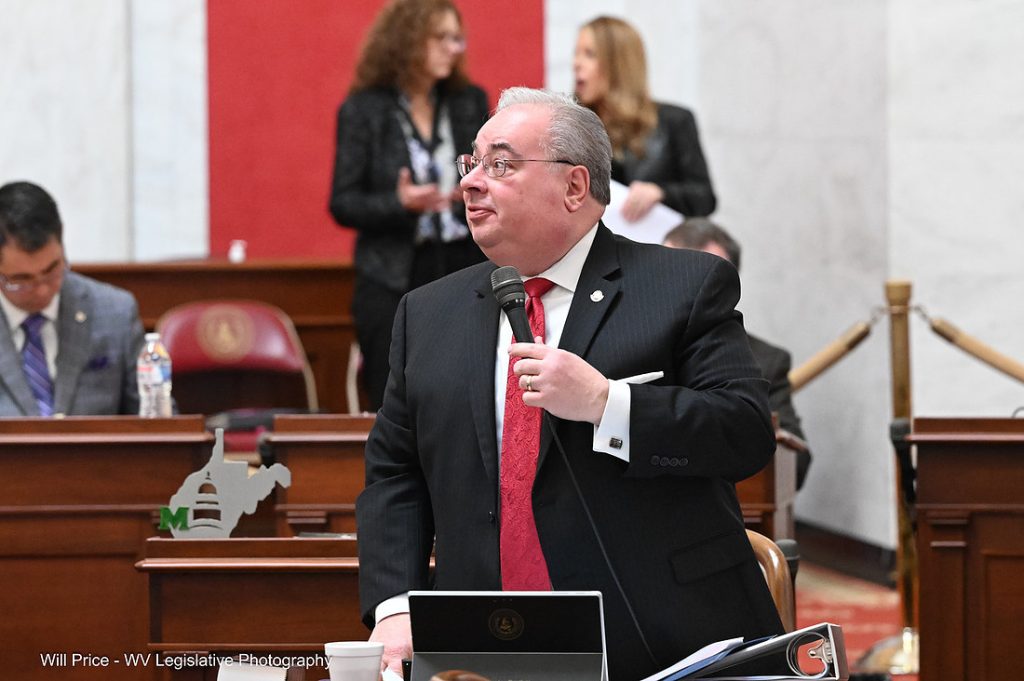
Sen. Kevan Bartlett, R-Kanawha, who is pastor of Maranatha Baptist Church, spoke to the resolution. “Today is a very significant day in the life of the Legislature…There would be no America without the Bible. Our system of government is formed from the pages of the prophets. The principles of brotherly love, self reliance…are found in the pages of the Word of God…The Bible is what God wants us to know.”
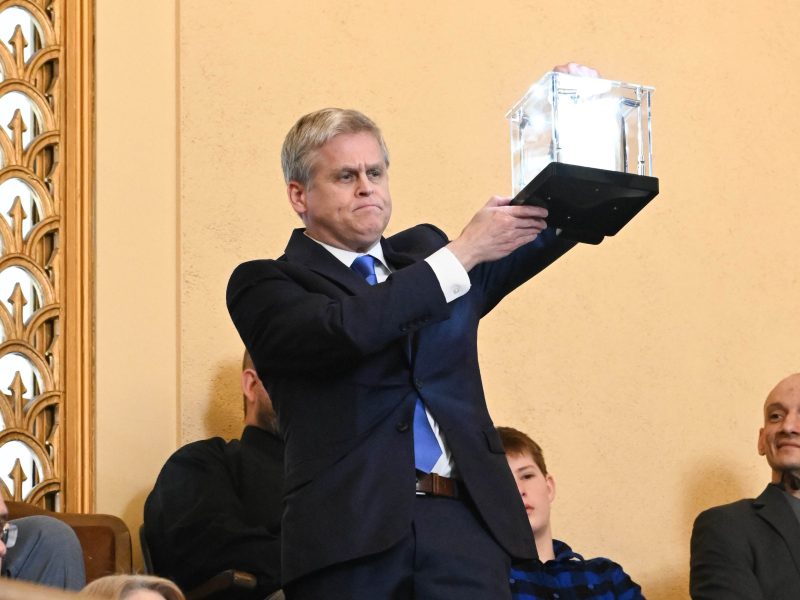
The resolution passed unanimously and Stephen Skelton was recognized by senators as being present in the gallery. Skelton then visited the offices of senators and delegates later in the day, presenting copies of the Aitken Bible which was the subject of SB 388.
What is the Aitken Bible?
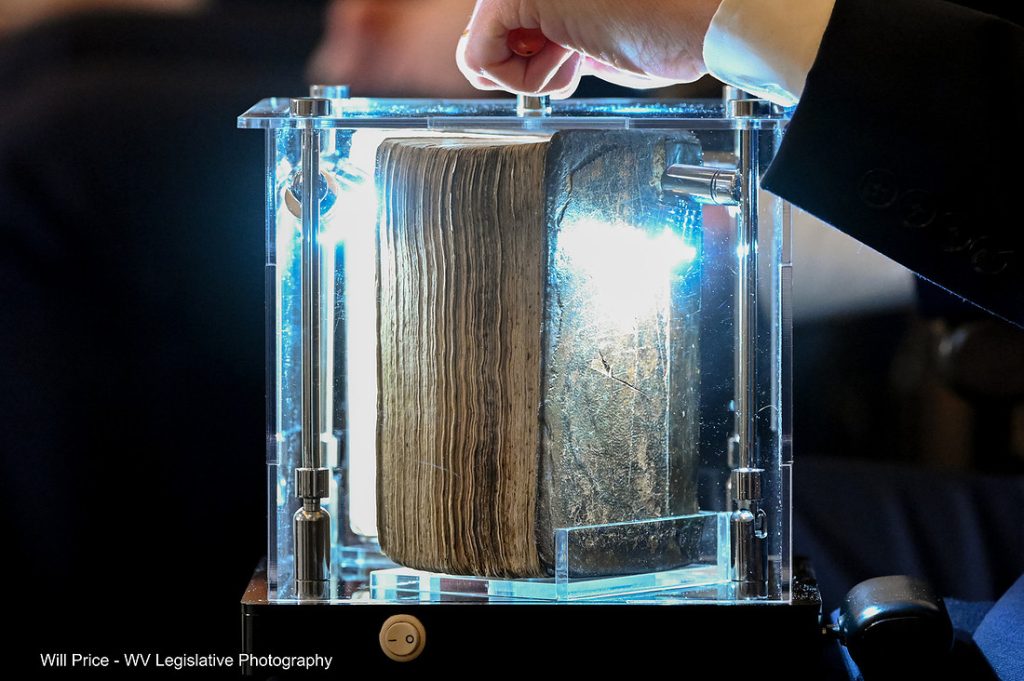
In 1781, Robert Aitken published an edition of the King James Version under his own name and petitioned Congress to make it the nation’s Bible and place it in schools.
More than a year later, Congress replied to Aitken by authorizing him to publish his own version but stopped short of any further endorsement.
A recent fact check by USA Today provides an in-depth historical analysis of the Aitken Bible’s history.
Sen. Mark Maynard, R-Wayne, described it on the Senate floor, saying, “The very first Bible that was ever printed in the United States is here today. A gentleman by the name of Stephen Skelton is bringing it around.”
While it was not the first Bible printed in the United States, it was the first printed in English. Aitken picked up the tab for it, and now a Tennessee-based nonprofit is pushing for it to receive a place of historical significance as well as inclusion in classrooms across the nation.

Stephen Skelton, shown above, is with the First American Bible Project, which is housed under a 501c3 nonprofit named the Aitken Bible Historical Foundation. The officers are Skelton and his family members. They hold over $300,000 in assets as of their 2024 tax filing. Most of their expenses are in personnel, travel, and printing costs. Their donors are unknown.
The mission of the First American Bible Project is to “put the Bible back in school.”
The state of Tennessee voted to make the Aitken Bible the official state book.
Christian nationalism?
Mallory Challis, a student at Wake Forest Divinity School, questions whether bills like SB388 violate the separation of church and state.
“This political use of Scripture co-opts the religious and spiritual practice of Christianity and utilizes them as tools to politically manipulate American Christians into believing they are thinking, supporting and voting as God wants them to,” Challis writes for Baptist News. “This fusion of Christianity with American civic life, which rests on the idea that America always has been and always should be distinctively ‘Christian,’ is a political framework called Christian nationalism.”
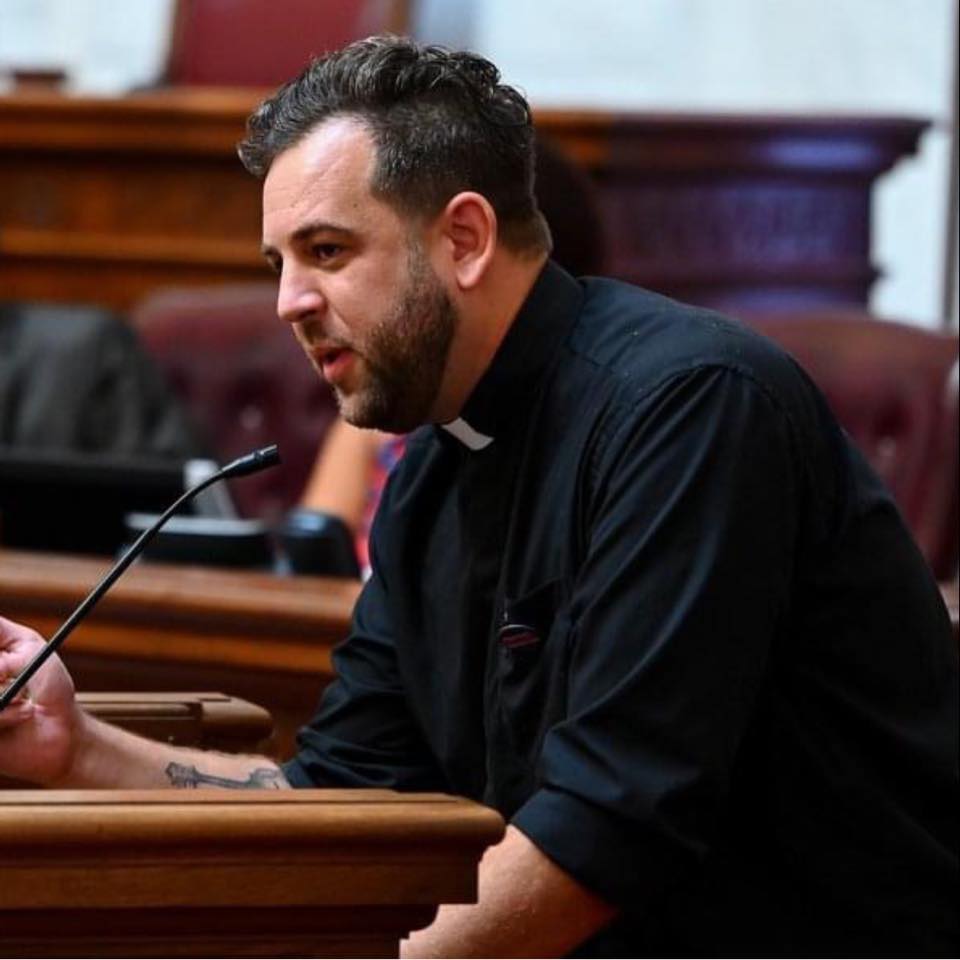
Morgantown’s Zac Morton, an ordained Presbyterian minister shown above, voiced opposition for a different reason in a message to legislators.
“The Bible has no place in schools to be used for personal spiritual purposes. That is the job of our faith communities. I understand how deeply rooted many churches are in their communities, but that doesn’t mean that we can compromise this important distinction.”
In recent years, West Virginia legislators have mandated that “In God We Trust” be placed in classrooms, allowed public schools to offer classes on the Bible, and has considered placing the Ten Commandments in schools as well.
SB388 now moves to the full West Virginia Senate for consideration.