West Virginians advocate for ‘Headache on the Hill’ in Nation’s Capital
PRESS RELEASE:
WASHINGTON, D.C. – On February 10, 300 citizens from across America converged on Capitol Hill in the nation’s capital to advocate for policies and funding to address headache and migraine disorders that impact more than 40 million Americans.
Three West Virginians – Andrea Kraft, Vivian Taylor and Carrie Ham – met with West Virginia Senators Shelley Moore Capito and Jim Justice and Representatives Carol Miller and Riley Moore to share their personal stories and seek support for three bills pending in Congress. They were participants in the Alliance for Headache Disorders Advocacy’s (AHDA) annual Headache on the Hill (HOH).
In West Virginia, the AHDA estimates 266,273 people have migraine disorders; yet, there are only four certified headache specialists in the state to help diagnose and treat it. Migraine alone accounts for over 157 million lost workdays annually in the U.S., leading to $78 billion in lost productivity.
This is the fifth HOH Andrea Kraft has participated in. The Mineral County native who works in Cumberland, Maryland, says she is pleased to join other patients, providers, and researchers for this advocacy fly-in. “Despite being among the most common neurological diseases, migraine and headache disorders remain one of the most underfunded and poorly understood areas of medicine,” said Kraft. “The lack of specialist care, restrictive insurance policies, and the overwhelming economic burden on patients and the healthcare system create serious barriers to treatment.”
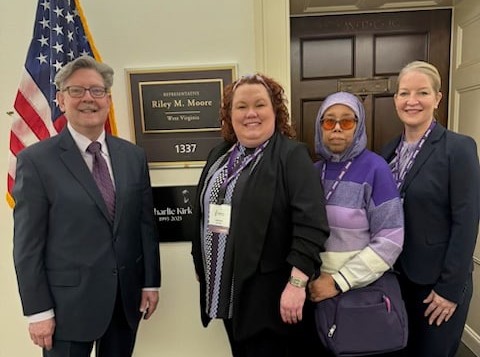
Vivian Taylor of Charleston, a graduate of Marshall University, is a former healthcare worker who is now on disability due to chronic, intractable migraine. This is the first HOH for Taylor.
Taylor indicated one in six adults and one in five women reported migraine or severe headache in the past three months. “Migraine and headache disorders often start in childhood, with 17 percent of U.S. children impacted,” she said. “Migraine and headache disorders can worsen over time without proper treatment. Earlier diagnosis and proper treatment may lead to improved outcomes and reduced disability.”
Catherine “Carrie” Ham, MD, FAHS is Associate Professor of Neurology and Director of the Headache Clinic for Charleston Area Medical Center in Charleston (part of the Vandalia Health System). For 10 years, Ham was Director of the Headache Clinic at Virginia Commonwealth University in Richmond, Va. This is her first HOH but she brings significant provider experience to confirm the need for more federal attention to headache and migraine disorders.
Ham said, “Headache disorders, including migraine and facial pain conditions disproportionately impact rural communities, yet too many go undiagnosed or struggle to access care. We’re trying to change that in West Virginia and other rural areas.”
During meetings with Members of Congress and their staff, the Mountain State advocates urged lawmakers to take action on the following bills:
The Headache Act – Headache Equity and Access for Disabilities in Coverage, Education, and Health Act, the first federal legislation focused exclusively on headache diseases. The bill aims to close long-standing gaps in research, workforce training, public health tracking, and disability protections for this underserved population.
Safe Step Act – a bipartisan bill to ensure patients can safely and efficiently access the best treatment available by improving step therapy protocols and reinforcing the doctor-patient relationship.
Connect For Health Act – legislation that would authorize telehealth consultations permanently and avoid current interim authorizations and thus avoiding disruptions in care.
“Our advocates put an incredible amount of time and heart into preparing for Headache on the Hill, and the West Virginia team exemplifies what this movement is about,” said Julienne Verdi, Executive Director of the AHDA. “They show up not just to share their stories, but to push for solutions that will make a real difference for patients back home. The HEADACHE Act is a critical step toward addressing workforce shortages, research gaps, and access barriers that disproportionately affect states like West Virginia.”
Mike Fulton, a native of Parkersburg, W.Va., who is Director of Public Affairs and Advocacy at Asher Agency in Washington, D.C., is a consultant to AHDA and works closely with his home state’s team to advance headache and migraine policies and funding.
# # #
About AHDA:
The Alliance for Headache Disorders Advocacy (AHDA) is an umbrella organization uniting headache advocates nationwide. Its mission is to improve the lives of the millions of Americans living with headache disorders through advocacy and policy change. Founded in 2008, the AHDA is a 501(c)(6) nonprofit organization. More at https://allianceforheadacheadvocacy.org/. Member organizations include, Alliance for Patient Access, American Academy of Neurology, American Headache Society, American Migraine Foundation, Clusterbusters, Coalition for Headache and Migraine Patients, Chronic Migraine Awareness, Facial Pain Association, Global Healthy Living Foundation, Headache Cooperative of the Pacific, Headache Cooperative of the North East, National Headache Foundation, Miles for Migraine, Southern Headache Society, Spinal CSF Leak Foundation and the US Pain Foundation.
About Headache on the Hill:
Headache on the Hill (HOH) is an annual advocacy event organized by the AHDA. This event brings together healthcare professionals, headache advocates, patients, caregivers, and researchers to push for federal policies that improve awareness, research funding, and access to care for headache disorders. HOH aims to ensure that the voices of those impacted by headache disorders are heard at the highest levels of government.