Locals speak out against $4 billion data center in Berkeley County
By RealWV Staff,
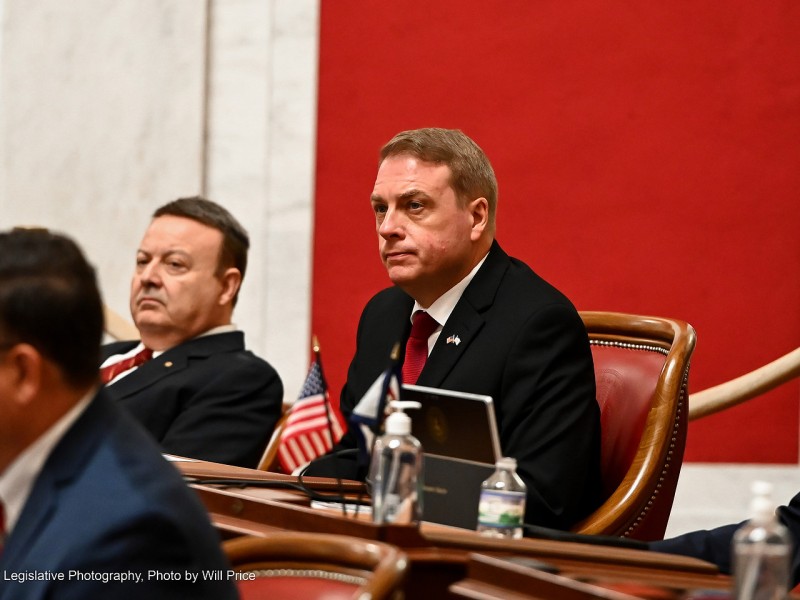
BEDINGTON, WV — On February 26, Gov. Patrick Morrisey announced a new data center for Bedington, a quiet township in Berkeley County, near the Potomac river, estimated to create more than 100 jobs on a 500+ acre campus at a price tag of $4 billion.
Eddie Gochenhour, President of the Berkeley County Commission made the trip to Charleston for the announcement and thanked Morrisey and Penzance. “This is really a fantastic opportunity that we’ve never had before. There are some unanswered questions, but I feel very confident after meeting with your team that you’re gonna be a great partner with us.”
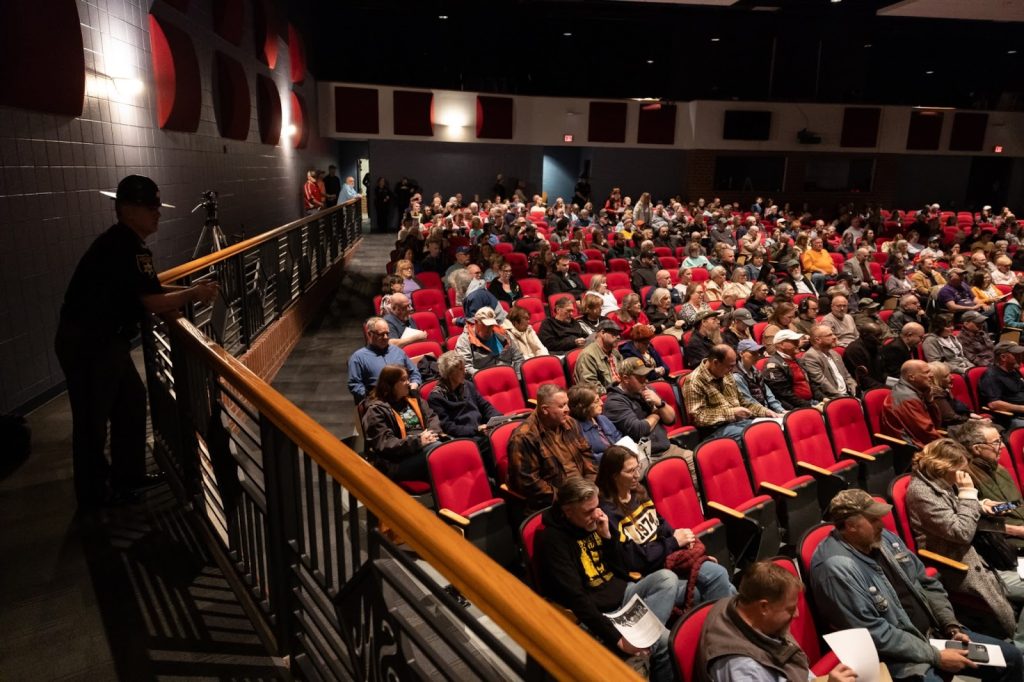
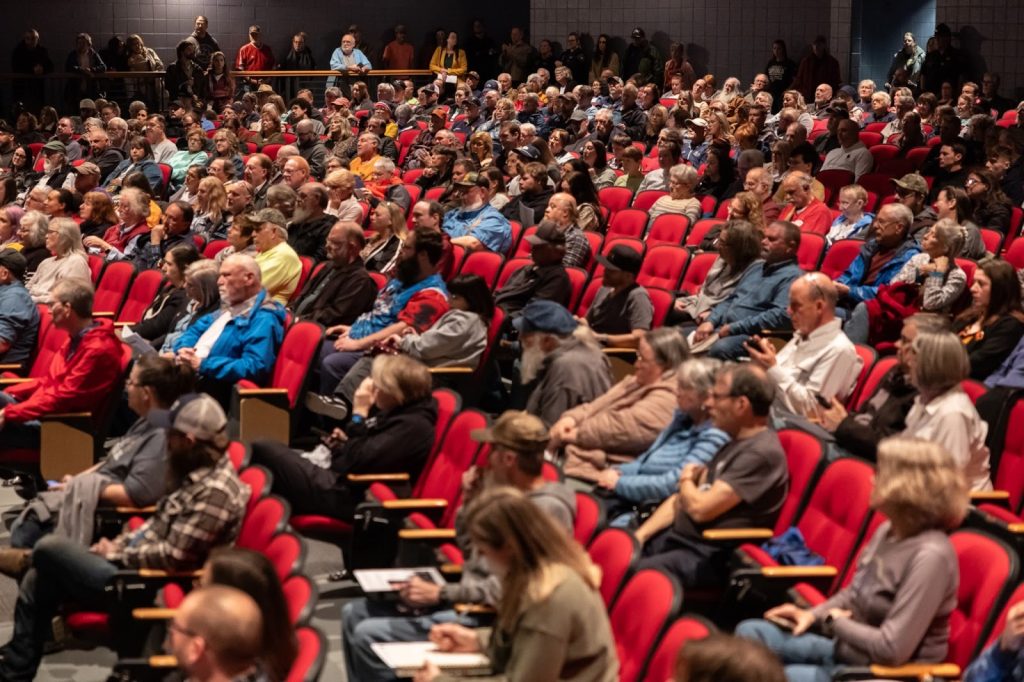
Concerned citizens sit in the Spring Mills High School Auditorium for the Berkeley Co. Commission town hall meeting about the proposed data center to be constructed in the township of Bedington, W.Va. Photo by RealWV.
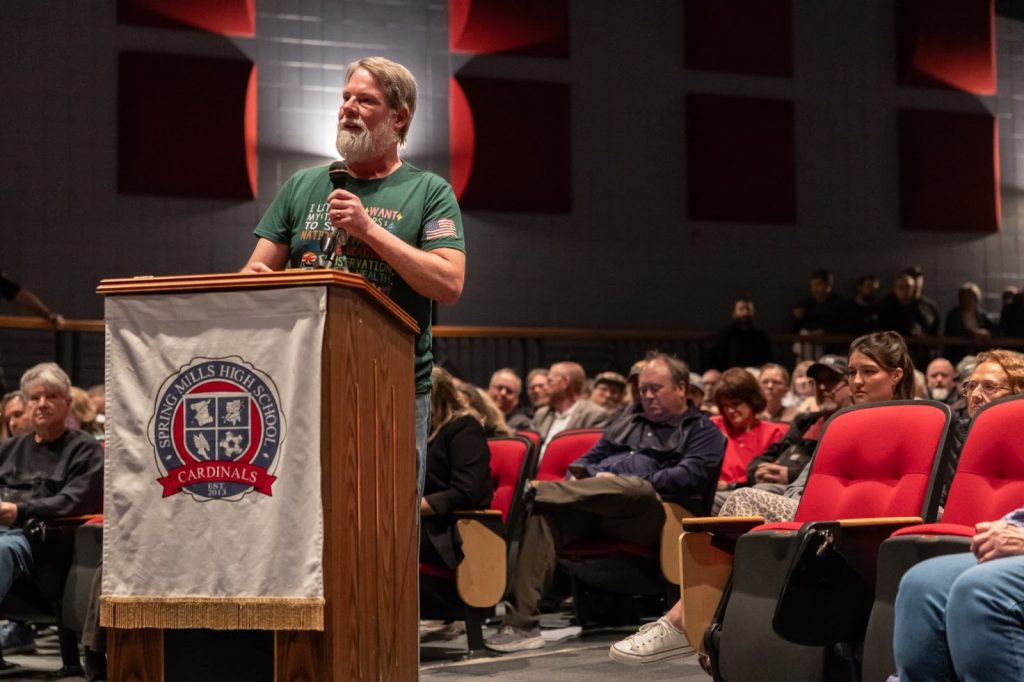
After locals raised questions and concerns, Gochenhour and fellow Commissioner John Hardy hosted a town hall which drew more than 300 people. Frustration, questions, and even talks of Eastern Panhandle secession from the state were heard on Friday, March 20, at Spring Mills High School auditorium. Berkeley County residents and others from the Eastern Panhandle, Virginia, and Maryland packed into the space. The volume of attendees, more than 300 in total, resulted in a majority of the seats being filled and people stood along the auditorium walls to hear what would be said at the Berkeley County Commission town hall.
Legislative action removes local control
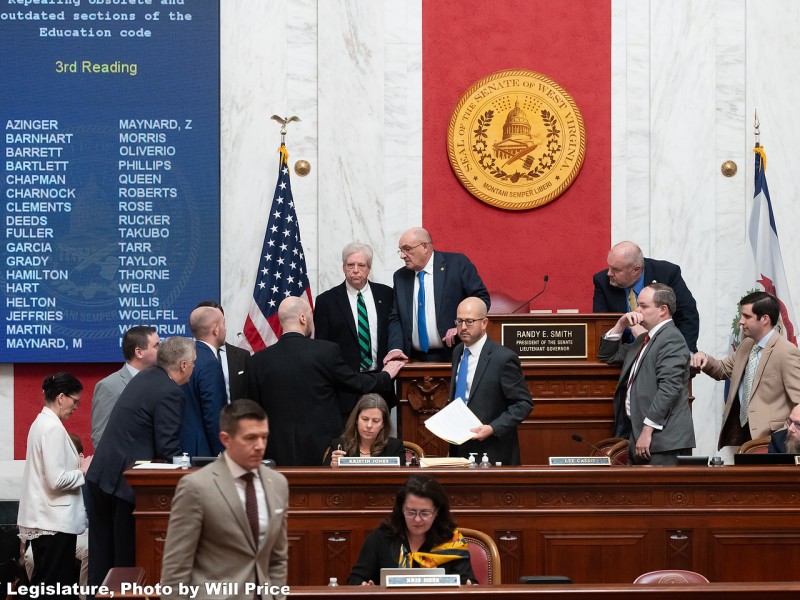
The two commissioners started the town hall by stating their disagreements with HB 2014, which was passed last year and known as the “Power Generation and Consumption Act of 2025”, which led to the data center being proposed for development in Bedington township along Bedington, Berkeley Station and Scrabble Roads. (The bill passed 88-12 in the House. See here for the vote.)
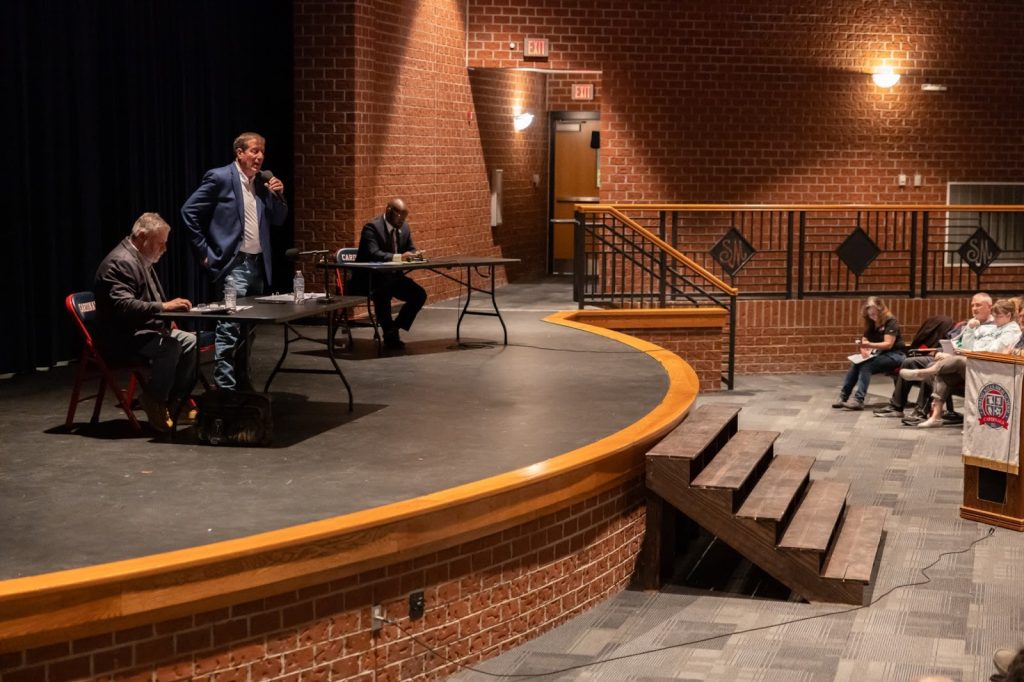
“When we saw it, it was drafted mostly as a micro-grid bill, but then when we flipped the page, it’s all over data centers and the different restrictions, in which local level oversight of those projects would be taken away,” said Commission President Eddie Gochenour. “We went to the subcommittee of economic development, in Charleston and met with delegates and senators and explained to them how this bill would hurt Berkeley County, and every other county in West Virginia, by taking away local control and centralizing it in Charleston.”
HB 2014 removed local control and enforcement of certain regulations for counties and municipalities where data centers can be built. This has permitted data centers that restrict local zoning ordinances and other regulatory processes to establish a certified microgrid program, producing and using their own power outside of pre-existing utilities. The law also creates a specialized tax structure for data centers and microgrids that are placed in designated districts, limiting local governments’ ability to have little say or control over those districts and establishing them at the state level under the law.
“As you all know, Charleston likes to paint the whole state with one brush but every county is different,” said Commissioner Hardy. “There are going to be a lot of questions that you all will ask us tonight that we are not going to have an answer for, so we will be taking those questions and going to the governor’s office and the developer to get answers.”
Citizens who attended the meeting had a 3-minute window to ask their questions to the commissioners, who, if they couldn’t answer, would log the questions and refer them to the developers of Penzance Management or the Governor’s office.
Citizen comments show deep local opposition to data centers
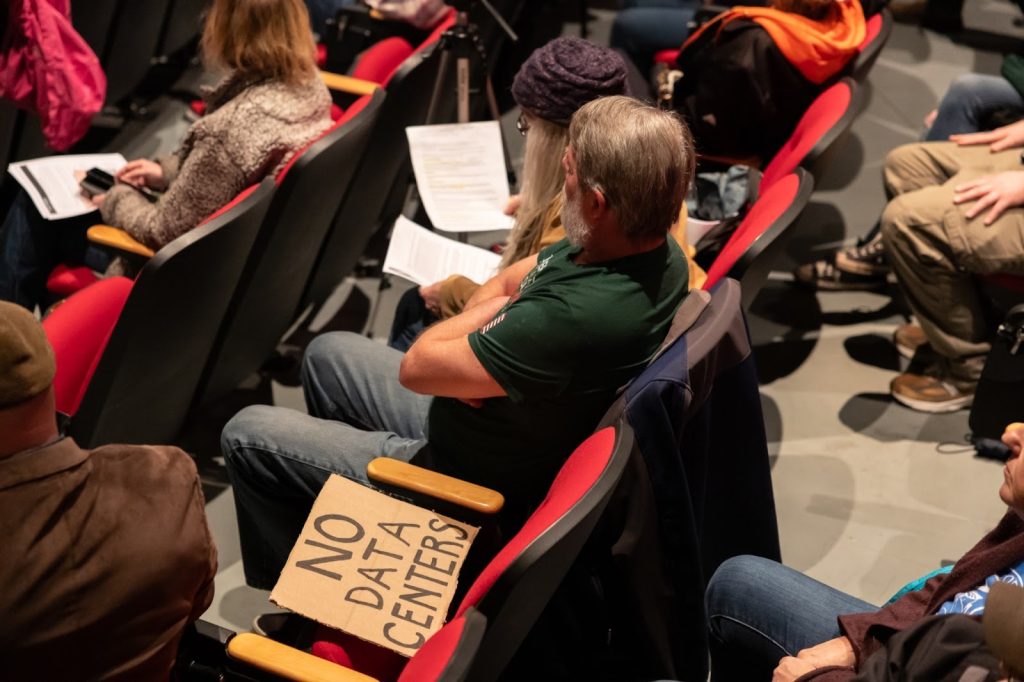
“We’ve had a data center dumped on our heads,” said David Pallente, concerned citizen. “We had no transparency and if we are given no transparency on what’s going on here then we will be in a situation where we are going to have a data center that does whatever it wants.”
Farmers and landowners in the surrounding area have also experienced a trend of prolonged drought over the last few years. This drought trend has affected the entirety of WV, but the Eastern Panhandle has been among the hardest hit areas, with levels reaching up to D3 extreme drought on the national drought monitor provided by NOAA. The data center raises issues with citizens and farmers on how water usage would be affected if the facility was built.
“We have already seen creeks, springs and wells running dry,” said Chantele Mack, a candidate running for state Senate. “Farmers are losing their water supply. How can you decide about any information in consideration to water usage, without the actual impact of studies?”
“We need to go to the polls,” long-time Berkeley Co. resident, Ani Watson, said in his speech. “We need to look for those who can stand up for our rights, for our industry, for those who have looked at who came before us. Those who have broken their backs to build this state, to uphold it.”
Some citizens looking to be candidates in the upcoming elections, like Bryan McKinney, voiced since local involvement had been taken away from the zoning and permitting of the proposed data center and handled through the state, he mentioned that if he were elected to the state Senate, he would present a referendum of secession to the legislature in a bold move to restore local control in the Eastern Panhandle.
“I have this crazy idea I’d like you to consider with me, I’m gonna call for the good people of Berkeley County, Morgan County, and Jefferson County to hold a referendum to secede from West Virginia,” said McKinney, a Senate candidate. “We will make Patrick Morrissey, and all these politicians fear our vote in the upcoming 60 to 90 days. I can’t come up with another way to fight back. They have stripped our freedom to say no. Maybe we can’t get rid of any of these state senators or delegates. But you know what? Maybe we can make our own state and make them sorry for ever doing this to us.”
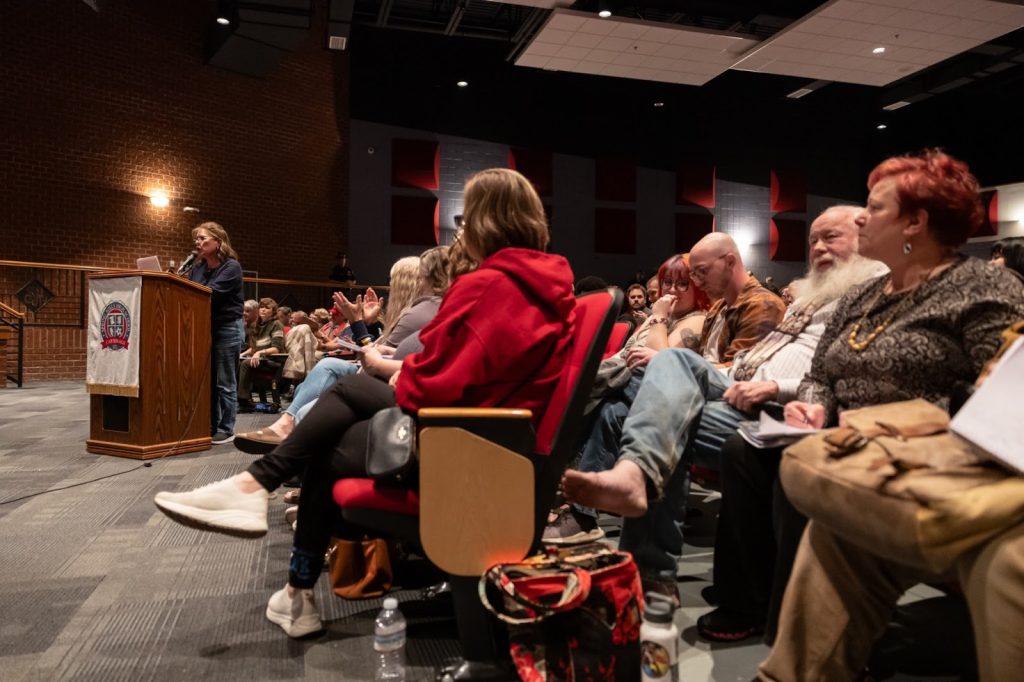
Other speakers, like Chelsey Rogers, took a more personal approach about growing up in the Bedington area on Scrabble Road near where the data center would be located.
“Growing up on Scrabble Road was a delight,” said Rogers. “I grew up from age seven to my mid-20s on Scrabble Road, where my dad, my brother, and my nephew still live. As the crow flies, this data center will be about a mile from their house. My dad taught my siblings and me about the beauty of the night sky. The stars were so innumerable in the night sky on the Scrabble Road. Looking up at all the stars and planets and galaxies above me created an immense respect, an overwhelming awe of the natural beauty all around me and it made me realize that I am a part of this incredible world and I have to do my part to take care of it. I’m fearful that light pollution will muddy the skies, ruining the night sky for the next little girl who needs to experience its awesomeness. The ramifications of this data center include the noise it produces as it stores and cools data and the light pollution it emits, which would be absolutely invasive to the area.”
Questions and outcry about political, technical, and personal perspectives piled up for Berkeley County Commissioners Eddie Gochenour and John Hardy. Neither responded to any queries from concerned citizens directly during the meeting. Instead, questions about the data center will be logged and passed to the developer, Penzance Management, state agencies and the Governor’s office for answers.
With the mountain of questions about the data center amassing by the day, citizens grow more wary about Berkeley County’s future. Stay tuned to RealWV for updates.
Author