
Mother and son find rhythm, confidence, and belonging through Greenbrier East marching band
By Hannah Yost, RealWV, with contributions by Birch Graves

LEWISBURG, W.Va. — For the past four years, Cooper Cherry and his mother, Jennifer Cherry, have been a familiar pair in the Greenbrier East High School marching band.
Together, they have stood at the front of the field with the percussion section, playing marimba through rehearsals, band camp, football games, competitions, hot afternoons, snowy evenings, long bus rides, and countless runs through the show “just one more time.”
For Cooper, a senior preparing to graduate, the experience has become a meaningful part of high school. For Jennifer, it has been a way to support her son’s love of music while helping him learn in the way that works best for him.
Cooper has autism and 22Q, a syndrome Jennifer described as, at its core, a communication disorder. Because certain communication and learning tasks can be challenging for him, Jennifer has spent years learning the music herself, breaking it down, and teaching it back to him piece by piece.
Their story began in middle school during COVID, when Cooper was not attending school in person. One of his classes was band, and Jennifer learned to play drums so she could help teach him. Eventually, his band director suggested the xylophone.
At Western Greenbrier Middle School, Cooper was not using the marimba, so Jennifer and Cooper were able to bring it home. From Christmas break through the beginning of fall, they practiced at home. By the time Cooper entered high school, he was still practicing drums, but the marimba had become his main instrument.
“During COVID, we worked on that as hard as we worked on anything and got really good,” Jennifer said.
Jennifer did not have a music background, so learning the parts meant starting from the beginning herself.
“I would have to learn it first, so I would have to pick it out,” she said. “I don’t have a music background.”
Jennifer said she would ask the middle school teacher questions, look up what musical markings meant, figure out the beat and begin adding notes. Then, she and Cooper would work measure by measure, repeating each section until it became manageable.
“I’d get the beat first, and then start plugging in the notes,” Jennifer said. “I would just play for a measure, and we repeat that however many times. We’d do another measure, and then we’d repeat that, and keep on.”
The stationary nature of the marimba made the experience possible. Marching would have been difficult for Cooper, Jennifer said, and harder for her to help with. But the marimba allowed him to participate from the front ensemble.
“That changed everything,” Cooper said.
The work has not always been easy. Getting started can be difficult for Cooper, especially in a busy band room with noise and distractions. Jennifer said Cooper can struggle with knowing when to come in during a piece, especially if directions are given in a way that is hard for him to process quickly.
Cooper explained that 22Q can make it difficult for him to understand what other people mean and to remember things. Jennifer said classroom and rehearsal environments can become overwhelming when there is too much noise or chaos.
“It’s too much for him to be able to process and feel good about it,” Jennifer said. “He is not going to feel good about it when it’s like that; he’s going to check out.”
But once Cooper knows the music, things change.
“When I know it pretty well,” Cooper said, describing when he feels best about band.
Jennifer said once Cooper learns a piece, he can play it even when she is not there.
“It’s always been fun,” Jennifer said. “It’s like a feeling of success. It’s super hard at first, and then we work on it, and work on it, and work on it, and it gets a lot easier.”
Cooper said once he gets going, the music feels natural.
“It just comes like second nature to me,” he said.
The process has created a unique partnership between mother and son. Jennifer said she may be better at learning the music and teaching it to Cooper, but Cooper is better at playing it.
Cooper agreed.
“I think so,” he said.
Playing music together for so many years has affected their relationship, they said. Cooper described it as “kinda natural,” while Jennifer said the two have learned to work as a team.
“We sync in,” Jennifer said.
“We sync in really well,” Cooper added.
For Jennifer, the work of learning and teaching music is an extension of the way she has supported Cooper throughout school. In elementary school, she said, homework often took two to three hours each night. Her role was to break information down into smaller pieces and translate it into a way Cooper could understand.
Music, however, has given them a more enjoyable way to work together.
“It was always me trying to convey the message about whatever he needs to learn,” Jennifer said. “Break it down into pieces, be able to turn it into a way that he could understand it.”
That same approach helped Cooper succeed with marimba. It also helped him experience the belonging that came with being part of the band.
When asked about his best experiences, Cooper pointed to his four years at Greenbrier East.
“The past four years here have been absolutely amazing,” Cooper said.
For him, it has been about the people, the teachers and the overall feeling of the band.
“The whole vibe around it — it just feels very friendly,” he said.
Jennifer said the band helped Cooper feel like he belonged to something at school. While there have been challenges along the way, including moments of navigating different personalities among teenagers, she said most students have been supportive.
“I would say 95% of the kids are fantastic,” Jennifer said.
Both Cooper and Jennifer said last year’s “Sparta” show was their favorite field show, once they learned it.
“That was fun,” Jennifer said. “Once we learned it. That’s been our favorite one.”
The two hope to continue playing music together even after Cooper graduates. At home, they have a marimba, xylophone, and vibraphone, along with two guitars that Cooper joked are “gathering dust.”
Jennifer said she would love to find a marching band or band opportunity for people with disabilities, or one willing to accept people with disabilities.
As Cooper prepares to graduate, the years of music, practice, and partnership have left both mother and son with lessons they hope others remember.
Jennifer said she did what she needed to do as a parent to help Cooper become as successful as he could be.
“He needed help to do this,” she said. “And that was my job to do that. And I just wanted him to be the best that he could be. And it made me better for it.”
For Cooper, the lesson is simple.
“Don’t listen to others who tell you you can’t do anything,” he said.
Jennifer said the same idea applies to almost any challenge.
“Anybody can do it,” she said. “It might seem overwhelming when you’re looking at the whole big picture of it, but if you can break things down into just the smallest parts, and then learn that small part, and then learn the next small part, and just keep on going from there.”
Editor’s note: This interview was conducted by Birch Graves.
Related Articles
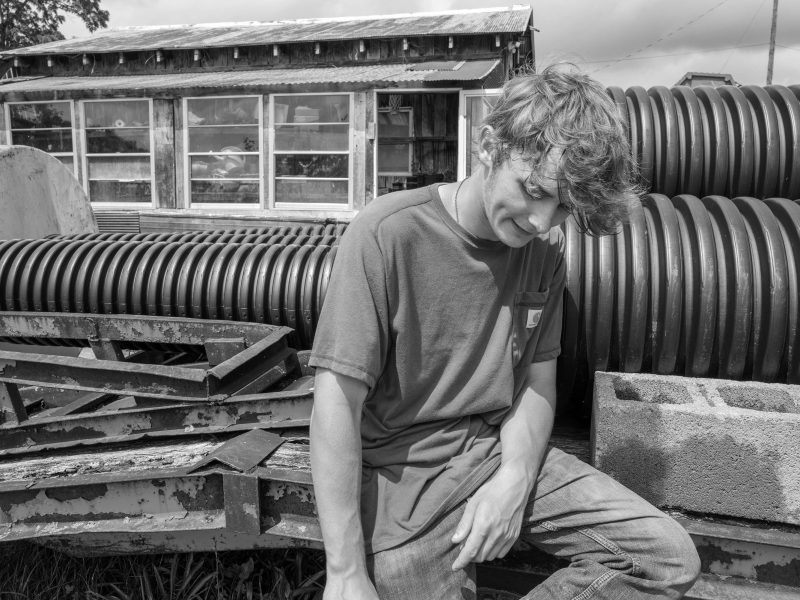
An afternoon on 18-year-old Billy Hedrick’s farm
This story is part of RealWV’s year-long focus on youth and belonging in West Virginia, exploring the difficult decisions young people face when deciding whether to stay or leave.
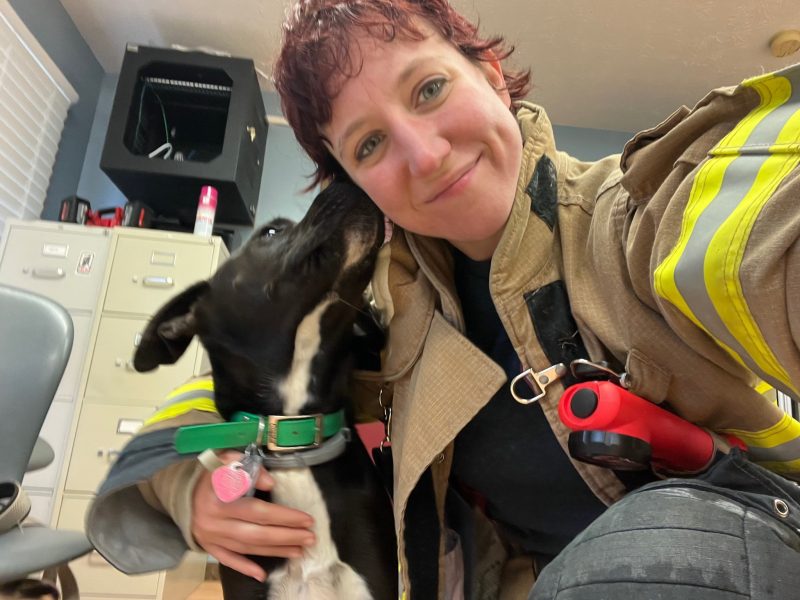
Real West Virginian of the Week: Mystik Miller found her way home — and built something from it
This story is part of RealWV’s year-long focus on youth and belonging in West Virginia, exploring the difficult decisions young people face when deciding whether to stay or leave.
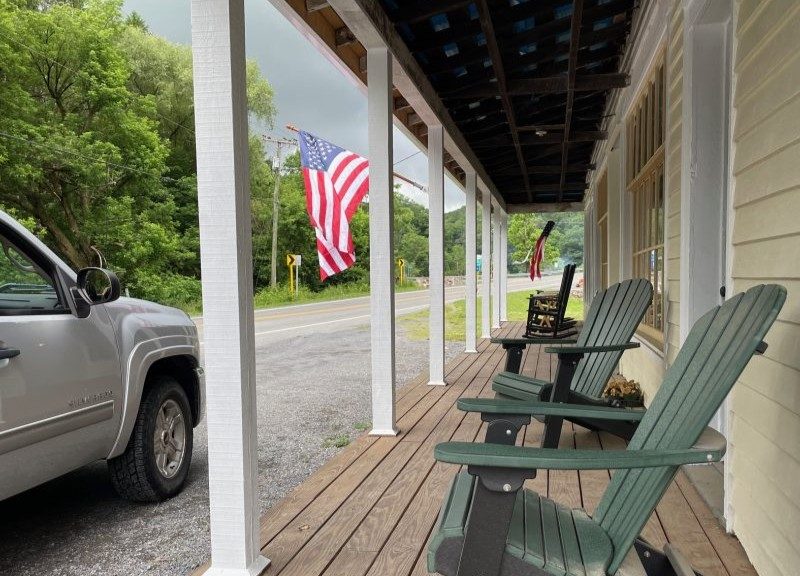
THE FRONT PORCH: Worth the splurge
I don’t know if anyone has noticed recently, but the cost of living has become pretty astronomical.