Ronceverte residents question proposed $31 million sale of water, sewer systems
Ronceverte residents raised questions about water rates, aging infrastructure, water loss, customer service, and the city’s relationship with Lewisburg during a public hearing Monday on a proposed $31 million sale of the city’s water and sewer systems to West Virginia American Water.
By Hannah Yost, RealWV
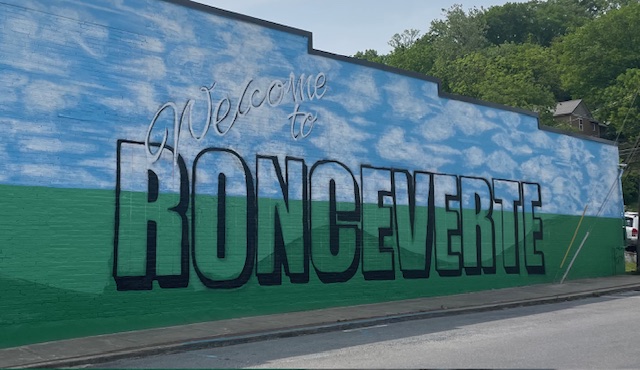
RONCEVERTE, W.Va. — Ronceverte residents raised questions about water rates, aging infrastructure, water loss, customer service, and the city’s relationship with Lewisburg during a public hearing Monday on a proposed $31 million sale of the city’s water and sewer systems to West Virginia American Water.
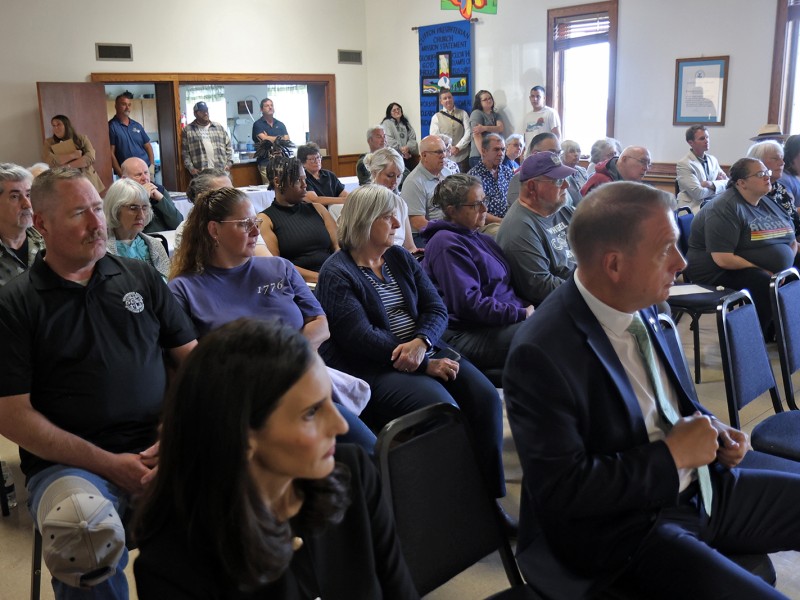
Two West Virginia American Water representatives attended the Aug. 17 hearing to explain the proposal and answer questions from residents. They emphasized throughout the meeting that the city has not made a final decision on whether to sell the systems and that the hearing was an opportunity for residents to learn about the proposal and provide feedback.
Under the proposal, West Virginia American Water would pay $31 million for Ronceverte’s water distribution system and entire sewer system. The representatives said approximately $16 million would be used by the city to pay off existing water and sewer debt, leaving about $15 million for Ronceverte to reinvest elsewhere in the city.
If the acquisition is completed, the company also plans to invest approximately $26.5 million into the systems during the first five years, including about $18 million for the water system and $8 million for wastewater infrastructure.
The proposed work would include replacing aging water lines, rehabilitating pump systems, addressing water loss, upgrading the wastewater collection system, and repairing or replacing fire hydrants.
The representatives said municipalities across West Virginia are increasingly facing challenges associated with maintaining aging and costly water infrastructure, particularly as communities try to secure the money necessary for major improvements.
Any sale would also require review and approval by the West Virginia Public Service Commission (PSC), which regulates West Virginia American Water.
How was the $31 million value determined?
One of the first questions from residents centered on how West Virginia American Water arrived at its $31 million offer.
The representatives said the company evaluates a system’s assets to determine what it considers a fair-value offer. Ronceverte maintains an asset list detailing what the city owns, which is reviewed as part of the valuation process.
The proposed value would then be presented to the PSC, which would conduct its own review before approving an acquisition.
Ronceverte’s wastewater treatment plant, which was upgraded around 2017, is functioning well, the representatives said. However, they said portions of the wastewater collection system, including pipes and pumps, still require investment.
Water loss a major concern
Ronceverte’s significant water loss generated several questions during the hearing.
The city currently purchases its drinking water from Lewisburg, and residents questioned how West Virginia American Water would address a system in which a substantial amount of purchased water never reaches customers.
The representatives said water loss has previously approached 80%, meaning the city could purchase 100% of its water from Lewisburg while only about 20% ultimately reached customers. Although that figure has improved, they said water loss remains a significant problem.
West Virginia American Water would conduct leak surveys, use specialized equipment to locate underground leaks, and assess whether damaged lines should be repaired or replaced.
The representatives said acoustic technology can help crews pinpoint leaks based on sound, giving workers additional tools to identify problem areas that may not be visible above ground.
They also emphasized that the problem is not necessarily a lack of effort from Ronceverte’s current workforce.
“The right people are doing the work, but the resources to fix it on the scale that it needs to be” are the challenge, one representative said.
The representatives said the company also works to coordinate water-line repairs with municipalities before streets are paved when possible, reducing the likelihood that newly paved roads have to be torn up for planned infrastructure work.
When excavation is necessary, representatives said the company’s goal is to leave the area in better condition than it was found. That includes repairing roads disturbed during water-line work and replanting grass or otherwise restoring property affected by construction.
West Virginia American Water operates as part of American Water’s 14-state footprint, meaning additional personnel and expertise could be brought into Ronceverte when needed, the representatives said.
What could happen to rates?
Rates were among the most frequently discussed topics Monday.
The representatives acknowledged that West Virginia American Water’s rates are generally higher than those of many publicly owned utilities.
Unlike municipalities, the privately owned company does not have access to many of the grants and low-interest government loans available to cities. The representatives said the tradeoff is that the company has greater access to capital and can make infrastructure investments more quickly.
West Virginia American Water cannot independently decide what customers will pay. Its rates are regulated by the PSC.
Based on current rates and average usage, the representatives estimated the difference between what Ronceverte customers currently pay for water and West Virginia American Water’s rates could be approximately $7 to $10, though individual bills would depend on usage.
The representatives said any transition to West Virginia American Water rates could potentially occur at closing or be implemented incrementally.
West Virginia American Water operates under a statewide rate structure, allowing major infrastructure costs to be distributed across its larger customer base rather than falling solely on the community receiving the improvements.
“If we spend $50 million in Huntington, that impacts the entire state,” one representative said, explaining that the same principle would apply to investments made in Ronceverte.
They also suggested Ronceverte could face significant rate increases in the future regardless of who owns the system because of the amount of infrastructure work that is needed. Under the company’s model, representatives said those costs can be spread across a much larger customer base, potentially resulting in more gradual increases rather than a sharp increase borne entirely by local customers.
Lewisburg relationship draws questions
Ronceverte currently purchases drinking water from Lewisburg, while Lewisburg sends wastewater to Ronceverte’s treatment system — an arrangement that prompted several questions.
Residents asked what would happen if West Virginia American Water purchases Ronceverte’s systems while the city continues receiving water from Lewisburg.
The representatives said West Virginia American Water would become responsible for managing that relationship on behalf of its Ronceverte customers.
If Lewisburg increases what it charges for water, that cost would become one factor considered in West Virginia American Water’s overall expenses. It would not, however, automatically determine Ronceverte customers’ rates because those rates are regulated by the PSC and spread across the company’s statewide customer base.
Residents also questioned whether Lewisburg is paying an appropriate amount for wastewater treatment compared with Ronceverte customers and other systems using the facility.
The representatives said those arrangements would be evaluated to determine what the appropriate rates should be.
One resident raised concerns about a previous water-quality issue and said Ronceverte had limited ability to address the problem because its water comes from Lewisburg.
The representatives said West Virginia American Water would evaluate the water entering the system, conduct routine testing, and work through regulatory channels to ensure the water being provided to customers meets required standards.
Residents also asked whether the company would consider building a water treatment plant in Ronceverte so the community would no longer have to purchase water from Lewisburg.
“We don’t want to make that call right now,” one representative said. “We don’t know yet.”
The representatives said the company would first assess the system and determine whether constructing a treatment plant would be in customers’ best interests.
“Our customers having good, reliable water is our priority, and we’ll do what we need to do to keep it that way,” one representative said.
Local employees would remain
Several residents questioned what the sale would mean for Ronceverte employees currently responsible for operating the systems.
The West Virginia American Water representatives said those employees would be offered the opportunity to continue operating the systems as company employees under West Virginia American Water’s pay and benefits structure.
The local workforce would continue handling day-to-day operations rather than all service being dispatched from outside the community, they said.
West Virginia American Water also operates a 24-hour response and dispatch system that can send additional personnel when necessary.
If the acquisition is completed, customers would receive their water and sewer bills from West Virginia American Water rather than the city.
The representatives said customers would have several payment options, including paper bills, online and app-based payments, and payment options through participating businesses and financial institutions.
The company also offers customer assistance programs that many municipal systems do not have, they said.
Those include installment arrangements for customers who fall behind, a one-time grant assistance program, and income-based discount programs. Representatives said qualifying customers earning less than approximately $32,000 annually may be eligible for a 20% discount, while some customers participating in qualifying assistance programs may be eligible for a 40% discount.
The company can also review unusually high bills caused by certain leaks and make adjustments based on a customer’s normal usage, representatives said. If a meter is malfunctioning, repairing or replacing it would be the company’s responsibility.
Fire hydrants and meters among planned improvements
Residents repeatedly raised concerns about the condition of fire hydrants throughout Ronceverte.
The representatives said hydrants would be tested and deficient hydrants repaired or replaced, with hydrants expected to be among the company’s early priorities.
They noted that a hydrant itself may sometimes be functional while the water line beneath it is unable to provide adequate service. Hydrants that are out of service would be identified as such.
West Virginia American Water would also continue work to modernize the city’s meters, including moving toward technology that allows meters to be read remotely.
The representatives said an update to the American Water customer app expected in early 2027 would also allow customers to receive notifications when their water usage suddenly spikes, potentially helping identify household leaks sooner.
Boil-water advisories and water quality
A resident who said they had lived in Ronceverte for 26 years questioned the number of boil-water advisories customers have experienced and whether customers receive compensation when their water cannot be consumed normally.
The representatives said boil-water advisories are required by the state following certain line breaks and other events.
Under West Virginia American Water, customers affected by an advisory would be notified through methods including phone calls, emails, and text messages associated with their accounts.
Representatives also said the company’s water systems are subject to inspections and water-quality requirements and that testing is conducted routinely.
When asked whether the company would stop using fluoride, representatives said fluoridation is a common treatment practice governed by regulatory requirements and the company would follow applicable government standards.
Data centers and future development
One resident questioned whether West Virginia American Water’s presence in multiple states and the growing demand for water from data centers could eventually result in residential customers paying more.
The representatives said the company has a team specifically evaluating how data-center development could affect West Virginia’s water systems.
They said the company’s position is that existing customers should not be required to absorb costs created by large new users.
As an example, one representative said West Virginia American Water declined to participate in a proposed Google-related project in Putnam County because doing so would have increased costs for existing customers.
Because the company is privately owned, the representatives said it cannot be forced to construct line extensions or other infrastructure for a data center if the project would not produce a good outcome for existing customers.
Why Ronceverte?
When asked why West Virginia American Water is interested in Ronceverte, the representatives said the acquisition presents an opportunity for the company to grow while bringing additional resources and investment to the community.
They described water infrastructure as a long-term investment rather than a quick financial return.
American Water spends billions of dollars annually on infrastructure throughout its national footprint, they said, and investments in individual communities are designed to provide returns over decades.
The representatives said continued infrastructure investment is central to the company’s business model.
“We want to be a part of this community,” one representative said, adding that the company wants to provide reliable water service while becoming a community partner.
Sale would still face regulatory review
Residents also questioned how quickly a transition could occur if Ronceverte City Council ultimately approves the sale.
The representatives said the acquisition would first have to go before the PSC, a process they estimated could take approximately six to nine months and potentially as long as a year.
If the city decides to proceed with the sale within the next month or so and regulatory approval is granted, the representatives said the transaction could potentially close by next summer.
At closing, West Virginia American Water would transfer the purchase money to Ronceverte. The city would then be responsible for paying off its existing bonds and loans, leaving an estimated $15 million available to reinvest in the city.
A resident also questioned the timing of Monday’s hearing, noting that notice had been provided shortly before the meeting and that it was being held during fair week.
The representatives said state law requires notice of the hearing at least seven days, but no more than 20 days, in advance.
For now, however, the proposed $31 million transaction remains just that — a proposal.
The representatives reiterated that Ronceverte has not made a final decision to sell its water and sewer systems. If City Council chooses to move forward, the transaction would still face PSC review before West Virginia American Water could take ownership.
Monday’s hearing gave residents an opportunity to weigh the potential benefits of millions of dollars in infrastructure investment against concerns over rates, local ownership, water quality, and the future of a utility system that directly affects Ronceverte residents every day.
The City of Ronceverte announced the following message on Aug. 18:
The City of Ronceverte proposes to sell the wastewater and water collection and treatment system to West Virginia American Water Company on the terms, conditions, and limitations substantially set forth in a proposed agreement of purchase between the City of Ronceverte, and West Virginia American Water Company, a true copy of which is available for review at City Hall located at 124 Cedar Street, Ronceverte, West Virginia.
The Second Reading on the adoption of said proposed Ordinance shall be held at the Trinity Methodist Church in Ronceverte on Tuesday, August 25, 2026, at 6:00 PM. The open hearing regarding the sale will begin at 6:00 pm with the council meeting beginning at 7:00 PM.
Interested parties may appear and be heard at such times with respect to the passage of the proposed Ordinance. A copy of the proposed Ordinance is available at City Hall.
Related Articles
PUBLISHER’S NOTE: Candidate forum will proceed as planned, candidates or not
Our job is to provide a forum for candidates to share their views. We will do that whether all the candidates show, some show, or none show. And we will report on it for voters to be informed.

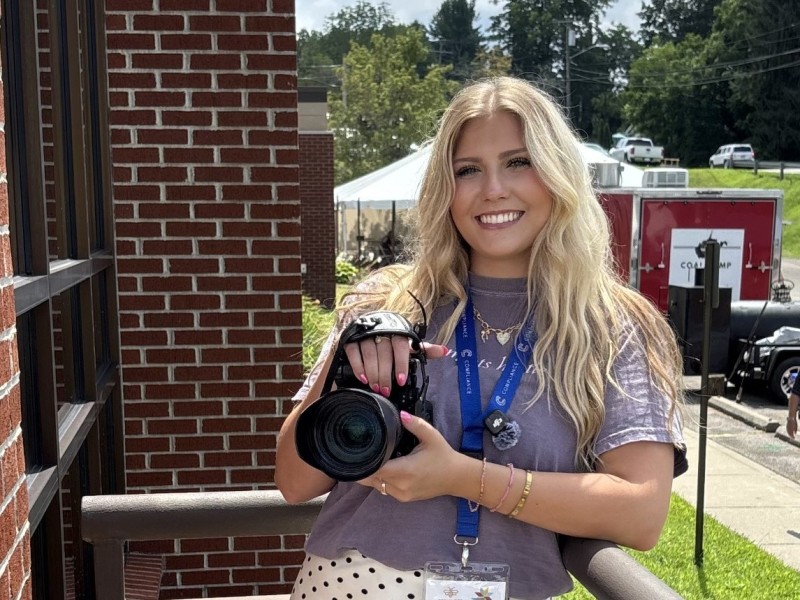
Real West Virginian of the Week: Jada Mills captures the people and places that make West Virginia home
For Jada Mills, a photograph can capture more than what happened in a single moment. It can show how someone felt while it was happening.