‘There’s got to be a reckoning’ – feds & state signal major changes for Medicaid expansion
By Stephen Baldwin, RealWV
Delegate Matthew Rohrbach, R-Cabell, told his colleagues Thursday on the Committee on Finance that the federal government is considering rolling back Medicaid expansion.
“The (federal) committee has been tasked with reducing $880 billion in costs,” he said. “They’re looking at Medicaid.”
In 2014, West Virginia opted into a federal expansion of Medicaid, as the state was only asked to pay 10% of the cost. The federal government picked up 90% of the cost, allowing a large number of citizens to obtain health care coverage at a low cost.
Cindy Beane, Commissioner of West Virginia Medicaid, told delegates the expanded coverage “provides their health care to go to the doctor and dentist.”
Whose health care? “These are the working poor,” she said. “A person working a minimum wage job. These are also parents of young children. Also those seeking substance use disorder treatment.” She said it covers people ages 19-64.
Rohrbach said he expects the federal government to recommend lowering the reimbursement rate for those covered by Medicaid expansion from 90% to 73%. If that occurs, he says the state would be on the hook for paying the difference. A sum of approximately $160 million.
“A number of states have preemptively said if that occurs then we’re gonna have to rethink this entire thing,” Rohrbach shared. “That’s a very large number for the state to have to deal with.”
Delegates then considered a bill that would end Medicaid coverage for the working poor if the federal government makes any changes to the current program.
Morning Meeting
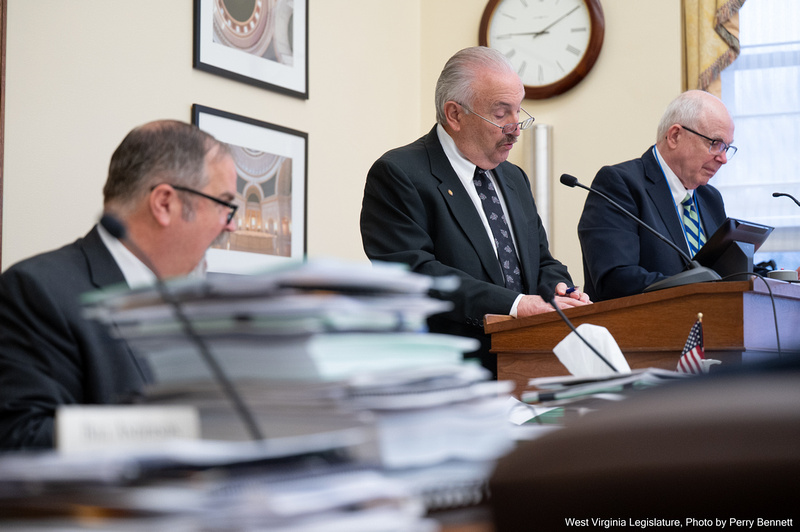
In response to the situation, the Committee on Finance took the somewhat unusual step of originating a bill–it was created by the committee on Thursday rather than authored by a delegate–and putting it to a vote.
Thursday morning at 9am, delegates unveiled the bill. They passed it with little debate.
Delegate John Williams, D-Monongalia, asked Chairman Vernon Criss, R-Wood, “Is it possible to have a committee hearing tomorrow? This is perhaps the most consequential bill we’ve had maybe all session.”
“No sir, we don’t have time,” said Criss.
“Is there no requirement for a hearing?” Williams asked, referencing new House Rules passed just this year.
“No, not with an originating bill,” Criss said.
The committee passed the originating bill which could potentially affect 166,000 West Virginians by a voice vote and adjourned.
Afternoon Meeting
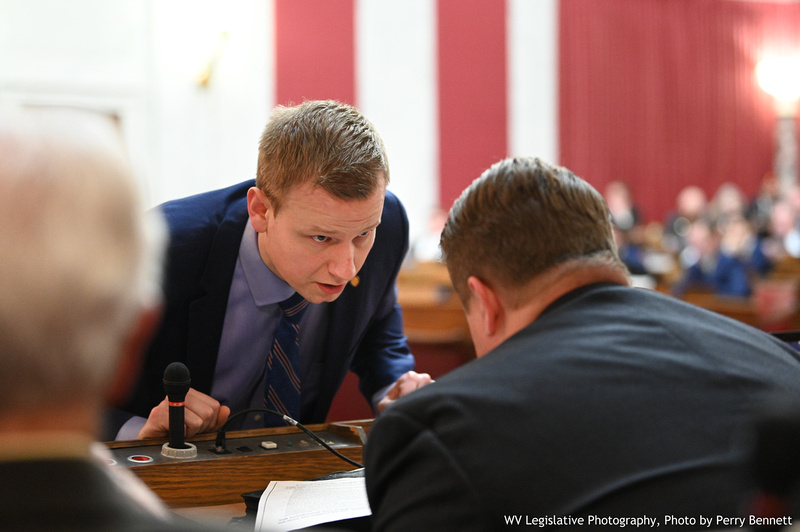
Later that afternoon, after internal discussions, delegates returned to the Committee on Finance and reconsidered their previous motion to allow for a hearing. Cindy Beane, Commissioner for WV Medicaid, along with several health care advocates and a doctor were allowed to testify.
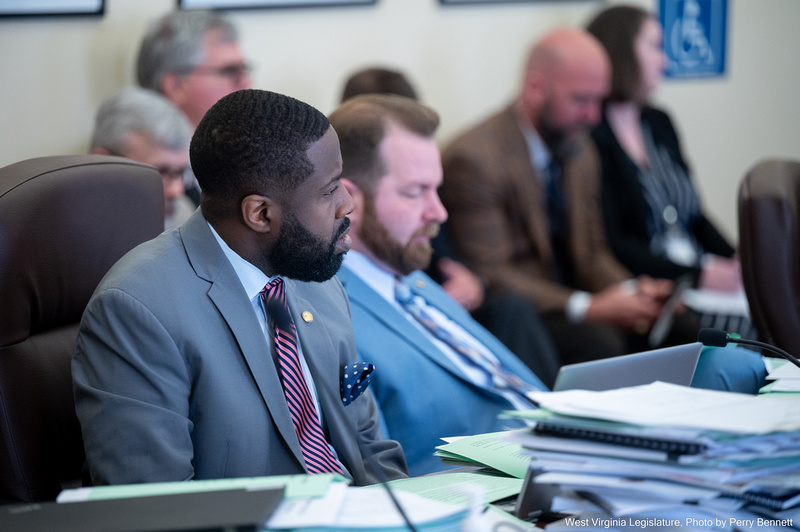
Delegate Sean Hornbuckle, D-Cabell, asked Beane what would happen to someone who receives health care via Medicaid expansion if the originating bill passed and the federal government changed the match?
“The trigger would happen at the federal change and we would start the disenrollment,” she said. “Immediately.”
Hornbuckle asked what those citizens could do as an alternative to receive health care?
“They could purchase insurance from the private marketplace.”
She added that it would also have a larger economic impact, as the Medicaid expansion funds don’t go to enrollees; they go to hospitals and doctors. She noted that states who did not expand Medicaid have seen hospital closures while West Virginia has not.
Next, Ellen Allen from West Virginians for Affordable Health Care testified that the expansion “covers 166,000 people who make around $20K per year. Their employers don’t offer health care. They make too much for Medicaid but not enough for Affordable Care Act. It’s particularly helped people with disability and young adults in the workforce.”
Dr. Nicole Perry Bryce, a resident at CAMC in Obstetrics/Gynocology, expressed concerns particularly for pregnant mothers if Medicaid expansion is rolled back. “There are 18 hospitals that provide OB care inpatient. The vast majority of our patients receive Medicaid. There’s a decent chance we’d only see six OB units remain open if this happens.” She said they would simply lose too much money to operate without Medicaid expansion dollars.
“We see some of the highest infant morbidity and mortality rates,” she testified. “We deliver a lot of premature babies. That means increased health care needs throughout the child’s life span. An infant stay in NICU can cost $1 million. Medicaid expansion provides for those costs.”
She shared that hospitals are already struggling to hire OB/GYNs for maternal care, citing CAMC Greenbrier Valley as an example. She said they only have one provider who is about to retire, and they can’t find a replacement.
‘There’s got to be a reckoning’
Following testimony, delegates voted to suspend Rule 83b pertaining to the normal committee hearing process and vote upon the bill.
Del. John Williams, D-Monongalia, spoke against the bill. “This is really gonna hurt people. Our speaker gave a heckuva floor speech yesterday. He said government can’t always fix problems. In this instance, government has given 166,000 people health insurance. This is one of the examples where government can help people. Now their legislature is kicking ‘em in the shin. It takes all these people immediately off their health care. There are other ways we can do this. Maybe we could pressure some of our friends in the federal government to not cut our people.”
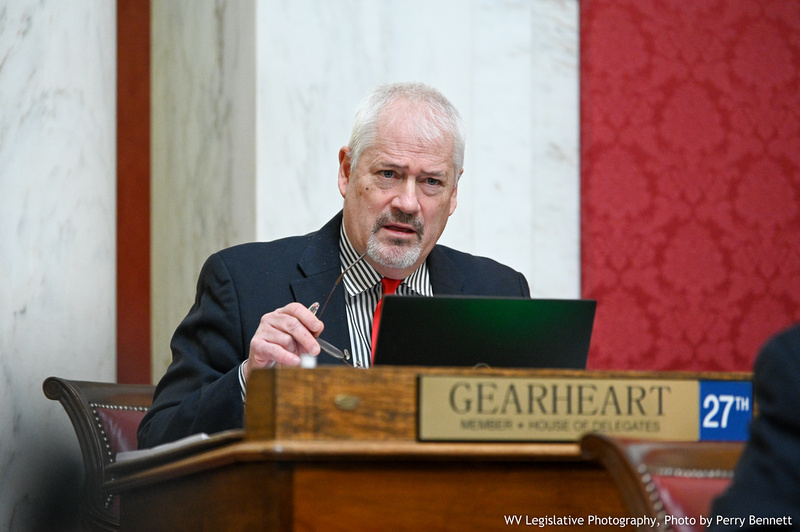
Del. Marty Gearheart, R-Mercer, spoke in favor of the bill. “The passage of this bill does not make anything immediate happen. It doesn’t cause anyone to lose anything. If the trigger were to take place, it does cause people to make other arrangements…There’s got to be a reckoning for what the federal government spends. It’s not about tax cuts. It’s about economic surety. Minimum wage jobs are entry level jobs. People that are working hard aren’t living on minimum wage.”
Rohrbach closed debate by pointing to statistics about the Affordable Care Act, which he said show the average monthly premium for a West Virginian is $88 per month. “To think we don’t have another option available through the marketplace, this data would refute that,” he said.
The committee then passed the bill on a party line vote, sending the originating bill to the full House for a vote on the floor.
Stay tuned to RealWV for updates.