‘Death of the Family Farm?’ New series shows the ups & downs of life on the land

By Stephen Baldwin, RealWV
Author’s Note: This is the introduction to a three-part series of stories on small family farms across West Virginia. It is titled: ‘Death of the Family Farm?’ The WV Humanities Council provided support for the series.
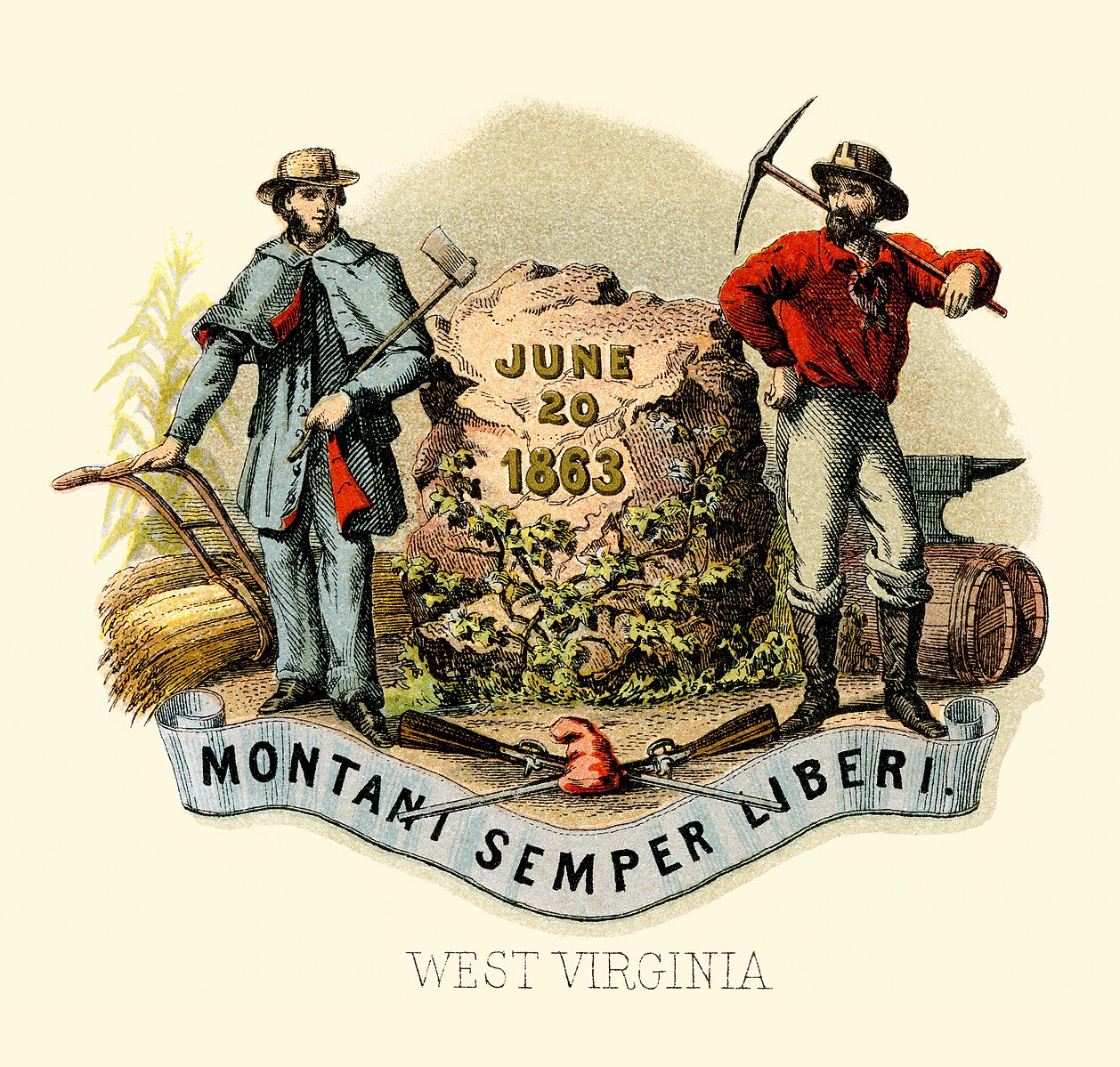
The state seal of West Virginia includes a coal miner and a farmer. These two professions have comprised the heart of the state’s economic soul for more than a century and a half.
Coal makes a larger economic impact, bringing in $6.5 billion annually compared to just under $1 billion for farming. However, farming employs three times as many people. There are about 13,000 working directly in coal mining these days and more than 39,000 who work in agriculture.
With support from the West Virginia Humanities Council, we at RealWV are going behind the scenes of those numbers to the people on the ground. Our new series “Death of the Family Farm?” chronicles life for three different families in three different parts of the state, all of whom are running small farms. The results might surprise folks.
Contrary to popular belief, family farms are not dying. While they do face enormous pressures, they are finding new ways to operate in today’s marketplace.
The Numbers
In the 1930s, there were more than 6 million family farms across America. Ever since then, that number has steadily decreased.
As of 2024, there were approximately 1.9 million family farms across the country, which represents a decline of 8% since 2017.
However, that national decline in the overall number of farms doesn’t tell the whole story. Family farms are growing in size, growing in productivity, and growing in profit according to data from the US Department of Agriculture’s Economic Research Service.
On a state level, West Virginia has 22,707 farms as of 2024, which is a 10% increase since 2012. More young people are choosing to farm, which is helping to drive the increase.
What is common across state and national lines is that farmers operate in very narrow margins, especially small farms in rural places like West Virginia, and that puts a tremendous amount of pressure on the families operating them.
Over the course of this series, we want to learn about the state of the family farm in West Virginia: Which family farms are succeeding and why? How do they handle the pressures of the job? What’s in store for the future?
The History

We spoke with John Seitz, noted Historian at Tennessee Wesleyan University who specializes in Appalachian agricultural history, to learn about the pressures family farms have faced throughout Appalachia’s history.
“The relatively small size of family farms, poorer soils, and a longer distance to large markets tended to be challenges,” Seitz says of family farms in West Virginia. “Topography of course does play a role. The flatter, more fertile regions along river valleys tended to be taken up by large plantations that used slave labor and could not be considered family farms. That meant that the majority of family farms were on more mountainous parts, and that simply limited the size of these farms and also made them less suitable for large single crops.”
While family farms in the state do face many of the same pressures farms across the nation face, Seitz says Appalachia has always faced tougher market conditions.
“As important markets got bigger and further away it became less clear how much sense it made to reach them,” he explained. “ It might make sense to drive your 10 cattle over the
mountain from Greenbrier County to Harrisonburg, Virginia, but there might be less incentive, lower profits, and more cost to transport them by truck or train to markets in Pittsburgh, New York, or Chicago.”
Beyond pressures and markets, Seitz thinks family farms in our state may have different goals in mind.
“The Russian rural economist, Alexander Chayanov, argued that peasant farms had a
different set of values rather than just economic maximization. Writing in the early 20th century, he pointed out that the goal of a peasant family farm was preservation of the family unit, not maximization of profit,” he argued.
“There have been a lot of challenges to his argument, but his argument does point to a truth that not everyone is motivated in agriculture in the same ways. Some people just want a maximum profit, others want some profit but do not want to maximize profit by selling off the farm, and still others are doing farming primarily as a lifestyle.”
The Modern Economy
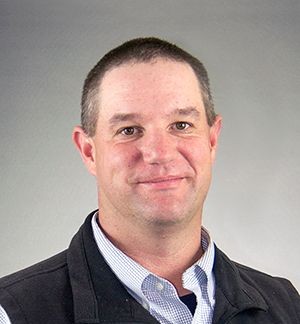
Brian Wickline serves as WVU Extension Agent for Monroe County. He farms and also works with family farms professionally on a daily basis. He sees that diversity Seitz describes, and believes family farming in West Virginia is primed to do quite well economically.
“If you’re in the right market,” he begins, “you can be profitable.”
“In the beef sector right now, we are at record high prices. Close to 90% of our receipts are coming in from beef in Monroe County right now. It’s a tremendous market, people are very profitable, and things are looking strong.”
Wickline says the sheep market is also higher than it has been for quite a while. “That market fluctuates a lot as it’s driven by holidays and the ethnic market, but prices are really good right now.”
While market prices are up for these two sectors, Wickline also says agricultural producers in West Virginia are up against mounting pressures.
“The average age of our producer is in the late 50s or early 60s,” he says. “That may be one of the biggest issues that we have because it’s unclear who’s gonna fill their shoes 20-30 years down the road? We need to continue to focus on trying to get young people involved in agriculture, but we can’t do that unless we show profit on these farms and try to show young people that they can be profitable and can have a nice life farming.”
“Yeah, it’s a lifestyle, but it’s also a business,” he explains. “If you want to be profitable, you have to commit to that. Then you get the lifestyle you want.”
The Helmick Family
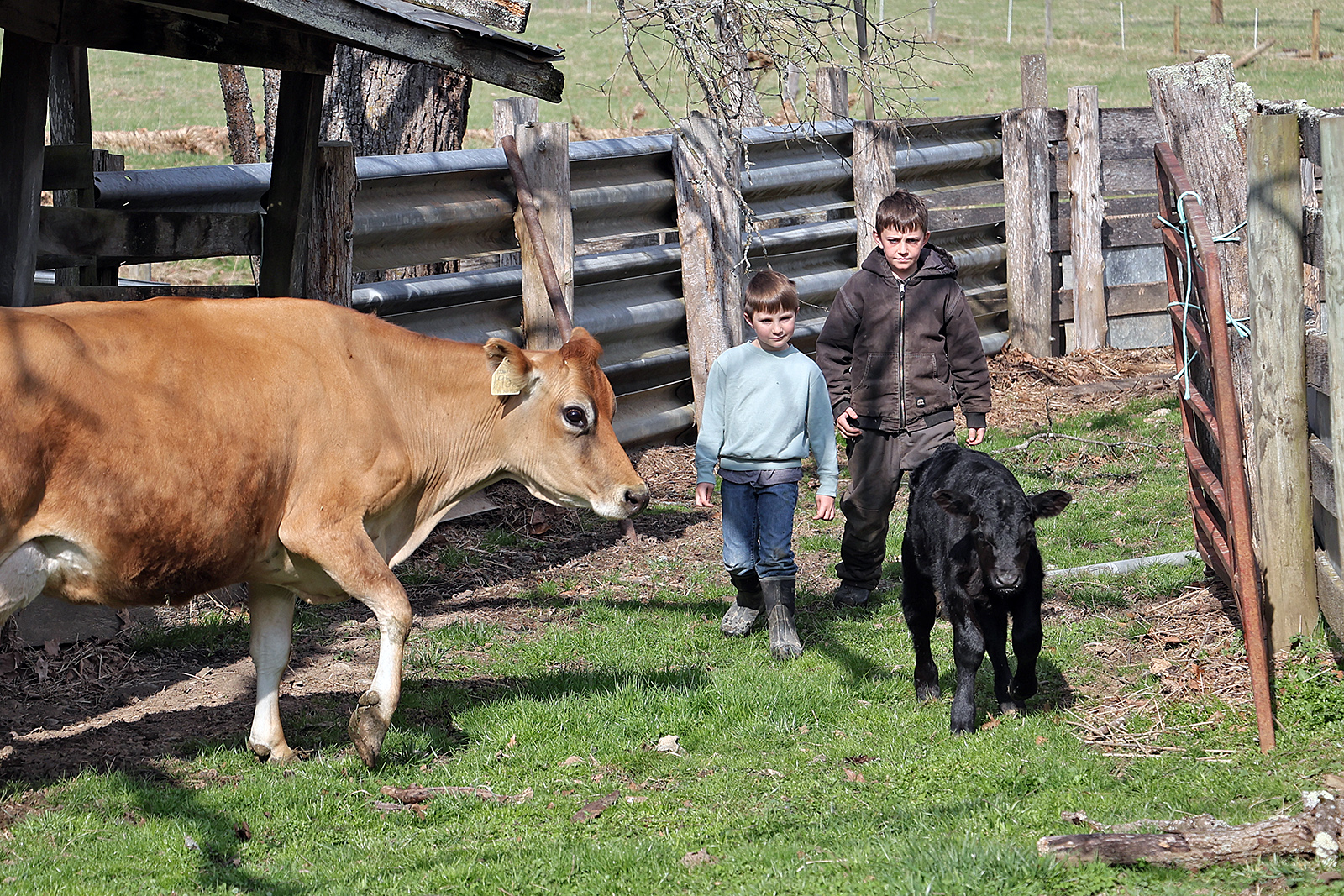
In a story scheduled to publish next week, we chronicle a visit to Aaron & Tara Helmick’s farm in the beautiful Hand Creek valley of Monroe County. They operate the Larew Family Farm, which has been in continuous operation since the late 18th century.
Two additional stories following two other family farms will publish in the coming months.
Stay tuned!
Related Articles
BLACK BY GOD: Youth Voices Rising: Black By God Helping Amplify Youth Voices in West Virginia
This October, during National Arts and Humanities Month, Black By God: The West Virginian is launching Youth Voices Rising, a series of student articles, interviews and videos that gives audiences a view of West Virginia through young people’s eyes.