Zeldin, Morrisey champion proposed EPA rule that exempts isolated wetlands from federal jurisdiction
By Autumn Shelton, RealWV
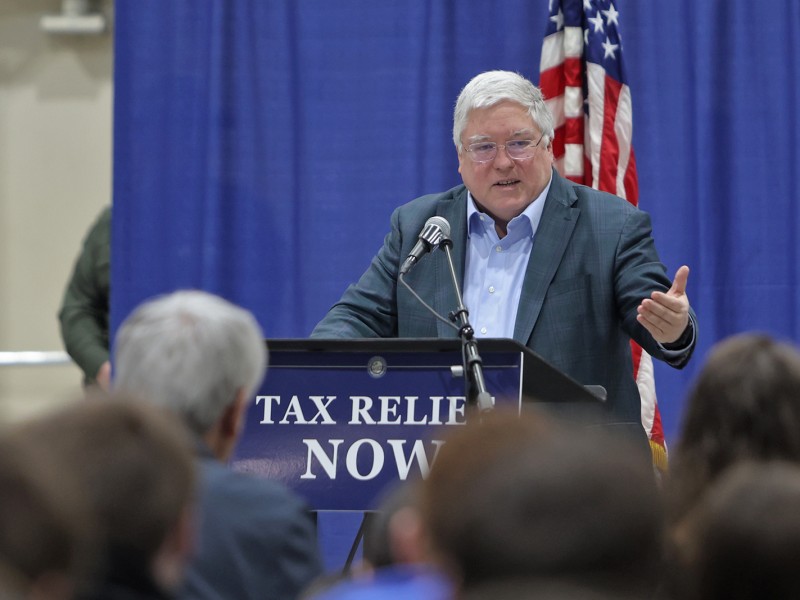
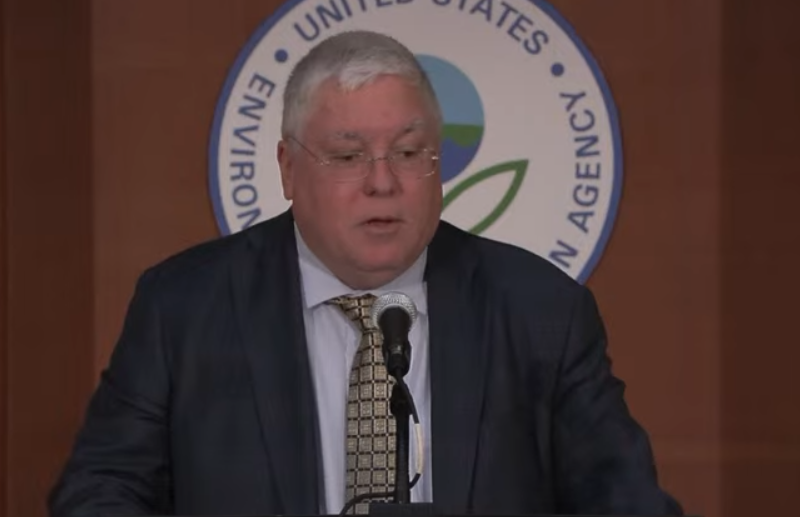
Washington, DC – West Virginia Governor Patrick Morrisey was in the nation’s capital on Monday, alongside U.S. Environmental Protection Agency (EPA) Administrator Lee Zeldin and Assistant Secretary of the Army for Civil Works Adam Telle, to champion a proposed EPA rule that changes the definition of “waters of the United States,” making small, isolated wetlands exempt from federal jurisdiction.
“I know that, as the West Virginia attorney general, we led most of the major ‘waters of the United States’ rule litigation for a long period of time,” Morrisey said during a press conference. “Today is a wonderful day, and I’m glad to see my successor here, J.B. McCuskey, who’s doing good work out of West Virginia.”
Morrisey continued that there has been a lot of confusion surrounding the “waters of the United States” rule.
“Unfortunately, it left many people holding the bag – farmers, contractors, small business owners guessing whether their ephemeral stream or backyard ditch was going to be classified as a ‘waters of the United States’ rule and potentially subject them to significant penalties, potentially up to $37,500 a day. It was a huge, huge problem.”
Morrisey said that the uncertainty surrounding the definition of the “waters of the United States,” and its “federal overreach” now ends with this new proposed rule.
This proposed rule stems from “Sackett v. EPA,” a 2008 lawsuit that originated in Idaho when Michael and Chantell Sackett purchased property and “began backfilling the lot with dirt to prepare for building a home,” according to court documents. The EPA soon informed the Sacketts that they were in violation of the Clean Water Act because the property being backfilled was protected as a wetland.
The Sacketts were ordered to restore the site, because the wetlands were considered “waters of the United States,” or face penalties of over $40,000 per day, court documents note. The Sacketts then sued, stating that these wetlands were not “waters of the United States.”
Morrisey, in his capacity as then West Virginia attorney general, led a 26-state coalition in support of the Sacketts when he filed an amicus curiae brief with the U.S. Supreme Court after the Ninth Circuit Court of Appeals declared the Sackett property did contain “waters of the United States because it sits across the road from an unnamed stream that feeds into a creek that ‘eventually flows’ into a navigable lake,” according to court records.
In 2023, the Supreme Court reversed the ruling of the Ninth Circuit Court of Appeals stating in their order, “In sum, we hold that the [Clean Water Act] extends to only those wetlands with a continuous surface connection to bodies that are ‘waters of the United States’ in their own right, so that they are ‘indistinguishable’ from those waters.”
Morrisey, during the press conference, said that this Supreme Court decision was the correct decision, and that West Virginia will be “supportive” of the new proposed EPA rule.
According to an EPA press release, key revisions of the current rule includes:
- Defining key terms like “relatively permanent,” “continuous surface connection,” and “tributary” to appropriately delineate the scope of waters of the United States consistent with the Clean Water Act and Supreme Court precedent;
- Establishing that jurisdictional tributaries must connect to traditional navigable waters either directly or through other features that provide predictable and consistent flow;
- Reaffirming that wetlands must be indistinguishable from jurisdictional waters through a continuous surface connection, which means that they must touch a jurisdictional water and hold surface water for a requisite duration year after year;
- Strengthening state and tribal decision-making authority by providing clear regulatory guidelines while recognizing their expertise in local land and water resources;
- Preserving and clarifying exclusions for certain ditches, prior converted cropland, and waste treatment systems; Adding a new exclusion for groundwater; and
- Incorporating locally familiar terminology, such as “wet season,” to help determine whether a water body qualifies as waters of the United States;
- In addition, the limitation to wetlands that have surface water at least during the wet season and abut a jurisdictional water will further limit the scope of permafrost wetlands that are considered to have a continuous surface connection under the proposed rule. These proposed changes are intended to provide clarity and consistency to the continuous surface connection definition.
“I think this is a win for both environmental stewardship and economic growth,” Morrisey said. “You can achieve both. We know that when you’re looking at state lands and waters, that’s tricky, especially in the purview of state government. I can tell everyone today that we care very passionately about clear air and clean water in West Virginia, and we want to be good stewards of the land and the waters. I think this rule will allow us to do that and step forward.”
Zeldin added, “When it comes to the definition of ‘waters of the United States,’ EPA has an important responsibility to protect water resources while setting clear and practical rules of the road that accelerate economic growth and opportunity. Democrat administrations have weaponized the definition of navigable waters to seize more power from American farmers, landowners, entrepreneurs, and families. We heard from Americans across the country who want clean water and a clear rule. No longer should America’s landowners be forced to spend precious money hiring an attorney or consultant just to tell them whether a water of the United States is on their property.”
Despite the words of Morrisey and Zeldin, opponents of this proposed rule say that removing federal wetland protections will cause more water pollution and environmental destruction as a result of land development and construction.
“This proposed rule, if adopted, could have catastrophic ramifications for communities already plagued by flooding, water quality concerns, and drinking water shortages,” Southern Environmental Law Center Senior Attorney Mark Sabath was quoted as saying in a press release. “After critical, longstanding protections for clean water and wetlands were drastically narrowed by the Sackett decision, we need stronger protections, not weaker, to safeguard our communities and environment.”
According to information found on the EPA’s website, this proposed rule will be published in the Federal Register, which will start a 45-day public comment period, before the EPA and the Department of the Army Corps of Engineers will develop a final rule.
The complete pre-publication rule may be read here: