Lawmakers seek to ‘get rid of the problems in the classroom’ by mandating suspension as first step in behavioral intervention
By Matthew Young, RealWV
CHARLESTON, W.Va. – “If we’re going to be talking about having a behavioral intervention program, I do have a concern as to how it’s going to be funded. We’re obviously cutting staff every year, and it has made it difficult to address the behaviors that we’re seeing, especially in K through 6th (grade).”
That’s what Kanawha County Schools General Counsel Lindsey McIntosh told lawmakers on Tuesday, during a meeting of the Senate Education Committee. McIntosh was on-hand to voice her concerns regarding the proposed committee substitute for SB 614, a bill which seeks to establish penalties for “dangerous” or “intimidating” behavior in public elementary school classrooms.
As explained by Committee Counsel Hank Hager, “The proposed committee substitute provides that when a grade K through six teacher determines that the behavior of a student is violent, threatening, or intimidating, or creates an unsafe learning environment or impedes other students’ ability to learn in a safe environment, the student is required to be placed in any behavioral-intervention program the county has established.”
According to Hager, should a county board of education not have access to a behavioral-intervention program, they would be required to follow the legislature’s mandated measures. Those measures include immediate removal from the “presence of other students for the remainder of the school day,” and parents would be notified to pick up the child, as he or she would be prohibited from riding the school bus.
“If the student is not picked up by the end of the day, the principal or other school employees are authorized to notify law enforcement,” Hager noted.
Additionally under the bill, the child would be required to serve a suspension of between one-and-three days, submit to an evaluation through Child Find, and be referred for a “functional behavioral analysis.” Furthermore, the child would be prevented from returning to school until a risk assessment is completed. If a second incident is reported within 10 days of the child’s return to school, they must be placed in an alternative learning environment for the duration of the school year.
At the conclusion of Hager’s explanation, Sen. Charles Clements, R-Wetzel, requested clarification that the bill would not be used to mitigate the common situation of “some kid that’s full of energy and running around.” While Hager emphatically stated that the bill would not be used that way, McIntosh expressed doubt.
“I understand that the intent of the bill is not to affect those students that are just running around and causing an issue,” McIntosh said. “However, […] those terms (violent, threatening, etc.) are not defined. And while we may think that we know what those mean […] teachers are going to be interpreting those terms. And while we do want to hear from teachers in the classroom, this kind of cuts the administrator out of the decision making.”
For the sake of consistency, McIntosh added, “Suspensions should always be determined by an administrator.”
Sen. Vince Deeds, R-Greenbrier, a co-sponsor of the bill, then stated that the intent of the bill, at least in part, is to have the teacher more involved in the disciplinary process. McIntosh countered Deeds’ point by advising committee members that “somebody has to have the final say.”
“Through our multi-tiered system of support, we have a bunch of behavioral-interventions we can go through before we ever get to suspension,” McIntosh added. “Again, I get that truly violent behavior is what we think we’re talking about. But unless these things are defined, ‘threatening’ is, ‘I’m gonna kill you over a pepperoni roll.’ Then that kid is out for three days for saying that.”
Deeds then made the point that the language of the bill includes a “disagreement” procedure, by which the county superintendent would make the final decision. However McIntosh again countered, advising that while such a remedy may work well in a smaller county, it could potentially become overwhelming to the superintendent in a larger county, such as Kanawha.
Although Sen. Mike Oliveria, R-Monogalia, spoke in defense of the terms included in the bill, and stated his belief that no further definition was necessary, Sen. Charles Trump, R-Morgan, motioned for the bill to be held over until such time as the language could be clarified. Trump’s motion, however, was defeated.
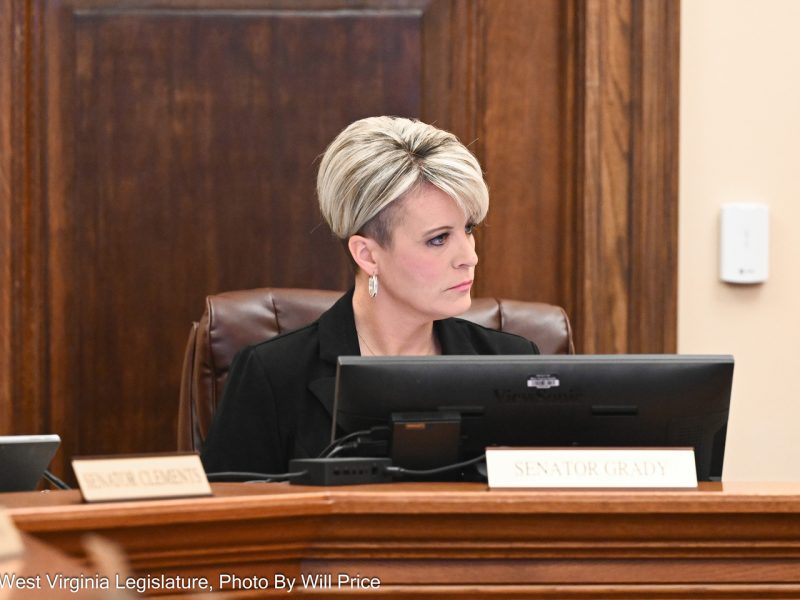
Committee Chair, Amy Grady, R-Mason, the bill’s primary sponsor, took a moment to advocate for the bill’s passage, saying, “We’ve got to take our focus where it should be.”
“In a group of 20 students and there’s one that’s creating a huge disturbance – that’s violent, threatening, or intimidating – I feel for that child and we should be compassionate for that child,” Grady said. “But what about the other 19? The majority of kids in our classroom can’t learn because the teacher has to spend so much time on that one student, that it takes away time from teaching.”
“We passed a transformative bill last year, the Third Grade Success Act,” Grady added. “In order for teachers to be able to implement that, and be able to do it correctly, we have to help them get rid of the problems in the classroom.”
The committee substitute for SB 614 will now be advanced to the full Senate for further consideration. RealWV will provide updates as to the progress of the bill as additional information is made available.
Related Articles

Heritage Music BluesFest brings big names to Wheeling this August
One of Wheeling’s biggest summer music events is back as Heritage Music BluesFest returns this weekend, August 7-9.

Monroe County Family Support Center to host community open house
The Monroe County Family Support Center is inviting families to its annual Open House on Friday, Aug. 7, from noon to 7 p.m.
THE FRONT PORCH: Flock cameras spread across West Virginia, sparking privacy debate
Across West Virginia, more communities are installing Flock Safety cameras to help law enforcement prevent and solve crimes.