House of Delegates begins 2025 session, debates future membership of Joseph de Soto
By Matthew Young, RealWV
CHARLESTON, W.Va. – West Virginia’s 87th Legislature kicked off its two-year term on Wednesday, before recessing for the next 30 days to allow Governor-elect Patrick Morrisey time to acclimate to his new office and prepare his agenda. This 30-day recess is customary after the election of a new governor.
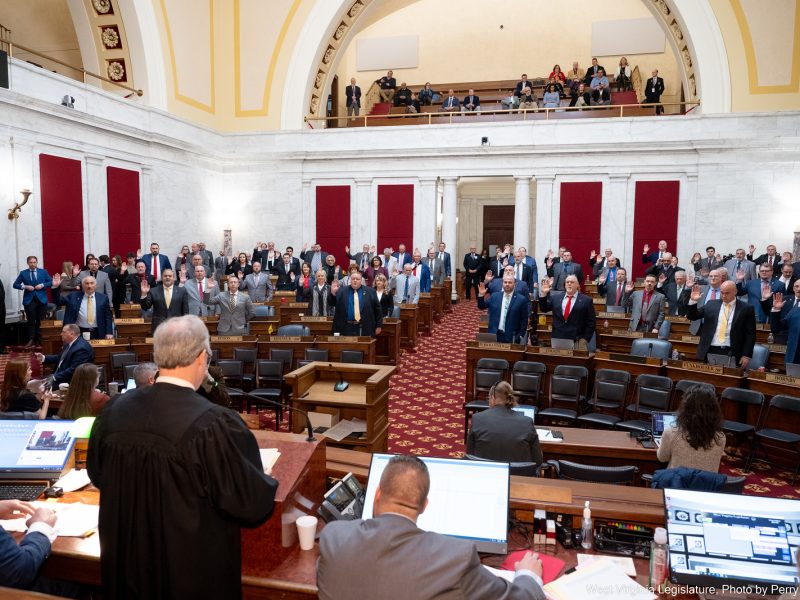
The first part of the day, which was more ceremony than business, began with Secretary of State Mac Warner, in one of his last official duties while in office, delivering the certified voter rolls to the House of Delegates. The 91 members in attendance took their oath of office before Del. David Kelly, R-Tyler, nominated Roger Hanshaw, R-Clay, to return to his role as House Speaker, with a second provided by Del. Pat McGeehan, R-Hancock.
When delivering their nominating remarks, Kelly described Hanshaw as having the wisdom to be a “leader leading a body of leaders,” while McGeehan spoke of his deep respect despite describing the early days of their relationship as being “antagonistic.”
After reminiscing about how, in years past, Hanshaw “kicked me off of three or maybe four committees,” McGeehan said, “I still had respect for him.” McGeehan then noted that it was in their shared “pursuit for the truth” that the two found a common bond.
“One thought that I believe we both (McGeehan and Hanshaw) more or less share, to one degree or another, is that we no longer live in the country we once knew,” McGeehan said. “The old order of modernity has collapsed. The United States is no longer governed by some sort of neutral public sphere, established by some sort of debate within a so-called ‘marketplace of ideas.’ We live, unfortunately, in the ruins of a society, wrecked by a progressive oligarchy, led by elites who shamelessly prioritize power and prophets over the good of the people.”
It was announced on Tuesday, through a press release from Speaker Hanshaw, that McGeehan has been selected to serve as House Majority Leader.
On the minority side, while Del. Sean Hornbuckle, D-Cabell, will once again lead the Democratic caucus, he was also nominated for the role of speaker – albeit in a more ceremonial manner.
“Delegate Hornbuckle is a true representation of a man who’s trying to lead, and do great things here in the State of West Virginia,” Del. Hollis Lewis, D-Kanawha, said during his brief nominating remarks.
While seconding the nomination, Del. Shawn Fluharty, D-Ohio, referred to Hornbuckle as “the adult in the room,” adding that, “This room needs adults.”
Despite expressing his support and joining with Democrats in voting for Hornbuckle, Hanshaw was re-elected by 84 of the 91 members present to serve as Speaker of the House of Delegates for a sixth time.
“That was a nail biter,” Hornbuckle said with a laugh, after the votes were counted. In a similar expression of support, Hornbuckle cast his vote for Hanshaw. “I am honored and privileged to talk about my friend, Roger Hanshaw.”
“I’m glad that he’s a part of us,” Hornbuckle continued. “He’s done so much for our state.”
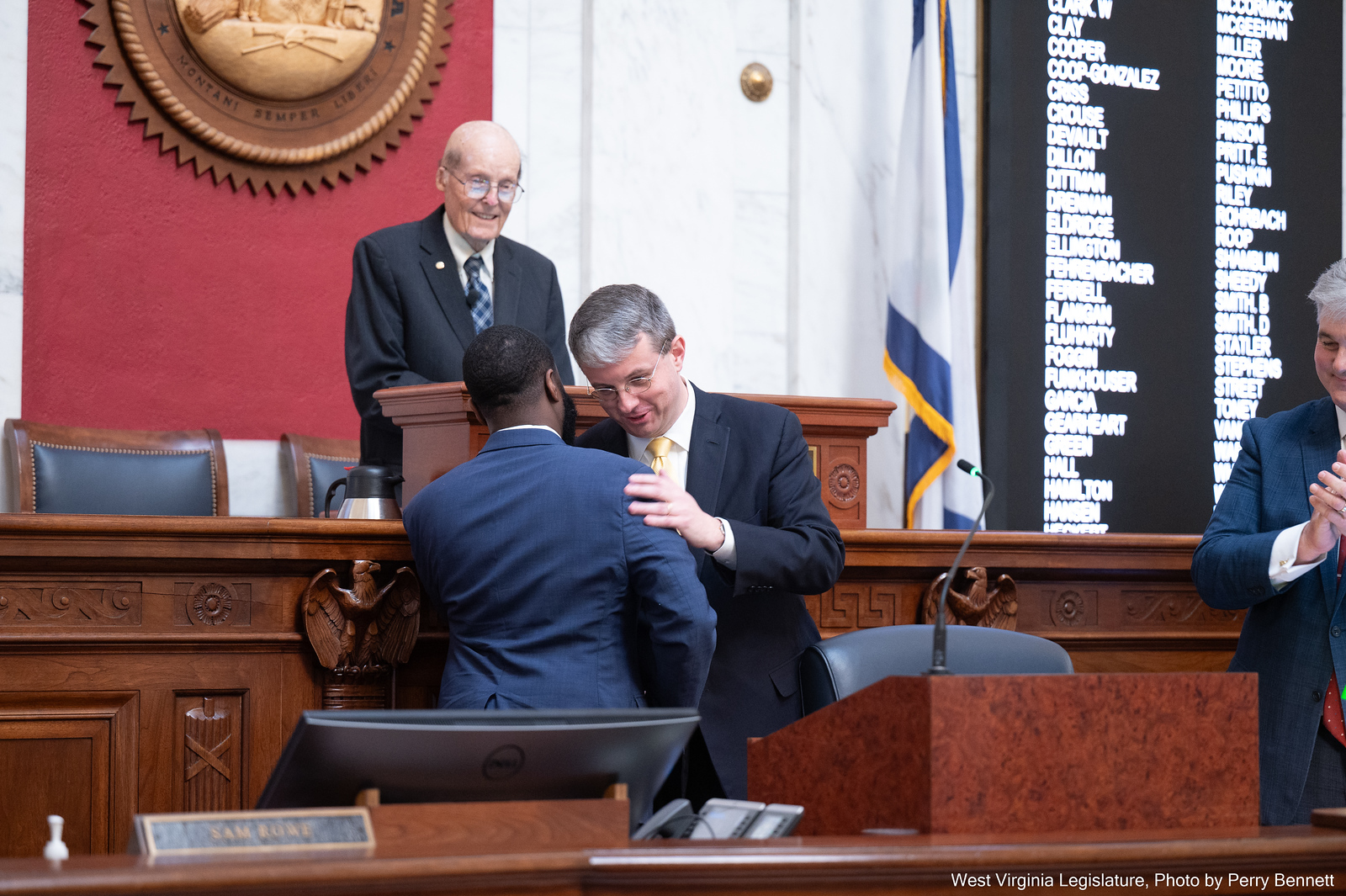
An attorney by trade, the 44-year-old Hanshaw was first elected to the House of Delegates in 2014, and has served as House Speaker since 2018. Standing beside him while he took his oath as Speaker of the House, was Hanshaw’s wife and daughters.
“I am somewhat at a loss for words, and I rarely am at a loss for words,” Hanshaw told his colleagues. “It was a humbling honor the first time – five elections ago, in 2018, when this body gave me this opportunity, but it’s been an even greater honor each time since then.”
Hanshaw’s first action as the newly re-elected Speaker was to nominate former Raleigh County Delegate Jeffrey Pack to succeed the retiring Steve Harrison as Clerk of the House.
Returning to the position of Doorkeeper, which he has held since 2019, is Robert Stewart, and succeeding the now-Delegate Marshall Clay, R-Fayette, as Sergeant at Arms will be Edward Hart. Hart’s nomination came from Clay, himself, with a second from Del. Mike DeVault, R-Marion.
The House took a short recess before hearing farewell remarks from outgoing Gov. and Senator-elect Jim Justice. The House then resumed for a brief afternoon session, at which point the ceremony, it seemed, was over.
Although he was not in attendance, the conversation was dominated by newly-elected House of Delegates member Joseph de Soto. Elected as a Republican to represent a portion of Berkeley County, de Soto was arrested on December 12, after allegedly threatening to kill several of his House colleagues.
After quickly working through three resolutions to establish the general rules for both Houses of the Legislature, the fourth resolution – intended to disqualify de Soto from House membership – broke down into a failed amendment proposal from Del. Mike Pushkin, D-Kanawha, and a heated back-and-forth between Fluharty and McGeehan.
The resolution, as explained by McGeehan, “declares the seat of the 91st Delegate District vacant,” due to de Soto’s “refusal” to take the oath of office.
Pushkin’s objection to the resolution was that it would grant selection-authority for de Soto’s seat to the Berkeley County Republican Executive Committee, even though de Soto changed his party registration to Democrat prior to his arrest, and remains a registered Democrat as of now. According to Pushkin, the law states that any House vacancy must be filled by the “registered party immediately preceding the vacancy.”
As de Soto is currently registered as a Democrat, Pushkin explained, the law requires that, if his seat becomes vacant, it is the Berkeley County Democratic Executive Committee’s responsibility to nominate candidates. And while Pushkin felt that West Virginia law clearly supported his argument, his proposed amendment was defeated.
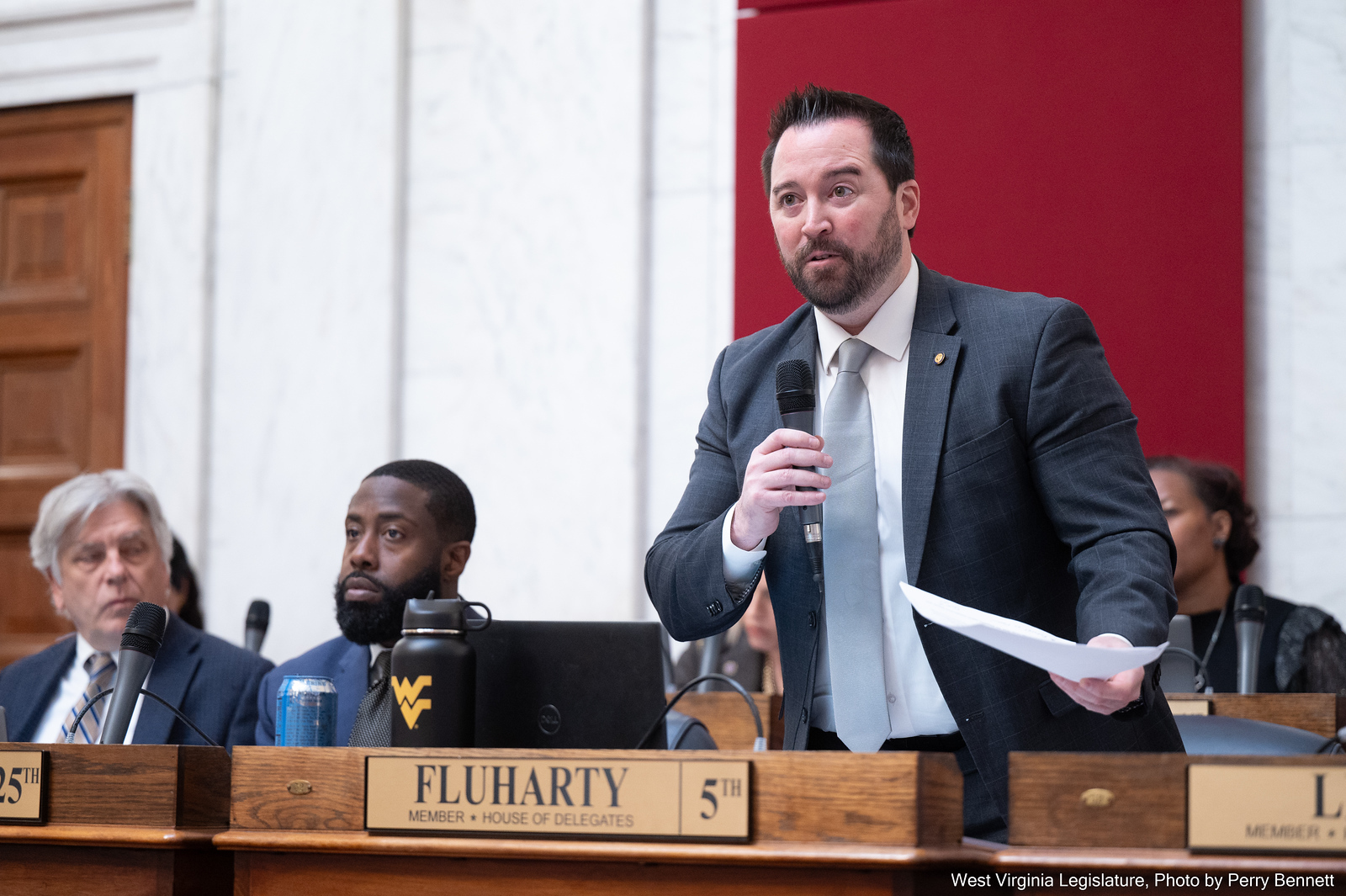
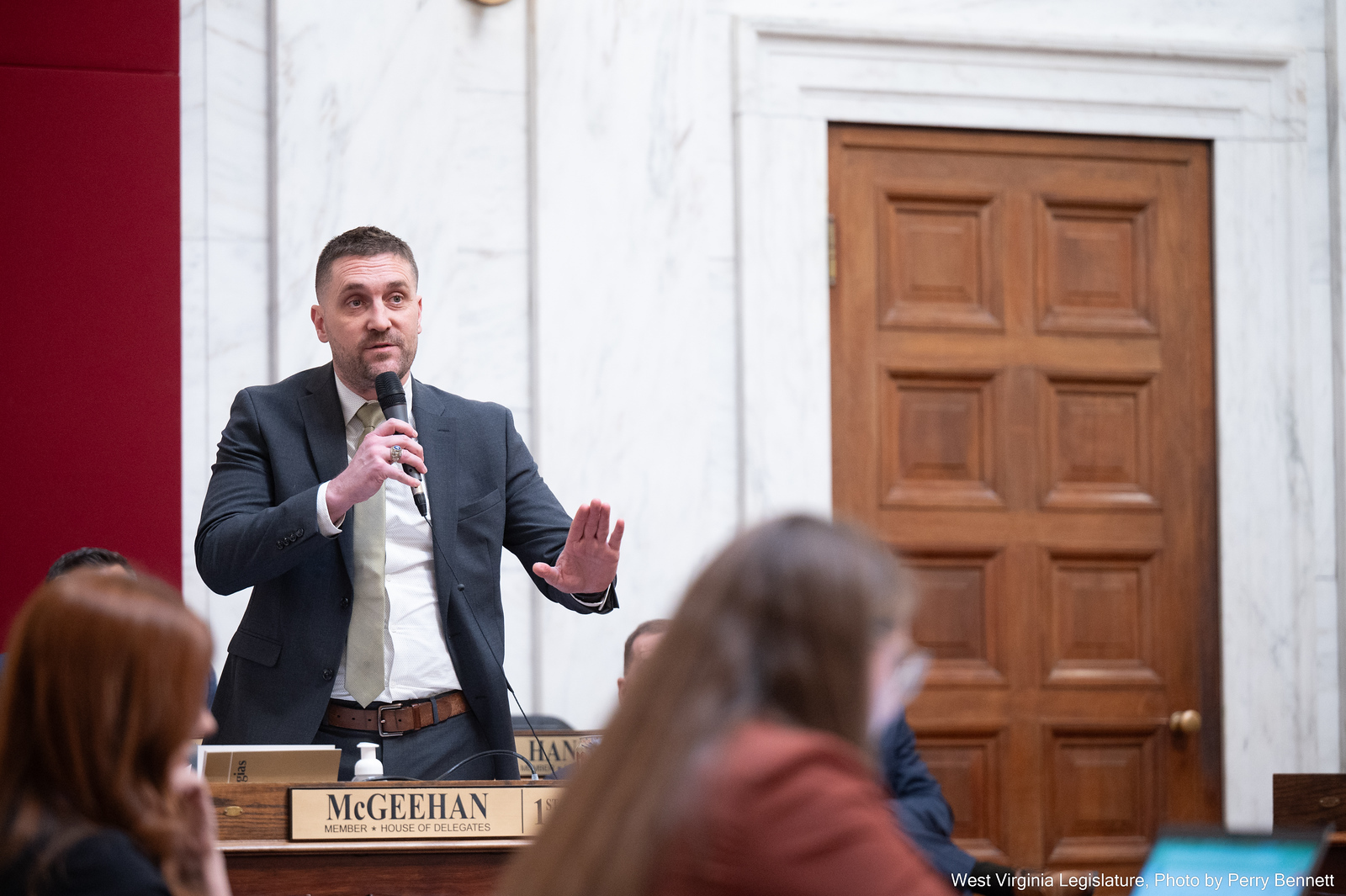
Fluharty’s objection to the resolution was also based on current law, although he did not offer any amendments. However, his attempt to explain his position and ask questions of McGeehan seemed to allow neither man to gain any ground.
“Can you show me where – in article six, section 16 (of the West Virginia Constitution) – it says that failure to take the oath forfeits the seat?” Fluharty asked, after McGeehan confirmed that the resolution was not a motion to expel a member.
“Failure to take the oath of office is entailed by being qualified to be seated,” McGeehan responded.
“You agree with me, though, that it is refusal that is the triggering effect for forfeiting the seat, right?” Fluharty then asked, to which McGeehan replied, “No.”
“Do we have any evidence that de Soto refused to take the oath?” was Fluharty’s next question.
“I think the evidence is that he’s incarcerated right now on home confinement,” McGeehan shot back.
While Fluharty expressed his opinion that “this guy (de Soto) needs to go,” he stated his belief that the resolution violated procedure, and would ultimately be deemed unlawful once the courts – as Fluharty believes they will – become involved.
“The governor just spoke here, and guess what he hasn’t done yet – taken the oath as a U.S. Senator,” Fluharty said. “Is that seat vacant? Is it forfeited? Is he not a member of the body? Did they kick him out?”
“We have multiple members who are not here (today),” Fluharty continued. “If you read this resolution and apply it as written, you’re saying that they forfeited their seats. That’s absurd on its face, but this thing (resolution) is full of errors.”
“You screwed it up,” Fluharty added.
After approximately 10 minutes of debate between the two, McGeehan refused to answer any more questions. Ultimately, the resolution to vacate de Soto’s seat in the 91st District was adopted by the House.
House of Delegates now stands in recess until Wednesday, February 12.