
‘Mountain State Maple Days’ return begins Saturday
By Vanta Coda III, RealWV
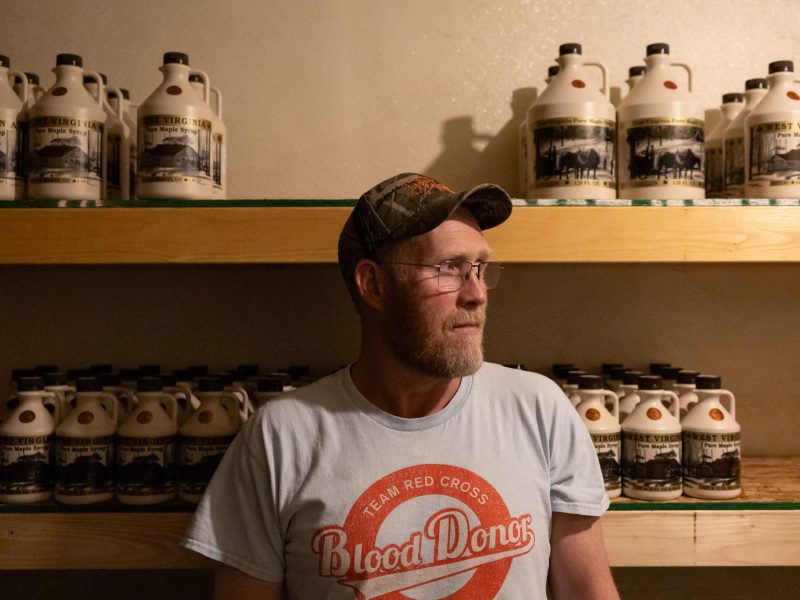
Sugar shacks throughout West Virginia are tapping maple trees and producing maple products in preparation for the 8th Mountain State Maple Days, hosted by the West Virginia Maple Syrup Association. This event will take place on February 15 and March 15 at various locations throughout the state.
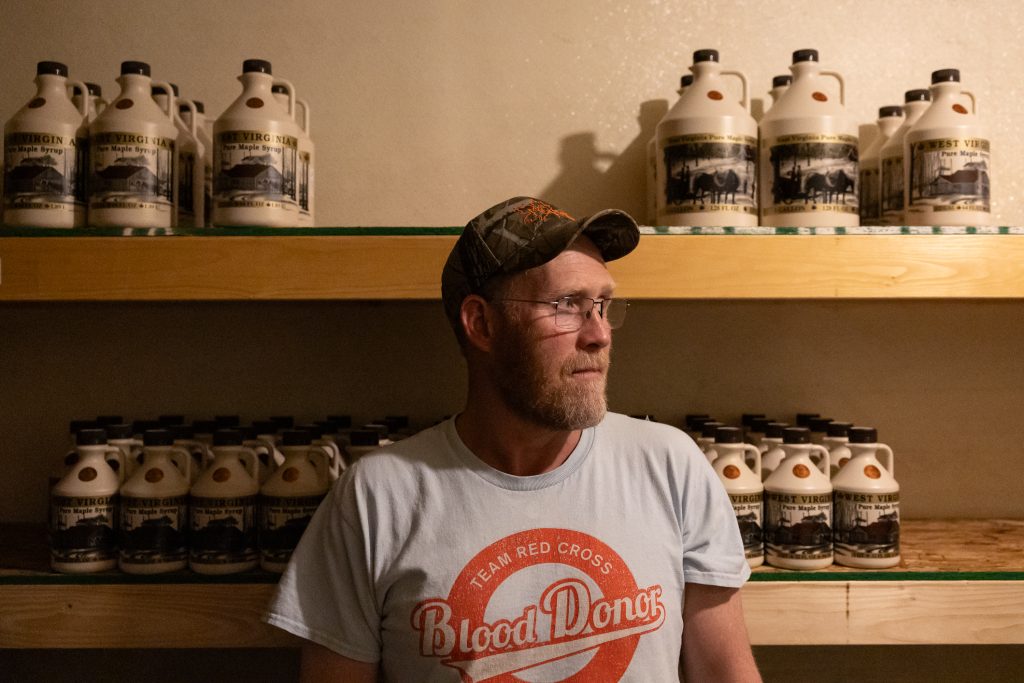
In Pendleton County, maple is in full production, as the weather has created favorable conditions for strong sap flows this year. Chris and Melissa Grimes, small-batch maple producers who operate Mountain-Cajun Getaway, are currently in the height of production and also preparing for Mountain State Maple Days.
“There is a limited time to collect sap before the trees begin to bud, and once they do, the sweet sap goes away,” said Chris Grimes. “This area of West Virginia is far different than down south or out west, our sugar bush is at about 3200 feet. Last year, because of the temperatures, we were boiling through March, and I wouldn’t be surprised if that happens again this year. We are hoping to produce about 325 gallons of syrup this season.”
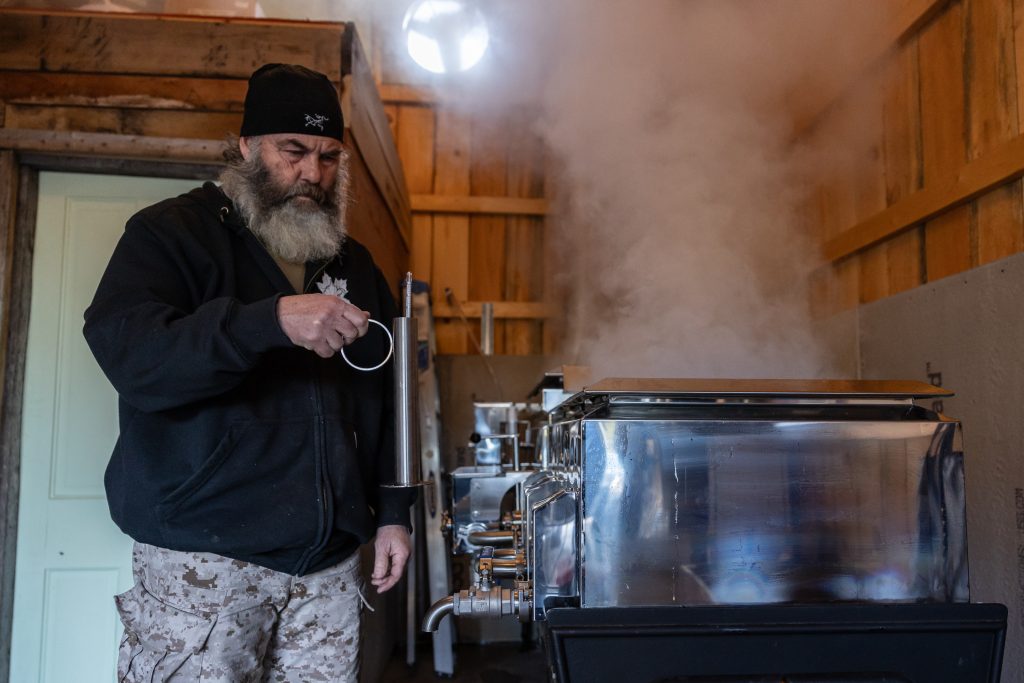
The primary goal of Mountain-Cajun Getaway is to create a space where veterans and their families can connect and address the challenges that arise from service-related separation and trauma. Since beginning maple production a few years ago, they have incorporated it into their program and now offer educational opportunities during the maple tapping season.
“We thought maple tapping would be a great tool for a veteran family to come up here and kind of assess the situation and work together. Our family is willing to join them if they wish. They can collect the sap and bring it back, and we will collaborate with them to help bottle it. After that, they can design their own label, and they will take the finished product home with them,” said Grimes. “From there it just grew to what it is now.”
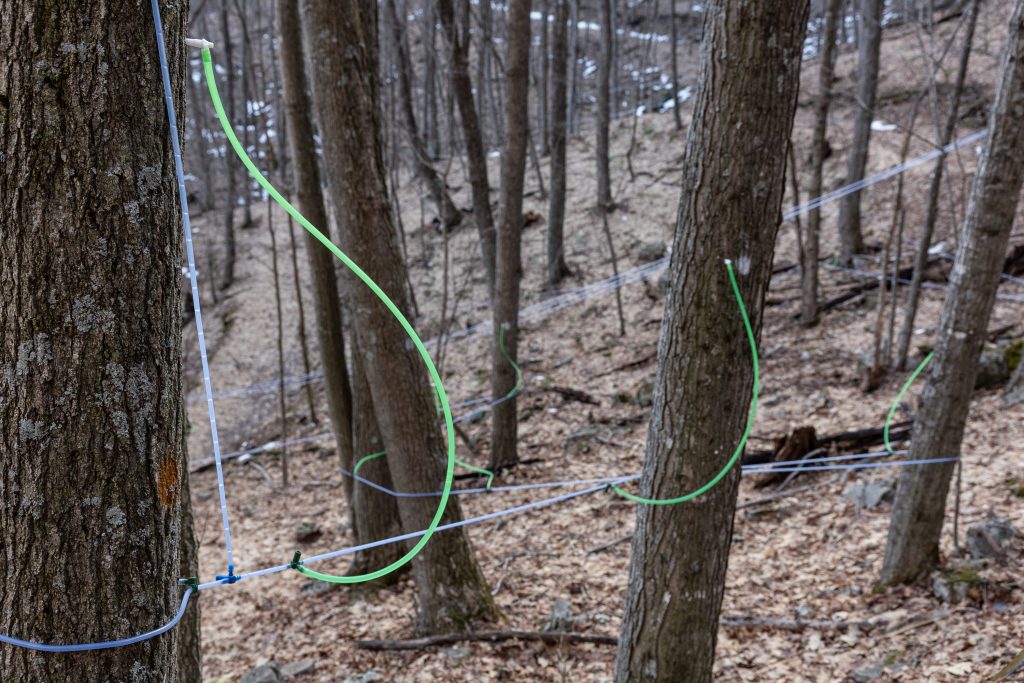
Mountain-Cajun Getaway has 600 taps on the foothills of Spruce Knob, the highest point in West Virginia. From these gravity-fed taps, which fill industrial-sized containers at the bottom, they then bring back to their sugar shack located behind Mountain-Cajun Getaway in Circleville, WV.
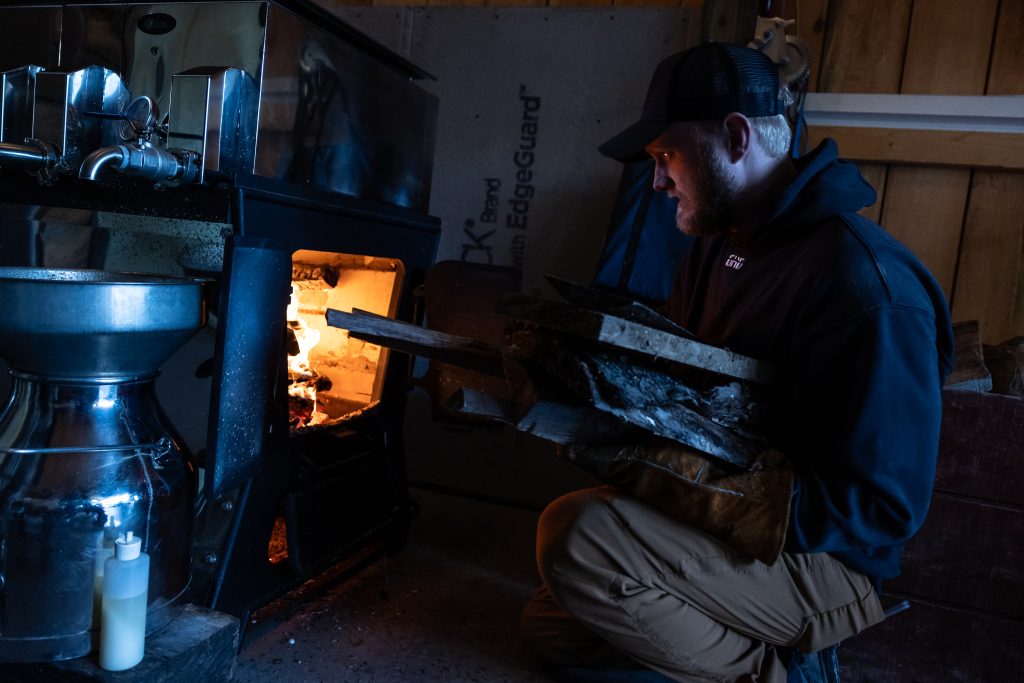
The higher altitude, varying temperatures, and specific positioning on the mountain create a consistent mix of warm and cold days, which is beneficial for sap flow during the tapping process. These conditions are ideal for maple harvesting. Pendelton County’s mountainous landscape makes it a prime location for maple production. Producer M&S Maple Farm, run by Mark and Sarah Kimble, who manage over 3,900 taps, get home from their day jobs in the evening and immediately go to work for their maple production.
“We usually get off between 5:00 and 5:30,” said Sarah Kimble. “As soon as we get home, we start throwing sap in the evaporator. We drive to our sap collectors and haul them back to the evaporator. It sometimes is a late night, depending on how much sap we get.”
Although maple producers harvest sap, not all of them produce maple syrup. Jeff Munn, the owner of Dry Run Spirits Distillery, uses maple sap to create a variety of alcoholic beverages, including one of Appalachia’s staples: moonshine.
“After my first year at a small level, 25 taps, making eight gallons of syrup over nine weeks, I realized this was really hard,” said Munn. “As a distiller, I realized that I didn’t really need to produce maple syrup, but my maple trees were pumping out free sugar. Water, sugar, and yeast are the key ingredients in making fermented alcoholic beverages. I collect sap, use reverse osmosis on it, and boil it just like any maple syrup producer. However, I don’t take it all the way to the full syrup consistency of 66% sugar. Instead, I put it into fermentation and distill it to make maple spirits.”
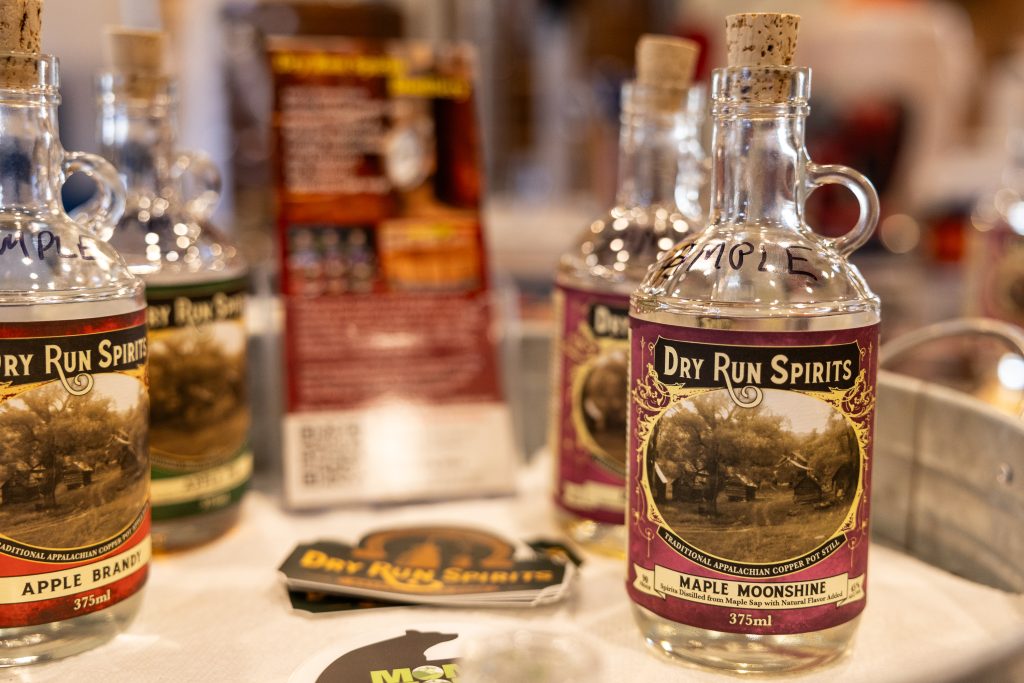
Munn’s property features a historic homestead that was established in the late 1700’s by German immigrants. In 1845, the homestead was incorporated into a small orchard and farm. Over the years, the property changed ownership multiple times, but throughout it’s change in owners it is most notable for producing apple jack, apple brandy, and other alcoholic beverages for over 130 years.
West Virginia is home to thousands of maple trees that are tapped each year by both producers and residents. The state features various species, including red maple, sugar maple, and silver maple. Future Generations University has documented and encouraged the practice of tapping trees, highlighting the historical significance of maples in West Virginia’s heritage.
Luke Taylor-Ide, Vice President of Community Engagement for Future Generations University, has conducted extensive research to assist producers in entering the maple tapping industry. In 2018, Future Generations University even hosted the Southern Syrup Research Symposium, a conference focused on the maple industry in the central Appalachian region.
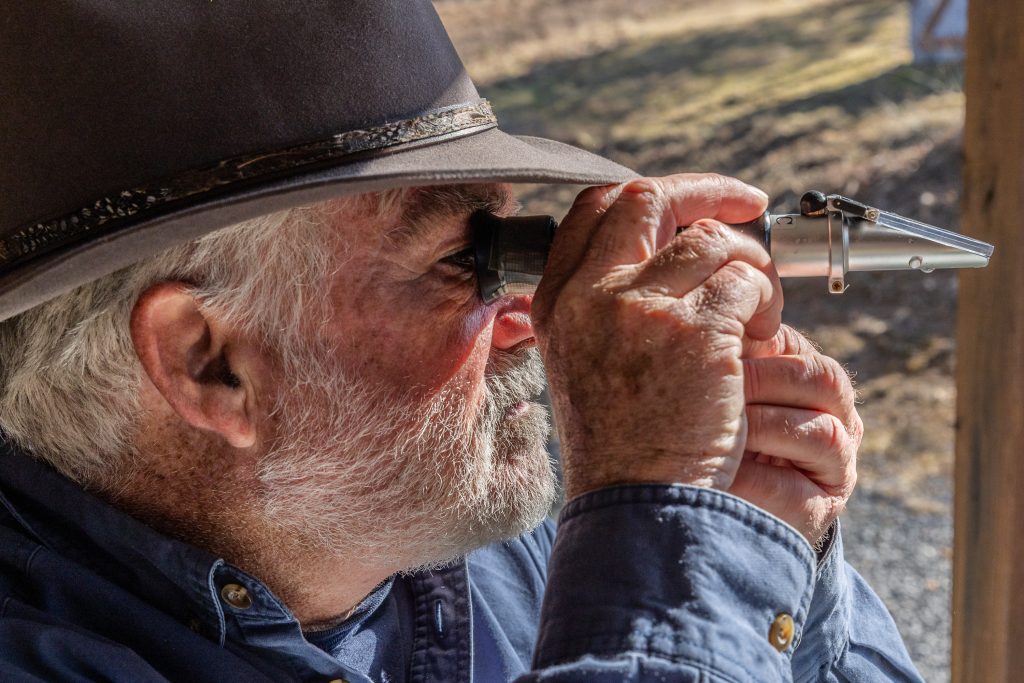
“Syruping has been practiced in this region since the 1800’s,” said Taylor-Ide. “Thomas Jefferson commissioned a private study of the economic potential of sugaring in America. Sugar was the first boycotted product in America, so in order for America to step into being independent, Jefferson stated that, it’s every American farmer’s patriotic duty to have an apple orchard and a sugar orchard.”
Kent Leonhardt, the West Virginia Commissioner of Agriculture, has been supportive of research in developing the maple syrup industry in West Virginia, utilizing grants that were already in use for research led by Dr. Michael Rechlin, a leading maple researcher from Future Generations University. His research explores the possibility of making syrup from red maple instead of the traditional sugar maple and its industrial implications in forming a maple syrup industry in central Appalachia.
With Dr. Rechlin’s research, training programs have been established for West Virginia citizens looking to get into maple tapping or for a lending hand and research for new producers. This initiative has led to an uptick in both large and small-batch maple syrup production not only in Pendleton County, but across West Virginia, making the state into a rising maple producer and maple research hub in North America.
With much research being conducted and West Virginia becoming more engaged in maple production, Mountain State Maple Days Coordinator and Future Generations University Communications Associate, Lindsay Kazarick, is excited for the eighth year of Mountain State Maple Days.
“Each year, Mountain State Maple Days is a nice opportunity to get out and explore what’s happening in your backyard,” said Kazarick. “Every farmer has a really important and unique experience that they bring to the table, a unique and really important set of skills that they are willing to open up their personal property to share with the public, and it’s a special time to learn something about West Virginia’s culture and our heritage, a way to pass that along to future generations that may not have a way to experience that on their own.”
Related Articles
From West Virginia to Chicago: Black By God joins national conversation on independent media
I went to Chicago representing a newsroom rooted in West Virginia, but the conversations happening there were much bigger than any one state
THIS WEEK IN WV HISTORY: Oct. 4–10
The following events happened on these dates in West Virginia history.