
Senate committee votes to make election of judges partisan
By Stephen Baldwin, RealWV
History may be repeating itself in West Virginia’s judicial elections.
Up until 2016, judicial elections in the state were partisan. After Republicans took control of the legislature in 2016, they made all judicial elections non-partisan. Now, a new crop of Republican senators wants to return to the old system.
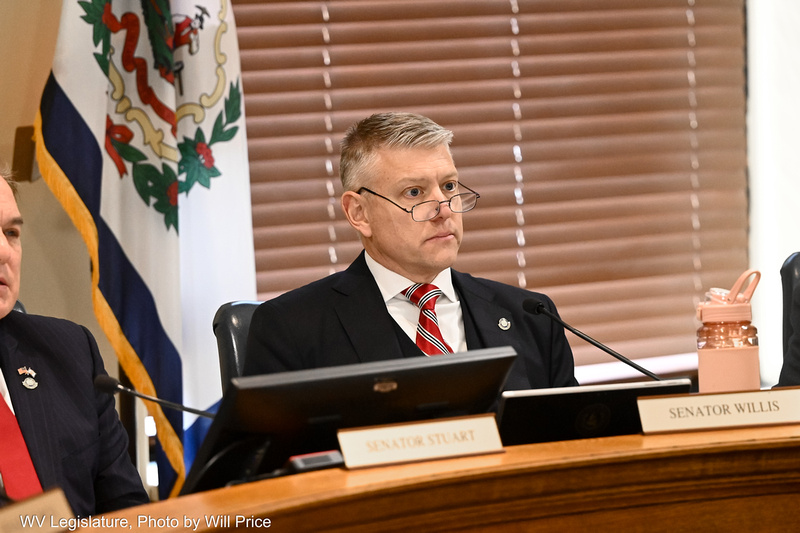
SB 521, sponsored by freshman Senator Tom Willis (R, Berkeley), requires the elections of the following offices to become partisan races decided in the fall rather than nonpartisan races decided in the spring–Justice of the Supreme Court of Appeals, Circuit Court Judge, Family Court Judge, and Magistrate.
A lawyer for the Senate Judiciary Committee explained to senators that if the bill were to pass there would be partisan primaries in the primary election and a partisan general election to decide all of these races.
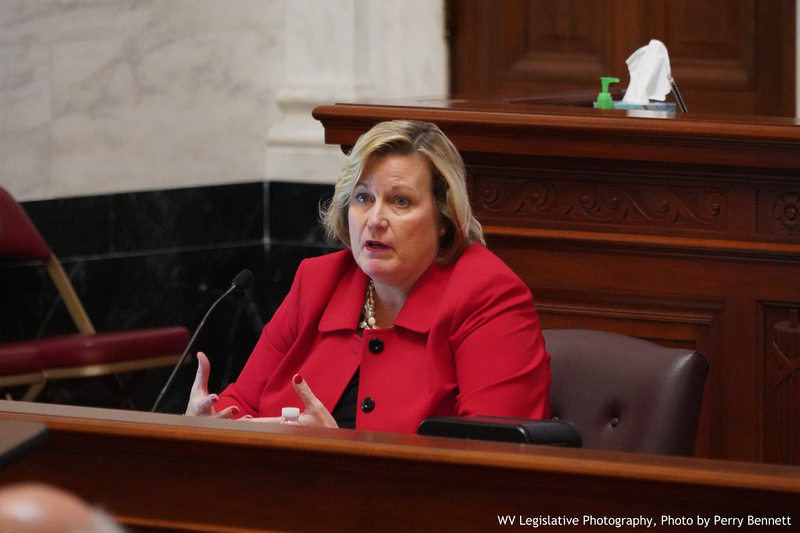
Justice Beth Walker, the most senior justice on the West Virginia Supreme Court of Appeals, testified in opposition to the bill.
“I’m one of the few people who can speak to having run a partisan and a nonpartisan election,” she began, describing her judicial races in 2008 and 2016. “I was the first justice elected in a nonpartisan race.”
Walker expressed support for the election of judges, saying that only 22 states allow for it currently. “Election of judges is incredibly important, for the sole purpose of making judges accountable to the public and more transparent. I think judges should go out and talk to the public. I welcome the election of judges.”
“But when it comes to the nonpartisan part of it,” she continued, “what we do as judges is not political. When you take nonpartisan away and inject partisan politics into the election of judges, it calls into question that very important fairness impartiality, and neutrality.”
Sen. Mike Stuart (R, Kanawha) serves as chairman of the committee and asked Walker if she thought voters wouldn’t be helped by having additional information on the ballot in the form of a party identifier? “Isn’t it hard for voters to know who candidates are?” he asked, arguing that folks are busy and often unable to stay tuned in to political races.
“I have more confidence in our voters than that,” she replied. “They do their homework, particularly for judge.”
Sen. Brian Helton, (R, Fayette) spoke in support of the bill, saying, “Voters deserve more information, more transparency. We need to give people as much info as possible about the candidate…and what philosophy of government they’re voting for.”

Echoing those sentiments, Sen. Mike Azinger (R, Wood) said, “Each party holds a repository of a certain set of values. Everybody knows, especially in 2025, what those values are. One set of values is represented by the R icon and the other by the D. It’s self-evident. Each party has a platform that says what the candidates of that parrty are supposed to aspire to. When I go to vote for one of the most important positions in a republic, the judicial election, I want to know how I am gonna vote.”
Willis, serving as Vice Chair of the committee, moved passage of his own bill despite the concerns of Justice Walker, and the committee voted in favor of the motion via a voice vote with multiple nays heard.
The bill is now before the full Senate and is up for passage on Tuesday of this week.
Stay tuned to RealWV for updates.