House votes today on exempting themselves from Freedom of Information Act, allowing them to adopt their own rule on public records
By Stephen Baldwin, RealWV
“The people, in delegating authority, do not give their public servants the right to decide what is good for the people to know and what is not good for them to know.”
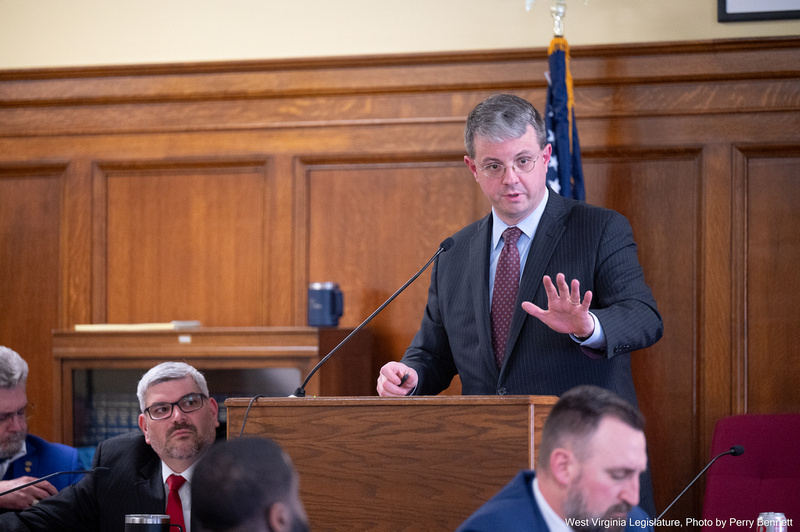
These are the opening words of the state’s Freedom of Information Act (FOIA), currently enshrined in law. The Speaker of the House, Delegate Roger Hanshaw, R-Clay, is proposing a significant change to that law.
HB 3412 was introduced on March 17 by Hanshaw. According to committee counsel, “This bill would exempt the legislature from the statutory requirements if it elects to adopt its own rules concerning the disclosure of public records.”
The Freedom of Information Act (FOIA) is a state law meant to provide access to public records. As the statute itself says, “The State statute on public records, known as the Freedom of Information Act, was enacted for the express purpose of providing full and complete information to all persons about the workings of government and the acts of those who represent them as public officials and employees, so that the people may be informed and retain control. Its provisions must be liberally construed to carry out that purpose.”
Hanshaw referred the bill altering FOIA requests to the Rules Committee, which he chairs. On March 26, the bill was presented at “hearing stage,” which typically allows members of the legislature and the public to provide input on pending legislation.
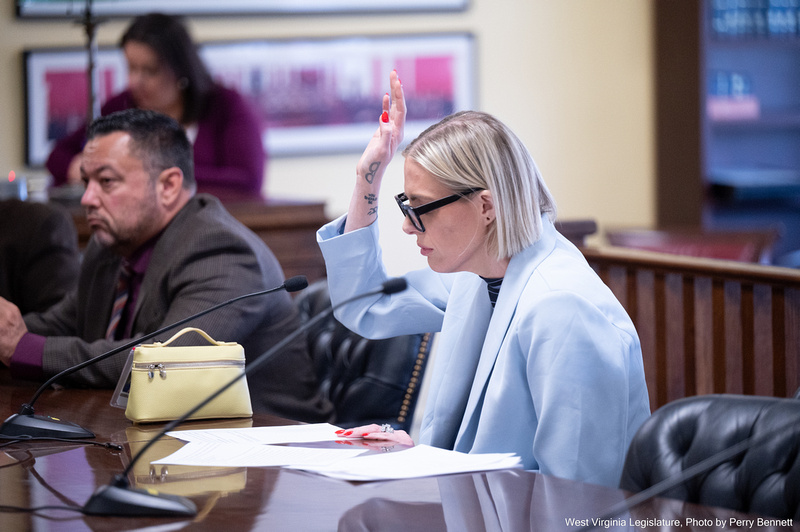
Delegate Kayla Young asked what types of records would be exempted by the bill? Counsel responded that it would depend on what rule the legislature would adopt. She suggested perhaps emails and financial records, and counsel agreed those are possibilities.
Hanshaw himself responded to the question as lead sponsor of the bill, saying, “We are often in receipt of requests for things that simply don’t come within the scope of the statute. Things like draft bills prepared by staff that are never introduced, draft legislation prepared by members that is never introduced.”
Hanshaw said the intent of the bill is to clarify what a public record is and what is available for access.
“The intention is not that we exempt the legislature from access to public records,” Hanshaw said. “It’s just simply to point out that we’re not the executive branch, and the kinds of records kept by the legislative branch are not the kinds of records kept by the executive branch.”
Again, the FOIA statute itself clarifies its scope, “The Act applies to all State, county and municipal officers, governing bodies, agencies, departments, boards and commissions, and any other bodies created or primarily funded by State or local authority, unless their enabling statute specifically exempts them from its provisions. The records covered by the Act include virtually all documents and information retained by a public body, regardless of their form.”
Hanshaw explained for this proposal to move forward and for anything to change relative to FOIA in West Virginia, a three-step process would be necessary. First, the House must pass the bill. Second, the Senate must pass the same bill. Third, the legislature must jointly adopt a new rule about what is and what is not subject to FOIA in terms of their own records.
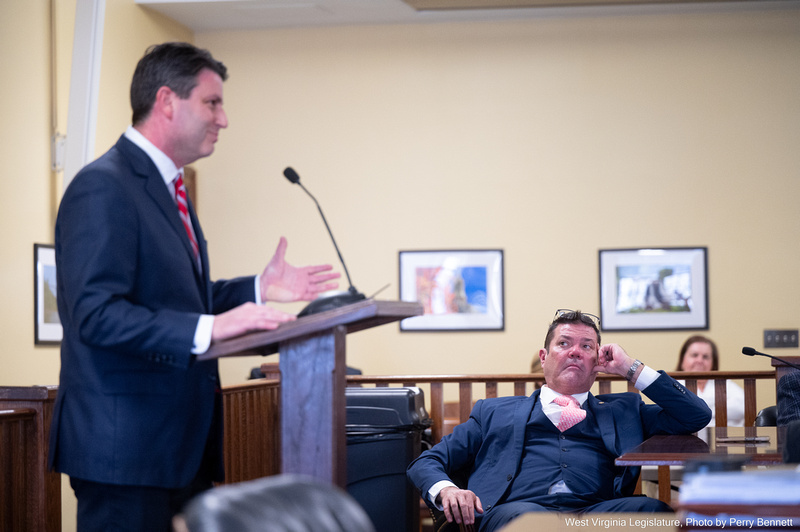
Only one citizen spoke at the hearing for HB 3412, former Delegate Doug Skaff, who is the owner of HD Media and Interim Executive Director of the WV Press Association. Hanshaw stated that he invited Skaff to speak.
“We just want to make sure…that government records, meetings, doings is available to recognized media outlets in the state,” Skaff said. “We feel like there’s a good relationship with the media now. Is there any intent to change that?”
“I’ll categorically answer that with a no,” responded Hanshaw. “We have a productive relationship with our media partners…The press is not the only user of the FOIA statute.”
“We would be supportive,” Skaff stated, “as long as it doesn’t restrict the rights of media to do their job.”
The next day, March 27, the Rules Committee passed the bill with no questions and no debate. It’s up for final passage on Wednesday, April 2.
Stay tuned to RealWV for updates.
Related Articles

West Virginia Herpetology Symposium brings enthusiasts, researchers together at New River Gorge
Headlamps pierce the dark on a trail that runs along the cliff faces of New River Gorge National Park and Preserve

BLACK BY GOD: Call to Action: PSC sets public meeting date to hear concerns regarding data center construction
The PSC (Public Service Commission) of West Virginia will hold a public hearing later this month regarding House Bill 2014 – otherwise known as the “Certified Microgrid Program” – a widely debated piece of legislation passed during the 2025 legislative session.
Dear Grace: Conversations that matter
I work full-time, but I can’t afford to live. Will the economy ever get better?