House votes to exempt themselves from Freedom of Information if they adopt their own rules
By Stephen Baldwin, RealWV
“Great googly moogly,” said Del. Larry Kump, R-Berkely, in reference to HB 3412, during debate on Wednesday.
According to Del. Clay Riley, “This bill would exempt the legislature from the statutory requirements if it elects to adopt its own rules concerning the disclosure of public records.”
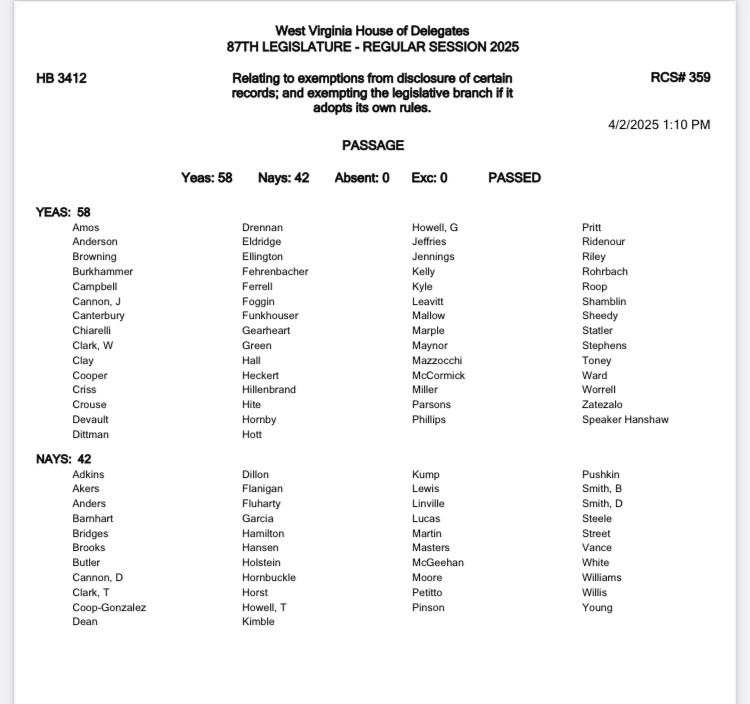
Kump voted no, but the bill passed by a margin of 58-42. See below for the roll call vote.
Delegates believe current law is too burdensome on legislative staff
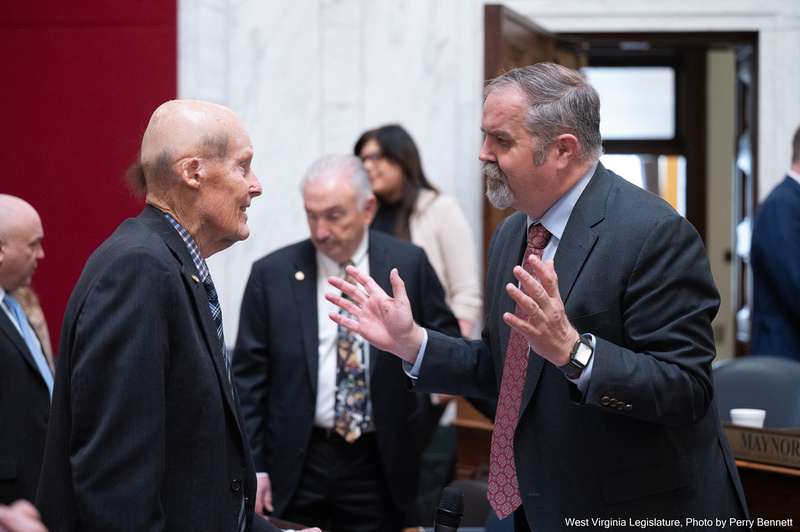
Speaker Roger Hanshaw introduced the bill. During a House Rules meeting, he explained the need for the bill this way: “We are often in receipt of requests for things that simply don’t come within the scope of the statute. Things like draft bills prepared by staff that are never introduced, draft legislation prepared by members that is never introduced.”
Several supporters of the bill echoed similar sentiments about legislative staff being overworked by Freedom of Information Act (FOIA) requests.
RealWV reached out to the House and Senate to inquire how many FOIA requests had been filed with them in 2025 and in the year prior, 2024?
Jacque Bland, Director of Communications for the Senate, responded that 7 requests for FOIAs have been received in 2025 and 41 were received in 2024.
Ann Ali, Director of Communications for the House, directed us to a public database of FOIA requests maintained by the Secretary of State’s office. It shows that no one has requested FOIAs via the House in 2025 and 50 requests were made in 2024. In a follow-up question, we asked if those numbers were accurate? Ali said she would check with the Clerk, Jeff Pack, and get back to us.
Del. Shawn Fluharty, D-Ohio, said, “There’s already procedures in place if there’s a FOIA request and we believe its too overly broad and burdensome. Putting this in rules defies the entire reason we have a FOIA statute in the first place.”
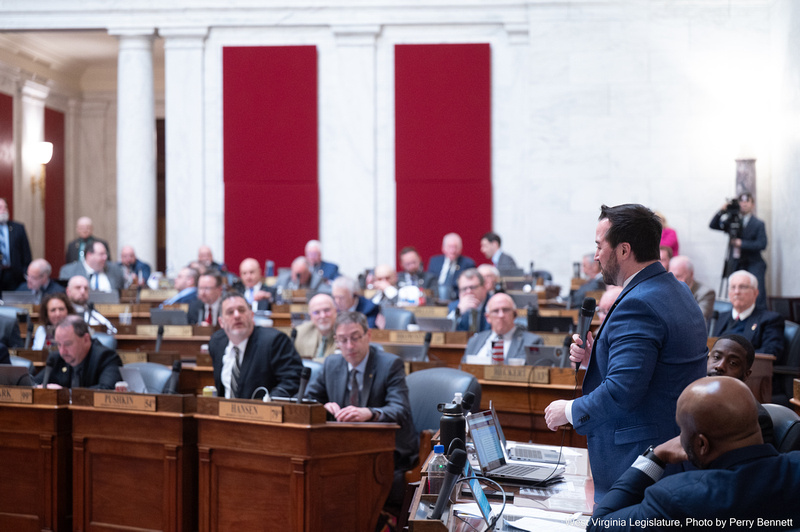
He went on to argue, “Using this ‘just trust us’ method is not something I want to do. ‘Just trust us, we’ll create our own rules.’ Why not anybody else?”
The Freedom of Information Act (FOIA) is a state law meant to provide access to public records. As the statute itself says, “The State statute on public records, known as the Freedom of Information Act, was enacted for the express purpose of providing full and complete information to all persons about the workings of government and the acts of those who represent them as public officials and employees, so that the people may be informed and retain control. Its provisions must be liberally construed to carry out that purpose.”
What’s next?
With the bill now passed, it heads to the Senate for consideration. If the Senate also passes it, current FOIA law would remain in effect until the legislature adopts their own rules governing which documents they allow the public access to and which they do not.
For additional background on the bill, see our reporting from yesterday.