West Virginia coal miner takes on federal government over NIOSH layoffs, judge orders return of certain employees
By Autumn Shelton, RealWV
CHARLESTON, W.Va. – On May 13, Raleigh County mine electrician Harry Wiley received good news. U.S. District Court Judge Irene C. Berger, in the Southern District of West Virginia, issued a preliminary injunction in Wiley’s case against the U.S. Department of Health and Human Services (HHS) and Secretary Robert F. Kennedy Jr.
In her ruling, Berger found that Wiley, a 38-year veteran coal miner, had enough evidence to prove that reductions in force (RIFs) at the National Institute for Occupational Safety and Health (NIOSH) Respiratory Health Division (RHD) would cause “irreparable harm” to those who are affected by black lung disease. As a result, Berger ordered that employees of the NIOSH Respiratory Health Division have their jobs restored and gave the defendants 20 days to be in compliance.
Wiley’s case, originally filed on April 7, stemmed from a February 11 Executive Order issued by President Donald Trump that called for prompt large-scale RIFs by federal agency heads as well as a “reorganization strategy” from the HHS to “Make America Healthy Again.” These RIFs affected 90% of the nationwide NIOSH workforce and included those employed at the Morgantown NIOSH facility — where research has a strong focus on the health and safety of coal miners, coal mines and respiratory diseases.
According to court documents, Wiley is currently employed as a mine electrician in Raleigh County. In November 2024, he was diagnosed with black lung disease (pneumoconiosis), a debilitating disease that causes coughing and shortness of breath following long term exposure to coal dust.
That same month, Wiley’s radiographic image showing signs of early-stage black lung disease was sent to NIOSH in Morgantown for “testing and interpretation” to determine if he would be eligible for a Part 90 – an “option to work in an area of a mine with dust below specified limits” that becomes legally available to miners who have been diagnosed with black lung disease.
“After NIOSH determines that a miner’s medical tests reveal evidence of pneumoconiosis and issues a Part 90 letter detailing the miner’s condition and rights, the miner can enforce his or her rights through the Mine Safety and Health Administration (MSHA) within the Department of Labor,” according to court filings. “Only NIOSH can issue the Part 90 determination.”
However, Wiley never received a response from NIOSH, court documents continue, forcing him to continue work in a dusty environment.
Testimony from two of NIOSH’s Morgantown epidemiologists, who had received RIF notices, was given on May 7 in Berger’s Charleston courtroom.
According to that testimony, the RIF notices were scheduled to take effect on both June 2 and July 2, 2025, although most of the employees at Morgantown had already been placed on administrative leave. Additional testimony from a black lung benefits coordinator out of Bluestone Health Center in Princeton stated that a notice was received in April declaring that “NIOSH had closed the Part 90 program to applications.”
Further testimony showed “there is no other agency in HHS or anywhere in the federal government that does similar work. Other governmental programs that address occupational pneumoconiosis among miners, such as the Black Lung Program within the Department of Labor’s Officer of Workers’ Compensation Programs, rely on the work done by the CWHSP (Coal Workers’ Health Surveillance Program) at NIOSH,” according to court documents.
When the Morgantown NIOSH layoffs were initially announced, and separate from Wiley’s initial filing with the courts, U.S. Sen. Shelley Moore Capito, R-WV, in April, wrote a letter to Kennedy asking to reinstate the employees in the Morgantown office.
“I believe in the President’s vision to right size our government, but I do not think eliminating the NIOSH coal programs and research will accomplish that goal,” Capito stated. “The mission and work conducted by the specially trained NIOSH employees is not duplicative of any other government program. I am concerned that the RIFs at NIOSH will undermine the vital health programs important to so many West Virginians. I urge you to bring back the NIOSH employees immediately so they can continue to support our nation’s coal industry.”
On the same day that Judge Berger issued her order, Capito took to social media to announce that over 100 employees at the Morgantown facility would be returning to their jobs permanently.
One day later, on May 14, Kennedy testified during a congressional hearing that 328 workers in the Cleveland and Morgantown NIOSH offices, as well as at the World Trade Center Health Program, have been reinstated.
Until a final judgement is reached regarding Wiley’s case, Berger’s injunction to reinstate employees will stand.
In the injunction, Berger also ordered that “there be no pause, stoppage or gap in the protections and services mandated by Congress in the [Federal Mine Safety and Health Act of 1977] and the attendant regulations for the health and safety of miners.”
The court determined that the actions of the defendants, the HHS and Sec. Kennedy, “are arbitrary and capricious and contrary to the law,” according to court documents, adding that federal regulations “require the HHS to provide medical examinations to screen for black lung, to evaluate chest radiographs and spirometry tests, to issue Part 90 findings to miners with signs of black lung, [and] to maintain a mobile health unit that travels to mines and mining communities . . .”
“The Defendants’ actions force Mr. Wiley, and miners like him, into choosing between their health and livelihood, despite Congress’s efforts to spare them that choice by establishing the job transfer program,” Berger’s order continues. “The federal government, the Defendants, and most importantly, the miners served by the CWHSP, within the RHD at NIOSH, are fortunate to have the professional skills of these highly qualified public servants. Losing the services of these experienced and dedicated employees is an aspect of the irreparable harm to the miners and the public that cannot and should not be ignored.”
Related Articles
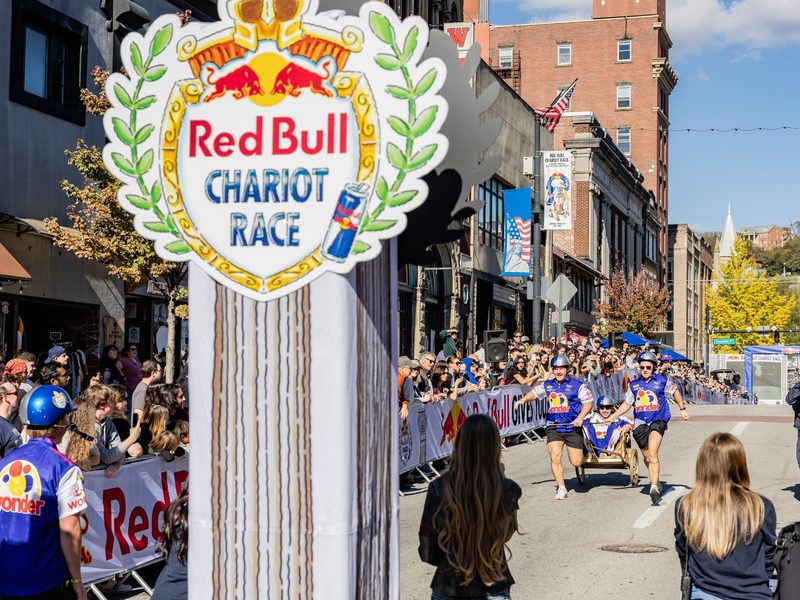
PHOTOS: Red Bull Chariot Race brings high-speed fun to Morgantown
Take a look at photos from the Red Bull Chariot Race in Morgantown, W.Va., which was held on High Street this past Saturday, Oct. 24, 2026.
BLACK BY GOD: Youth Voices Rising: Black By God Helping Amplify Youth Voices in West Virginia
This October, during National Arts and Humanities Month, Black By God: The West Virginian is launching Youth Voices Rising, a series of student articles, interviews and videos that gives audiences a view of West Virginia through young people’s eyes.