Real West Virginian of the Week: From India to Appalachia, Madhur Bedre finds home and opportunity in West Virginia
By Hannah Yost, Real WV
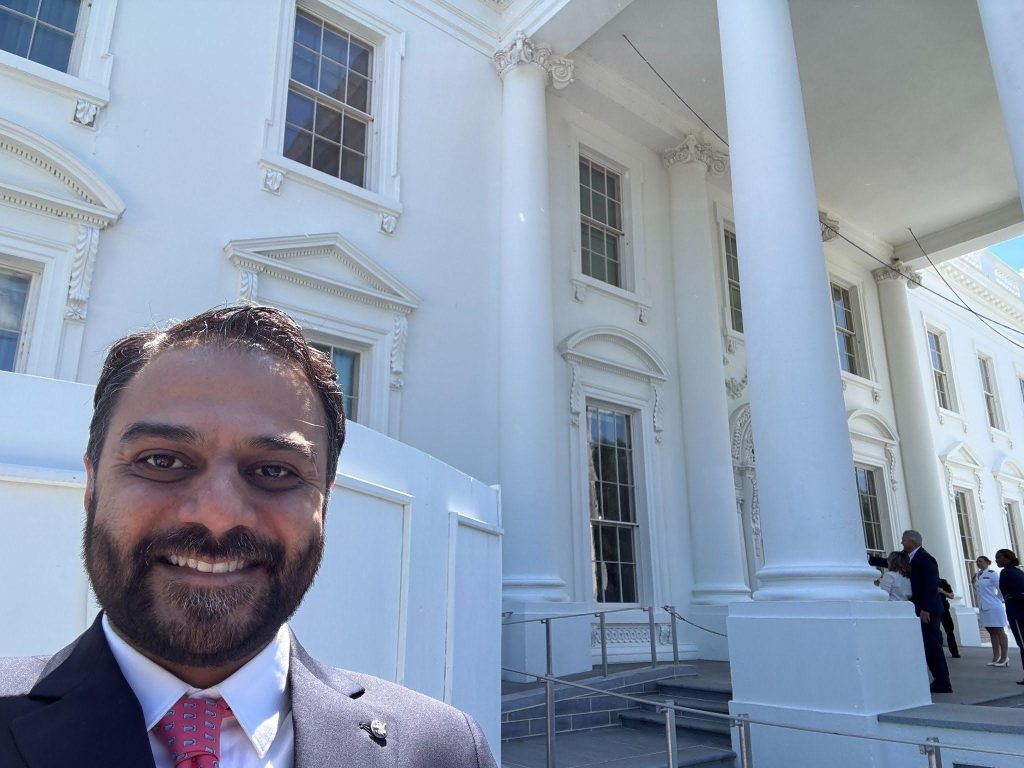
SOUTH CHARLESTON, W.Va. — When Madhur Bedre came to the United States from India, he did not necessarily know West Virginia would become home.
He came for his master’s degree after receiving a WVU flyer in 2009, a moment that helped shape 15 years of his life. What began as a move for education eventually became something much deeper — a career, a family, a business, and a sense of belonging in Appalachia.
“I’ve been in West Virginia for the last 15 years,” Bedre said.
Today, Bedre is the founder and owner of Atlas Prediction Control LLC, a company based in South Charleston. Before starting his own business, he worked in process control and automation, gaining experience solving problems for manufacturers, working with customers, and navigating negotiations.
In 2020, he decided to take the leap and start his own company.
Part of that decision, he said, came from his father, who had wanted him to become a small business owner. But Bedre also saw an opportunity in the field where he had already built his career.
He wanted to make a difference in how the process industry approaches optimization.
Starting a business brought uncertainty, especially as an immigrant navigating systems, banking, and business planning in a place where he did not initially know many people. But Bedre said West Virginia’s business support network helped him find his footing.
He pointed to the University of Charleston, West Virginia Regional Technology Park, the West Virginia Small Business Development Center (WV SBDC), and other support networks that helped him get started. Those early connections helped him build a business plan, secure a grant, and connect with an accountant who helped create a cash-flow spreadsheet and budget.
“We were able to do this with the support of mentors,” Bedre said. “The business ecosystem is fantastic to support that.”
Atlas Prediction Control started with zero capital and a focus on services. In the beginning, Bedre said the company took on lower-risk projects that helped it stay afloat and build cash flow.
In 2020, it was just him.
By 2021, the company had added three people. It added three more in 2022, another three in 2023, and now has a team of 12.
In recent years, the company’s business model has shifted toward higher-value, higher-risk projects that require more accountability and effort. The company now supports clients in Asia, the Middle East, and North America.
Bedre said the team is made up of chemical engineers, all of whom are transplants to West Virginia.
When asked what made him start the company in West Virginia, Bedre said part of it happened by chance. He came to WVU, started working in the state, and had already spent about a decade here when he began considering whether to launch the business.
But over time, chance became roots.
He had built a family here. He had children here. He had a life here.
When he thought about whether he should move somewhere else to start the company, he realized it would not necessarily change the type of work the company could do or the customers it could attract. Starting from the place where he was comfortable, with the people and support systems he had come to know, made the most sense.
“It was the right place to start the business,” Bedre said.
That sense of belonging is now central to how he talks about West Virginia.
“Absolutely, I wouldn’t be where I am without the support and belonging,” Bedre said.
In his first years in the state, Bedre said he assumed he might only stay in West Virginia for a couple of years before moving back to India or to another part of the country. Instead, he put down roots.
He built friendships across different groups and, when it came time to grow a business, said he never felt limited because he was an immigrant.
“At no point did I feel like I had limited access to things because I was an immigrant,” Bedre said. “It’s been very welcoming.”
He sees West Virginia’s closeness as one of its greatest strengths.
“A superpower for West Virginia is that we have one or two degrees of separation,” Bedre said. “Once you start asking questions, you find the right people to answer them, and it cascades from there.”
For Bedre, that network matters. It helped him find mentors, resources, and connections when he was starting out. It also helped him feel like he belonged in the place where he was building something new.
“I never felt shortchanged by being here,” he said.
Bedre describes his team as “young, scrappy, and hungry.” Because the company works in a highly technical field and supports customers across time zones, he looks for people with a high-ownership mindset, accountability, technical capability, and the ability to work well with others.
That matters, he said, when team members are solving problems for clients who may be halfway around the world.
As a business owner, Bedre said he still sees himself as someone who is constantly learning. When asked what he wishes he had known earlier, he said there are many things, but the process itself is part of the experience.
His mindset, he said, is to keep learning and rely on people who can help and “walk the walk” with him.
For others in West Virginia thinking about starting their own business, Bedre’s advice is simple.
“Start,” he said.
He believes that if someone is already thinking about starting a business, there is likely something innate there. If they have the desire, are willing to work, and are willing to leverage the people and support available in West Virginia, he believes they can do it.
That belief is connected to his own upbringing. Bedre said he grew up middle class in India with minimal resources, where people often had to figure out their own way. The grit he saw in others’ success inspired him.
Now, he hopes more people will build businesses in West Virginia and set an example for young people in the state.
“People should set the path and show our young people that it’s possible,” Bedre said.
For Bedre, the larger message of his story is about courage, opportunity, and the support that exists when people are willing to take the first step.
“I think the takeaway for people is that opportunities are everywhere,” he said. “There are many different things that are available, accessible, and it takes a bit of courage, but a lot of support is available if you decide to make the courageous step.”
And after 15 years in West Virginia, that step has led to more than a company.
It has led to a home.
“Courage goes a long way,” Bedre said.
Know someone who should be featured? Email your nomination to news@therealwv.com.
Related Articles
Nellie’s Course: A slice of Heaven in Renick
On the outskirts of Greenbrier County, Matt Turner has created a disc golf heaven.
WVSOM doubles in-state enrollment
This year in-state students make up 37 percent of the first-year class – a dramatic increase over three years.
DEAR GRACE: Conversations that matter
Our family farm is suffering. How do I support my husband and our workers when I’m so scared myself?