RFK rescinds NIOSH cuts, WV employees reinstated
By Autumn Shelton, RealWV
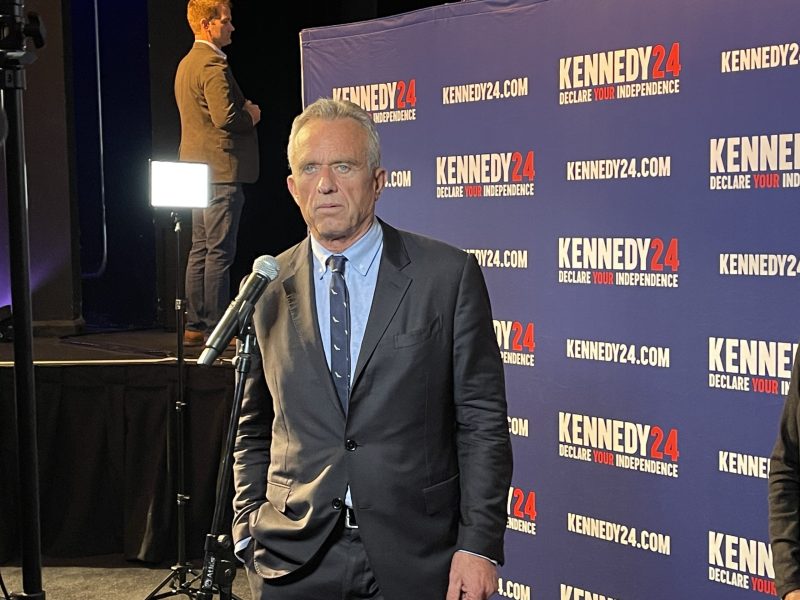
CHARLESTON, W.Va. – The U.S. Department of Health and Human Services (HHS) and Secretary Robert F. Kennedy Jr. have officially filed court documents stating that the Reductions in Force (RIFs) in the Respiratory Health Division (RHD) of the National Institute for Occupational Safety and Health (NIOSH) have been rescinded.
On June 2, Robert F. Kennedy, Jr., in his official capacity as Secretary of HHS as well as the HHS, submitted written certification that they were in compliance with U.S. District Court Judge Irene C. Berger’s preliminary injunction to reinstate employees.
Judge Berger’s injunction was issued in the Southern District of West Virginia on May 13 after the determination that Harry Wiley, a 38-year veteran coal miner, had enough evidence to prove that RIFs at the NIOSH RHD would cause “irreparable harm” to those affected by black lung disease.” As a result, Berger ordered that employees of the NIOSH RHD have their jobs restored. She gave the defendants 20 days to be in compliance.
(For more information on Judge Berger’s ruling and case background, read “West Virginia coal miner takes on federal government over NIOSH layoffs, judge orders return of certain employees.” )
According to court documents, the defendants certified that all RIFs in the NIOSH RHD have been “rescinded to facilitate the full restoration of the RHD, including the health surveillance through the Coal Workers Health Surveillance Program (CWHSP) and the Part 90 job transfer program.”
Additionally, the defendants certified that “in the event of the reorganization of the RHD, the Department of Health and Human Services will comply with the Court’s Order (ECF No. 36) and there will be no pause, stoppage, or gap in the protections and services mandated to be performed by the RHD by Congress in the [Federal Mine Safety and Health Act of 1977] and the attendant regulations for the health and safety of miners.”
John J. Howard, director of NIOSH, provided a declaration in support of the defendants certification, which was also filed on June 2.
According to Howard’s declaration, on April 1, HHS notified all non-bargaining unit employees based in Morgantown’s NIOSH office, as well as most bargaining employees, that they would be part of a planned RIF effective June 2. Also, on April 1, “some other bargaining unit employees” in Morgantown’s NIOSH office received an “Intent to RIF notice.” They later received notification that this would become effective on July 2.
“Fifty-one employees working in the Respiratory Health Division (RHD) received RIF notices,” Howard’s declaration states. “These 51 employees include all NIOSH RHD employees except for five Commissioned Corps Officers and three part-time employees.”
Howard further declared that all employees who received RIF notices, except one, “have returned to work in RHD at NIOSH,” and that “NIOSH removed a banner from its website saying the CWHSP is paused, and the Program is again accepting submission of chest X-rays and spirometry tests and “other information” such as the most recent information Mr. Wiley provided to the program.”
Lastly, Howard’s declaration states that “NIOSH is working through CDC (Centers for Disease Control and Prevention) and HHS chain of command to fully restore the RHD operations.”
When Judge Berger first issued her preliminary injunction back in May, West Virginia Attorney Sam Petsonk, who represents Harry Wiley, stated:
“America’s coal miners won an injunction today reversing the federal government’s closure of NIOSH’s miners’ health programs, including the Part 90 low-dust transfer & miners’ health screening programs. These programs are more urgent than ever as Appalachian coal miners cut through massive amounts of highly-toxic sandstone to reach the thin coal seams that remain in our heavily-depleted coal basin.
This opinion gives life to America’s foundational principles of judicial review, empowering ordinary citizens like these coal miners to defend their rights against illegal actions by our government. I’m glad to see the Administration already taking some initial steps in the direction of complying with the order. America’s coal miners deserve nothing less, and in fact they deserve a heck of a lot more.
The United Mine Workers of America in southern West Virginia struck and picketed to create these federal miners’ health programs, which have protected working people worldwide—from African emerald miners to Italian stonecutters to rare earth miners and beyond. And it was southern West Virginia miners again today who stepped up to save these programs by bringing this lawsuit.
By the grace of God and the order of the federal district court, these health protections should now continue for generations to come.
I was honored to work on the case with Mountain State Justice & Appalachian Mountain Advocates fighting for all miners.”
RealWV will continue to provide updates regarding this case as they become available.