Appalachian Power sees substantial push back over potential rate hikes
By Autumn Shelton, RealWV
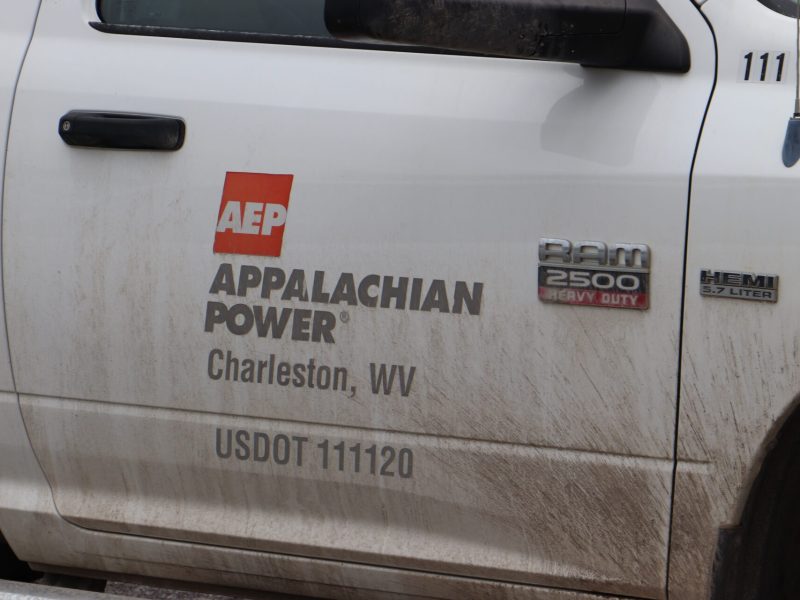
CHARLESTON, W.Va. – Appalachian Power Company and Wheeling Power Company customers have made it clear – they do not want to see an increase in their electricity bills.
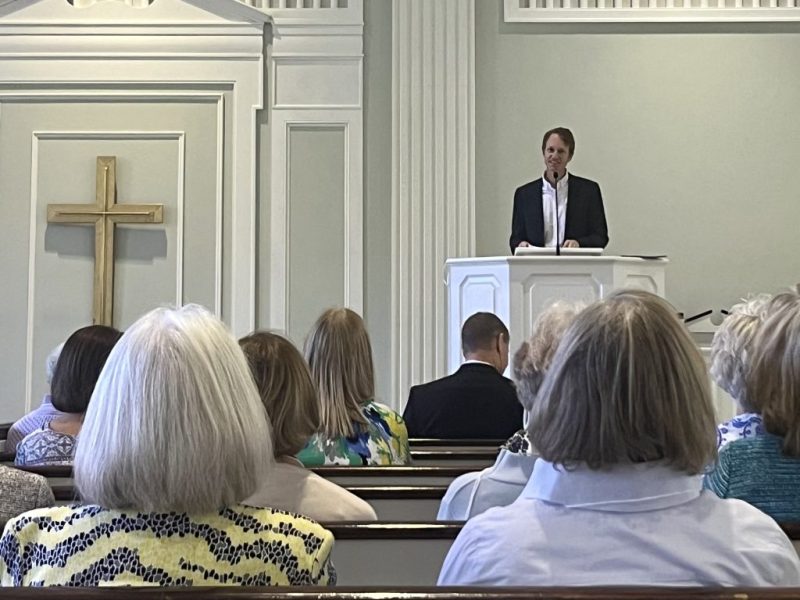
On June 17, numerous customers spoke, both in-person and virtually, during a public hearing before the Public Service Commission of West Virginia in protest of a requested $250.5 million annual revenue increase by Appalachian Power Company and Wheeling Power Company. Should members of the PSC approve the request, residential customer bills will rise $27.15 per month on average. This increase would take effect in August 2025.
Aaron D. Walker, president and chief operating officer of Appalachian Power, stated in testimony to the PSC, and provided in written documents, that the reason for the base rate increase request is to ensure a fair return while continuing to provide customers with safe and reliable service as cost of production continues to rise.
Some reasons for the increase in production costs, cited by Walker, include fossil fuel cost fluctuations, changing environmental regulations, aging utility infrastructure, inflation and severe weather events.
If approved, this would be the first base rate increase in six years. However, customers are not happy with this proposal — many stating that they are already overburdened by rate increases and dissatisfied with company practices.
In a written protest to the PSC, Raleigh County resident Joseph Sears stated, “Why should they get a rate increase when their CEO gets millions in bonuses . . . So for the people on fixed incomes, please deny the rate increase and make them use profits for what is needed. If people need something they save for it, but companies don’t. They just get rate increases and give a [huge] amount to company executives.”
Priscilla Cecil of Mercer County writes, “[Appalachian Power] wastes a lot of money on tree trimming that in my opinion is absolutely useless . . . please do not approve a rate hike.”
In addition to individual residents, school districts and county commissions have also issued statements of protest.
In February, Marshall County Schools and Raleigh County Schools issued statements of protest showing concern that electricity increases could take funding away from already overburdened county school budgets. In April, the McDowell County Commission filed a letter of protest citing stretched financial resources following flood events, and the Fayette County Commission filed a letter of protest citing an undue burden on its citizens.
Customers who provide energy to the grid from renewable sources, like solar, have also protested against the power companies’ request to replace the current net metering service (NMS).
Mercer County resident Chenoa Harrison writes, “I oppose AEP’s proposal to devalue the net metering credit by two-thirds for solar homeowners. I also oppose AEP’s proposal to raise electric rates. Please consider giving solar homeowners a fair credit rate for the energy their panels generate for their neighbors-and the grid! A fair credit rate makes it possible for West Virginians to go solar and produce energy locally.”
According to testimony provided by Rebecca A. Schwarz, director of Regulatory Pricing and Analysis for parent company American Electric Power (AEP), changes to tariffs, including the replacement of the company’s full retail net metering service, have been proposed along with the potential rate increase.
“This one-for-one netting has the effect of shifting cost responsibility for the non-energy related facilities and services that all customers use onto non-participating customers. For example, customer generators rely on the Companies’ transmission and distribution lines to deliver and receive energy but avoid contributing their fair share to the fixed cost recovery of the utility system or its maintenance,” according to Schwarz. “As solar has become more affordable, more customers have taken an interest in net metering and self generation as a means to reduce or control their energy expenses. The exponential growth of net metering has led to approximately 1,500 customer-generator participants and more than 15 MW of installed capacity in the Companies’ West Virginia jurisdictional service territories at year-end 2023. Given its rapid growth over the past decade, it is time to take a comprehensive look at the Companies’ net metering compensation structure and to make revisions that ensure net metering practices are not creating unjust and unreasonable cost shifting to other customers it serves.”
Dan Conant, Founder and President of Huntington-based Solar Holler, LLC, provided testimony stating that the power company’s proposal to eliminate the net metering service tariff for new customer generators by replacing it with the NMS 11 will harm the state’s economy.
“If approved, the NMS II tariff would effectively halt residential and commercial solar development in West Virginia,” Conant continued. “The proposed export rate for customer generators is so low that most, if not all, solar projects would no longer be cost effective. Some solar developers have already halted new sales in AEP territory given the uncertainty around the outcome in this case. If approved, NMS II would force solar developers to shut down operations or work exclusively with customers outside AEP’s territory.”
Solar Holler LLC, as well as West Virginia Energy Users Group, SWVA, Inc., West Virginia Citizen Action Group, Solar United Neighbors, and Energy Efficient West Virginia, Consumer Advocate Division of the Public Service Commission, Kroger, and the West Virginia Coal Association have filed petitions to intervene in this case.
460,921 customers throughout West Virginia in Boone, Brooke, Cabell, Clay, Fayette, Greenbrier, Jackson, Kanawha, Lincoln, Logan, Marshall, Mason, McDowell, Mercer, Mingo, Monroe, Nicholas, Ohio, Putnam, Raleigh, Roane, Summers, Wayne, Wetzel, and Wyoming Counties would be affected by the rate request, according to documents provided to the PSC.
Additional information surrounding the rate increase can be found at www.psc.state.wv.us.
RealWV will provide additional information, as well as the PSC’s decision on the requests by Appalachian Power and Wheeling Power Companies, as it becomes available.
Related Articles

Greenbrier County Commission holds first hearing on proposed hotel occupancy tax increase
On Tuesday, Sept. 2, the Greenbrier County Commission held its first public hearing pertaining to the proposed Hotel Occupancy Tax Ordinance.