Rural flights could be grounded after passage of Big Beautiful Bill
By Stephen Baldwin, RealWV
CHARLESTON—A program that has successfully brought daily air travel to rural West Virginia for more than 40 years faces an uncertain future following the passage of the Big Beautiful Bill in Congress earlier this month.
In 1978, the federal government began an experiment in subsidizing flights from rural airports to regional hubs. It was called Essential Air Service (EAS).
According to the US Department of Transportation (USDOT), which operates EAS, “The Essential Air Service program was put into place to guarantee that communities…maintain a minimum level of scheduled air service. This is generally accomplished by subsidizing, when necessary, two round trips a day with 30- to 50-seat aircraft, or additional frequencies with smaller aircraft, usually to a large- or medium-hub airport.”
The program emerged from the Airline Deregulation Act, with the intent of ensuring that rural communities could connect to the National Air Transportation System without having to drive long distances to a regional airport.
It was authorized for 10 years initially. “After multiple extensions of that period, the program is now permanently authorized by Congress,” says the USDOT.
Jon Vrabel, Airport Director for the City of Morgantown, says the program has stuck around because it works.
“Back when the program started, it was supposed to be short-lived,” he explains. “It did so well connecting small communities to national and international routes, and that’s the reason it has stayed around for so many years.”
$20 million impact in the Mountain State
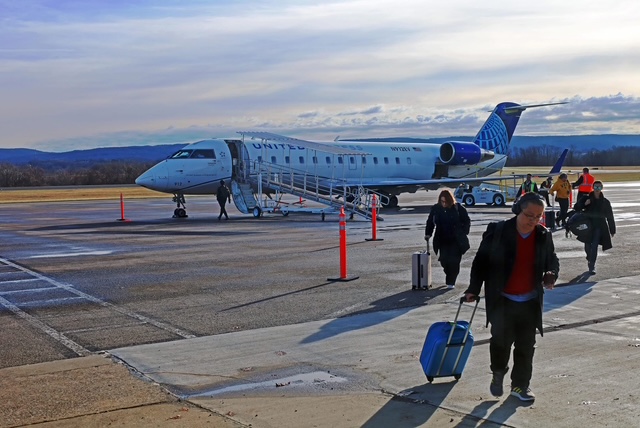
Last year, EAS subsidized local flights in 112 rural communities across the United States plus another 65 in Alaska.
The total cost? $550,008,083 as of October 2024, the last time USDOT released statistics.
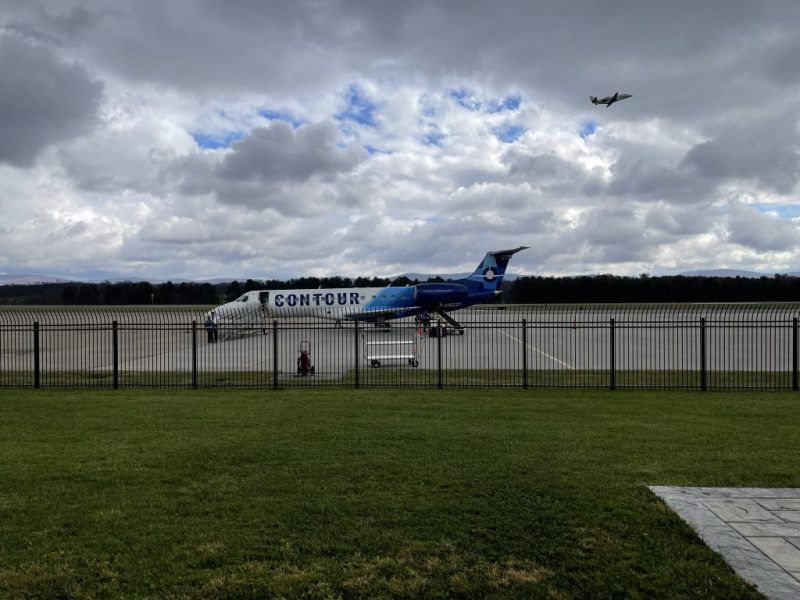
West Virginia received approximately $20 million last year from EAS at five airports–Beckley ($2.8M), Clarksburg ($5.5M), Lewisburg ($6.4M), Morgantown ($3.3M), and Parkersburg ($2.1M).
The airports don’t receive the fund directly. USDOT provides direct subsidies to the airlines who provide flights from the airports. Without those subsidies, though, the airports say they’d be in trouble.
“Most of the airports in West Virginia wouldn’t be able to survive without it,” says Vrabel. “Charleston and Huntington have vital air service and are not EAS airports. They would be able to stand on their own. The rest (of the airports) that have air carrier service, we need the EAS to provide flights.”
In the fall of 2024, Morgantown signed a contract with SkyWest Airlines, an affiliate of United Airlines for EAS flights. Here’s how the process works.
“For instance, in Morgantown, the USDOT will put out a bid for EAS at the airport,” explains Varbael. “Several carriers will submit bids. They will have what cities they’ll fly to from your airport. Then we as a community can put together a team to interview those carriers. Then we make a recommendation to the USDOT who we’d like to see in our community and why they’re a good fit. They ultimately make the decision who is chosen, and it could be based on price or the service provided.”
The Morgantown committee recommended SkyWest. Even though they weren’t the low bidder, they flew more routes to more places via their affiliation with United Airlines, and USDOT approved the recommendation.
“You can go anywhere in the world from Morgantown. We didn’t have that capability before,” adds Vrabel.
Big Beautiful Bill cuts EAS by more than half
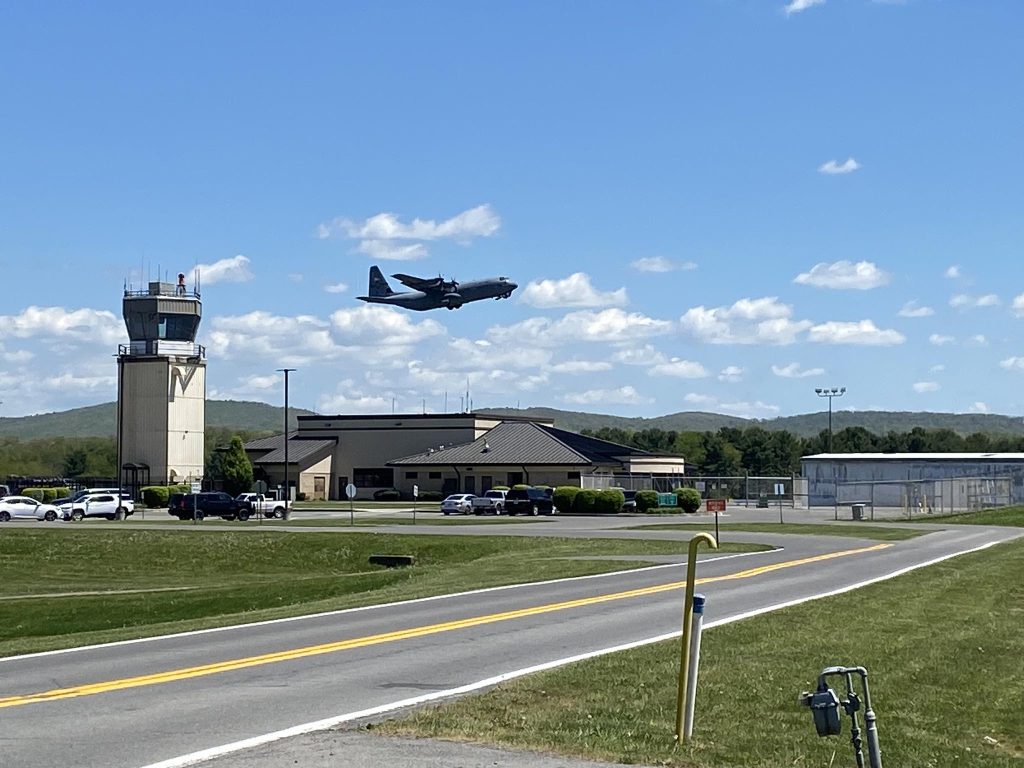
But now, those EAS flights to five West Virginia airports and 167 other American communities fear they may be grounded. The Big Beautiful Bill championed by President Trump and approved by Congress earlier this month includes a $308 million cut to EAS.
The bill was sweeping in its scope, and the cuts to air service received little attention from lawmakers or the media. But now airports are left wondering what the impact will be.
The WV Airport Managers Association, via Jon Vrabel, told RealWV they are awaiting details from the USDOT.
“We havent received any communications yet,” he says. “We’re waiting to see what USDOT puts out and see how it will affect our airports. It’s hard to say what will happen. There will be some scrutiny on the program going forward. There may be things USDOT will have to do to live within that budget. More than likely, there’s going to be communities that lose air service.”
RealWV reached out to the USDOT, via the office of Secretary Sean Duffy, for comment to see what airports could expect from the cuts and who they would affect. Our request was not returned.
Vrabel is hopeful that West Virginia’s congressional leadership will go to bat for the airports.
“Sen. Capito (R-WV) does a lot for our area. She also has a lot of power. She will try to keep that service here,” he says.
Martha Livesay, Director of the Greenbrier Valley Airport, echoes those sentiments. “We remain optimistic about working with our congressional delegation to demonstrate the value this program provides to communities like ours. We encourage our representatives to consider the significant impact that EAS funding has on rural connectivity and economic development as they evaluate federal spending priorities.”
RealWV reached out to Sen. Capito’s office and asked about the EAS program cuts, but our request was not returned.
Local leader calls EAS ‘critical’ to tourism in WV
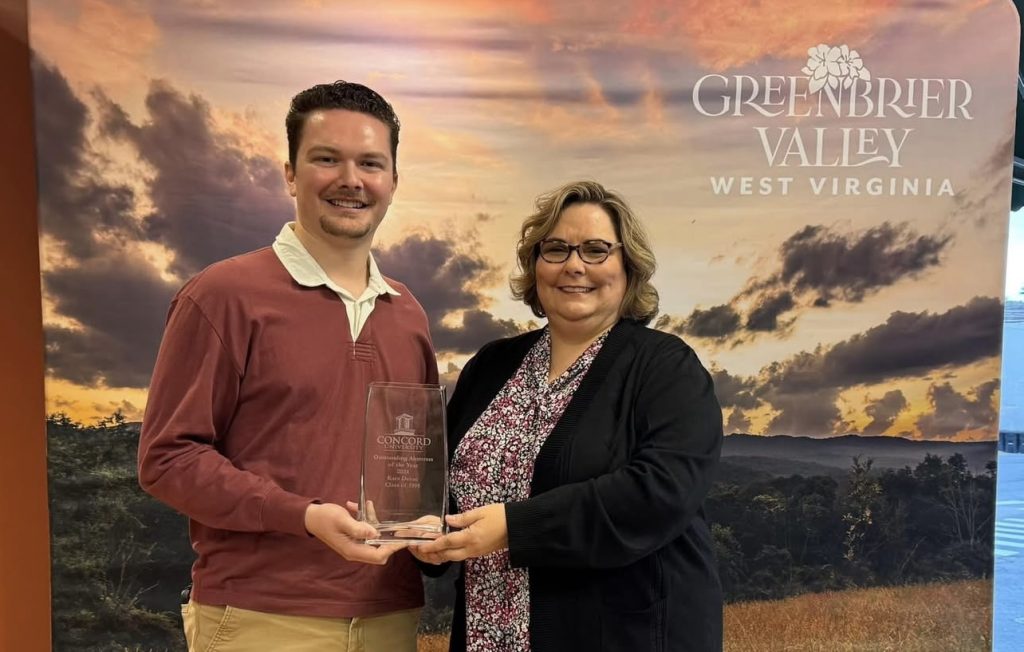
Kara Dense (right) is the President and CEO of Experience Greenbrier Valley, an organization devoted to promoting tourism and travel in southern West Virginia. She strongly supports EAS for the local impact it makes.
“Essential Air Service is critical to the success of tourism in the Greenbrier Valley,” says Dense. “It provides a gateway for visitors across the country to experience our unique blend of outdoor adventure, rich history, and warm hospitality.”
Dense further cited a recent WV Department of Tourism study which showed that travelers spent almost $400 million in the Greenbrier Valley in 2024, supporting nearly 3,000 jobs. She attributes that economic impact in part to daily air travel via EAS.
“With two daily connecting flights to major hub airports, access to our region is significantly improved, making attracting leisure visitors and groups easier,” says Dense. “Without reliable air access, we risk limiting the growth of our visitor economy and weakening the local businesses and jobs that depend on tourism.”