Take a drive through ‘Bloody Mingo’s’ Dingess Tunnel
By RealWV Staff,
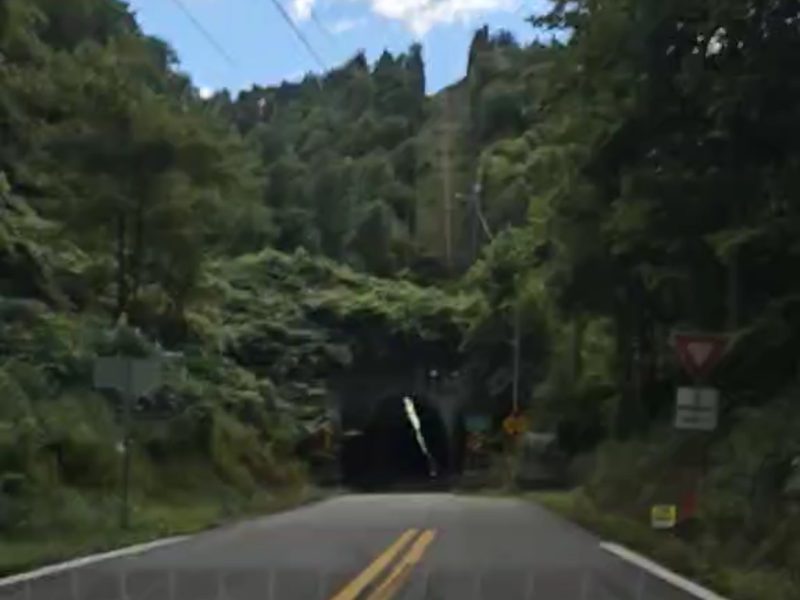
Originally constructed in 1892, the historic Dingess Tunnel served, for more than 12 years, as the “Twelvepole Creek” route of the Norfolk & Western Railway. Heavily traveled until the early-1900’s, the tunnel fell out of favor after a series of fatal accidents claimed the lives of 10 people, and the construction of a new line was completed along the Big Sandy River. By 1913, the tunnel was completely inactive for train passage.
Legends tell of locals who, not wanting outsiders coming into their town, would wait near the entrance of the tunnel for the train to draw near. When within range, the locals would shoot at the train, attempting to hit riders.
As explained on the Tug Valley Area CVB website, “While no official records exist, its estimated hundreds of victims were killed in this ambush style murder. There were even tales of masked men who would stop trains, remove passengers in the middle of the night and kill them.”
“The crimes against outsiders certainly contributed to the county’s nickname ‘Bloody Mingo,'” the website further states.
While trains no longer passed through the Dingess Tunnel, its direct connection between the towns of Wayne and Lenore made it a valuable travel route for pedestrians and horses. At just over six-tenths of a mile, traversing the tunneling meant cutting significant travel time going from one town to the other. As horses were replaced by automobiles in the 1920’s and 1930’s, the tunnel’s rail lines were removed and a road installed.
The Dingess Tunnel remains, to this day, a single-lane roadway which connects Wayne and Lenore. To learn more about the Dingess Tunnel, visit the Tug Valley Area CVB’s website, at visitcoalcountry.org.