
Front Porch Conversations: The U.S. Supreme Court to hear arguments regarding transgender athletes
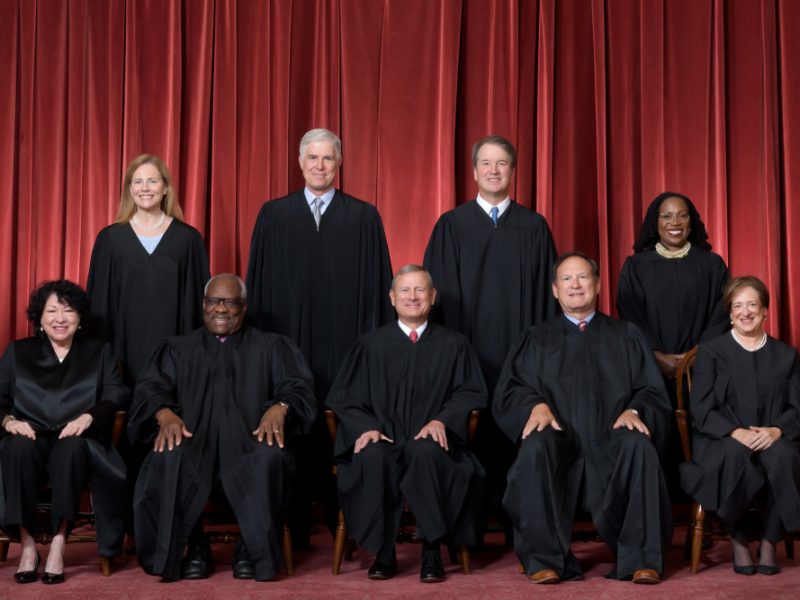
I’m interested to see how the Supreme Court will decide the Becky Pepper-Jackson case. It has been a topic of contention for quite some time in West Virginia.
Welcome to our Front Porch!
On Tuesday, Jan. 13, the United States Supreme Court is set to hold oral arguments in the case of West Virginia vs. B.P.J., a high-profile case that will determine if transgender athletes are permitted to play on girls’ athletic teams. (Also included in Tuesday’s oral arguments will be the Idaho case of Little v. Hecox, but we are going to focus on the Mountain State lawsuit.)
According to information found on the Supreme Court website, the two main questions the court must decide are: 1. Whether Title IX prevents a state from consistently designating girls’ and boys’ sports teams based on biological sex determined at birth. 2. Whether the Equal Protection Clause prevents a state from offering separate boys’ and girls’ sports teams based on biological sex determined at birth.
So, how did a West Virginia case make it all the way to the Supreme Court?
In 2021, then West Virginia Governor Jim Justice signed House Bill 3293, the “Save Women’s Sports Act,” into law. This legislation determined that there are “inherent differences between biological males and biological females,” and that “in the context of sports involving competitive skill or contact, biological males and biological females are not in fact similarly situated. Biological males would displace females to a substantial extent if permitted to compete on teams designated for biological females.”
Essentially, the law states that biological males are not allowed to play on athletic teams designated for females in the state of West Virginia.
After this legislation became law, a Harrison County parent filed a lawsuit claiming that her 11-year-old child, Becky Pepper-Jackson, who has identified as a female since elementary school and who has taken puberty blocking hormones, would no longer be permitted to play on her middle school girls’ cross-country and track teams.
After a series of court dates, in April 2024 the U.S. Fourth Circuit Court of Appeals decided in favor of Becky Pepper-Jackson, which allowed the now 15-year-old high school student to continue to play on her athletic teams despite West Virginia’s law.
The state of West Virginia, through then Attorney General Patrick Morrisey, appealed the decision to the U.S. Supreme Court, and in July 2025 the Supreme Court decided that they would hear arguments regarding the case.
Since becoming the state’s governor, Morrisey has continued to support keeping biological males out of women’s sports, and championed President Donald Trump on Feb. 5, 2025, when the “Keeping Men out of Women’s Sports” executive order was signed.
West Virginia Attorney General JB McCuskey is set to defend the state’s Save Women’s Sport Act before the Supreme Court on Tuesday.
“This case is monumental not only for West Virginia, but for our entire country. The outcome will impact the future of women’s sports, the promises of Title IX, and the safety of our daughters,” Attorney General McCuskey said in a Jan. 7 press release. “We are hopeful that the Supreme Court will uphold the Save Women’s Sports Act and agree with what West Virginia has been saying for years: biological sex matters in sports, and allowing males to compete against female athletes is unfair and dangerous.”
Live audio of the Supreme Court’s oral arguments can be listened to on their website, https://www.supremecourt.gov/oral_arguments/live.aspx
RealWV will provide an update on the Supreme Court’s decision as it is made available.
###
Do you have a question or a topic of conversation? Reach out to us at https://therealwv.com/front-porch-conversations/. Discussions take place over on our Facebook page @TheRealWV.
Feature image credit: Collection of the Supreme Court of the United States