Legislature sends budget to governor, with a message
By Stephen Baldwin, RealWV
“This is the final compromise between the Senate and House.”
Sen. Jason Barrett, R-Berkeley and Chair of the Finance Committee, presented the budget bill (SB250) to his colleagues on Thursday morning with that explanation.
Who was the compromise between? Republicans and Democrats? The legislature and the governor?
As the day wore on, that answer became clear. It was a compromise between Republican leadership in the House and Senate in order to send a message to the governor.
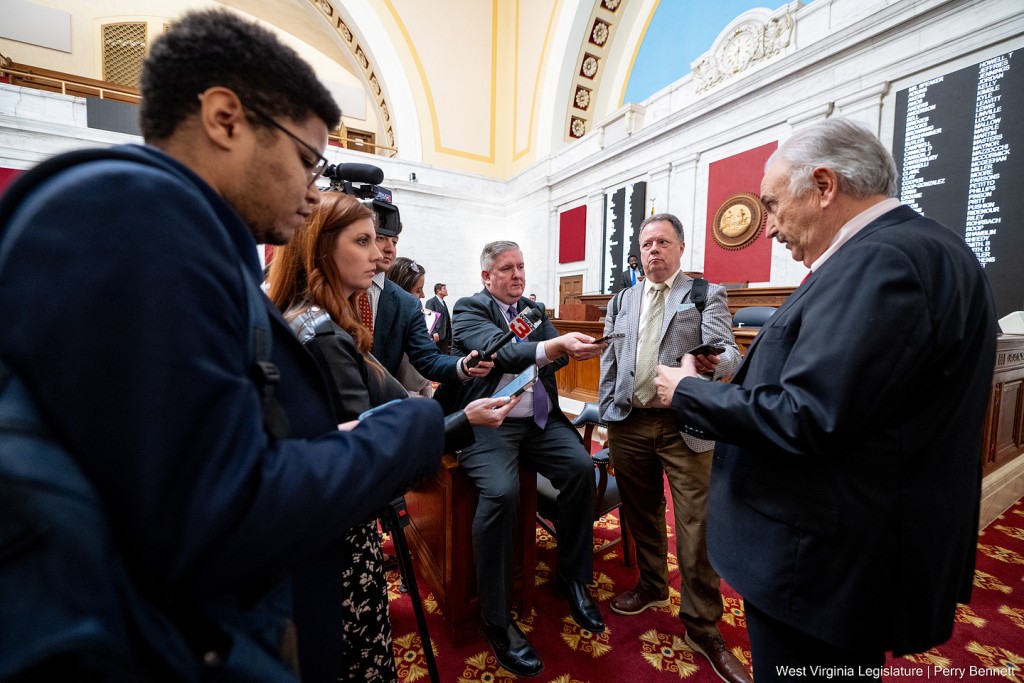
“We wanted the budget out so that we have the opportunity for the governor to take a look at it, and if he decides to do line-item vetoes then we have an opportunity to override those vetoes,” said Del. Vernon Criss, R-Wood, after the floor session, as first reported by Brad McElhinny of WVMetronews.
Criss went on to describe the legislature’s memory of Morrisey’s use of the line-item veto, a power given to governors constitutionally but rarely used, last year. “We learned in the process of the 29 veto items that he did in the current budget that we needed to have the ability to voice our opinions.”
According to the state constitution, the governor has the power to veto specific lines in the budget. However, the legislature also has the power to override those vetoes, by a vote of ⅔ of the members, so long as they are still in session.
By passing the budget more than 5 days before the end of the session, Morrisey will seemingly be forced to either sign the budget, let it become law without a signature, or use the line-item veto and risk a direct confrontation with the legislature they feel confident they have the votes to win.
The Budget Bill, SB250
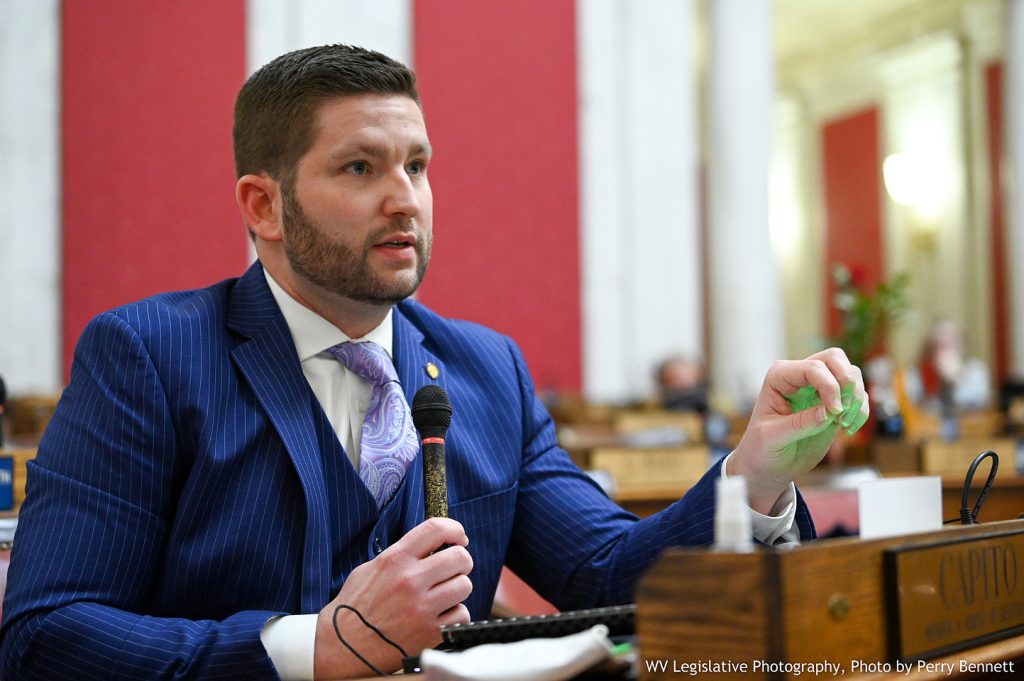
The final vote in the Senate was 30-3 (with one absence) in favor of passing the annual budget bill. Barrett outlined the contents of the bill by highlighting the following areas contained in SB250:
- 5% income tax reduction
- 3% pay raise for state employees
- $40M increase to adoption and foster care services
- Additional money for the School Building Authority, Office of Entrepreneurship, pregnancy centers, and Court Appointed Special Advocates (amounts not disclosed on the floor)
- Restoring 2% cuts to high education
- $297M for the Hope Scholarship (of which $117M comes from general revenue, $20M from carryover funds via the Treasurer’s office, $100M in supplemental budget requests, & $60M surplus funds).
- $5M is left unappropriated for the 2026-2027 budget
- $29M to personal income tax reduction fund
- Six items in the surplus section, listed in order of priority (to be spent only if the state sees a budget surplus next year): Hope Scholarship $60M, Lily’s Place $250K, Willow Bend $100K, Glenville State $5M, IJDC $30M, dilapidated buildings $10M, Department of Highways $125M, Neighborhood Access Roads $10M, Office of Flood Resiliency $5M.
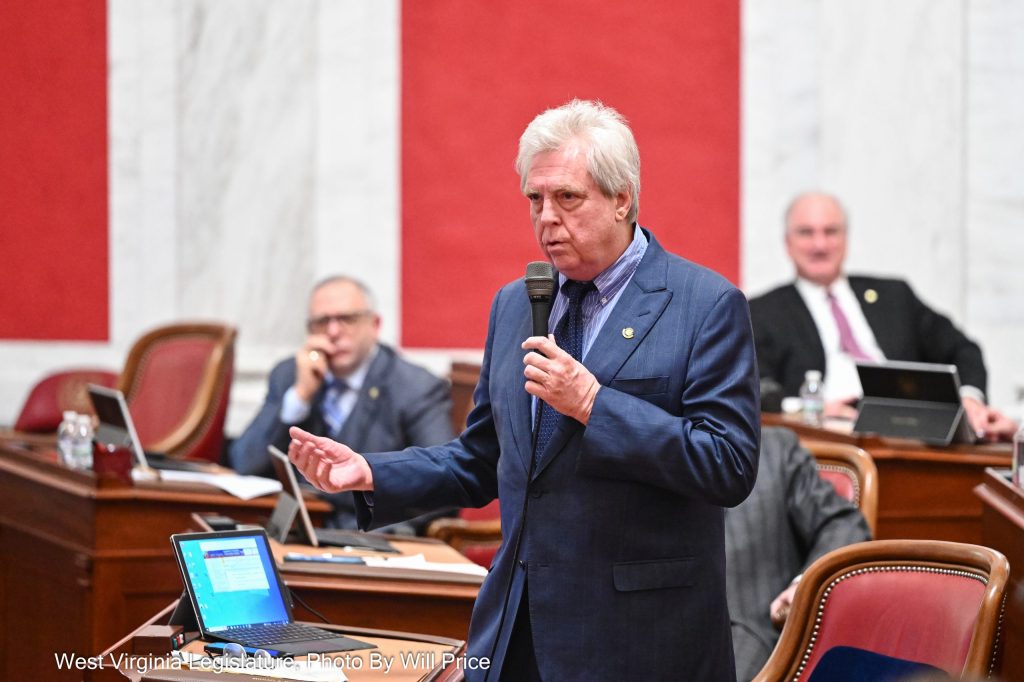
While no senators rose to speak for or against the bill after it was presented by Barrett, Sen. Ben Queen, R-Harrison, did speak to it later in the morning during remarks from members, a time on the calendar each day for senators to speak their minds freely.
“I think compromise is a great thing,” Queen began, referring to the budget. “Today is day 51 of a 60 day session. This is the earliest budget we’ve passed in the ten years I’ve been serving here.”
He said the budget balances the priorities of the 134 members of the legislature and includes funds for Emergency Medical Services and a multi-billion investment in roads and infrastructure.
“We stil have 9 long days to go in this session,” he concluded. “I’m proud of the priorities we’re pushing in this chamber.”
‘We were not included or consulted in any negotiations for this compromise.’
Sen. Mike Woelfel, D-Cabell, and Sen. Joey Garcia, D-Marion, disputed that the budget was a “compromise.”
“We were not included or consulted in any negotiations for this ‘compromise,’ they said later in the afternoon. “Our priorities were not reflected in this budget.”
They listed child care, utility bills, teacher pay, and the I/DD waiver list as priorities of theirs which were not considered in the budget process.
“Unfortunately, the Senate did not prioritize those values. They prioritized funding the Hope Scholarship and a 5% tax break that will go mostly to the wealthy donor class, while failing to increase any funding for public education. We stand by our vote; the people of this state deserve better.”
The House responds
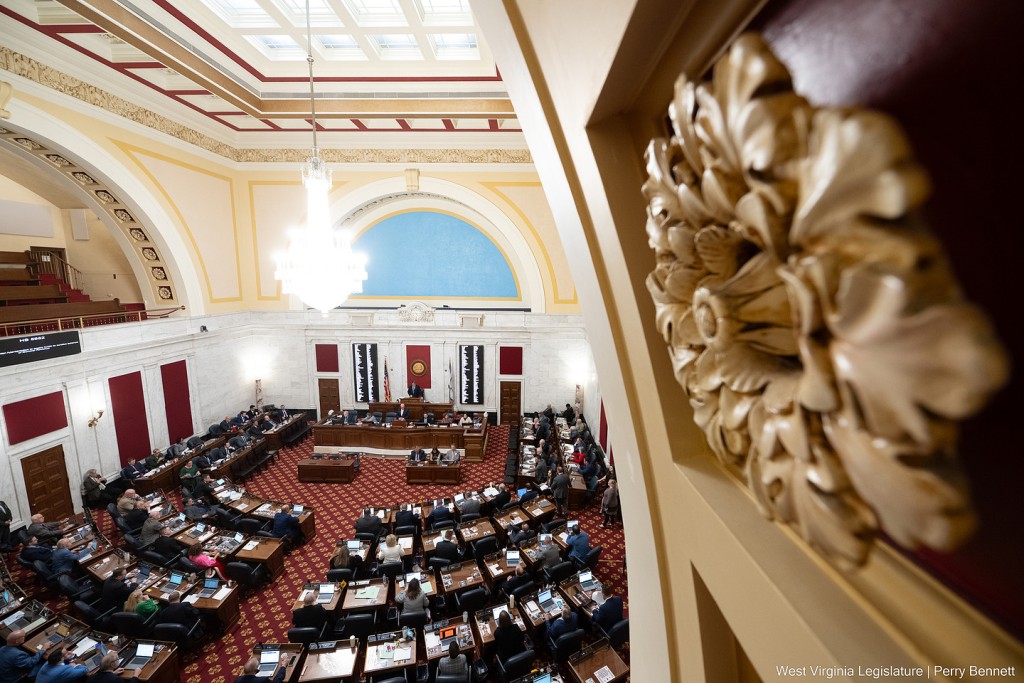
Late Thursday afternoon, the House received the Senate budget bill and began debating it.
“This is the compromise,” Del. Vernon Criss, R-Wood, began.
Delegates asked Speaker Roger Hanshaw if they could offer amendments and were told they could not, per the joint rules of the legislature. They had to vote it up or down.
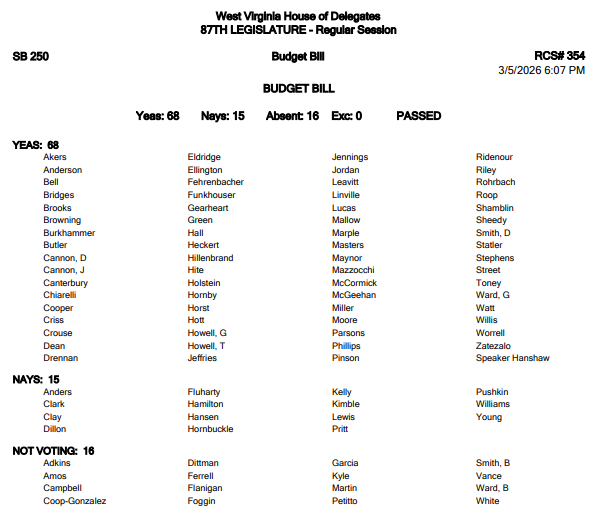
After debate, the House approved the budget by a vote of 68-15. Sixteen delegates were absent and did not record a vote on the budget Thursday evening.
SB250 has now completed legislative action and will be sent to the governor.
Stay tuned to RealWV for updates.