House District 47 candidates debate data centers, hospitals, guns, and education
By Stephen Baldwin, RealWV
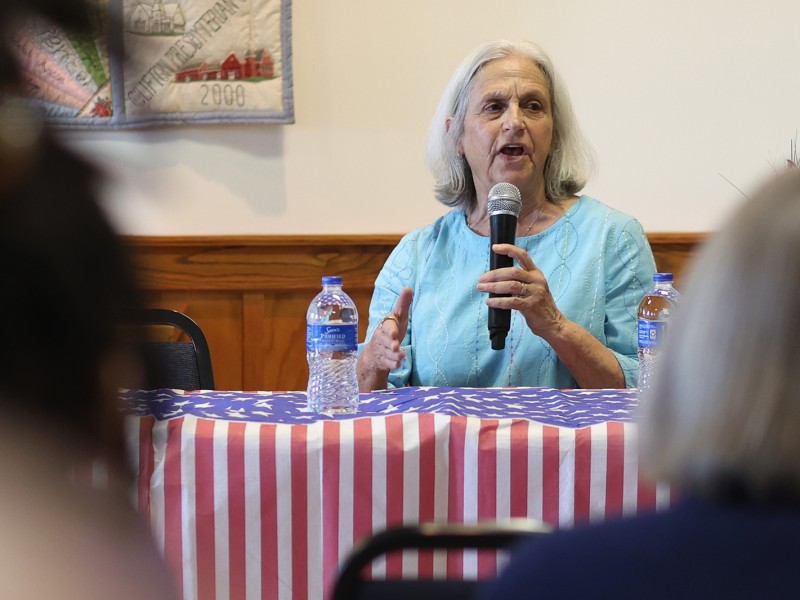
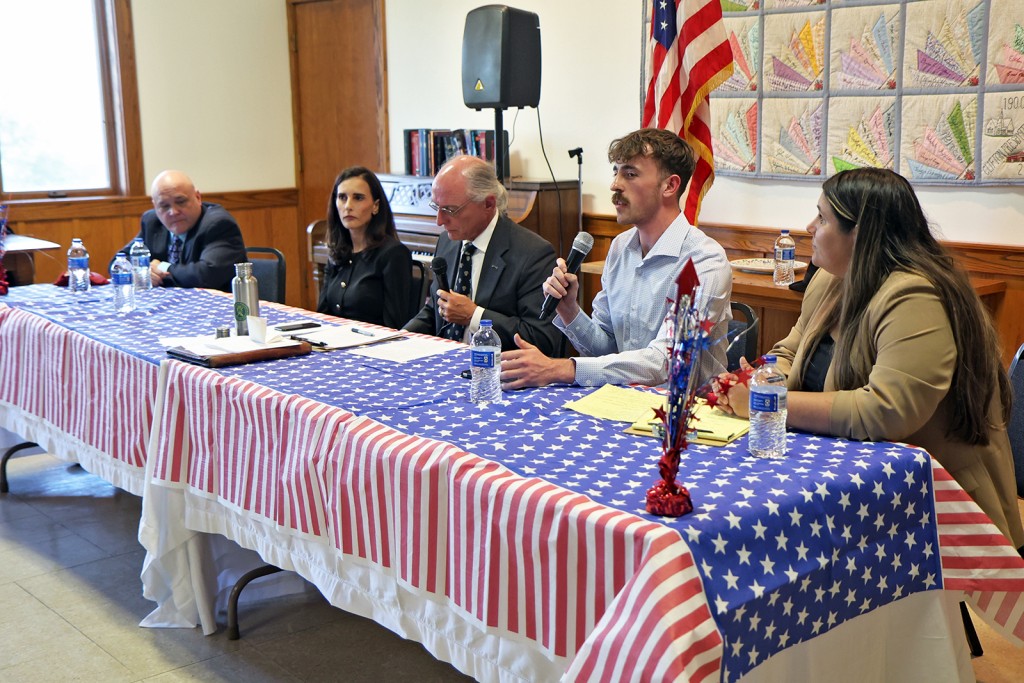
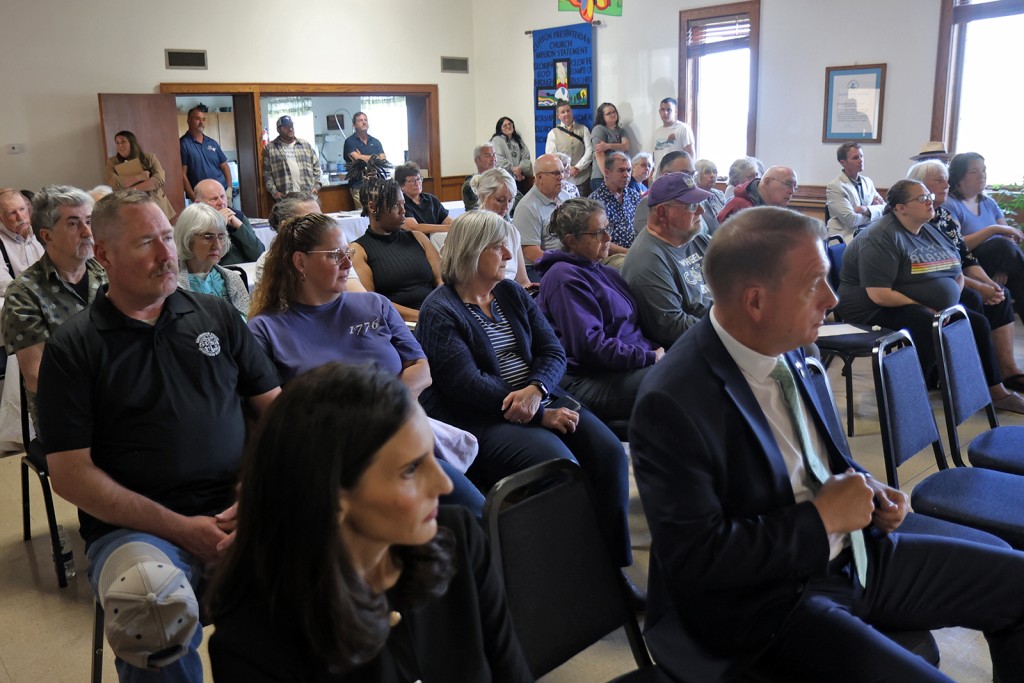
MAXWELTON, WV – Before a standing-room-only crowd in Maxwelton at Clifton Presbyterian Church on Tuesday night, candidates in House District 47 debated data centers, hospitals, guns, and education.
Scott Womack, a retired military officer and teacher from Monroe County, WV, served as moderator for the RealWV forum, which is offered as a policy discussion for voters seeking to learn more about candidate views on major issues.
District 47, Western Greenbrier
District 47 includes four candidates total, with contested primaries for both the Republican and Democratic parties. Del. Ray Canterbury is being challenged by Mary Katherine Tuckwiller on the Republican side, while Sarah Morris and Mark Phipps are vying for the Democratic nomination. All four candidates attended the forum and sat beside each other for a policy forum on Tuesday night. The forum began with introductions.
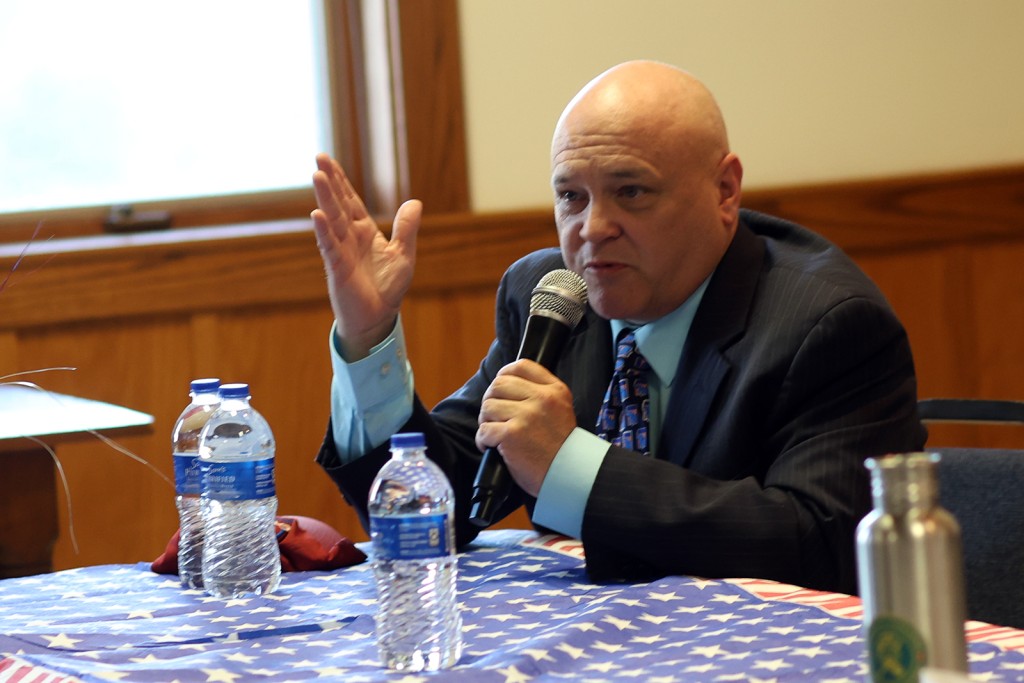
Delegate Ray Canterbury began by saying constituents need a representative who can pass a balanced budget, “kill really bad ideas” during the legislative session, and cut taxes. “I’ve been able over the years to vote to eliminate food tax, income tax, the homestead exemption, and cut industry taxes.”
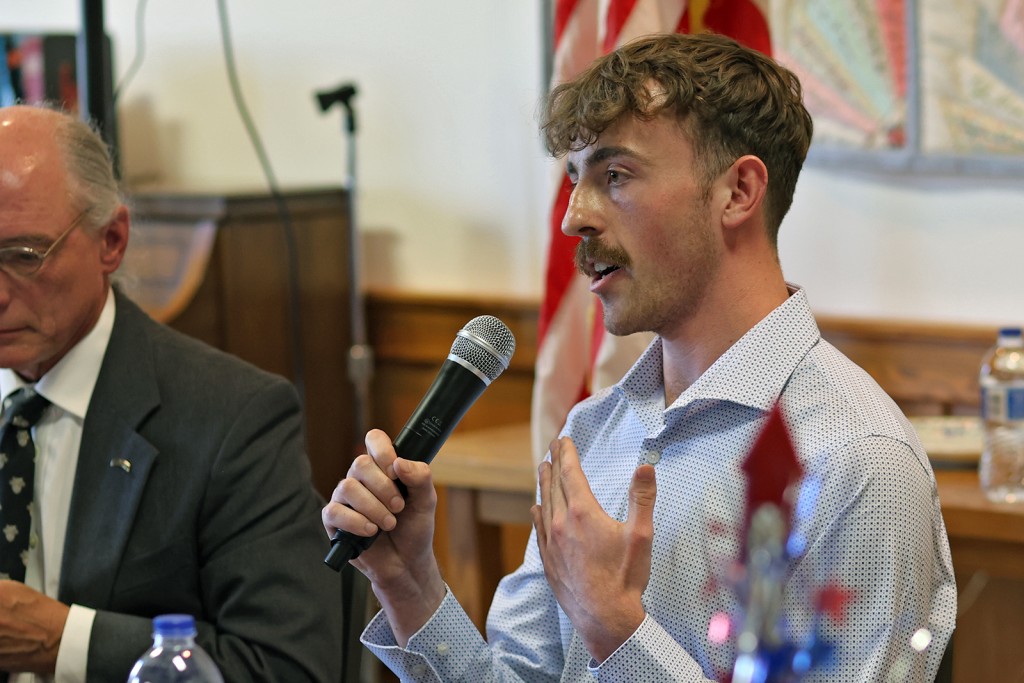
Mark Phipps said, “I’m from Rupert, a graduate of Greenbrier West High School. I’m not the most polished candidate. Not an attorney or career politician. I’ve spent my entire adult life serving whether it’s military or community service. A lot of the problems are complex. But I do know right from wrong and what integrity is. I got tired of watching Charleston be consumed by ideological fights. Individual rights matter. Women’s rights matter…I’ll stand up for those rights and I’ll get to work on issues that will impact your daily life.”
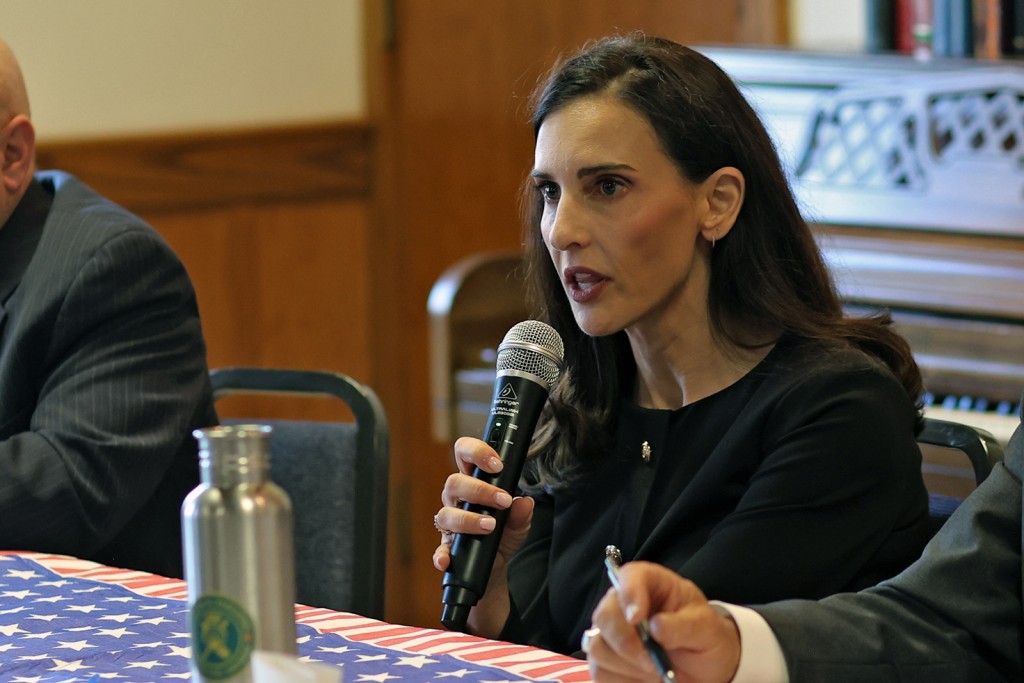
Mary Katherine Tuckwiller offered, “I’m the only person who had the privilege of choosing West Virginia. My husband and I are raising two children here. We are trying to educate our children, make a home for them they can grow in and come back to, find quality jobs, and make a living. I care deeply about how our lives can be governed. We live here together and I want us all to work together for a better Greenbrier Valley. I care about health care, our farmers, local control over land. I understand our education system, and I would love to represent you.”
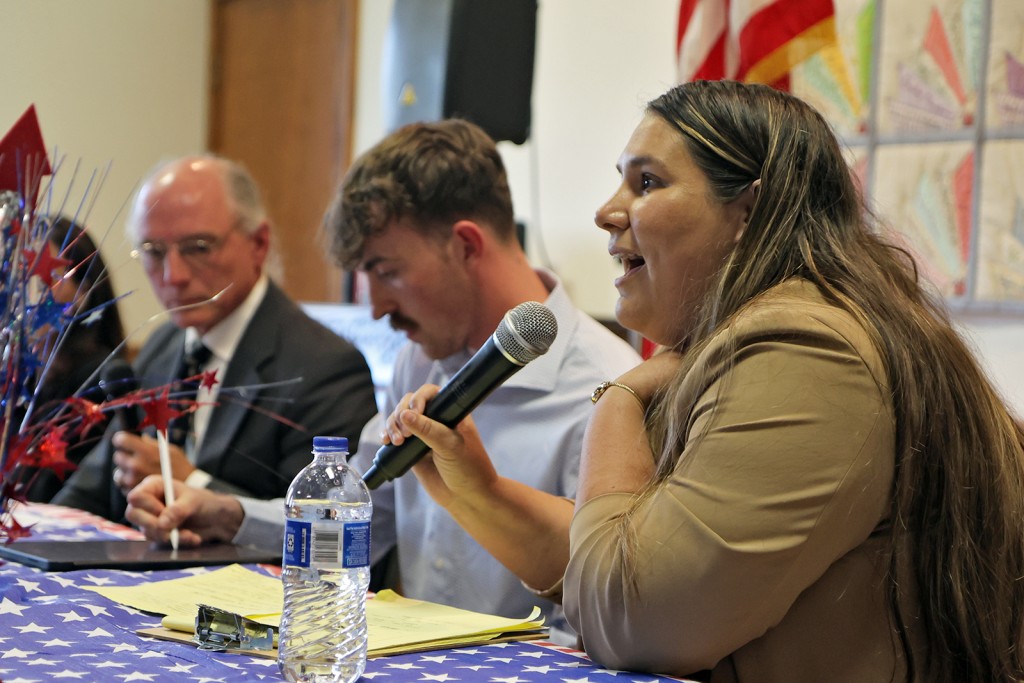
Sarah Morris said, “When it comes to your legislators, policy is important. But going to the hills and hollers and listening to what people are concerned about is also important. I grew up here. I left like many people because there were not opportunities for me to thrive here. I became a flight attendant and a dolphin trainer. In 2020 my mom got sick. I started paying attention to the mudslinging… now I want to make an impact in my community.”
Can we have strong public schools and school choice at the same time in WV?
The first question was about education: Voters in West Virginia want school choice and strong public schools. Can we have both?
“It is possible to have both choice and public school,” said Mark Phipps. “The Hope Scholarship is a voucher program that guts public education. You can have both if there was more oversight and accountability over the money.”
“I am a product of both (public school and choice),” Sarah Morris said. “I was homeschooled and then entered public schools. I fell between the cracks. I was behind when I went to school. There needs to be some sort of balance. Taxpayers have the right to see benchmark testing and income guardrails (for Hope students). Public schools are foundational and need to be protected.”
“I think that school choice is important,” began Mary Katherine Tuckwiller, an education attorney. “We can have very strong and accountable public schools and choice. Something that hasn’t come up is the funding formula. It is an archaic measure and doesn’t take into consideration what we have locally.”
“One size doesn’t fit all,” said Del. Ray Canterbury. “I was one of the legislators pushing for guardrails this session. It wasn’t popular. We don’t have an accurate forecast of how many people will accept (the Hope scholarship) so we can’t budget for it accurately. I can imagine a scenario when West Virginia is between a rock and a hard place…We have several counties in deep financial trouble. Hancock County and others.”
Do you support data centers?
The next question centered on data centers: Is there a way for locals to have a say in data center placement, after HB 2014 took that away last year? Do you support data centers within the state?
“I have serious concerns as someone who lives here locally and knows how much we value local control with the fact that we don’t have the opportunity to weigh in on the placement of data centers,” began Mary Katherine Tuckwiller. “There is merit to growing the economy and they are integral. But we deserve the say where they go and have more of that tax money. Berkeley is exploring if there will be a detriment to the school system. We cannot sacrifice our own wellbeing for the pot to go somewhere else. But we also need to promote the growth technology will afford us.”
Her opponent, Del. Ray Canterbury, supported HB 2014 in 2025, which took local control away in data center placement. On Tuesday night, he said concerns about electric bills are unfounded and wonders if data centers are just a fad. “The revenue from these data centers are substantial. Your taxes will be reduced. Your power bill will be diminished, actually. In the long run, I am not optimistic we’re going to build a lot of these. The entire industry is on a bubble, I think. We’re probably on the tail end of this. I think that industry will fizzle out a bit.”
Sarah Morris said, “There needs to be more local control, and we can’t guarantee how many jobs are going to West Virginians. The people in our community need to have a say.”
“Data centers deplete our air and water,” Mark Phipps said plainly. “They also raise electric costs. We’ve seen that time and time again. If they come here, they need to supply their own electricity. West Virginians are paying more for electricity than mortgages. They (data centers) don’t have a good ratio of land usage to jobs.”
What can be done about the closure of labor & delivery at GVMC?
Discussion then turned to the biggest issue in the county over the last six months–Vandalia’s closure of the only labor & delivery unit in the region at Greenbrier Valley Medical Center, which occurred last Friday.
“This is a very important question,” Sarah Morris answered. “We have a world class osteopathic medical school. We need to utilize that. We need to have some sort of service for these mothers. Having babies on the side of the road (trying to get to a hospital far away) is not acceptable. Our EMS services are taxed already. What can the legislature do? Work together and focus on access to rural health care. I am committed to finding out an answer so this isn’t the norm. It’s unacceptable.”
“It is a complicated problem,” Mark Phipps replied. “I’d like to see the legislature create a health care stabilization fund to keep these rural units open.”
Delegate Ray Canterbury began, “I spent many 13-hour days during session working on this. Our birth rate is plunging. The hospital only has 200 births a year.* OBGYNs like to work in teams. We have a national shortage of OBGYNs and there’s a shortage of residencies. You can establish a rural residency out of larger facilities. There’s an accreditation process and there are regulations involved in that. It is a complicated solution but it is the simplest one. It would provide more OBGYNs than the economy would otherwise justify but it would work.”
(*According to RealWV reporting, GVMC delivered approximately 300 children last year.)
Mary Katherine Tuckwiller said, “I have two children. This is obviously at the forefront. If there was a solution we could implement, Del. Canterbury and his colleagues would have implemented it. Health care is essential. Giving birth is something that happens everywhere people live. Perhaps we need to look at making birthing centers more accessible, alternate safe locations for women to receive gynecological care, continuity of services, so you’re not driving down the turnpike asking your husband if he can pull the baby like he pulls calves at the farm. What’s next? Our dialysis unit?”
Do you support conceal carry for 18-20 year olds?
Next, an audience member asked the candidates if they supported the change in law this past legislative session allowing 18-20 year olds to conceal carry a handgun without training?
“I think it’s fine,” Del. Ray Canterbury said. “We have a constitution that says you have the right to bear arms. In West Virginia we don’t have a problem with high rates of crime. I think the law is completely acceptable.”
Mary Katherine Tuckwiller agreed. “I believe that when you reach 18 you are a legal adult citizen and the rights that are afforded to you are the rights you have earned by reaching the age of maturity, just like those who are able to vote… I would like all persons who are possessing and operating guns to be safe and responsible with them. I find the majority of people who are choosing to carry are doing so safely and intentionally. They are not the individuals we need to worry about.”
Mark Phipps, who served in the Army, disagreed. “I was in the military. We have a lot of training. If you wanna own a gun and conceal carry, fine. But you should have proper training.”
Sarah Morris shared, “I am a victim of gun violence. That is my first core memory. That happened in front of my when I was young and my dad took his life. He was suffering with mental health issues. Then I married a guy who loves to shoot shotguns and learned that through proper training you can actually have guns at a sensible rate. At the end of the day that (conceal carry for 18-20 year olds) needs to be revisited.”
Do you believe in the separation of church & state?
Another question from the audience centered on candidate beliefs about the separation of church and state in light of recent legislative action to consider placing Bibles in certain classrooms and the Ten Commandments in schools?
“One of the tenants I’m running on is my faith,” Mary Katherine Tuckwiller said. “It tells me to treat others as i would want to be treated. We have a loving God who sees everyone as equal and worthy. The place for that is in our homes how we treat one another. Our job in the pubilc school system is to educate our children in the fundamental tenets of education. It’s appropriate to talk about religion in a historical context. I would support any child wishing to express their own religions tenets and allow that to occur.”
“That bill (placing Aitken Bibles in schools) probably did have some real constitutional issues,” noted Del. Ray Canterbury. “That’s why we didn’t run it (in the House). To argue for separation of church and state is not anti-religion at all. If you look at religion Europe, you’re generally required to practice it. They have a lower level of belief. We have more people who identify as Christian than any other Western nation (when it’s not mandated here).”
“There need to be a separation,” Sarah Morris said. “I am a Christian. I believe in God. I also don’t want children to feel excluded in school because they don‘t conform. This nation was built on religious freedoms and we need o respect that.”
Mark Phipps agreed, “There needs to be a separation. I am also Christian, but I don’t let my own faith or beliefs cloud my judgment when it comes to constitutionality.”
Moderator Scott Womack thanked the candidates for attending and setting a good example by having a reasonable policy debate, noting that he hoped perhaps would Washington could take lessons from these local candidates in the future. Early voting begins on April 29 and the election day is on May 12.
Stay tuned for additional stories on others races which were featured in the candidate forum including Board of Education, County Commission, and Senate.
For the full video of the forum, see below.