
Berkeley County bird recordist helps preserve sounds of nature
By Vanta Coda III, Real WV
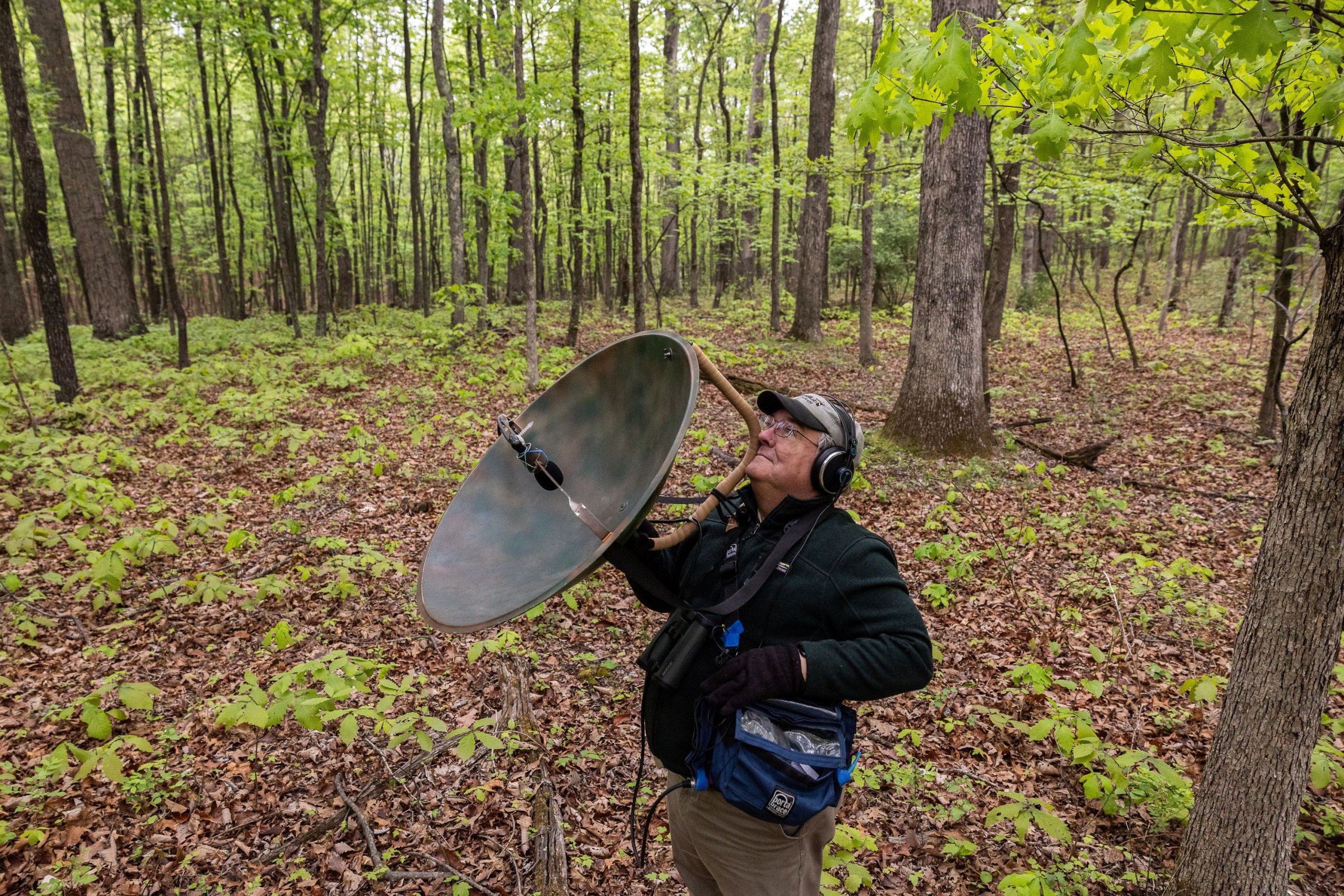
The sound of the eastern whip-poor-will breaks the silence on a gravel road atop one of the ridges that make up the Sleepy Creek Wildlife Management Area. As dawn draws near and the sky lightens to a deep purple, a man stands like a statue, holding a satellite-looking recording device and listening to avian calls. Wilbur (Wil) Hershberger has captured more than 6,200 audio recordings of birds and is world-renowned in the birding community, with many of his recordings archived at the Cornell Lab of Ornithology. Hershberger journeys from his Berkeley County residence to record birds at least a couple of times a week, if weather permits. On the day he recorded the whip-poor-will, he arrived at the site at 4:30 a.m. His interest in birds began when he was just a boy living in Hagerstown, eventually leading to his dedication to audio recording and research.
“I got interested in birds, probably around age 10 or 11, when a pair of Baltimore orioles nested in my parents’ backyard. We could see it through the windows of the back door as it was building a nest,” Hershberger said. “That was my spark bird.”
Hershberger then grew up, went to college, graduated from graduate school, and ended up working for the USDA in Kearneysville, W.Va., in molecular biology and microbiology. He then did some contract work for the Maryland Department of Natural Resources, where he studied the ecology of loggerhead shrikes, at the time a declining species in the Eastern Panhandle and Maryland Panhandle region. Hershberger, along with the Maryland Department of Natural Resources, played shrike calls and songs to see if they could get a response from birds out of sight. Hershberger recalled getting some cheap equipment from RadioShack, recording the shrikes’ call and playing them back in empty fields. Unfortunately, the fields were empty, and his team ruled that the species was extirpated from the panhandles of both Maryland and eastern West Virginia.
What got Hershberger hooked on recording was a 1994 class offered by the Cornell Lab of Ornithology in the Sierra Nevada of California. He took the class and went from being very interested in sound recording to being addicted to it.
“They taught you some secrets, you know, about how to get close, and the closer you can get, the better the signal-to-noise ratio, all these kinds of things that I learned eventually,” Hershberger said. “I was using, at that time, a little bit better cassette recorder than the stuff I’d bought originally for the loggerhead shrike project, I now use digital recording software.”
After the class in the Sierra Nevada, the Cornell Lab of Ornithology asked if Hershberger could archive bird recordings that were housed at their college. That year, Hershberger made around 250 cuts of recordings, each taking an entire week to archive on both quarter-inch and digital tape.
Hershberger also helped feed sound data into the popular app Merlin Bird ID, made by the Cornell Lab of Ornithology, using their archive of bird calls to help users identify bird species in real time through their phones’ microphones. The app includes hundreds of Hershberger’s own recordings to help users identify birds
“They’ve used a lot of my recordings in audio projects,” Hershberger said. “With Merlin, a lot of the recordings were used for training material for the program, and now they’re on it, so people can listen and make sure they have the right species.”
Locally, Hershberger has been president of the Potomac Valley Audubon Society and the Frederick chapter of the Maryland Ornithological Society, and has led countless bird outings and events, sharing his love of birding with birders across West Virginia and Maryland.
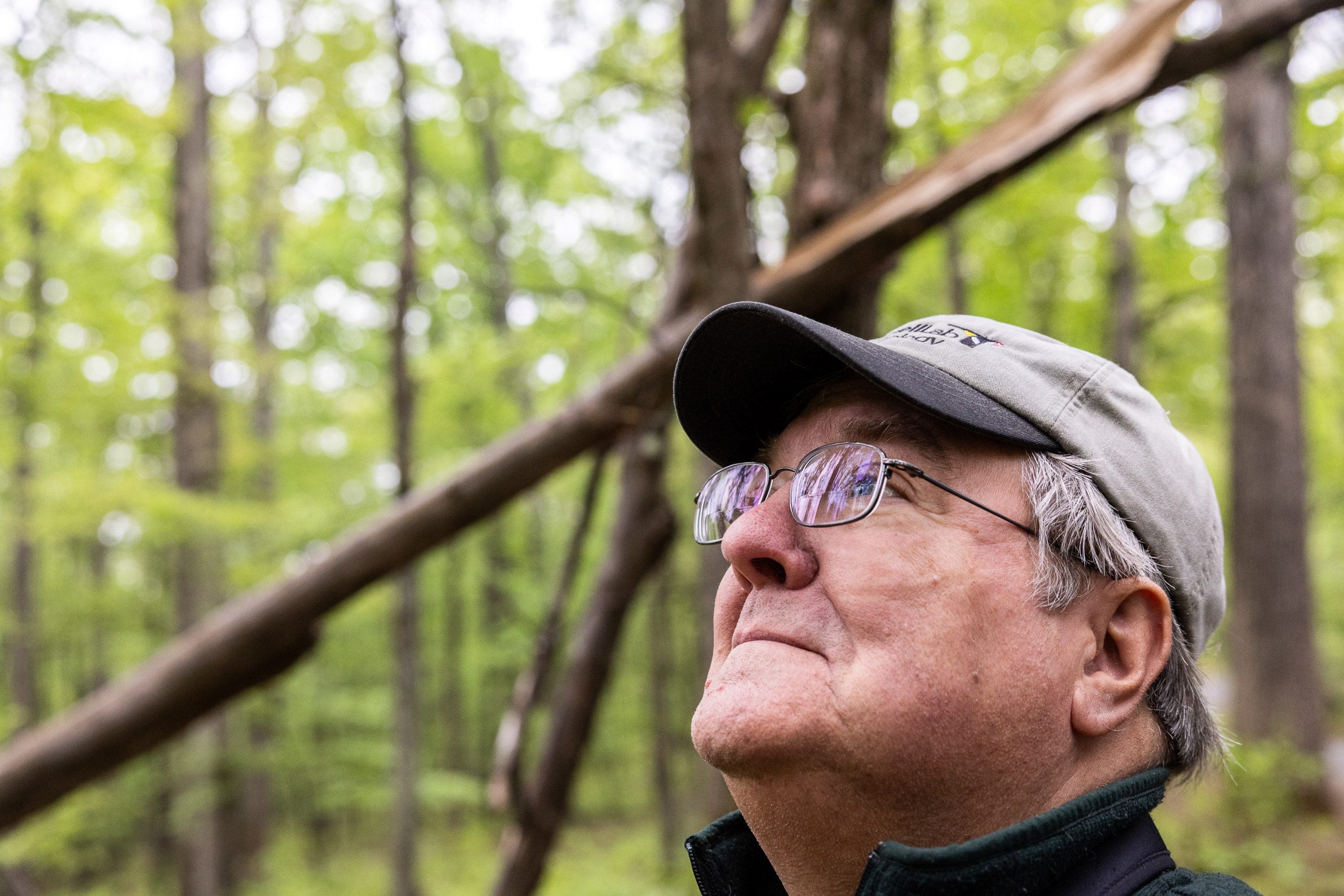
As bird migration peaks in West Virginia, Hershberger says newer West Virginia birders should watch for migration trends to see which birds are coming through.
“The beginning of May is peak migration in West Virginia for the Eastern Panhandle; the first 10 days are when you want to be out,” Hershberger said. “You’ll get things like blackburnian warblers, Cape May warblers, and Nashville warblers going through. Once you hear the blackpoll warblers, that’s kind of the end of migration, which is usually May 12 through May 20. You’ll be hearing those go through with really high-pitched sounds.”
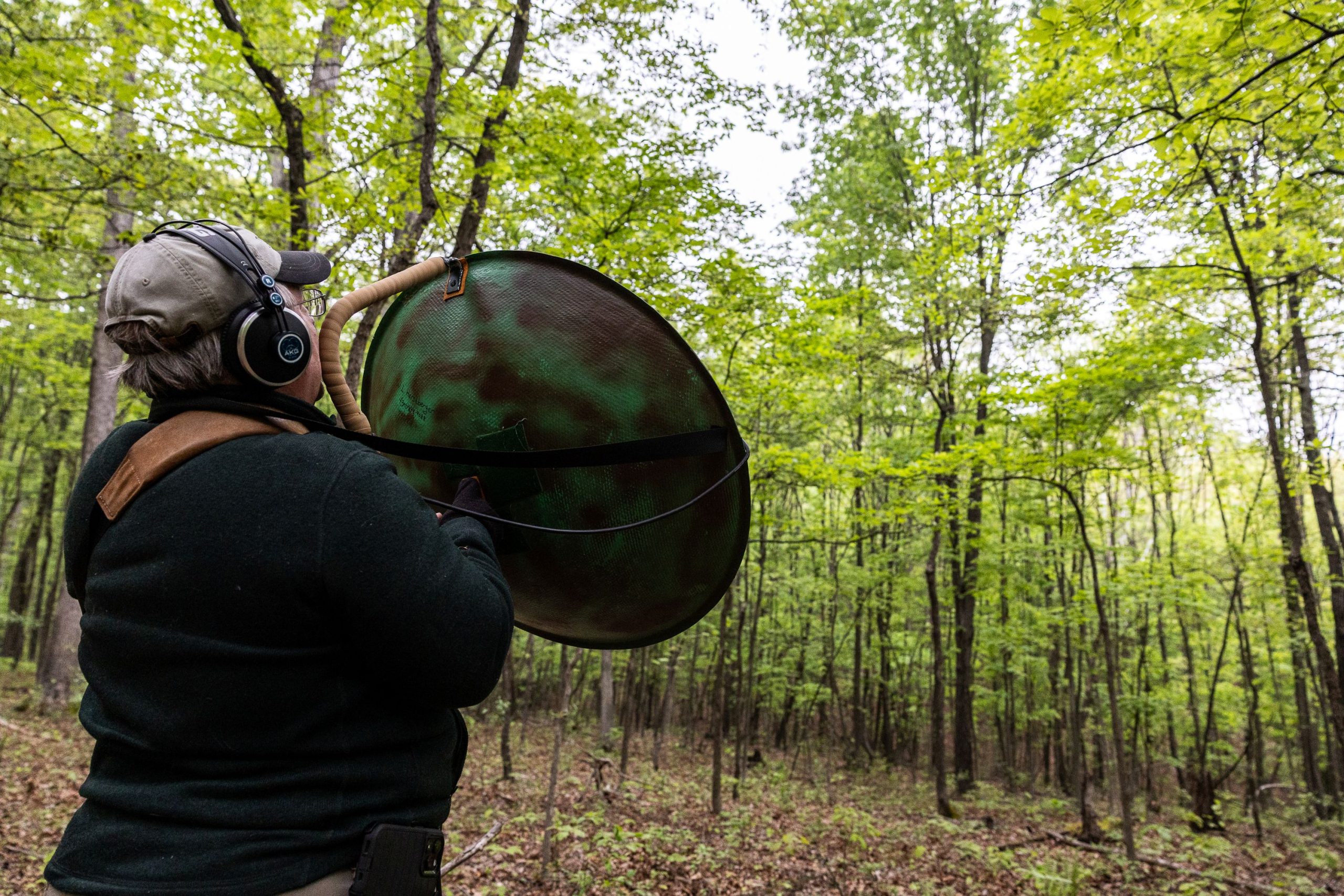
Hershberger can be found in prime bird habitats around the Eastern Panhandle today, using a 76-centimeter parabola with a microphone in the center, attached to a digital recorder, as he listens to and collects audio from the constant chorus of our avian friends.
Related Articles
THIS WEEK IN WV HISTORY: August 9–15
The following events happened on these dates in West Virginia history.

Real West Virginian of the Week: Kaitlyn Glaspell — Building more than a boutique
When Kaitlyn Glaspell first began selling vintage clothing, she wasn’t dreaming of opening a storefront.