Real West Virginian of the Week: Brittany Miller-Baker helps Wyoming County students turn orange water into a national award-winning solution
By Hannah Yost, RealWV
HANOVER, W.Va. — For Brittany Miller-Baker, teaching science in Wyoming County means helping students understand the world outside their classroom door — and giving them the confidence to change it.
Miller-Baker teaches sixth through eighth grade science and social studies at Huff Consolidated Elementary and Middle School in Hanover. She has spent 12 years in the classroom, holds a master’s degree in education, and is certified in general science and social studies. She also runs the school’s STEM program, which includes robotics, engineering, coding, and a makerspace. She is also a Project Lead the Way-certified educator.
But her connection to the work goes beyond her title.
“This is where I teach, where my students live, and where the problems we study are real and right outside our door,” Miller-Baker said. “When you teach in a community like this one, you are not just preparing kids for some distant future. You are helping them understand the place they already call home, and giving them the tools and the confidence to make it better.”
That belief became the foundation of ClearFlow, a student-led water filtration project that began as an entry for the Samsung Solve for Tomorrow competition and grew into a national award-winning solution.
Miller-Baker said she wanted her students to take on something that mattered to them — not just a textbook problem. Water quality quickly became the focus.
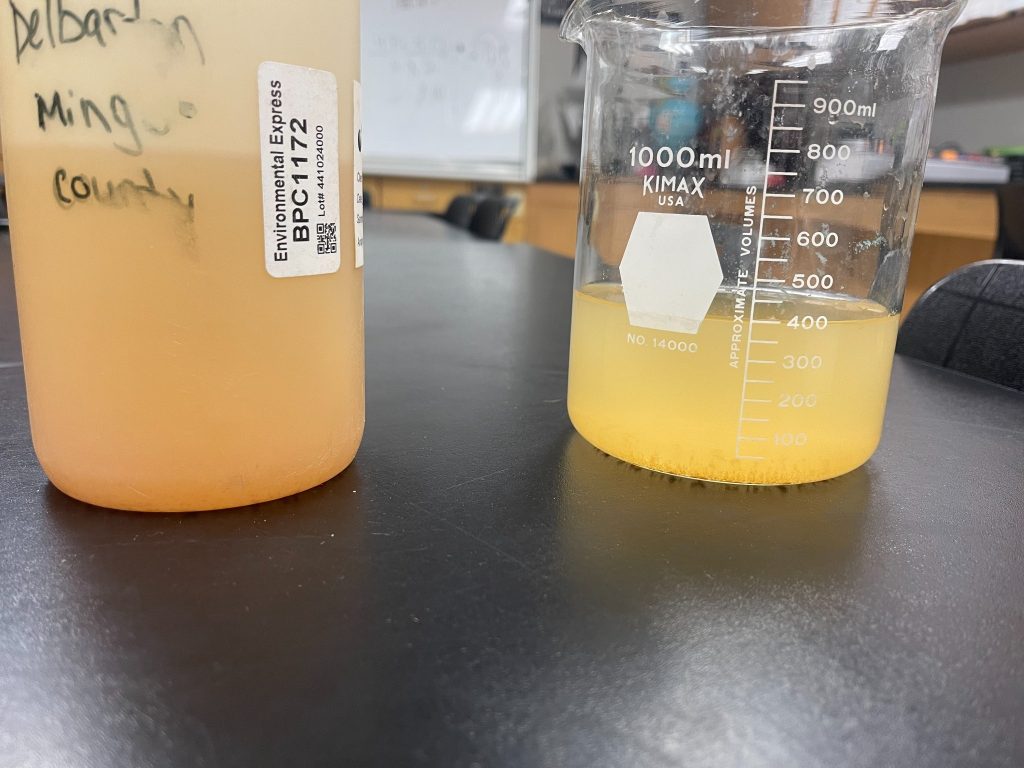
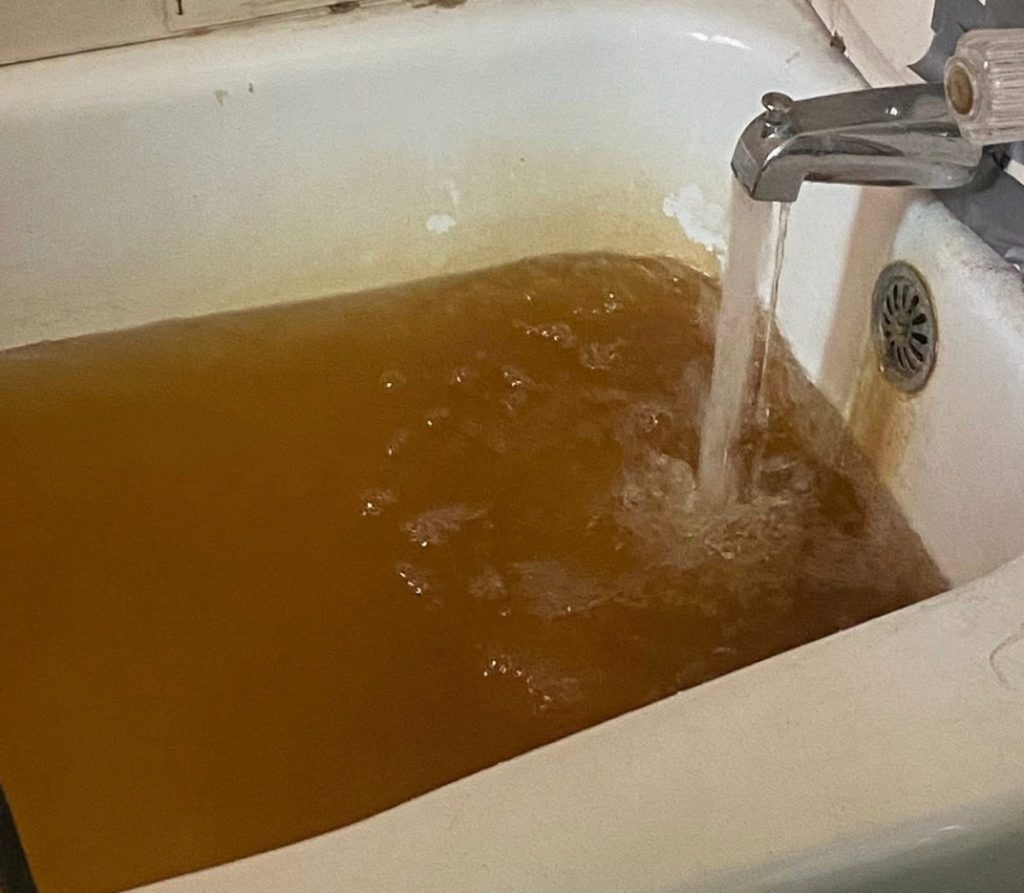
“These kids see orange-tinted water,” she said. “They know people on well water who have been told for years that it is just iron and nothing to worry about. So we started asking, well, what is actually in the water? That question became our whole project.”
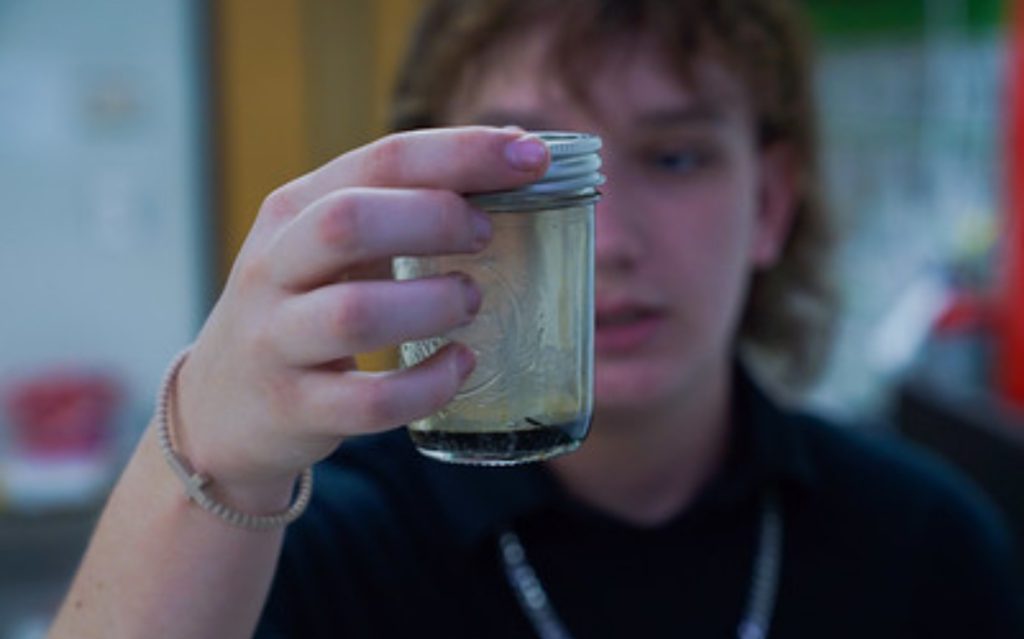
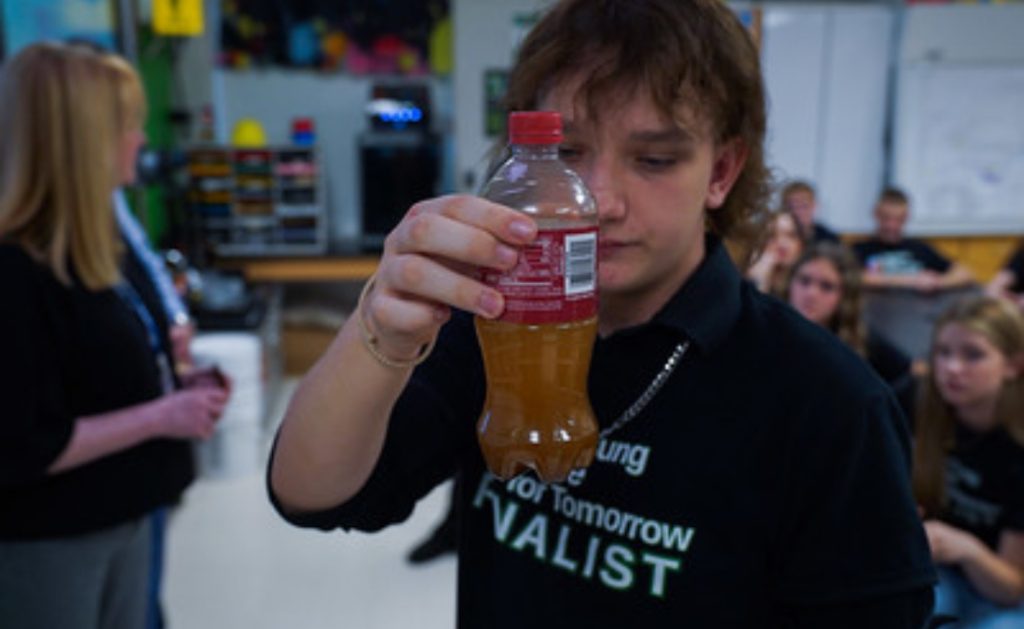
The project became personal when one student brought in a sample of his family’s well water. The water was orange, even after it had already been filtered.
“The room got quiet,” Miller-Baker said. “You could see it on every single face. This was not a textbook problem anymore. This was his family’s water.”
From that moment, she said, students were no longer simply completing an assignment. They were trying to solve a problem affecting people they knew and loved.
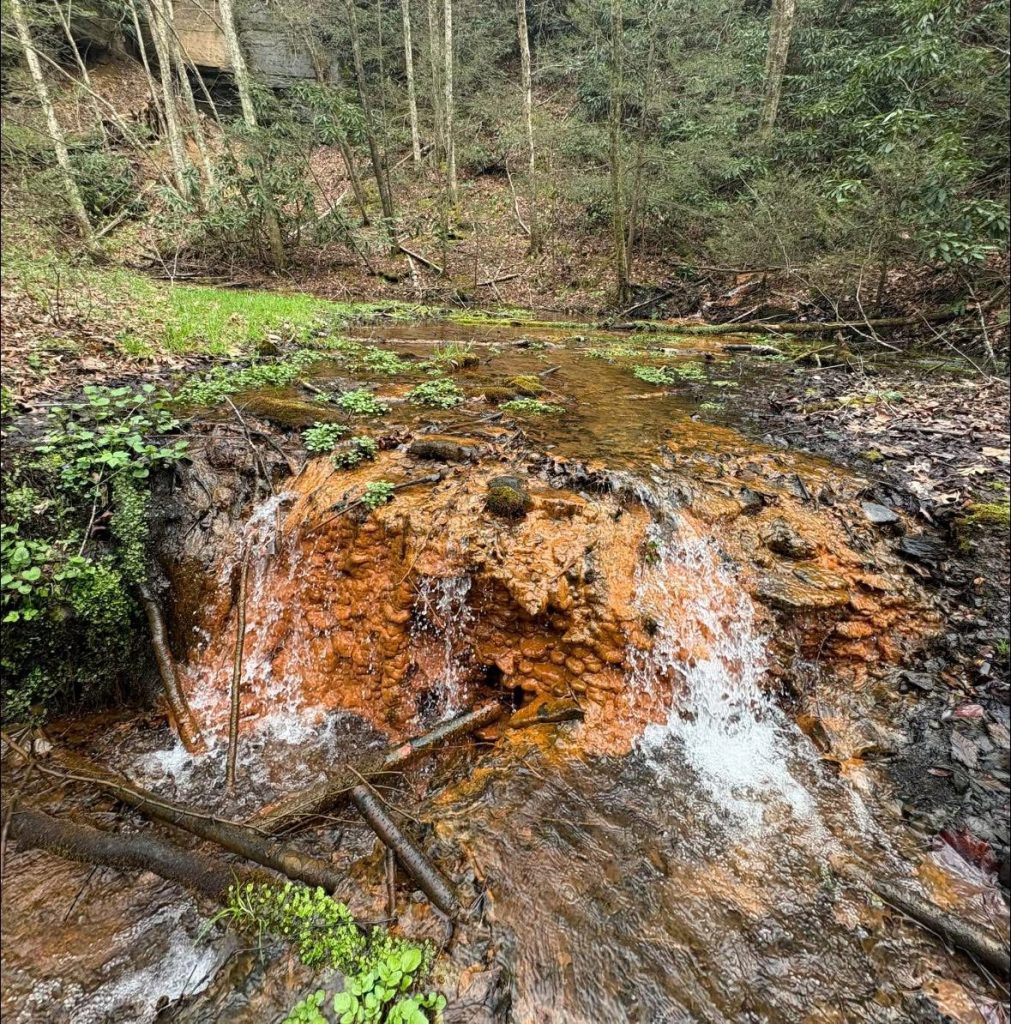
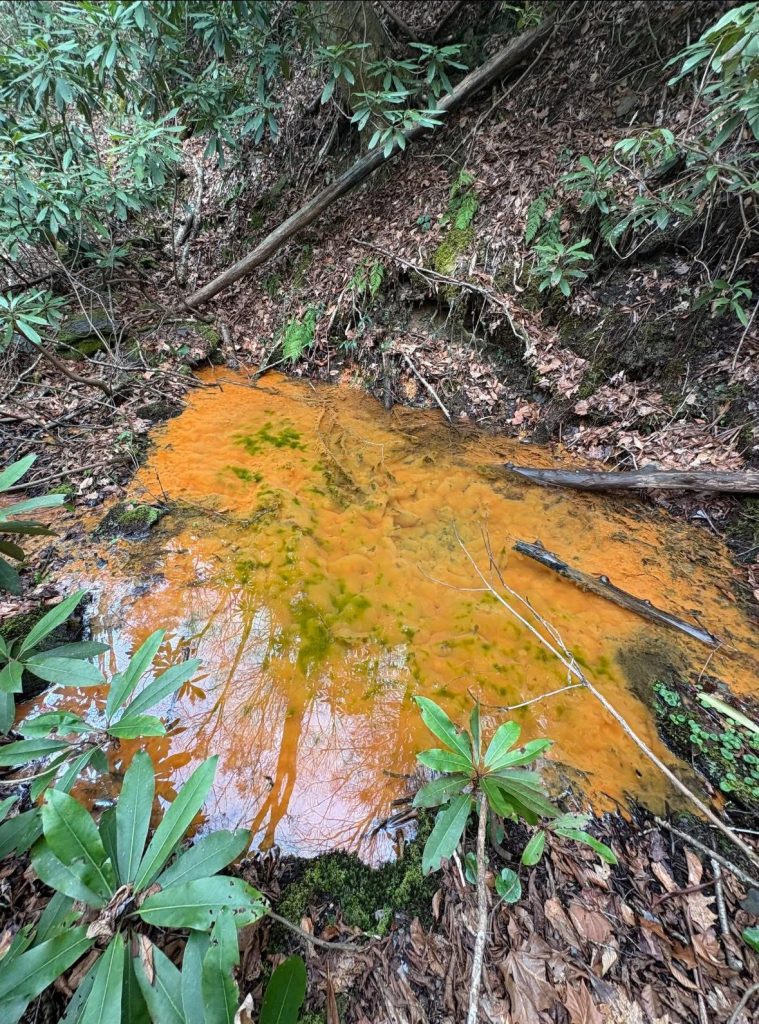
The students began learning about acid mine drainage, what happens when abandoned mines flood, and how acidic water can move through surrounding rock and soil. They learned that orange water may be the visible sign, but it may not be the only concern.
“Iron explains the color, but it does not explain everything else,” Miller-Baker said.
Through their research, students learned acid mine drainage can carry heavy metals such as manganese, aluminum, and, in some cases, lead and arsenic, along with the iron that gives water its orange tint. They learned to study pH, total dissolved solids, and water chemistry, and to think about how contamination can affect wells, streams, and families.
That kind of work, Miller-Baker said, required students to talk honestly about the environmental impact of mining while also honoring the role coal has played in Wyoming County.
“Coal provided jobs for the people of this county,” she said. “It put food on tables, built churches, funded schools, and sent kids to college. I never walk into my classroom and talk about mining like it was a mistake. These are my students’ families we are talking about.”
At the same time, she said, communities should not have to choose between coal heritage and clean water.
“Coal’s legacy and clean water are not opposites,” Miller-Baker said. “They belong in the same conversation.”
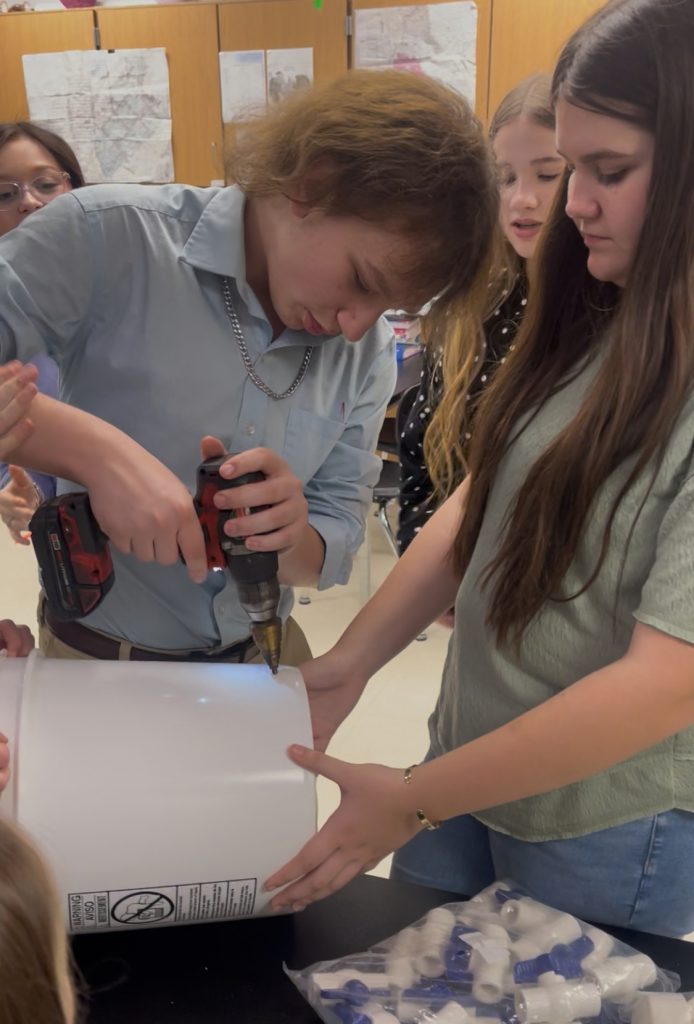
The students’ solution, ClearFlow, is a gravity-fed, four-stage filtration system originally designed to address acid mine drainage contamination. Water moves first through a settling tank, where larger particles drop out. It then flows through layers of rock, sand, limestone, and activated charcoal, with each layer targeting different contaminants. The limestone helps neutralize acidity.
After filtration, the water passes through UV-C light to kill bacteria and biological contaminants. The system also uses two ESP32 microcontrollers to monitor pH, turbidity, temperature, total dissolved solids, and flow rate in real time, uploading the data to a live dashboard.
When Huff Consolidated entered the Samsung Solve for Tomorrow competition, Miller-Baker hoped her students would make a strong showing. She did not expect the project to go as far as it did.
The team was named a Top 10 national finalist and traveled to Washington, D.C., in April 2026 with a working prototype.
“We did not just show up with a poster or a slide deck,” Miller-Baker said. “We brought a real, working prototype and we wanted every single judge to see that. This was not just an idea. This was something that worked.”
The judges, she said, recognized that a gravity-fed filtration system that does not require electricity could help communities not only in West Virginia, but also in places around the world without reliable power or clean water.
Huff Consolidated returned home as the national winner and also received the Community Choice Award, which is voted on by the public. According to Miller-Baker, the school became the first in West Virginia to win in the competition’s 16-year history and the first to bring home both awards at once.
But she said the award was never the finish line.
“From the beginning, this was about getting clean water into homes,” Miller-Baker said. “Real homes. Homes like the ones our students go back to every single day.”
The work has continued. While researching ways to improve the system’s ability to remove heavy metals, students began exploring alum, or aluminum potassium sulfate. Miller-Baker said alum works as a coagulant, binding to fine particles and certain dissolved metals so they clump together and settle out of water, making them easier to filter.
Students are now looking at ways to incorporate a coagulation and flocculation stage into the ClearFlow system and plan to do more controlled testing to see how much they can reduce contaminants such as lead and arsenic.
“This is still developing, but the potential is really exciting for communities dealing with contamination beyond just AMD,” she said.
For Miller-Baker, the project has shown students that science is not something that only happens in faraway labs. It is a tool they can use to address problems in their own communities.
“It has taught them to sit with uncertainty, to redesign when something does not work, and to ask better questions when they do not have answers yet,” she said.
It has also shown students from a small rural school that their ideas belong on a national stage.
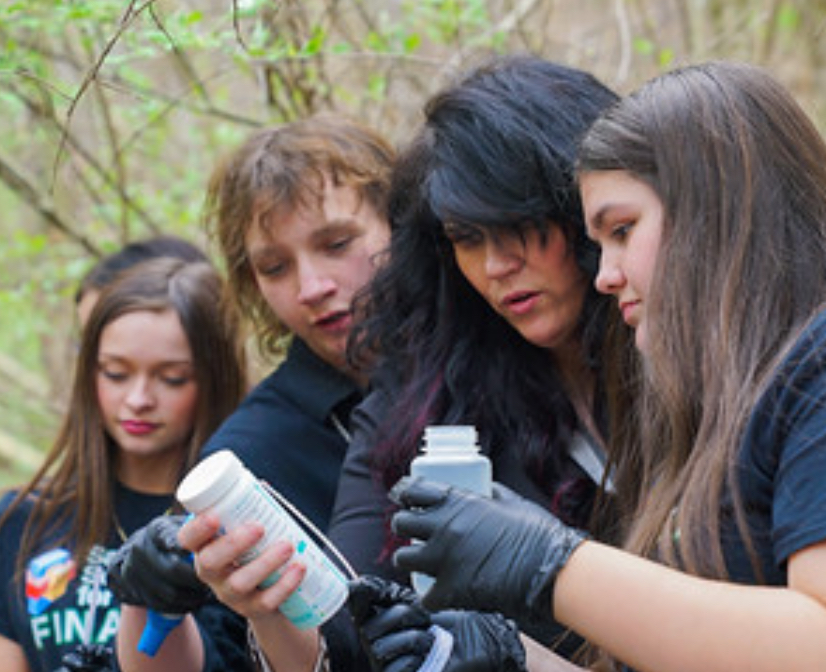
“The size of your town does not determine the size of your impact,” Miller-Baker said. “You can make a real change in this world.”
The community response has been overwhelming, she said. Families have shared their own stories of orange-tinted bathtubs, water they would not drink but felt they had no choice about, and wells with concerning levels of iron, lead, and arsenic.
“It is not abstract,” Miller-Baker said. “These are our neighbors.”
The project has faced challenges, including limited resources, the logistics of testing and building, and the realities of working in a Title I school in a rural county. Miller-Baker said lab testing partnerships, funding for materials, university partnerships, and support through organizations such as West Virginia Rivers Coalition would help students continue developing ClearFlow.
Still, what gives her hope is the students themselves.
“It would be easy, growing up here, to feel like the problems are too big and the opportunities too few,” Miller-Baker said. “But these kids looked at a generational environmental problem and said, ‘We can do something about that.’”
That spirit, she said, reflects what West Virginia has always been made of.
For Miller-Baker, the lesson she hopes students carry with them goes far beyond water filtration.
“I want them to carry the knowledge that they are capable of doing hard, meaningful things,” she said. “That science is a tool they own. That where you are from does not limit what you can contribute to the world.”
And sometimes, she said, the most important problems to solve are the ones closest to home.
“You do not have to go looking for a worthy cause,” Miller-Baker said. “Sometimes it is right there in the water.”
Know someone who should be featured? Email your nomination to news@therealwv.com.
Related Articles
Real West Virginian of the Week: Ashley Alford Glance helps shape the future of Putnam County
This story is part of RealWV’s year-long focus on youth and belonging in West Virginia, exploring the difficult decisions young people face when deciding whether to stay or leave.