
Affordability driving Gen Z to WV?
This story is part of RealWV’s year-long focus on youth and belonging in West Virginia, exploring the difficult decisions young people face when deciding whether to stay or leave.
By Stephen Baldwin, RealWV

CHARLESTON, WV — According to new industry data, 14,286 people moved into West Virginia in 2024. The largest generation in that group? Gen Z, with 5,666 new residents moving to the Mountain State.
The data, analyzed by Emilia Mann of StorageCafe, emanates from the self-storage industry which tracks migration of Americans between states annually.
Key findings of the data analysis on a national scale show that:
- Interstate migration slowed sharply in 2024 to 2.1% of the U.S. population, compared to 2.3% in 2023 and 2.5% in 2022.
- Texas and Florida remain the top states for net domestic migration, but both are seeing markedly slower population gains compared to recent years.
- Gen Z has overtaken Millennials as the most mobile generation, with 2.2 million Gen Zers relocating across state lines in 2024 versus 1.98 million Millennials.
- Affordable Midwestern states are gaining ground: Ohio, Michigan and Wisconsin are emerging as increasingly attractive migration destinations.
- Vermont leads on a per-capita basis, adding more than 20 newcomers per 1,000 residents — the highest relative inflow in the country.
- New Hampshire and Maine convert the highest share of new residents into homeowners, with 57% and 56%, respectively, purchasing a home within their first year.
Focusing locally, the data analysis showed that West Virginia ranked #6 in the country for net domestic migration per 1,000 residents in 2024 — and Gen Z led the inbound move, making up 32% of new arrivals. Detailed data analysis shows:
- West Virginia’s top source of new residents is Virginia, which sent roughly 8,000 movers in 2024. West Virginia home values are 58% lower than Virginia’s — a gap that matters considerably for younger households trying to establish themselves.
- Pennsylvania (6,900 movers), Ohio (5,000), Texas (3,000) and North Carolina (2,900) round out the top feeder states. In each case, West Virginia’s median home value is meaningfully lower — ranging from 29% to 58% less.
- Nearly half of arriving movers (46%) came as homeowners, indicating a share that is committing to the market rather than renting temporarily.
- West Virginia netted roughly 14,300 domestic migrants in 2024 — about 39 per day — even as overall interstate moving has cooled from post-pandemic levels.
“The Gen Z data out of West Virginia is striking,” said Man. “This is a generation navigating some of the most challenging entry-level housing conditions on record, and the migration patterns show them making deliberate, affordability-driven decisions about where to build their financial lives.”
Population decline trends expected to continue
Despite a small rise in young people moving into the state in 2024, US Census data shows that overall population declined by 1.5% from 2020-2025. Southern West Virginia saw the most rapid decline, while the eastern panhandle was the only region to seem an increase in population.
West Virginia University’s Bureau of Business & Economic Research projects a population loss of more than 3% between now and 2040.
“Affordability still sits at the center of America’s moving decisions — but the once-unstoppable pull of the Sun Belt is starting to ease. Younger movers aren’t just heading south anymore; Gen Z and millennials are increasingly eyeing the Midwest as they broaden the search for an affordable home to live their American Dream,” said Susan Wacther, Albert Sussman Professor of Real Estate and Professor of Finance at The Wharton School of the University of Pennsylvania.
Lloyd Potter, of the University of Texas at San Antonio, says that people move for a variety of reasons including housing affordability, good schools, and recreational opportunities. But the largest factor is job-related. “Domestic migration tends to be strongly associated with the economics of a geographic area. If jobs are being lost, people will move away, and if they are being created, they will move in.”
Analysis from Sean O’Leary with the WV Center for Budget & Policy also indicates the 2024 migration data is likely a blip that bucks a larger trend, as West Virginia is “the fourth-oldest state in the nation.”
“West Virginia’s high death rate is not just due to an older population-it also can be explained by an unhealthy population with a low life expectancy. West Virginian women born in 2000 can expect to live an average of 70.1 years, the second-lowest in the country and 7.3 years less than the leading state. For West Virginia men born in 2000, average life expectancy is 75.3 years, ranking last in the country and 16.6 years less than the leading state,” he reports.
“Life expectancy also varies widely between counties, with higher death rates in West Virginia’s southernmost counties. Life expectancy is longest in Monongalia County (one of just two counties with more births than deaths) at 77.8 years, 12.3 years longer than the county with the lowest life expectancy, McDowell, at 65.5 years.”
Ascend WV: Talent Recruitment & Retention program
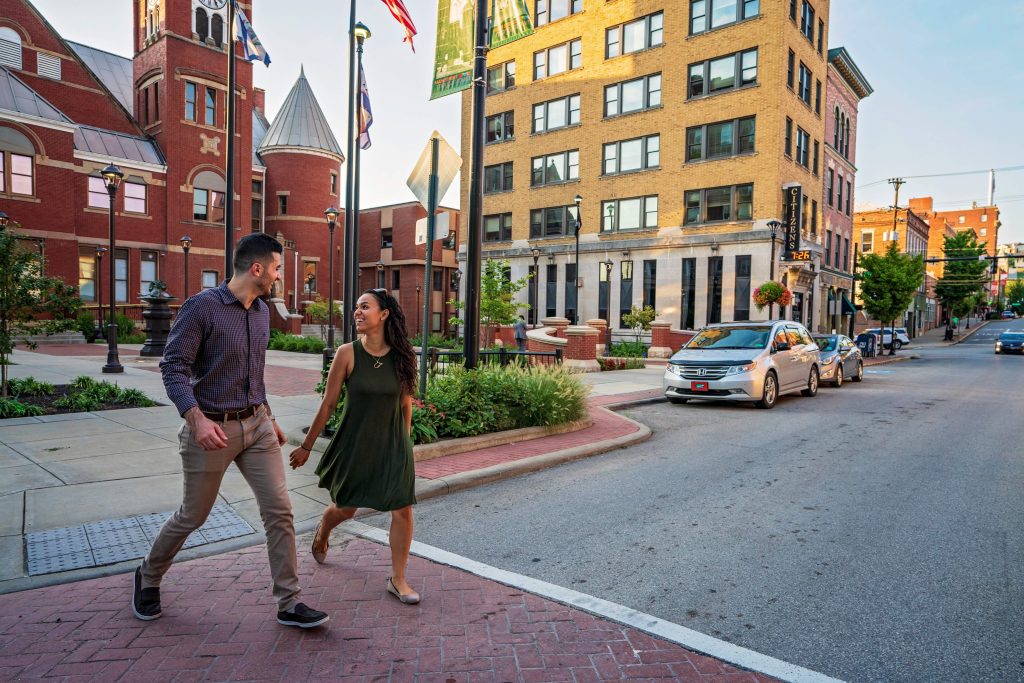
The Ascend Program, begun by Brad & Alys Smith, seeks to reverse those trends. The program has brought more than 1,000 young professionals into the state through an incentive program for remote workers over the last few years. How do they do it? They pay a relocation bonus of $12,000 to remote workers and focus on the state’s quality of life and outdoor recreation opportunities.
“Ascend WV is about more than just relocation—it’s about building community, fostering new connections, and empowering people to create fuller, more meaningful lives,” said Alys Smith, Co-Founder of the Wing 2 Wing Foundation, First Lady of Marshall University, Founder of the Women Warriors Summit, and Attorney.
Ascend WV is currently operational in six regions of the state. They claim a retention rate of 96% an an economic impact of more than $500 million after only a few years in operation.
Will it help reverse the state’s long-term population decline trends, leading to years like 2024 when more young people move into the state than move out?
Stay tuned to RealWV for continuing coverage over the next six months, examining in detail why young people choose to stay, leave, or return to West Virginia for their professional life.
Related Articles
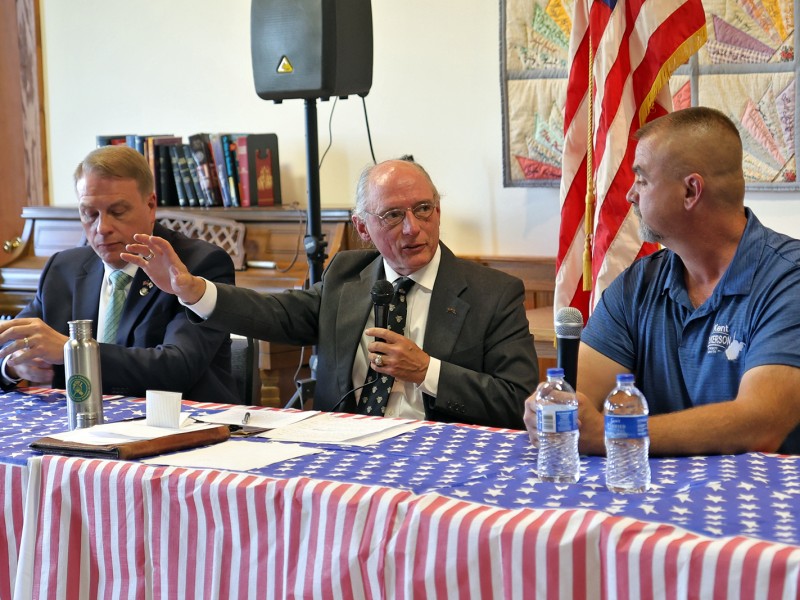
Greenbrier Candidate Forum, Oct 27 at 6pm
All candidates on the ballot for the offices of Greenbrier County Commission, Greenbrier County Magistrate, State Senate District 10, and House of Delegates Districts 46 & 47 have been invited to participate.
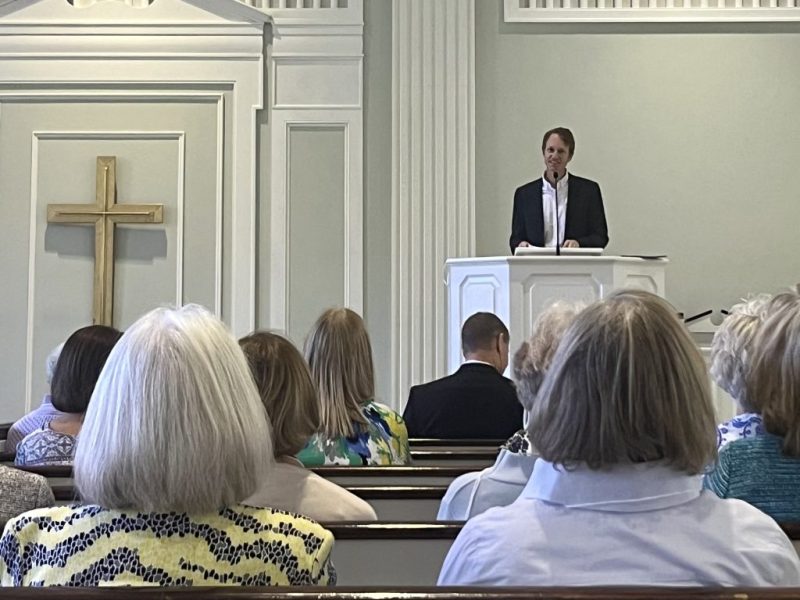
SUNDAY SERMON: Render unto Caesar
Our modern ears think this passage is about church and state and taxes. But Jesus brushes those things aside. He’s got bigger fish to fry. “Render unto God what is God’s.”