
How 22-year-old entrepreneur Alex DeGraff has built a vibrant life in Appalachia
By Lauren Rodgers, RealWV
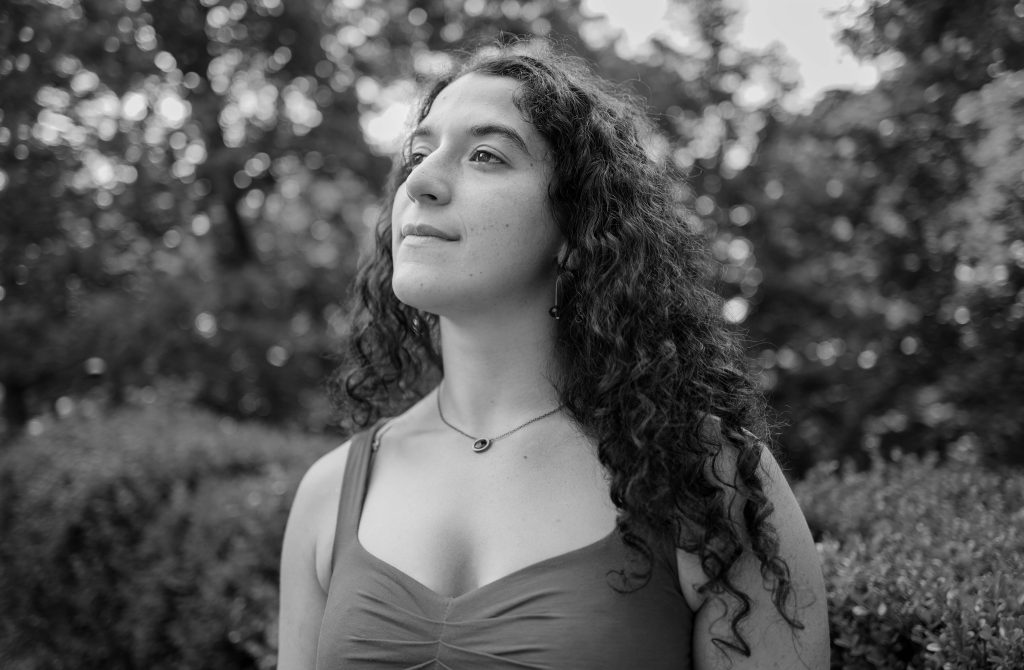
Two years ago, Alex Degraff signed the closing documents on a one-story ranch house on the outskirts of Lewisburg, West Virginia. She had been running the music school she founded at the age of 16 for four years, was obtaining her real estate license, and had decided that she wanted to lay the foundation for her adulthood in Lewisburg.
Now, River City Music Co. has expanded to 30 students and five teachers. Alex has sold properties valued at just under $1 million, and she turned the house she bought two years ago into a home, complete with an expansive garden in the backyard.
Alex DeGraff is only 22 years old.
Born and raised on a small horticulture farm outside of Lewisburg, Alex describes her upbringing as “completely unusual.” Homeschooled by her parents and active in the Greenbrier Valley arts scene, Alex learned to approach the world with an alternative eye from an early age. She milked the cows every morning, played piano in the afternoons, and went to dance practice each night.
“I feel like an upbringing in West Virginia is already unusual from an outsider’s perspective, because our lifestyles are primarily small-town-based and agricultural,” DeGraff said. “It’s unusual anyway, but I was ‘unschooled,’ meaning that I did not follow a standard curriculum growing up. My mom was truly a stay-at-home mom in the best possible way — our education was a lot of student-led learning. Life was interesting, and my brother and I wanted to know all that we could.”
Alex’s “unschooled” education instilled a potent creativity in her, as well as a deep agricultural knowledge, resilient self-discipline, and an aptitude for critically engaging with the world — all qualities that she carries with her to this day, especially in her entrepreneurial endeavors.
Though Alex looks back on her childhood fondly, there were still moments when she desired more than what she believed Lewisburg could offer her. She longed to continue her passion for dance beyond her teenage years and looked at joining a modern dance company in Richmond, Virginia. She considered attending college out of state and rigorously studied for the SAT.
“I wanted something different,” DeGraff said, “But I always felt like leaving would be temporary. Also, I think we’re taught to believe that if you stay in your hometown forever, you’re stunting your professional or adult life. That was a narrative I hadn’t yet unlearned for myself.”
In the midst of her search for out-of-state opportunities, a local parent asked Alex if she would be open to giving her child piano lessons.
“I had never taught before, but she had two kids who wanted to learn. I had nothing else on my schedule, because it was the summer after COVID and everything was shut down. I thought, ‘Why not? I might as well earn some money.’”
Alex’s decision to teach piano lessons would come to alter the course of her young adulthood.
“I realized that if I got to a certain number of students, the annual income could be livable. Recognizing that I could support myself by teaching piano was really profound for me, because I’ve always been set on not wanting a job that I didn’t feel inspired by,” DeGraff said. “Maybe that’s an entitled place to be, but I’ve always had strong feelings about that and have been blessed enough to structure my life around that conviction. Everything felt right the moment I realized that teaching piano could be a long-term profession, keep me in the area, financially support me, and maybe even support a family one day.”
Alex’s decision to root her life in southern West Virginia extends beyond her upbringing and entrepreneurship — it is also informed by an enthusiastic adoration of her community.
“West Virginia is so community-oriented, and I believe the community you build for yourself is everything. It’s all in the people — you have to be engaged with the community to be able to discover what’s here. We love thy neighbor, and it’s fulfilling,” Degraff said.
If she’s not teaching at the music studio, selling real estate, or working on her garden, Alex is meeting friends downtown, going to the farmers market, or swimming at the river. And though Alex has crafted a pace of life in Lewisburg that she loves, she understands the perspective of other folks her age who seek out-of-state opportunities.
“I’ve heard so many different things: ‘I’m leaving because there are no jobs, because I want something more fast-paced, because I can’t find a boyfriend,’ or whatever the reason is. It’s not an easy place to live, and I do see why people may need to leave,” DeGraff said. “As a young person, it can be easy to overlook everything this area has to offer, particularly with what social media portrays as being a ‘full’ life. It doesn’t look like this very often — influencers, or whoever you follow, are often traveling, going out, shopping, maybe clubbing. Life in Lewisburg is slower, and that can be hard for young people to appreciate. But a life here can be exceptionally full — I want to be clear about that. I think there’s a creativity and an intentionality to it.”
To young people in the region, Alex has a message:
“If you love it here and feel like something is lacking, create where you see lack. Pour back into your community — everything that you love here was started by somebody. It all starts with that seed of desire and a willingness to try. West Virginia isn’t perfect, but she is who she is. It’s not going to be easy or fast, but you can grow what you want over time. And if you have that desire, the opportunities here are as endless as they are in the rest of the world.”
Author

Related Articles
Heritage Music BluesFest brings big names to Wheeling this August
One of Wheeling’s biggest summer music events is back as Heritage Music BluesFest returns this weekend, August 7-9.
Monroe County Family Support Center to host community open house
The Monroe County Family Support Center is inviting families to its annual Open House on Friday, Aug. 7, from noon to 7 p.m.
THE FRONT PORCH: Flock cameras spread across West Virginia, sparking privacy debate
Across West Virginia, more communities are installing Flock Safety cameras to help law enforcement prevent and solve crimes.