Residents share differing views on revised Greenbrier County zoning ordinance
By Hannah Yost, RealWV
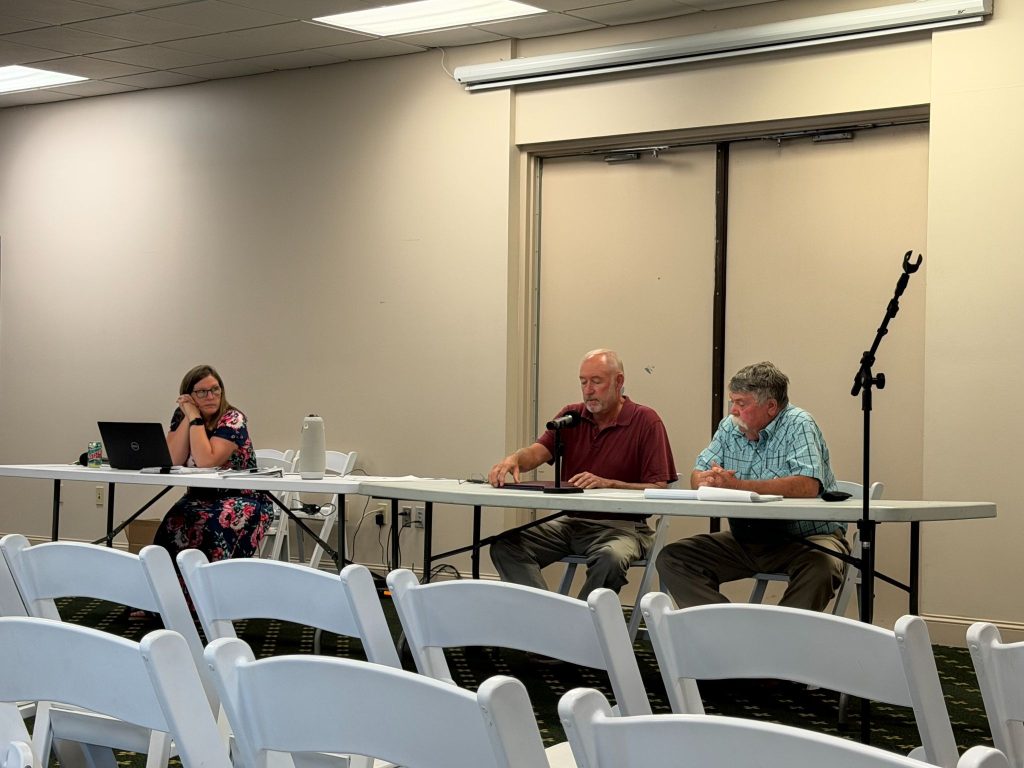
LEWISBURG, W.Va. — Opinions remained divided during a public hearing on Greenbrier County’s proposed zoning ordinance, as residents, landowners, farmers and business owners offered differing visions for balancing private property rights, farmland preservation, and future development.
The hearing marked the latest chapter in Greenbrier County’s ongoing zoning discussions. Earlier this year, residents voiced concerns over the original draft of the proposed ordinance during a previous public hearing. Read The Real WV’s previous coverage, “Citizens oppose ‘overregulation’ in proposed Greenbrier County Zoning Ordinance,” for additional background and context.
The July 7 hearing focused on revisions made by the Greenbrier County Commission to the proposed zoning ordinance following recommendations from the Greenbrier County Planning Commission. County Commissioners Woody Hanna and Lowell Rose attended the meeting in person, while Commissioner Richie Holliday participated via Zoom. County Commission Assistant Kelly Banton also attended.
Several speakers urged the commission to restore protections included in an earlier version of the ordinance, particularly within the Open Space Conservation zoning district.
One resident of the Lewisburg district, whose name was not clearly heard over the sound system, encouraged commissioners to return the ordinance to the Planning Commission for further review, describing the latest revisions as a “huge overreaction.” The resident argued that many property owners living within existing zoned districts chose those areas because zoning helps preserve farmland, open space, and responsible development.
“We’re making a mockery of protecting the land and its natural beauty,” the resident said.
Former Greenbrier County Schools educator Linda Ball, who said she served on the committee that developed Greenbrier County’s comprehensive plan several years ago, voiced concerns over proposed changes affecting the Open Space Conservation district.
Ball said she was alarmed by the number of commercial uses now proposed as permitted or conditional uses within the district. She specifically referenced the Midland Trail National Scenic Byway, describing the corridor west of Lewisburg as one of the county’s defining landscapes.
“I gasped when I read the land use changes,” Ball said, expressing concern that commercial uses such as gas stations, self-storage facilities, bars, and tattoo parlors could gradually alter the area’s rural character.
“Once it’s commercial use, it never returns,” she said.
Several other residents echoed Ball’s concerns, emphasizing the importance of preserving Greenbrier County’s scenic landscapes, agricultural heritage, and tourism appeal.
Another resident, whose name was not clearly heard over the sound system, said she and her husband have lived on more than 100 acres in the Forest Recreation district for approximately 35 years, said Greenbrier County’s natural beauty is one of the reasons so many people choose to live there.
“I understand Greenbrier’s need for jobs and growth and keeping young people here,” the resident said. “But this is not consistent with why people want to be here.”
Others argued the revised ordinance still places too many restrictions on private property owners.
Brandon DePriest questioned who had been involved in drafting portions of the ordinance, suggesting the proposal resembled Lewisburg’s zoning regulations more than those appropriate for rural Greenbrier County.
“There’s a reason why most of us don’t live in Lewisburg,” DePriest said, adding that property owners should retain greater freedom in determining how their land is used.
He also raised concerns about provisions involving mass gatherings, rebuilding agricultural structures, and what he viewed as increasing government oversight.
Jessie Bennett, whose professional career involves working with property owners, said private property rights should remain a central consideration throughout the zoning process.
“When you start taking private property rights and enhancing the authority of government, you have to justify why that shift is needed,” Bennett said.
Kevin Anderson questioned portions of the proposed zoning map, saying boundaries between residential, agricultural, and open space areas remain confusing and require additional work before the ordinance moves forward.
While much of the discussion focused on limiting commercial development, other speakers argued that carefully managed business opportunities are essential to preserving family farms.
Taso Stavrakis, owner of the West Virginia Renaissance Festival, thanked county officials for revising portions of the ordinance and described the latest draft as a positive step forward.
Stavrakis said farmers often need diversified sources of income to keep their land in agricultural use and encouraged commissioners to continue refining the ordinance while allowing reasonable opportunities for agritourism and similar ventures.
“There isn’t a goose laying golden eggs on my farm,” Stavrakis said. “I have to do something to keep my horses.”
Dawn Kieninger, who owns and operates the West Virginia Renaissance Festival alongside Stavrakis, asked commissioners to reconsider restrictions affecting art studios, farmers markets, educational opportunities and event facilities. Kieninger said those types of uses help landowners generate income while preserving large tracts of farmland, allowing families to keep their property rather than sell it for development.
Throughout the hearing, county officials emphasized that the revised draft attempted to strike a balance between protecting neighboring property owners while avoiding unnecessary regulation.
Commissioners said they removed several provisions they believed would require excessive enforcement while adding conditional uses that would allow certain proposals to be reviewed individually by the Board of Zoning Appeals.
Commissioner Lowell Rose acknowledged that opinions on the ordinance remain divided.
“We’re trying to do a balancing act,” Rose said. “We’re never going to please everybody.”
Rose said the County Commission sought to make the ordinance less restrictive than earlier drafts while still providing protections for residents living in more densely populated areas of the county.
He added that while only a small portion of Greenbrier County is currently zoned, residents should review the proposed ordinance to determine whether it would affect their property.
Following the hearing, The Real WV asked Matt Ford for his perspective on the discussion.
Ford, the only candidate currently on the ballot for Greenbrier County commissioner in this fall’s election, said he would like to see future meetings include more discussion between county officials and residents rather than a traditional public hearing format.
“I would like to see more discussion as opposed to a public hearing,” Ford said. “To get more of a back and forth between both sides. There’s never any discussion, and you don’t really get to hear the opposing point of view.”
Ford, who lives on the western end of Greenbrier County, said many residents in his area generally oppose additional regulations until a neighboring property becomes a nuisance. At that point, he said, residents often expect county officials to intervene, but there are few tools available to address those situations.
County officials said another public hearing is expected to be held around July 28 at the Greenbrier County Courthouse after public notice requirements prevented the hearing from being advertised within the required timeframe.
Residents can review the proposed zoning ordinance by visiting greenbrierwv.gov. Copies are also available for public review at the Greenbrier County Courthouse and local libraries.