WV BOE President tells lawmakers they need to ‘level the playing field’ for public education, Sullivan retires
By Autumn Shelton, RealWV
CHARLESTON, WV– After missing their regular September meeting due to court hearings concerning mandatory school vaccinations, when members of the West Virginia Board of Education held their October 1 meeting, President L. Paul Hardesty had something to say to the state’s lawmakers – create laws to level the playing field for public education.
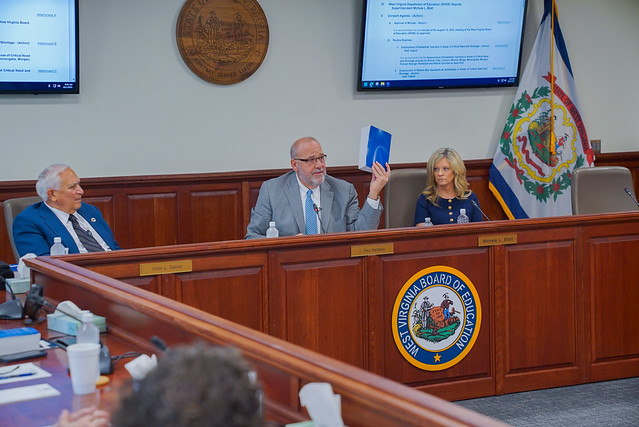
“Today the board members received their new copies of the West Virginia Code,” Hardesty began, as he held the book up for all to see. “This is the West Virginia law book that governs public education.”
“There is a real misconception amongst the voters and the general public in the state of West Virginia of what that book actually is and who the actual author of that book is,” Hardesty continued. “Ladies and gentleman, I assure you the author of that book is not the West Virginia Board of Education nor the West Virginia Department of Education. This is a book of school law created by legislators past, present, and, hopefully in the future.”
Hardesty stated that public school closures throughout West Virginia, largely because of the loss of student enrollment, are heartbreaking and happening more often. But, he provided his ideas on preventing these school closures.
“There’s 134 members of the Legislature. They have the oversight, they have the ability to change the school aid formula to recognize these rurally challenged, geographically challenged areas that we speak of,” Hardesty said. “They have that ability. I, and this board and this department, do not.”
Hardesty then brought up school choice, and said that although he thinks school choice is not necessarily a bad thing, the Hope Scholarship has “no guardrails,” is too costly and has “grown out of control.”
“But, what has been the orchestrator of this school choice in West Virginia?” Hardesty asked. “I’m going to go back to 2014 and I’m going to focus my comments on this past decade, basically. The American Legislative [Exchange] Council (ALEC), they are the ones that proposed the school choice model and playbook for West Virginia and other states throughout the land.”
According to Hardesty, the way to harm public education is to do so financially. And, as a result of school choice legislation, financial instability has occurred in the state’s public school system.
“If you bankrupt the school system, change can occur,” Hardesty said. “That’s why you see this staggering decline in enrollment in West Virginia. In the past decade, we have lost over 35,000 students in public education all in the name of school choice.”
Yet, Hardesty continued, nothing has been done to “stop the hemorrhage’ in West Virginia, which is not only causing public schools to close, but leaving children behind who need the most economical and social assistance.
Hardesty explained that the state code “green book” is given to each county, and details the newest public school rules and regulations that have been passed by the state’s legislators each year. But, he noted that public charter schools and those who home school do not have to follow what is in the green book.
Instead, he said that the rules and regulations which apply to public charter schools can be detailed on one and half sheets of paper. Homeschool rules and regulations can be detailed on one index card.
“The public deserves the truth,” Hardesty said. “I am sick and tired of legislators going and piling on this board, piling on this department, telling us how wrong we are that we shouldn’t close these [public] schools. You all made the law, not I.”
“Ladies and gentlemen, you tell me, are the options fair and equitable?,” Hardesty questioned. “Which one is designed to fail and which one is not?”
“You gotta level the playing field,” Hardesty stated. “This assault on public education by ALEC and the people that follow ALEC has got to stop.”
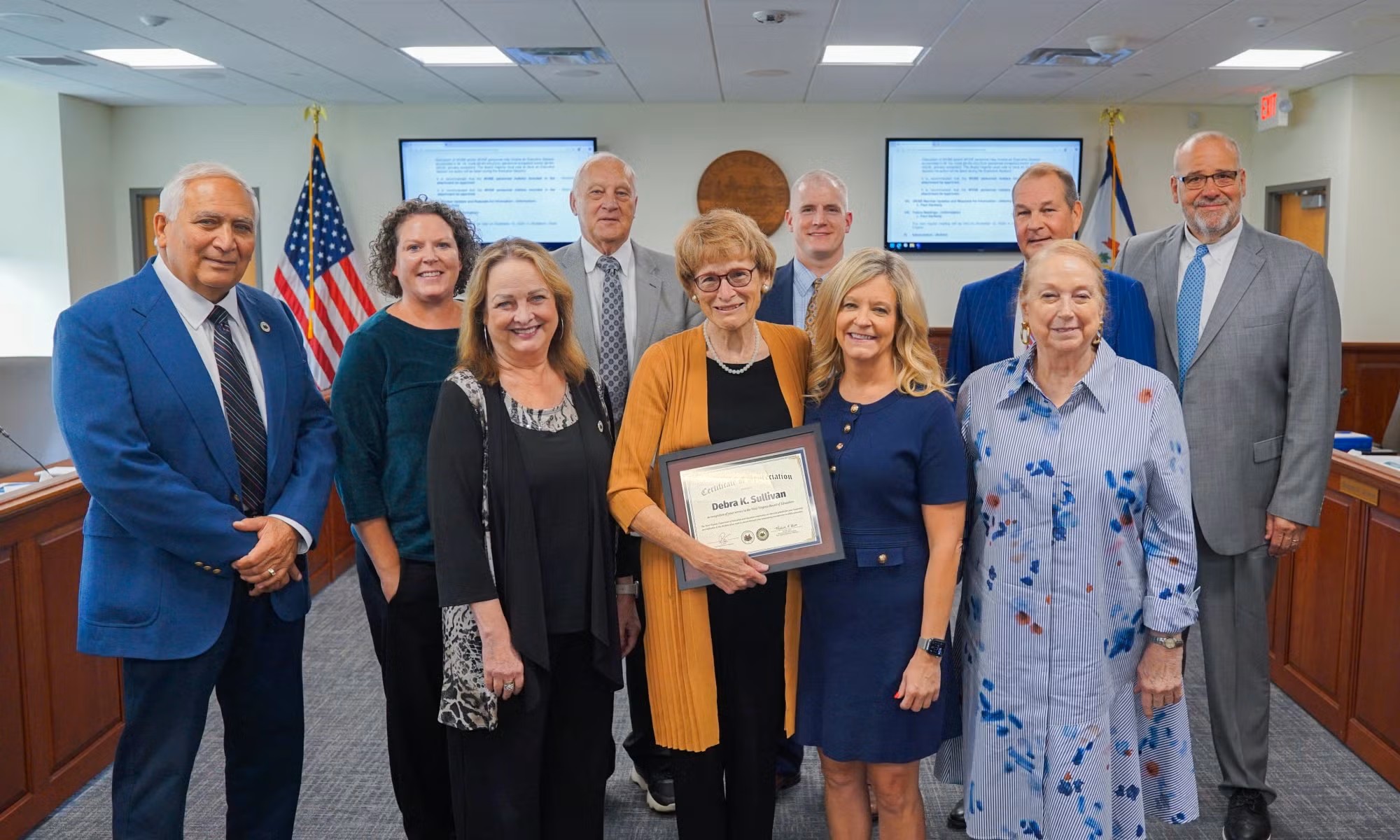
Board Member Debra Sullivan retires
Appointed by former Gov. Jim Justice in 2017, Sullivan announced her retirement and stated that this would be her last BOE meeting.
According to Sullivan, she knew what an important responsibility serving on the board would be, and she has never taken it lightly.
“Schools feel like home to me,” Sullivan said. “Being in them and around the people who are involved with them gives me hope for our children and our state. Yes, we have challenges. Schools should never be viewed as the problem. They define our future and should be given the credit they deserve. Public schools are the bedrock of our communities, and they will continue to be. They will continue to enroll children from all backgrounds with the single purpose of this in mind: to raise up the next generation of responsible, productive, engaged citizens who can make their way in the world.”
Sullivan said she has been grateful to serve the state in her role and added that she will continue to be involved with schools and push to give children “the best opportunities imaginable.”