
BACK PEW: What’s in the Greenbrier County Comprehensive Plan?
By Stephen Baldwin, RealWV
Last week, one citizen showed up to the Greenbrier County Courthouse for a hearing on the county’s comprehensive plan.
It’s easy to jump on the Planning Commission or County Commission for not getting more engagement, but they tried. They have been advertising this process since January.
It would be just as easy to blame the citizens for not showing up, but people are busy. From kid’s sporting events to church to second jobs, it’s not like people have a lot of spare time on their hands in the evenings.
I confess that I’m part of the problem too. Though we at RealWV have been reporting on the plan for months, I hadn’t read it until this weekend. (If you’d like to read it for yourself, click here.)
It contained loads of interesting demographic information which I found to be very educational. For example, did you know that nearly 18,000 housing units were lost in Greenbrier County from 2010-2020? Or that nearly 87% of businesses in the country have less than 20 employees? Or that by 2030, we are expected to lose about 5% of our county population?
Statistics such as these and other information contained in the plan identified many of the problems our county faces–lack of affordable housing, traffic congestion along Route 219, a small workforce, lack of business sites, dilapidated properties in need of demolition, aging population combined with departing young people, and population decline.
While the plan does a good job of identifying these issues, it does not specify solutions. Instead, it lists broad goals.
Take housing for example. The Greenbrier County plan says, “GOAL: Actively encourage the development of housing, services, and facilities to address senior needs. IMPLEMENTATION: The Greenbrier County Commission should provide the community with information regarding resources to address housing concerns in Greenbrier County.”
Or economic development. Since the plan identified businesses of 20 employees or less as the backbone of the local economy, I expected a blueprint for strengthening such businesses. Instead, the plan says, “GOAL: Identify new business sites to attract new businesses to Greenbrier County.” Business sites are defined as large new employers, which are the ones we’ve always struggled to attract.
Next in the report comes the Traffic section. “Community input indicates that Route 219 traffic congestion is a top priority for the community.” It then lists, “GOAL: Alleviate motor vehicle traffic congestion along major thoroughfares in and out of the Lewisburg area along the 219 corridor.”
How? The plan doesn’t specifically say.
According to Cornell University, comprehensive plans are “a blueprint for the future development and preservation of a community.” Using data and input from citizens and key leaders, they “create a vision and goals” for the community.
The real test of the comprehensive plan will come next. Will elected officials leverage it into concrete policy solutions for the problems it identifies? What will those solutions be? What specific steps must be taken to get there? Does the political will exist to make structural changes to our county for the sake of posterity?
That’s the view from the back pew.
Stephen Baldwin is a Presbyterian minister, the Publisher of The Real WV, and the former West Virginia Senate Minority Leader.
Related Articles
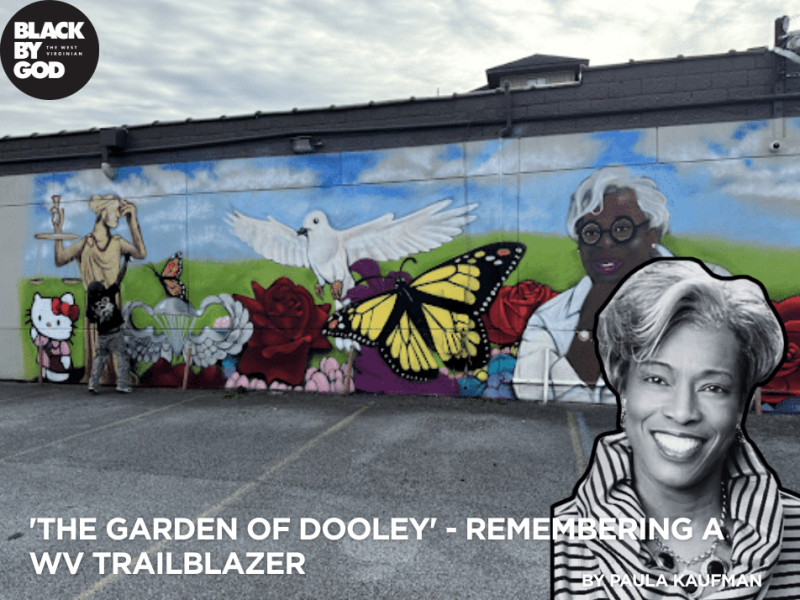
BLACK BY GOD: ‘The Garden of Dooley’ — Remembering a WV trailblazer
Respected activist and Charleston attorney, Katherine Louise “Kitty” Dooley passed away on October 10th, 2025. Five days later, the public awakened to “Garden of Dooley.”