New report shows West Virginia has highest percentage of zero-income households in nation
By Matthew Young, RealWV
Reporting released on Friday shows that West Virginia leads the nation in percentage of households which generate no income.
According to Visual Capitalist – a digital publisher of global statistical-information – the 34% of West Virginia households that report zero dollars in annual income make it the highest percentage in the country. As of their 2020 counting, the United States Census Bureau reports there to be approximately 721,118 households within the Mountain State, meaning more than 250,000 households are entirely dependent upon the state for food, housing, and all other necessary resources.
Second highest behind West Virginia is New Mexico’s 31%, followed by Maine, Arkansas, and Mississippi, all at 30%. At 17% and 19% respectively, Utah and Washington D.C. have the lowest and second-lowest percentages of no-income households in the country, followed by a 21%, three-way tie between Alaska, Colorado, and Texas.
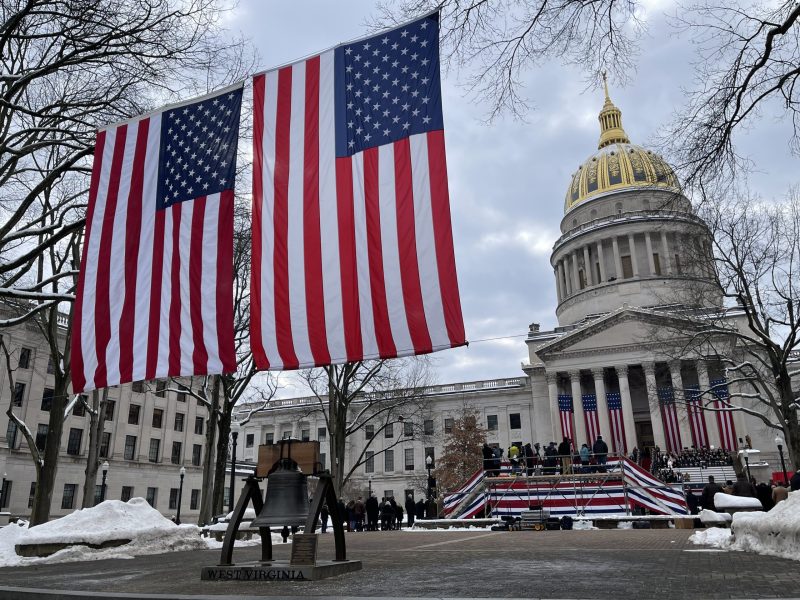
In West Virginia, both Gov. Patrick Morrisey and House of Delegates Speaker Roger Hanshaw, R-Clay, have targeted the elimination of the state’s income tax as a priority of their 2026 legislative agendas. In year’s past, income tax revenue has been added to the state’s General Revenue Fund, which is used to pay for various public needs. Education, law enforcement, and physical infrastructure are examples of such needs, as are hospitals and public health programs. Legislative and Executive branch officials are also paid from this fund.
While West Virginia has roughly the same number of households generating no income as it does households receiving SNAP (Supplemental Nutrition Assistance Program) benefits, the majority of SNAP funding is provided to the state by the federal government. Therefore, barring any future changes or extended shutdowns of the federal government, any reduction or elimination of West Virginia’s income tax would have minimal impact on in-state SNAP recipients. Where the impact could be felt, however – in addition to a potential reduction in other services mentioned above – is in the state’s other tax schedules and credits, such as those provided for child care and to disabled veterans.
According to the West Virginia University (WVU) John Chambers College of Business and Economics, approximately 32% of the state’s General Revenue funds are spent on welfare programs, such as Medicaid and CHIP (Children’s Health Insurance Program), with another 30% going toward education. West Virginia currently receives some nine-percent of General Revenue funding from its state income tax. To fund all public programs, however, West Virginia spends 26% more annually than the state income tax brings in, with the remainder of the funding coming from the federal government in the form of public assistance.
If West Virginia lawmakers choose to eliminate the state’s income tax – or nine-percent of the General Revenue fund – it is as yet unclear how they will plan to compensate for the financial shortfall.
RealWV will provide updates regarding the possible elimination to the state’s income tax as additional information is made available. The 2026 Legislative Session begins Wednesday, Jan. 14.
Related Articles
New music venue opens in Lewisburg on Saturday
This weekend marks a new beginning for Lewisburg’s live music scene
THIS WEEK IN WV HISTORY: August 2–8
The following events happened on these dates in West Virginia history.

Real West Virginian of the Week: Allen Smith — Helping students discover a future in West Virginia
Every year, Allen Smith helps hundreds of students answer one of life’s biggest questions: Where do I belong?