
Hancock County Schools employees will receive February pay, Senate Education Committee discusses funding bill
By Autumn Shelton, RealWV
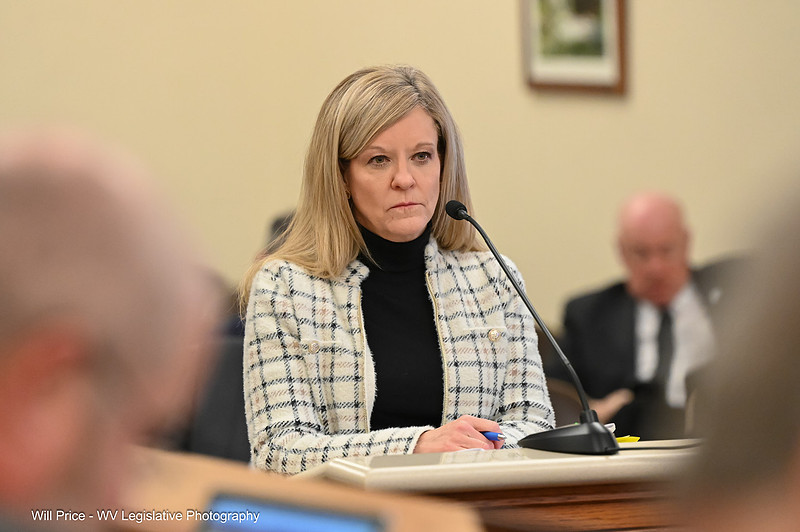
CHARLESTON, W.Va. – On Tuesday, during the Senate Education committee meeting, West Virginia Superintendent of Schools Michele L. Blatt said that Hancock County Schools employees will receive their February paychecks now that an advance of school aid funding has been made available.
“We were able to work with the auditor’s office and the treasurer’s office to front their June state aid payment last week,” Blatt said. “So, all the teachers, staff and everyone will be paid as normal for their February payroll.”
Blatt added that in March, the arrival of local tax collections should help cover payroll. However, in May a portion of the payroll may need to be covered by the state.
“But, that’s still to be determined,” Blatt noted, adding that Hancock County should be good financially until June when the state aid payment would need to be made-up.
“That’s around $3.1 million we’re looking at right now,” Blatt said. “The problem comes in that that’s the end of the fiscal year so there’s no way that we can front additional state aid.”
The issue of not being able to make payroll has been a concern in Hancock County Schools since it became publicly known in September that the county is in the midst of a financial crisis, which prompted a takeover of the county school system by the state Board of Education on Jan. 16.
Additionally, members of West Virginia’s legislature have been working on bills that would provide emergency state funding in the form of a loan to the county due to the alleged “maladministration” of funds by Hancock County Schools officials. These two bills, House Bill 4574 and House Bill 4575, were quickly passed in the House, but have slowed down for debate in the Senate.
House Bill 4575 was sent to the Senate Finance committee, and House Bill 4574 was sent to the Senate Education committee, where it was discussed on Tuesday.
According to Blatt, seven other counties are under the control of the State Board of Education and often those districts face financial concerns. But, Hancock County, once financially stable, found itself in its current situation because school officials chose to keep 143 positions over the school aid funding formula that were being paid for with federal Elementary and Secondary School Emergency Relief Funds (ESSER) following the COVID-19 pandemic.
The county should have considered a reduction-in-force (RIF), but that didn’t happen, Blatt added, noting that the county is currently under investigation to find out where the problem originated.
In response to questioning, Blatt explained that one financial problem occurring in counties throughout the state stems from the difficulty surrounding school closures.
“You have a five member board who hires the superintendent. The superintendent is beholden to this board for their job. This local board is elected in that small county and they don’t want to make the decisions that gets rid of their community school or their neighbors job,” Blatt said. “And, so we end up in a situation where Hancock is just kind of on steroids with this problem. But, that’s the problem we’re seeing across the state is the hard decisions that are being asked of these local board members to vote in their small communities for things that are not popular.”
Blatt added that transportation costs in rural counties as well as special education needs are causing the counties to be “in the hole” financially, but work continues with stakeholders – including lawmakers – to find solutions for funding concerns.
“If you think about the public education system and the work that we want to do in the economic development and the things we want to do to grow, we’ve got to make sure that we have . . . resources for career pathways and to build this out so that we can produce the workforce that we need here in West Virginia,” Blatt said.
As for Hancock, Blatt said that upcoming reductions in force will help solve some financial issues, but work continues on solving the crisis.
The Senate Education committee did not take a vote on House Bill 4574, but will take the matter up at a later date, according to Chair Amy Grady, R-Mason.
Related Articles

THE FRONT PORCH: Why is harm reduction important?
Oftentimes, the topic of harm reduction can become controversial. So, let’s talk about it.