Senate Committee advances bill to move $199.5 million in federal dollars to establish Rural Health Transformation Program
By Autumn Shelton, RealWV
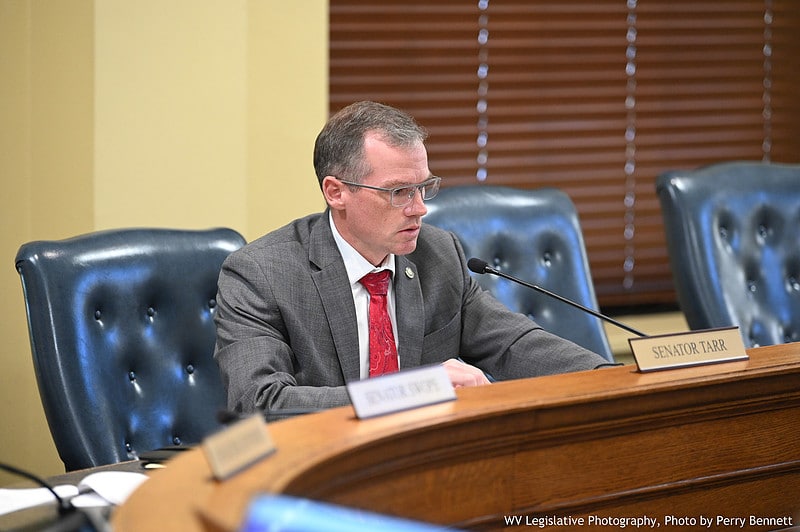
CHARLESTON, W.Va. – On Monday, the Senate Finance Committee voted to advance a piece of legislation that moves $199.5 million in federal dollars awarded to the West Virginia Department of Health in December to establish the Rural Health Transformation Program – part of the Trump Administration’s nationwide plan for a rural health transformation.
Senate Bill 570, a supplemental appropriations bill, grants $199,476,099 in federal dollars to the West Virginia Department of Health for fiscal year 2026. This federal funding was made available through the “One Big Beautiful Bill,” but West Virginia first had to submit an application for the funding and discuss ways in which the state would support rural health.
Back in September, as the state was putting together a rural healthcare transformation plan, Gov. Patrick Morrisey said, “We have to support innovation in rural areas and look at the root causes of disease to improve prevention, chronic disease management, behavioral health and many other disease states. We have to help rural providers and new entrants improve delivery of care in a way that ultimately moves the needle on outcomes.”
After meeting with stakeholders to develop a rural health transformation plan, on Dec. 15 Morrisey released a summary of the plan, which discusses seven different health initiatives, including a connected care-grid for increased telehealth access, a Mountain State Care Force to retain and recruit healthcare workers, a Personal Health Accelerator, based on the Make America Healthy Again movement, to motivate and incentivize West Virginians to eat better and move more, and others.
As discussed during the Senate Finance Committee meeting, the federal dollars will be distributed among the seven health initiatives as follows:
- Connected Care Grid – $45.9 million
- Rural Health Link – $13.8 million
- Mountain State Care Force – $14.7 million
- Smart Care Catalyst – $45.6 million
- Health to Prosperity Pipeline – $13.9 million
- Personal Health Accelerator – $29 million
- HealthTech Appalachia – $18.8 million
An additional shared program cost will be provided $18.6 million.
Curtis Capehart, policy director for the West Virginia Governor’s office, explained that this funding will be monitored through data to ensure accountability and effectiveness.
“This isn’t just sort of a pipeline to free money where folks are just never going to have to show anything,” Capehart said.
In response to questioning from Sen. Amy Grady, R-Mason, on specific data collections, Capehart said that each program initiative will be monitored accordingly and there will be a lot of federal involvement.
“On the front end there is an annual revisitation by the federal agency overseeing this – CMS (Centers for Medicare & Medicaid Services),” Capehart said. “They will evaluate our performance on an annual basis to see if we’re actually living up toward the commitments that we’ve made in our application. As part of that, they’re going to evaluate all the data we’re collecting. There’s a large focus on just the technology for the sake of treatment but also the technology as a source for data collection. We can’t really prove that we’re moving any of those needles if we’re not tracking the data.”
Additionally, Capehart said there is a potential for a clawback of funds if adequate progress isn’t being made, even if those funds have already been spent.
“They’ve made it very clear that this is a five-year funding span, and there should be no expectation that more dollars are coming. So, from day one we’ve had to craft a program based on the expectation that there will be no more dollars, that funding cliff exists, and that sustainability has to be a facet of this,” Capehart concluded.
On Feb. 3, House Bill 4740 was passed by the House of Delegates. This bill will exempt the Department of Health from purchasing requirements to allow for the quick release of federal funding for the Rural Health Transformation Program. The bill is currently awaiting movement in the Senate.
Senate Bill 570 is now headed before the full Senate for further consideration.