
Furry, slimy, hairy or feathered, the Cheat Lake Animal Hospital treats all comers
By Vanta Coda III, RealWV
The Cheat Lake Animal Hospital has an array of animal patients that come in throughout its 24-hour operational hours, from dogs and cats to exotic species such as axolotl. Within the patients who are admitted to the veterinary office, a visitor from the far north that is unique to see in West Virginia heals with careful attention from the care team. This patient is a Horned Grebe, an obligate waterbird that is commonly found in northern parts of Canada and the United States. The northern visiting bird was checked in at Cheat Lake Animal Hospital, under the treatment of the Avian Conservation Center of Appalachia. a 501(c)(3) nonprofit organization that operates out of the Animal Hospital. The organization is licensed by the US Fish & Wildlife Service to rehabilitate injured, ill, or orphaned wild birds across all bird species.
Dr. Jesse Fallon, Director of Veterinary Medicine at the Avian Conservation Center of Appalachia, said the Horned Grebe was one of two species of obligate waterbirds brought in by local residents or rescued by the West Virginia Division of Natural Resources as a result from winter storm Fern that blanketed the mountain state in snow and ice.
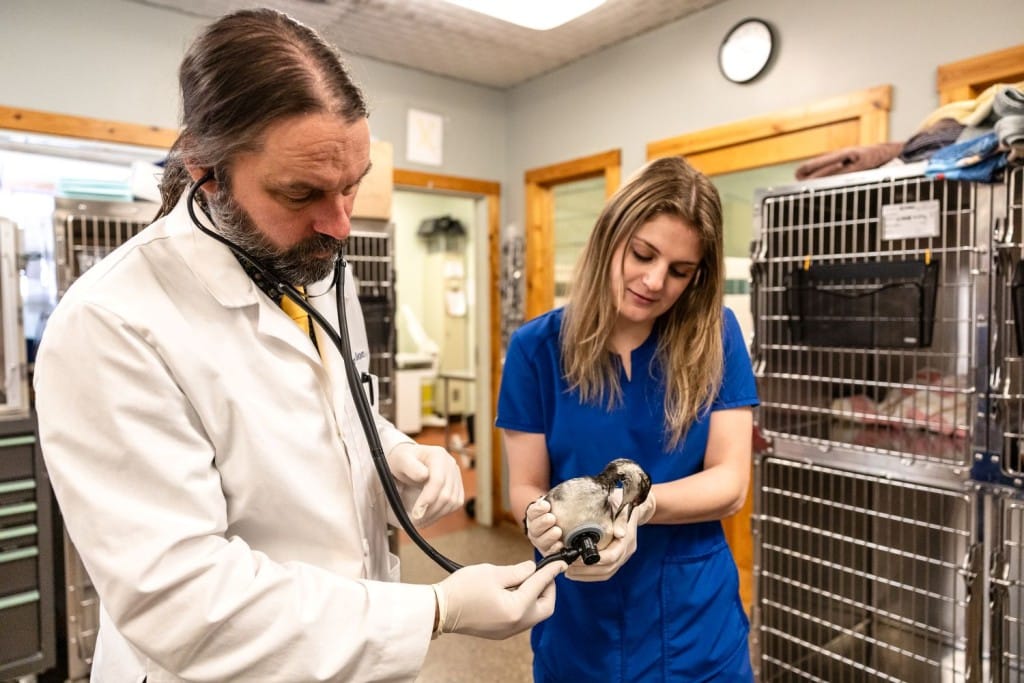
“We occasionally get these water birds that we call obligate waterbirds, and that means they really don’t function well on land,” said Dr. Jesse Fallon. “They can’t walk around like a duck or a chicken because of the way that their anatomy is evolved to be really adapted to life on the water, that is why their legs are placed laterally. What happens sometimes in the winter typically during a storm event like we had a couple weeks ago, the weather itself, with the freezing rain and the winds can force them to land for safety, but also they’ll see the gleam of an ice patch on a driveway or on a piece of snow, and that’ll look like or mimic the top of a lake, and they’ll land, and then once they land, they’re unable to get back off the ground without having water.”
Unlike many other birds, obligate waterbirds have denser bone structure and no hollow bone cavities, which help most other bird species fly. Obligate waterbirds have this bone structure so they can dive for prey below the surface of the water. For taking off they use the propulsion of their feet and wings gaining enough speed and lift to take off. If there is no water for them it is virtually impossible for them to take off on solid ground, stranding them.
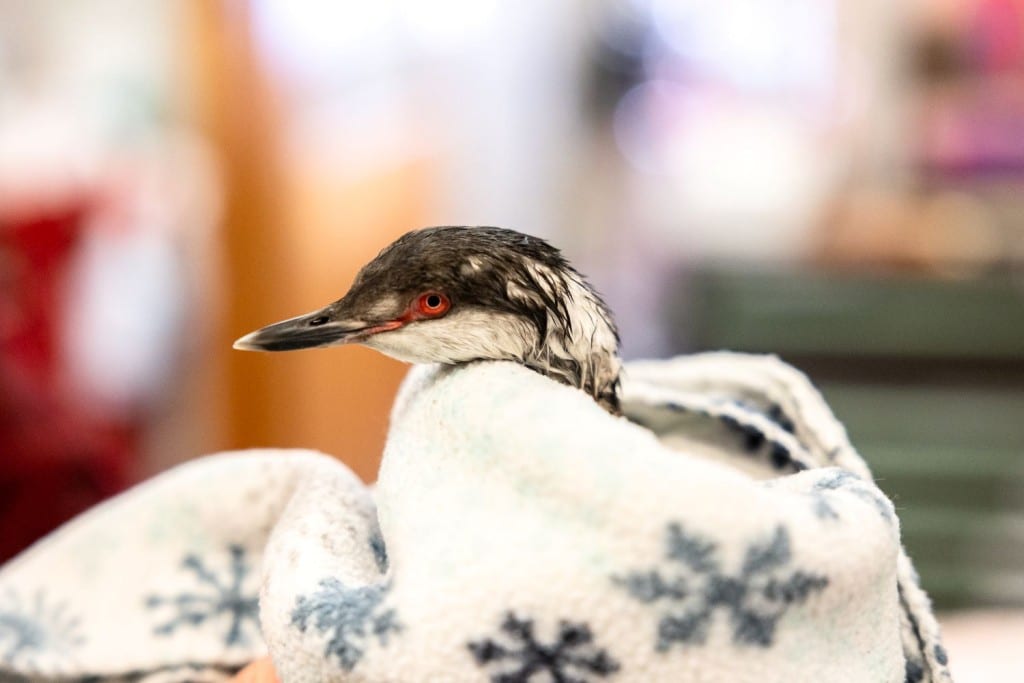
In addition to the Horned Grebes treated by the clinic, several Red-throated Loons were taken in as patients following winter storm Fern. Dr. Fallon and his wife, Katie Fallon, Executive Director of the Avian Conservation Center of Appalachia, said these are the first Red-throated Loons they have seen since starting to rehabilitate birds for the organization in their 15-year working history.
“In about a 48-hour period, we admitted about six Red-throated Loons,” said Dr. Fallon “In all, we had 12 obligate waterbirds that came in over the course of that week, all from that storm.”
The Avian Conservation Center of Appalachia and the Fallons usually see Common Loons as well as Horned and Pied-billed Grebes around this time of year, but a Red-throated Loon is a very rare sight, as is the number of obligate waterbirds admitted into the care of the Avian Conservation Center of Appalachia during a short period of time.
“The Horned Grebe is such an interesting bird,” said Katie Fallon. “They’re such a northern bird and found all over the world during breeding season, but in the wintering season they migrate down along the coast. This one likely ended up in West Virginia as a forced pit stop with the storm that hit.”
Many of the stranded obligate waterbirds typically are released quickly, as the species is difficult to keep in captivity. Unfortunately, sometimes the conservation center will have birds that come in with fractures or skin abrasions from trying to walk or propel themselves forward on the ground, causing for a longer rehabilitation.
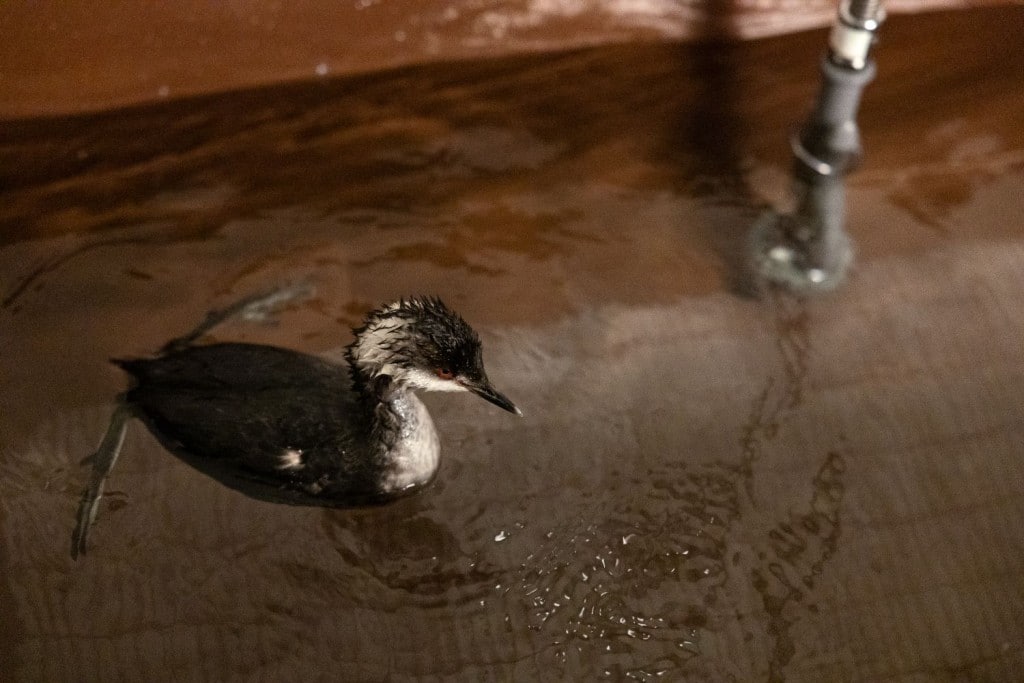
The center is waiting for the production of waterproofing oils from a gland at the base of the tail of their Horned Grebe patient, which coats the feathers of the bird and are essential for keeping the bird warm and for gliding through the water when hunting prey underwater.
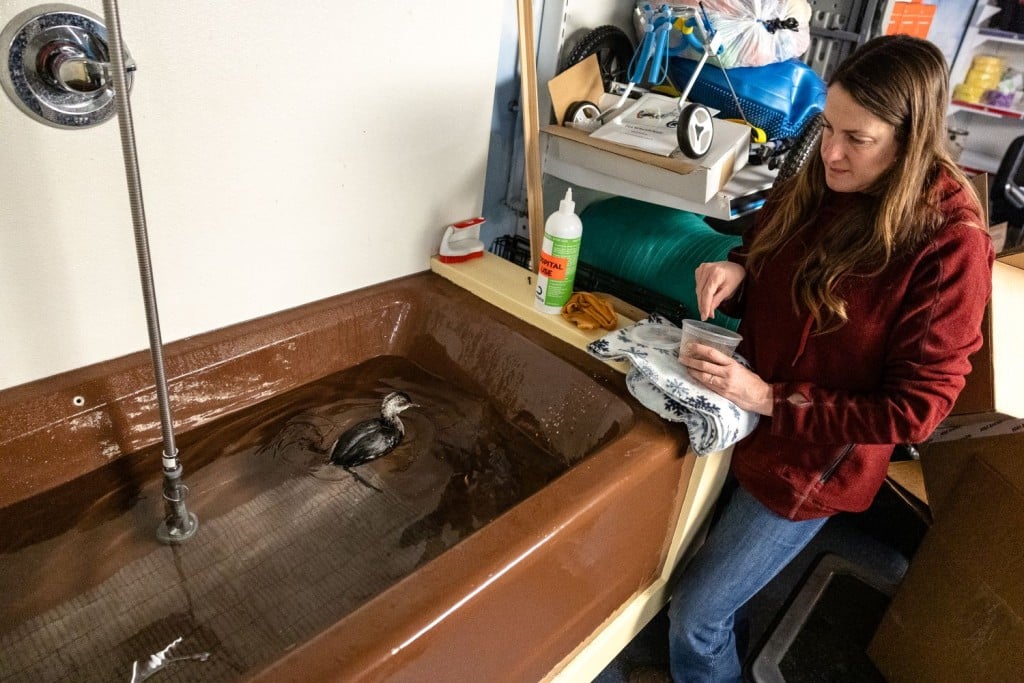
As winter continues in W.Va. Dr. Fallon expresses that if the public encounters one of these downed obligate waterbirds during the wintertime, they should immediately call the Avian Conservation Center of Appalachia hotline at (304) 906-5438.
Since the center operates in conjunction with the Cheat Lake Animal Hospital in Morgantown, W.Va., they are open 24 hours and can take in patients around the clock. To make sure the bird is comfortable and safe when it is found, it should be placed in a cardboard box. Since these birds are cold-adapted and wild animals, they should not be warmed up or fed, but rather brought to Cheat Lake Animal Hospital for evaluation as soon as possible.
Related Articles
PUBLISHER’S NOTE: Candidate forum will proceed as planned, candidates or not
Our job is to provide a forum for candidates to share their views. We will do that whether all the candidates show, some show, or none show. And we will report on it for voters to be informed.

Real West Virginian of the Week: Jada Mills captures the people and places that make West Virginia home
For Jada Mills, a photograph can capture more than what happened in a single moment. It can show how someone felt while it was happening.