60 years later, hate still cannot drive out hate: remembering the March on Washington with the West Virginians who were there
By Jeffrey Kanode, RealWV
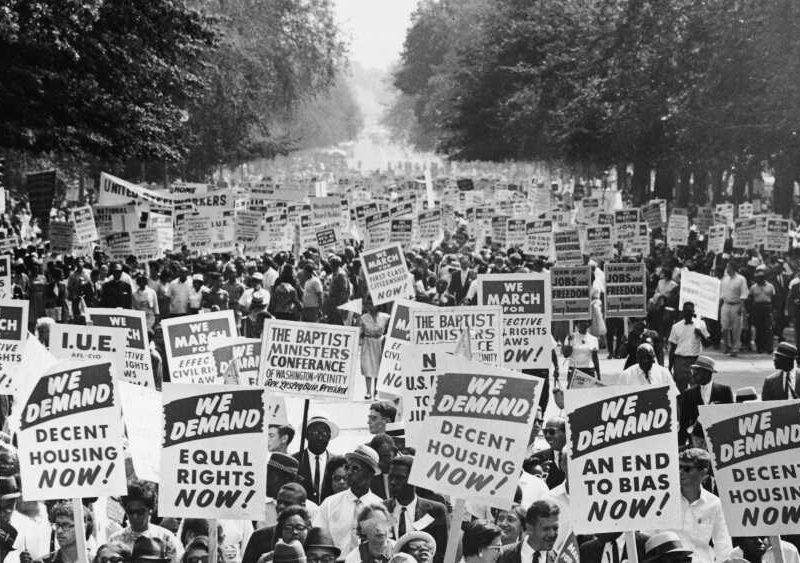
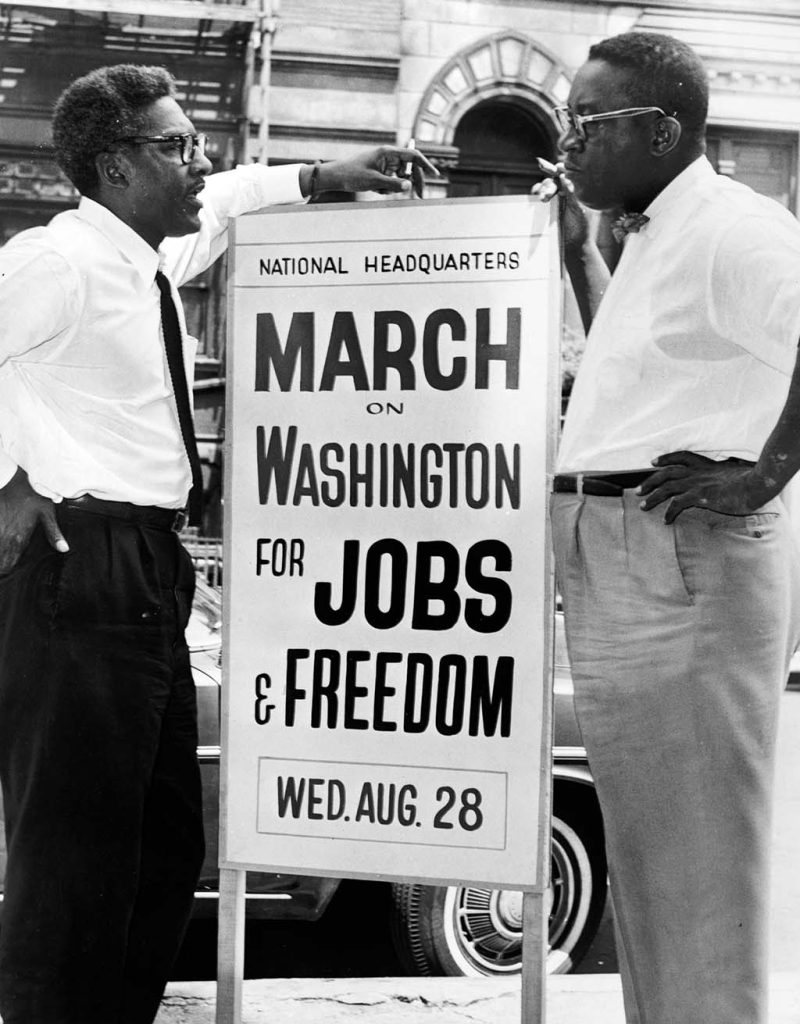
The March on Washington for Jobs and Freedom, where Dr. Martin Luther King delivered his prophetic and poetic “I Have A Dream” speech, occurred on August 28, 1963. To commemorate the sixtieth anniversary of the milestone of American history and culture, the Charleston branch of the NAACP, Our Future WV, and the WV Faith Table recently convened a conversation – via Zoom – with four West Virginians who played a part in making that history.
Opening the conversation, moderator Kathy Ferguson reflected that the March represented “the height of the fight for civil rights.” It was “the first of its kind in D.C. and became one of the pivotal and important moments in American history.”
Ferguson said that the organizers of the “Lunch Out Loud” virtual event envisioned bringing together West Virginians who were there to share “their lived experience of that summer day.”
For those four people, the day remains a pivotal moment that continues to shape their worldview, their politics, their morality, and their sense of purpose and passion. It remains a day they cherish because it gave birth to incredible hope – hope realized, hope yet to become reality, and hope that continues to challenge.
Rev. Ronald English serves as the president of the Charleston Chapter of the NAACP. His memory of the March on Washington begins in the darkness of night. He and a friend, another young pastor, journeyed through the South, up from Atlanta to D.C. In order to make it to the March on time, they were traveling through after sundown. Driving through Lynchburg, Virginia, the two young men witnessed a noose, strung up and in full display right in the center of town.
“It was a sign of intimidation for anyone going to the March, a reminder of the lynching legacy of America,” English said.
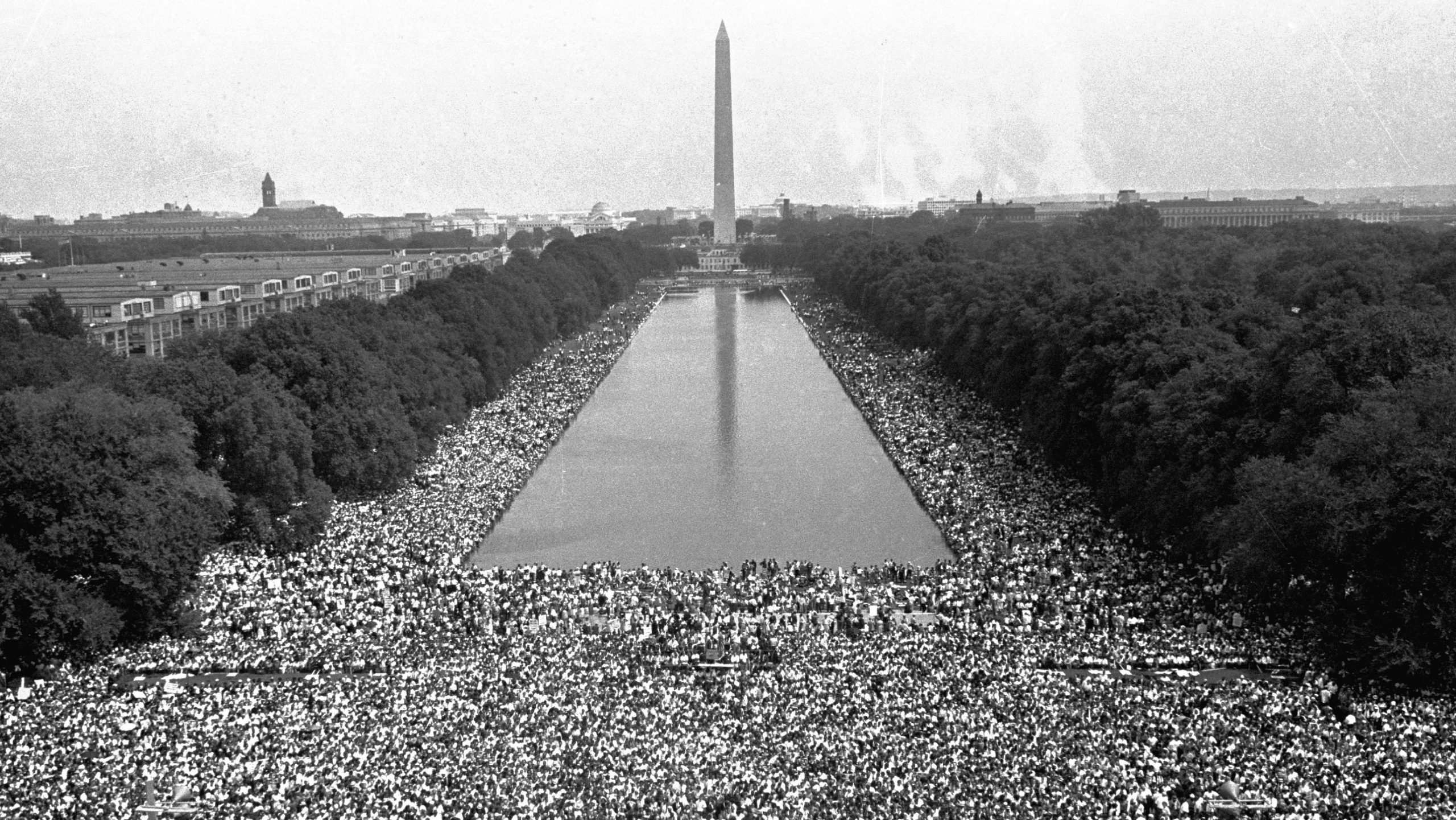
But for English, his friend, and thousands of others inching toward D.C., the symbol of hate did not evoke the emotions racists intended. “It fired us up, reminded us of why we had to be there, what the impact, expectations were,” he said.
English recounted that he stood near the podium that day many Augusts ago, with a clear view of Dr. King. Sixty years later, English voices caution when it comes to reflection and understating of King’s message.
“The Dream speech has been accommodated. It has been misused and abused, utilized,” he cautioned.
The West Virginia pastor, who counted Dr. King as a close personal mentor, reflected that after the March, in the years before he was assassinated in 1968, King said publicly that his dream had become “a nightmare,” referring to the violence inflicted on the black community throughout the United States, particularly in places like Selma and Birmingham.
“We need to keep that in mind as we begin to understand the range of his motion and impact, and the
maturity, as well as the agony that came out of what he was doing, and what he was seeing, and
the work that was yet to be done,” English said. Only then, English insisted, can people today have “an authentic insight into what his dream meant, what that day meant, what his life meant, and how the integrity of his life was consistent for what he died for.”
Despite the sinister threats of mob violence implied by that noose hanging in the shadows of the Blue Ridge in a prominent Virginia city, and beyond any misinterpretation or appropriation of Dr. King’s message, Rev. Ronald English carries in his heart positivity when he recalls the March on Washington. He called the day an experience of “soul force.” When Kathy Ferguson asked him to articulate what he meant by the phrase, English answered, “It was a collective shout. It was a collective ‘amen!’” He said that on August 28, 1963, he could look around into many eyes and see new light, and he witnessed seeing a shift in how people walked.
Betty Rivard was a college student in the summer of 1963. Her family had just moved to Morgantown, and she was there helping them settle into their new home. She traveled from Morgantown to D.C. for the March.
Rivard had become part of the Civil Rights Movement because of the systemic racism she had witnessed firsthand in her junior high school in San Francisco. According to Rivard, the students in that school were placed in “levels,” and she knew no black peer who ranked higher than the third level, with most black students, other minority students, and low income white kids grouped together in the ninth level.
“I couldn’t grasp how unfair this was, when I met black girls in gym class who were obviously as qualified as I was, or more qualified,” Rivard said.
From high school on, Rivard embraced diversity, making it a “core value” she would always embody. Embodying that value brought her to the nation’s capitol that late summer day in 1963. “One of the biggest impressions for me was that people were standing tall. The values that I had, what I believed about our country at gut level – and I was a student of political science; I was geared to that – was there. I was experiencing that in real life. We shared a moral purpose.”
Rivard believes that the March on Washington has served as a foundation and a light for many other movements over many years.
“This was, in my life, a model for the non-violent actions of women, the LGBTQ community, people with disabilities, the elderly, and now we have spaces like this, everywhere,” Rivard said.
She cites all the peaceful protests and non-violent marches that sprang up throughout not only urban areas, but small town America too, in 2020 after the murder of George Floyd, and the blossoming of the Black Lives Matter movement. The March on Washington for Freedom and Jobs created the first space for such large, peaceful protest, and now anywhere can be home for such space, she noted.
As a Harvard student, Gibbs Kinderman had landed an internship with the federal government for the summer of 1963. His work centered on public health, not politics, and he wasn’t very interested in politics. All federal employees had the day of the March off, Kinderman recalled, because the government worried about crowds and traffic. Out of curiosity, he made his way to the Lincoln Memorial and the March.
Kinderman could not believe the size of the crowd he encountered, or it’s energy.
“Everybody was in an upbeat mood. The spirit was unbelievable. It was just a total ‘mind-blow’ for me,” he said. “It really made me feel like I wanted to become part of something bigger, and this was probably it. The day was an unexpected blessing. I was curious and I came away excited.”
Gibbs Kinderman walked away from the March on Washington with his heart dedicated to making civil rights and human rights his lifework. He would journey to Mississippi in the summer of 1964 – Freedom Summer – and to Selma, in the summer of 1965. He marched. He helped register black voters. He was there in peaceful protest even as violence – from the Ku Klux Klan to state troopers – erupted all around. Kinderman said he has tried “to help create a just and more equal society in America.”
“But this was my introduction, and it was life-changing,” Kinderman added.
In the years since the March on Washington for Jobs and Freedom, Al Anderson has become a beloved musician throughout West Virginia, and an entrepreneur. He’s held management positions in retail, and he owns his shoe repair shop in his hometown of Osage. He worked as a manager of a retail store on Connecticut Avenue in Washington D.C. in the summer of 1963.
On the day of the March, he stepped out of the shop to walk toward the gathering throng on the mall.
“It was kind of like a love fest. You couldn’t find anybody that had a problem with somebody next to them. It was just like a serene situation,” Anderson said. This historic “serene situation” changed, revived Anderson’s life, he asserted. He recalled that he has always remembered the image of walking up the hill back to the store on Connecticut Avenue. The atmosphere, the vibe, had changed. The walk, the faces of the people had changed, too.
Anderson was twenty-six years old back then. He’s eighty-six now. In the last sixty ears, in addition to his music and his business, Anderson has won many awards, and achieved many leadership positions in civic organizations. He credits Dr. King and the March for “strength, energy,” and the determination to “treat people well.”
Anderson reflects that for him, and perhaps for the final verdict on the meaning of that day, August 28, 1963, it might come down to a very humane, even a holy, virtue. “I’m often the only one of my persuasion at the places where I sing. But if you have love in your heart, and you do your job, you are going to have a packed house.”
Sixty years later, August 28, 1963 and the March on Washington, punctuated with the cadences of Dr. King’s “I Have A Dream,” still reverberates, still echoes, still challenges, still calls.