‘Coming Home: Before and After Deinstitutionalization in West Virginia’ premieres tonight at The Culture Center
By Douglas John Imbrogno, WestVirginiaville
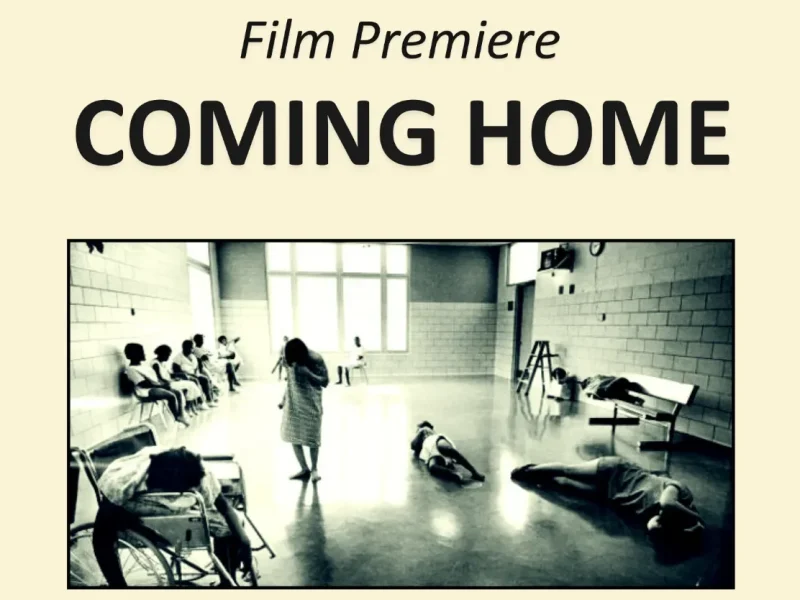
On Thursday, June 5, 2025, the Culture Center in Charleston WV, will host the premiere of a 33-minute documentary I did with Bobby Lee Messer for the Developmental Disabilities Council of West Virginia, titled “COMING HOME: Before and After Deinstitutionalization in West Virginia.” That is one long word in the subtitle, but it is a very important one, historically and also today as some lawmakers wish to return people to institutional settings. The film takes an unflinching look back at how West Virginia’s institutions were routinely used as dumping grounds for people with developmental disabilities. It traces the struggle to close these institutions via unstinting and heroic legal and social activism, aiming to return adults, teenagers, and children hidden behind stone walls and locked doors to community and family life. And the film considers the question: Where do we go from here?
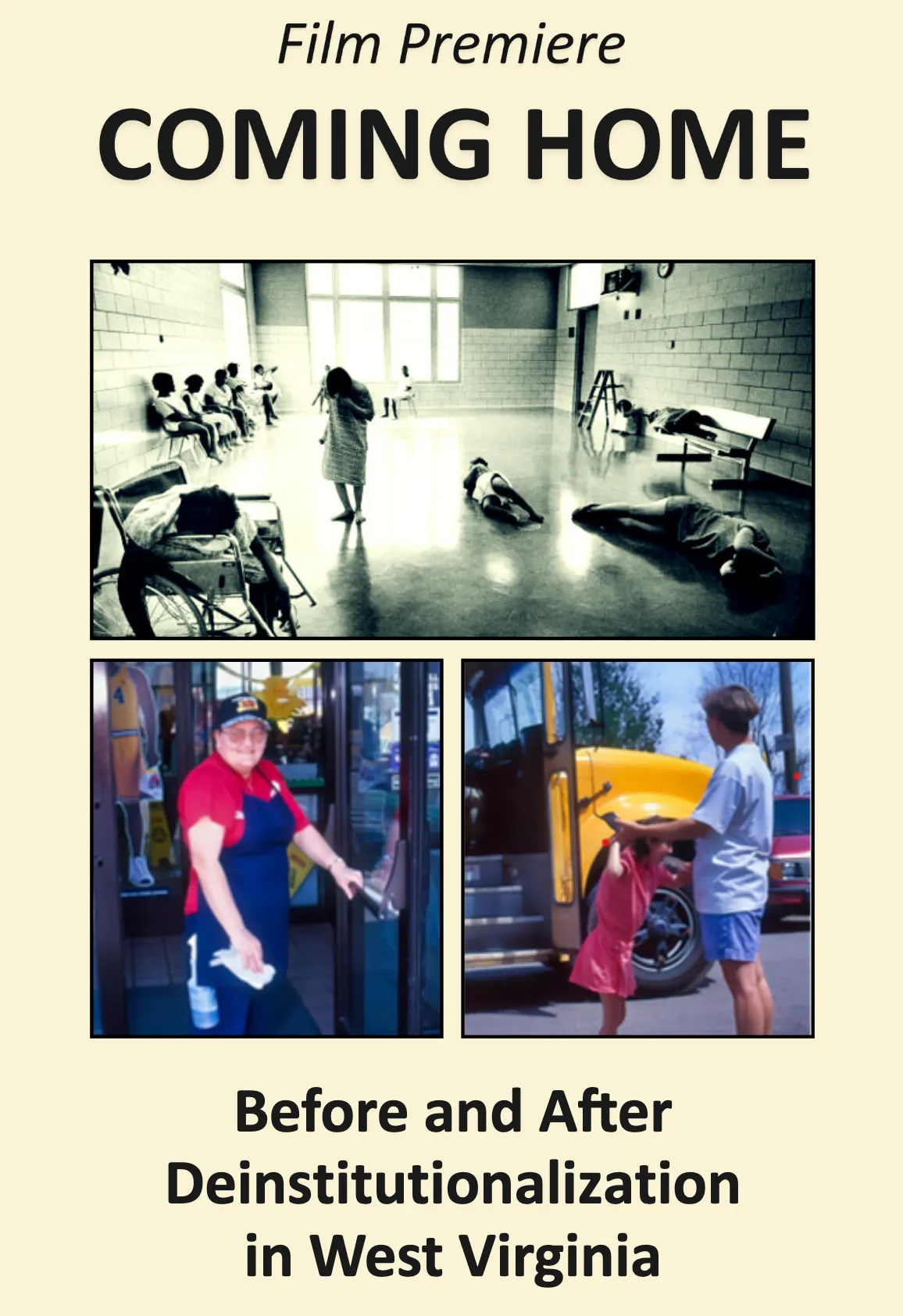
“COMING HOME” takes a deep dive—as well as a sometimes emotional one—into what it was like for patients consigned to back wards and hilltop hospitals, and for families separated from them, often by long distances. The film tracks the move to ‘deinstitutionalize’ patients—a cumbersome, yet apt word for the compassionate and challenging sea change that began to occur in the 1970s to 1990s, not just in West Virginia but across America. The complexity of this transformation—closing psychiatric institutions and returning occupants back to cities, towns, and rural settings with limited resources—led to its own issues. Some former state hospital residents fell through the cracks. Yet many more lives flourished in the move from understaffed and over-stuffed institutions to family and community-centered lives, as can be seen in the film’s testimonies from formerly institutionalized individuals and family members.
At one point, the documentary—whose script I wrote and narrate and which was shot and edited by Bobby Lee Messer—shifts to the front of the Mildred Mitchell-Bateman Hospital, a psychiatric facility formerly known as Huntington State Hospital. I recount how for three months in 1983 I went undercover there as a young reporter for the Huntington Herald-Dispatch, a seeming volunteer on the wards. Yet I was really seeking a first-hand look and better understanding of conditions in the hospital’s locked wards. This undertaking was part of a week-long series of articles published in July of that year, called ‘HOUSES ON THE HILL,’ examining the state’s psychiatric wards and the lawsuits to improve care or to close such institutions down.
I wrote the series at a time of heightened attention and legal wrangling over the often abominable conditions that adults, youth, and children sent to these facilities faced—sometimes for years, sometimes for lifetimes. ‘COMING HOME’ charts some of the advocates and attorneys (one of whom had motivation in her own family powering her legal work) whose efforts were key to the last of these warehouse facilities for people with developmental disabilities to close in the late 1990s.
In advance of the documentary’s premiere and to make more personal what drove this move to spring people from institutional settings, over the next few days I am reprinting in WestVirgniaVille excerpts from my diary-style Herald-Dispatch pieces describing what I saw in and outside the Huntington State Hospital wards in 1983. (I pause here to shower kudos on my H-D editors from back in the day—Don Hatfield, Charlie Bowen and Fran Allred, specifically—for old-school newsroom support for this months-long special assignment and trust in shoe-leather journalism).