New project creates a ‘safe space’ for salamanders in the Canaan Valley National Wildlife Refuge
By Vanta Coda III, RealWV
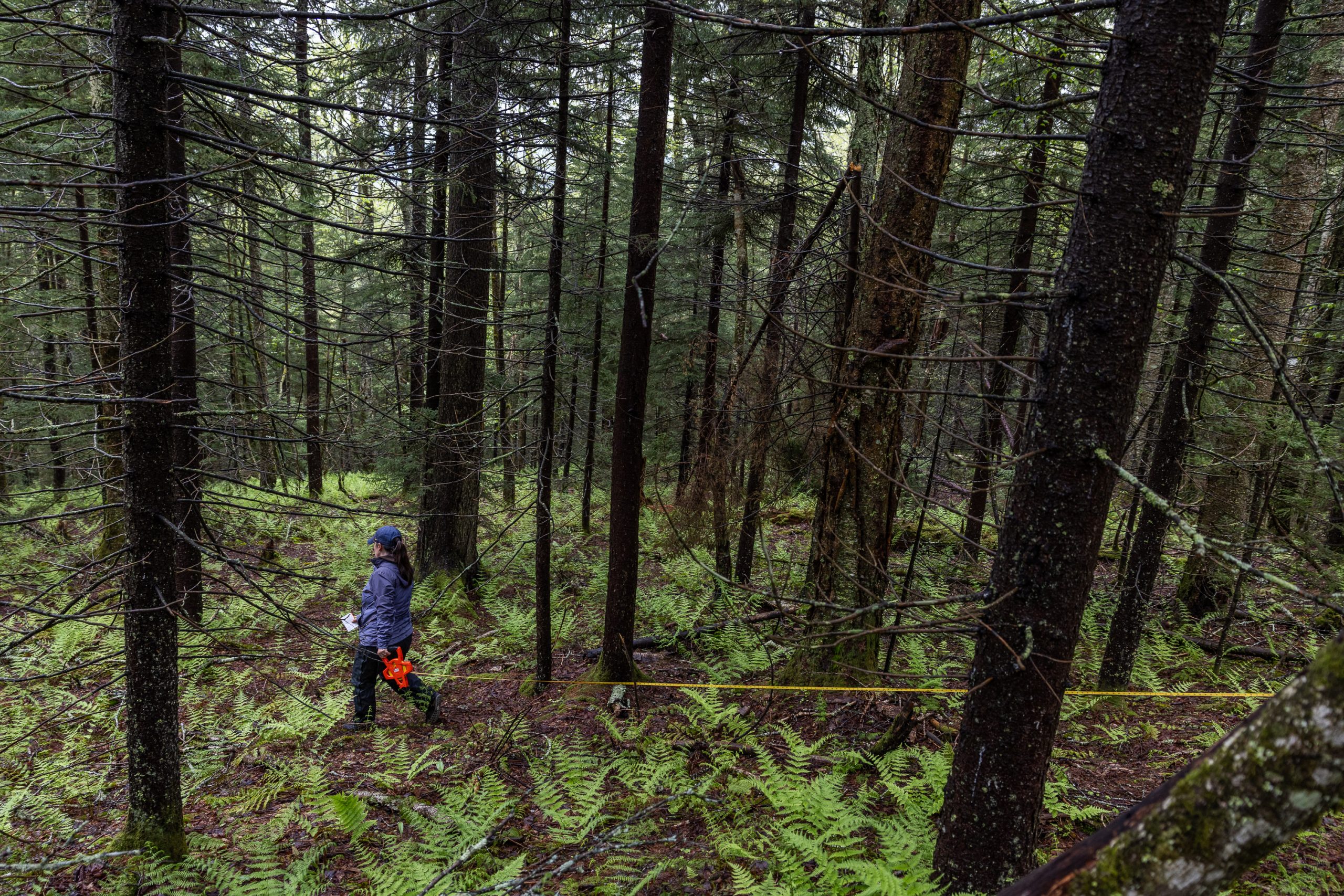
Rain falls through the dense branches of a red spruce canopy onto a floor blanketed with spruce needles. The trees have thrived in the high mountains and valleys of eastern West Virginia for hundreds of years. Unfortunately, much of the forest was logged by West Virginia’s first settlers, leaving only pockets of red spruce and virgin hemlock populations that once dominated the landscape. Logging has also put one of West Virginia’s endemic species at risk: the Cheat Mountain salamander.
The Cheat Mountain salamander is one of West Virginia’s few federally threatened endemic species. It is only found in specific areas within the Monongahela National Forest and the surrounding counties. This salamander prefers habitats with hardwood tree litter on the forest floor, typically consisting of red spruce needles at higher elevations, and requires a cool, moist environment to thrive. Salamanders prefer cooler, more north-facing slopes.
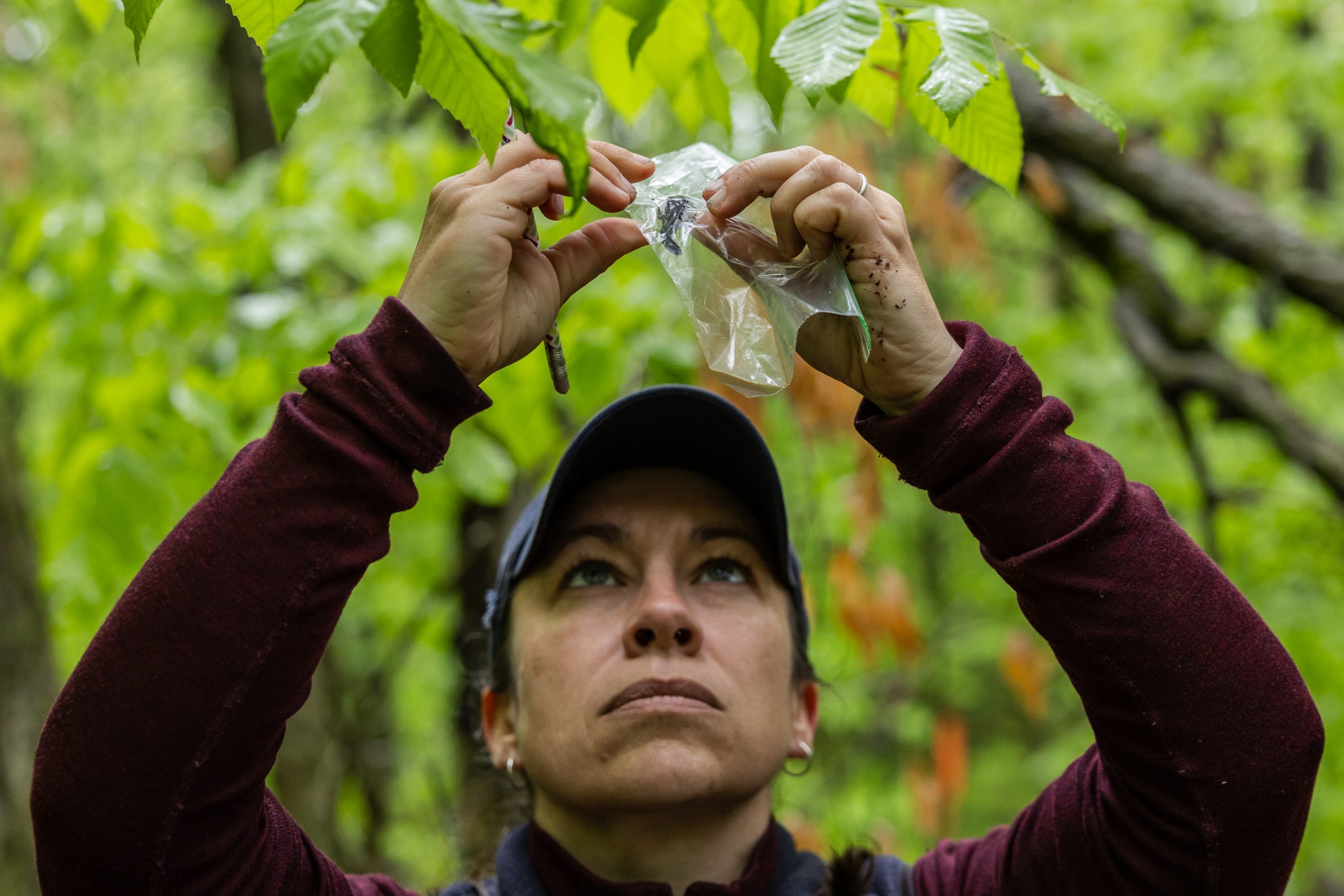
Every May, as winter comes to an end, biologists, researchers, and federal and state agents visit testing sites to monitor a particular species and assess the conditions of its habitat. This year, a project has begun at Canaan Valley National Wildlife Refuge to decommission old forest logging roads and decompact the ground, creating safe crossing areas for salamanders. This initiative provides new access to habitat for various salamander species in the area. Matthew Boarman, William “JJ” Yarley, and other biologists, specialists and rangers from the US Fish and Wildlife Service (USFWS) are monitoring this habitat to observe any activity.
“Staff established surveying plots and a set of equipment to monitor air and soil moisture and temperature. Six plus months before decommissioning, initial surveys were to mark individual salamanders before decommissioning and determine if salamanders were using the forest road as habitat. The same sampling will continue post-decommissioning to determine if salamanders moved in response to the management action, as determined by recapturing salamanders marked before management,” said Wildlife Refuge Specialist, Matthew Boarman. “This study is designed to test our ability to restore the continuity of habitat between patches and document how long it may take before that connectivity is restored and salamanders use habitat that was previously a forest road.”
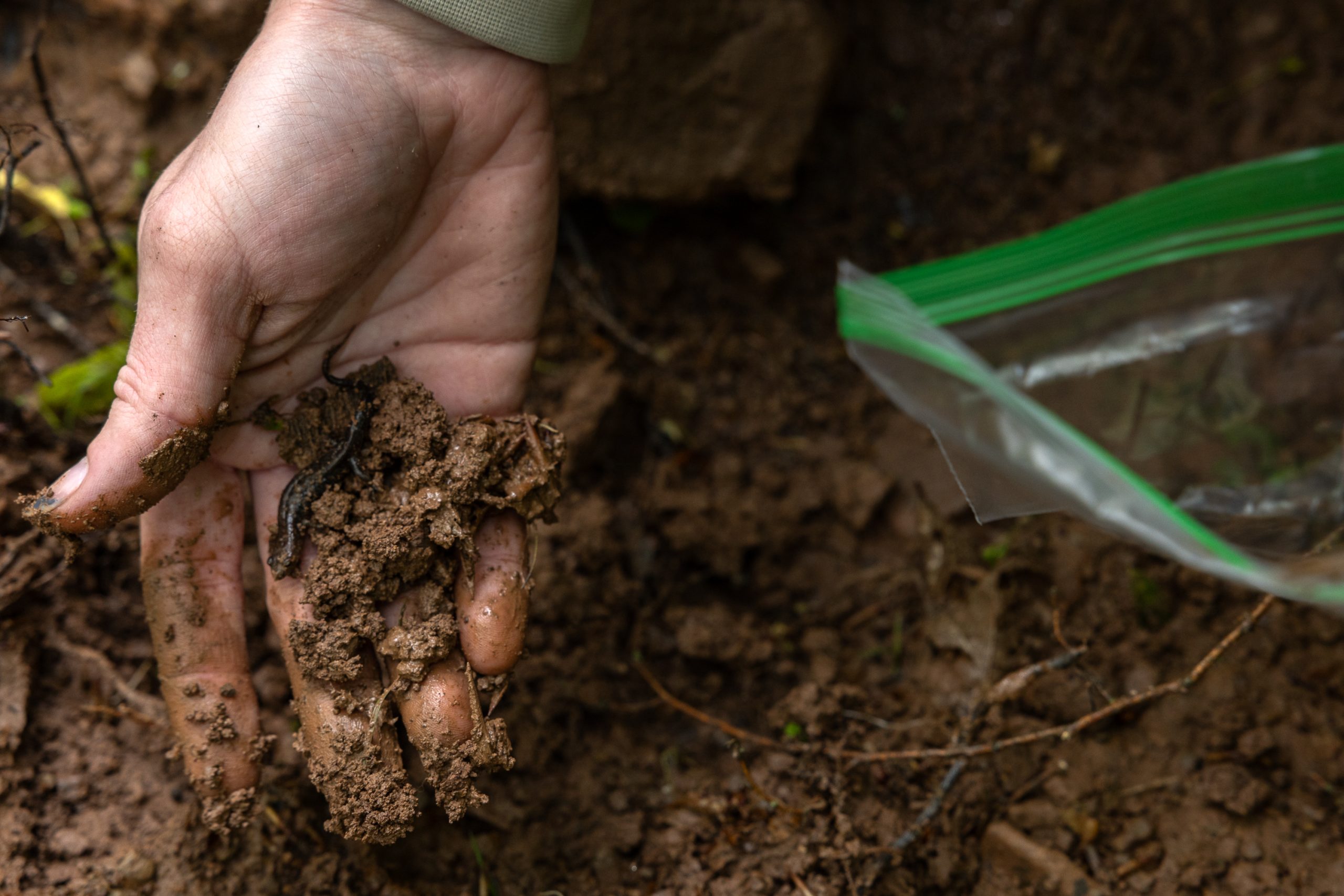
Remarkably, an Eastern Red-Backed salamander, the first salamander recorded on the decommissioned logging road since its closure in February, was discovered by USFWS rangers as they were monitoring the area while walking uphill. Although it wasn’t a Cheat Mountain salamander, this finding is a positive sign that salamanders are utilizing this space, which opens up possibilities for expanding their habitat.
“Why we are doing this project is that there was a study, in Cheat Mountain salamander habitat, there was a logging road dividing Cheat Mountain salamander populationions, and they conducted a study to see if they were crossing the road, and they weren’t,” said Wildlife Refuge Specialist, Matthew Boarman. “So that kind of led to this project where we decommissioned these old logging roads and now we’re trying to see if they’ll cross the road.”
The Appalachian Mountains have the highest diversity of salamanders in the world. A study by the USGS found that, the most common salamander in Appalachia is the Eastern Red-Backed salamander, with an average population of 5,300 individuals in every patch of forest the size of a football field. Although populations of the Cheat Mountain salamander and other salamander species do not reach numbers like those of the Eastern Red-Back, the presence of salamanders is a good indicator of a healthy forest.
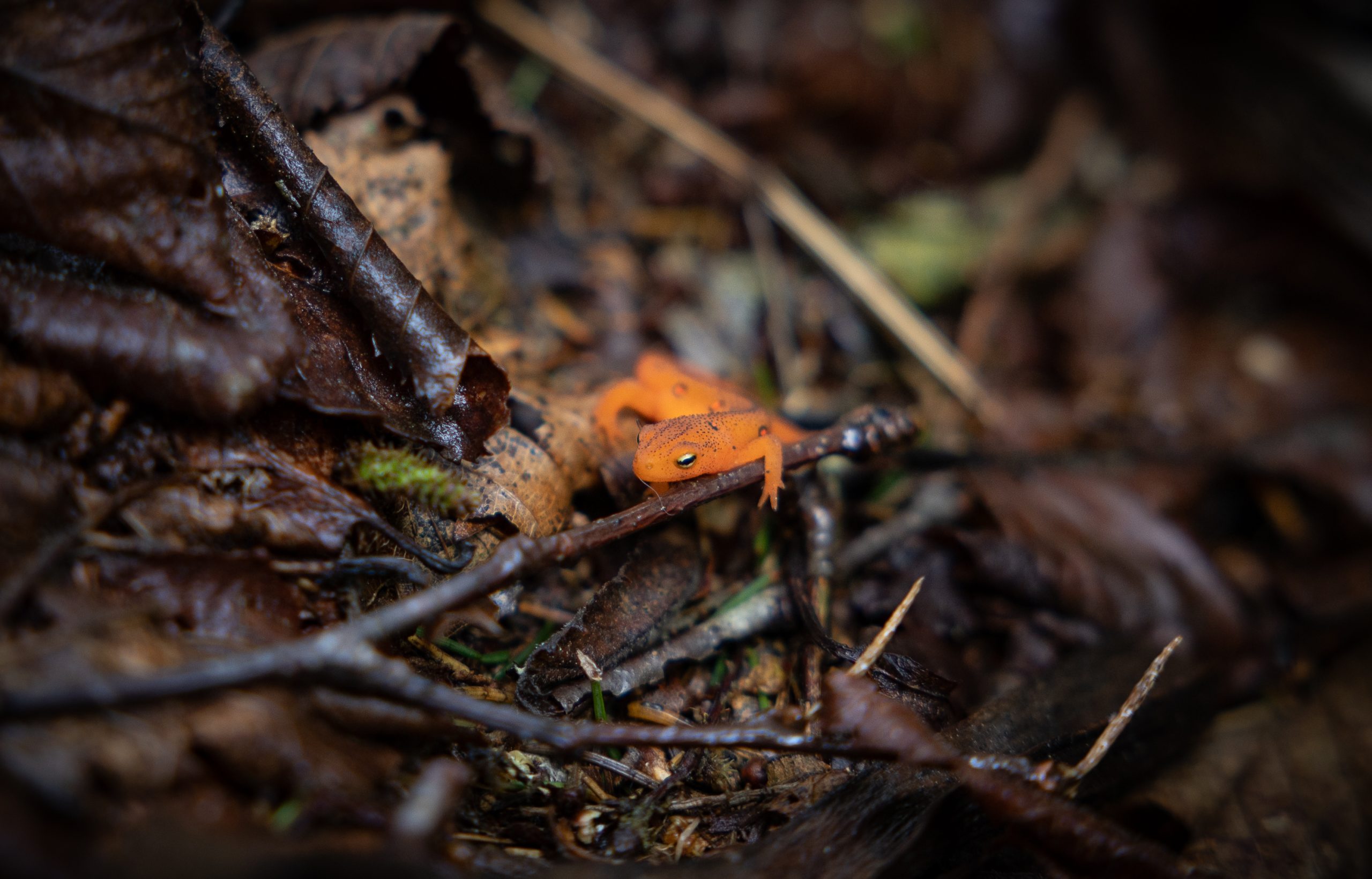
“Salamanders serve an important role in the food chain. Of course, they eat a lot of the invertebrates that would otherwise eat the leaf litter or the moss, protecting the pretty critical layer for any other species that depend on leaf litter that is there. Additionally, you can think of them as kind of like slimy Watch Dogs for health,” said Park Ranger, JJ Yarley. “You know, if you have salamanders there, especially Cheat Mountain salamander, that is an indicator of a healthy forest. Healthy forest means a lot of benefits for us too, including flood control, clean water, clean air, and so we want to have salamanders in these areas, because that means it’s going to be healthy forests.”
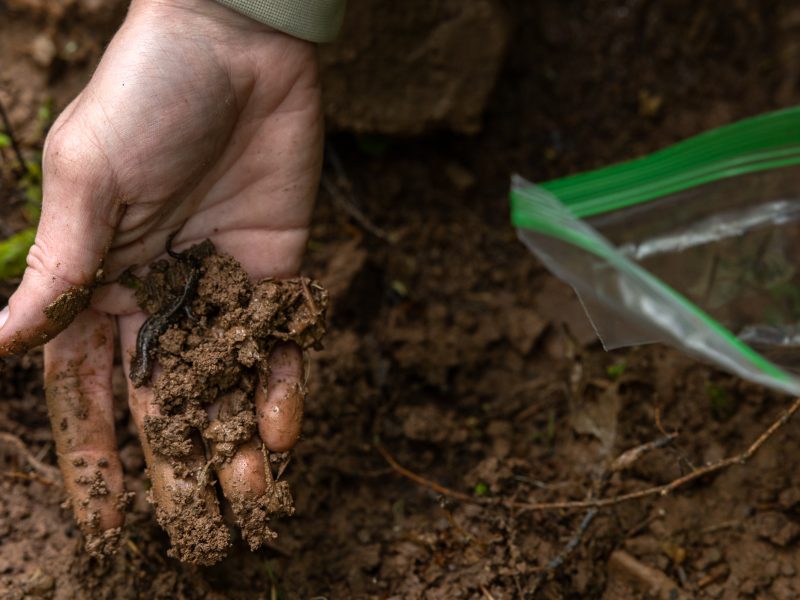
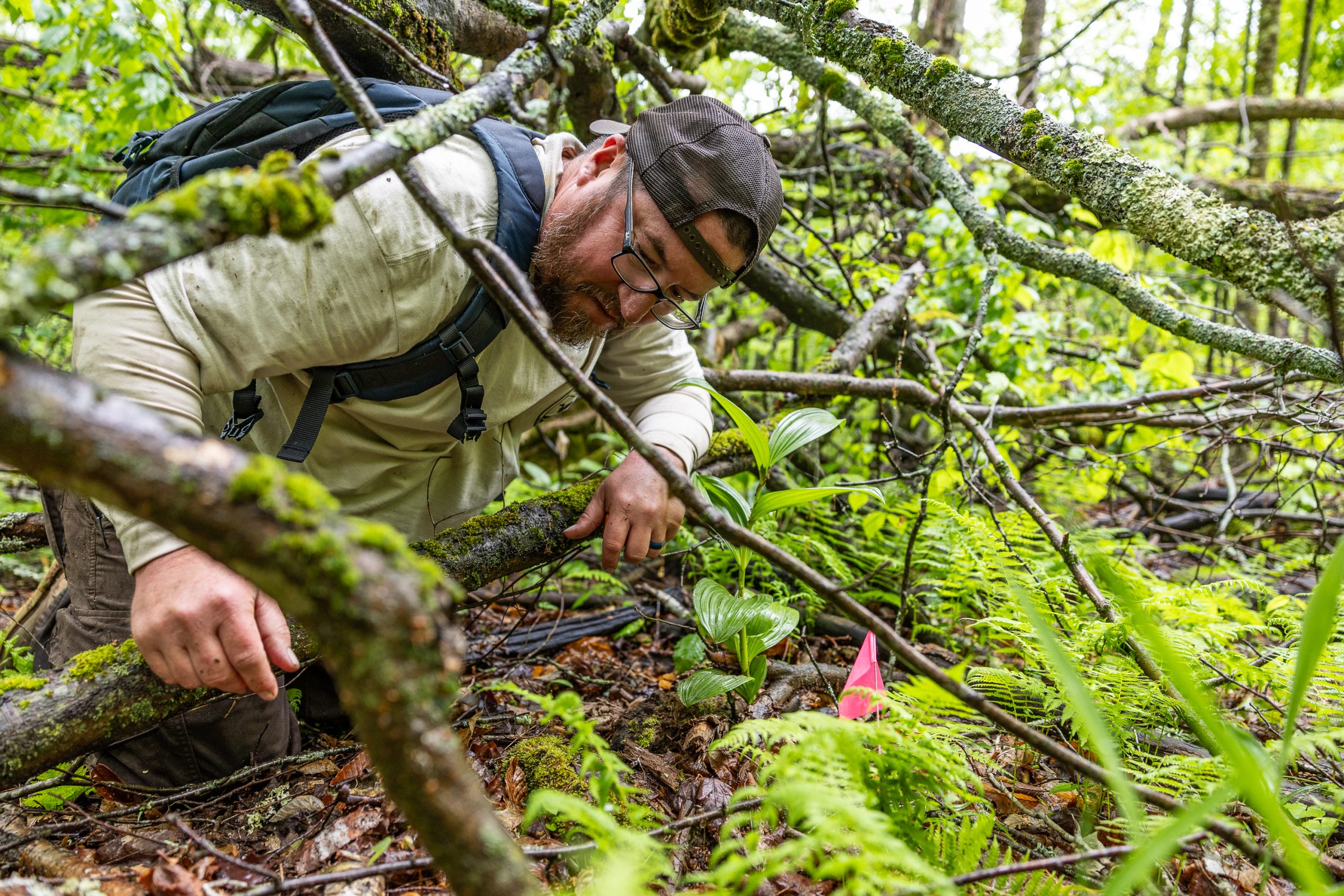
In addition to the decommissioned road monitoring site, the Cheat Mountain salamander monitoring sites are located in various areas of the refuge. They use a similar monitoring method to the one employed at the decommissioned logging road. Instead of using flags to mark the length of the monitoring zone, the monitors utilize a measuring tape to pull downhill to a specific distance. They then walk back uphill, turning over logs and other debris on the forest floor in search of the Cheat Mountain salamander. When the salamanders are spotted, they are tagged if they are not already marked and documented in the monitors’ notes.
Since the Cheat Mountain salamander was first listed as a threatened species in 1989, various projects and habitat conservation efforts have been developed to protect this unique endemic species. The commitment of federal, state, and local agencies, non-profit organizations, and concerned citizens has made the species in the Monongahela National Forest region a symbol of conservation efforts in West Virginia.