
WVU students set 100-day filming record with ‘The Freedom of Uselessness’
By Matthew Young, RealWV
With the December 2012 release of ‘Logistics,” Swedish experimental-filmmakers Erika Magnusson and Daniel Andersson set a cinematic-record that would stand for over 13 years. Coming in at a previously unheard of 51,420 minutes – or just seven-hours shy of 36 days – “Logistics,” which follows the production cycle of a pedometer, became the longest film ever made.
However, this past October, that record would be broken by two students from West Virginia.
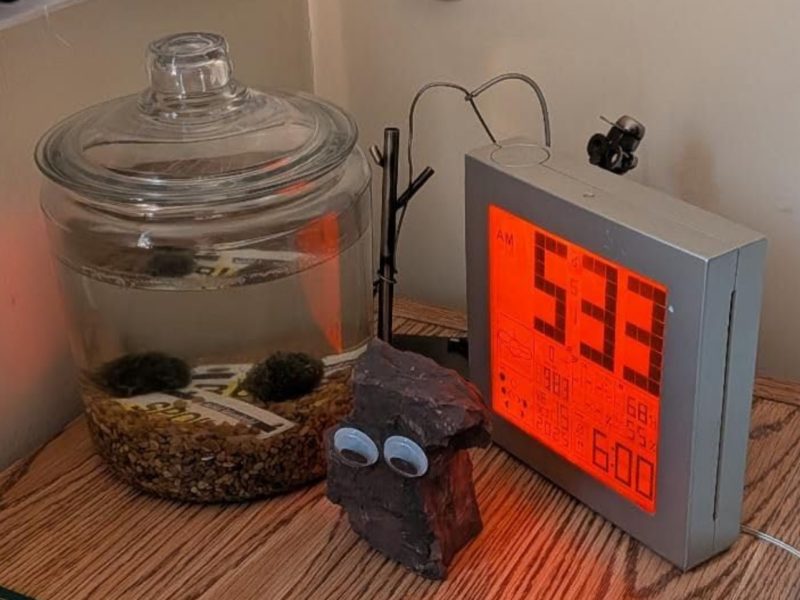
Samuel Felinton and Declan Mungovan, both juniors at West Virginia University (WVU), began filming “The Freedom of Uselessness” on August 26. More “artistic expression” than the exploration of a plot-driven narrative, “The Freedom of Uselessness” examines the slow-passing of time for two moss balls, floating in still water.
“It’s kind of framed around the philosophical-concept of Taoism,” Felinton explained, while speaking with RealWV Tuesday. “The idea is that a sense of non-productivity is a form of freedom.”
“It explores the idea that people can avoid exploitation by rejecting everything, and just kind of floating around,” Felinton added.
While the two floating moss balls’ rejection of everything grew to include the “Logistics” record of 35-days in early October, Felinton and Mungovan kept the camera rolling. And on Thursday, December 4, the two young filmmakers set the new record for the longest film ever made at a staggering 100 days.
“We wanted to break the longest film record ever,” Felinton said. “We were thinking about a few different things to put in front of the camera. What came to mind were little sea-monkeys, or possibly fish. But we ended up choosing the moss balls because we felt like they’re just practically useless.”
“In the film, it’s just two moss balls in a container, in front of a camera for 100 straight days,” Felinton noted.
Since filming began, “The Freedom of Uselessness” has been continually livestreamed on YouTube. However, the project has been broken down into more than 250 individual “episodes” to comply with YouTube’s guidelines regarding the allowable length of livestreams.

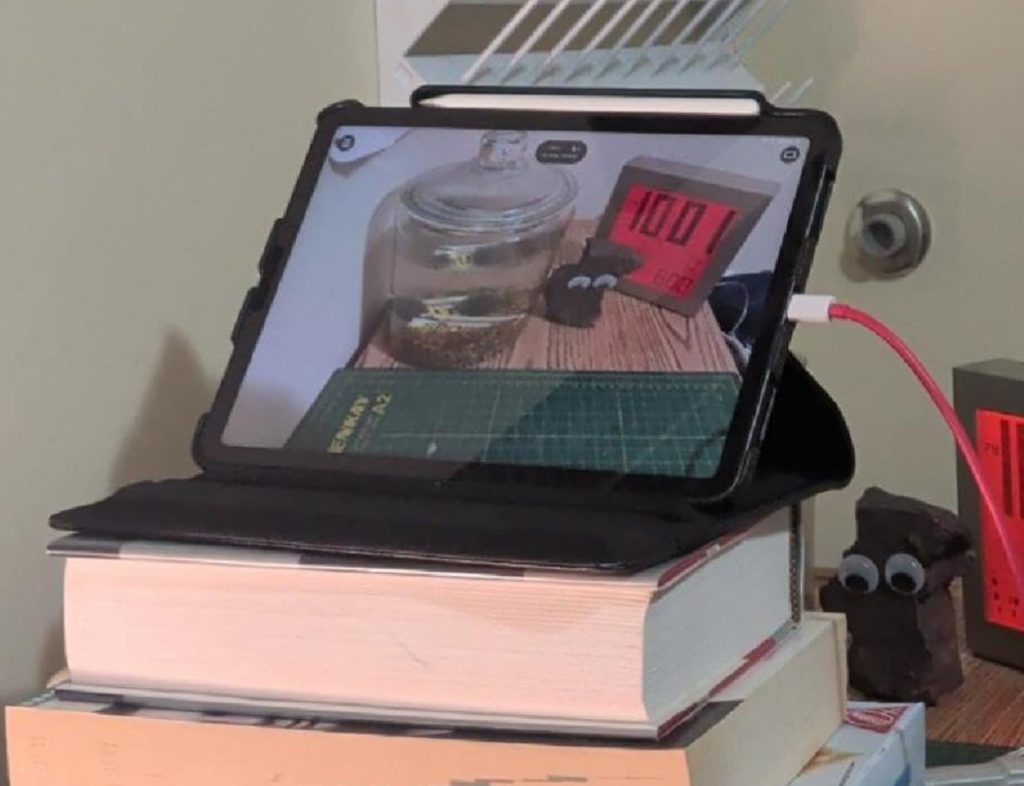
“It’s been livestreamed and archived in real time – being recorded on an iPad in my apartment,” Felinton said.
As far as the two filmmakers – or possibly a different filmmaker – breaking their 100-day record, Mungovan says, “The possibility is always there.”
“It’s really just getting down the logistical aspect of filming for 100 days,” Mungovan added. “If someone else can figure out a more efficient way to do it they totally could, but we’ve been the only ones to do that so far.”
The irony of developing an efficient method for filming the literal depiction on non-productivity is not lost on Felinton and Mungovan, whose other collaboration, “Project Butterfly: Flatwoods,” is intended for full release to coincide with Point Pleasant’s Mothman Festival next September.
Although Thursday marks the film’s 100th day, Felinton and Mungovan aren’t ready to turn off the camera just yet.
“We will be having a, quote-unquote, extended cut for the film,” Felinton noted with a laugh. “Declan and I both go home on December 20 after finals, so the complete film will finish December 19.”
Despite filming the “extended cut,” the boys intention for festival-submissions is to cap the finished product at the 100-day mark, noting that the even number makes their film both “more symbolic,” and “more marketable.”
“After that extended cut, I think the moss balls will live out their lives on one of our shelves,” Felinton added. “Those things can practically live forever with the right conditions.”
Beyond submissions to film festivals, among other goals, Mungovan hopes to see the project find a place in the academic-debate landscape of experimental film.
“To bounce off of that,” Felinton added, “The main goal, I think, is to find some type of museum to host us as a feature. Six months ago, one of our other projects, ‘The Death of Film,’ was accepted into the WVU College of Creative Arts Online Exhibits.”
“The Death of Film,” whose runtime falls just one hour short of “Logistics,” examines what the filmmakers foresee as the AI-caused demise of film.
“That’s the goal with this film as well – to have it in some type of exhibit,” Felinton noted.
To see more of Felinton and Mungovan’s work, visit their YouTube channel, @projectfinc.
Related Articles

Devastating flooding in Upshur & Lewis counties
Buckhannon issued a shelter in place order was water rescuses were udnerway.


Dear Grace: Conversations that matter
How can I be a more thoughtful host when cultures collide?