BACK PEW: Warning, gridlock ahead
By Stephen Baldwin, RealWV
You’ve seen who prevailed in primary elections earlier this week. But what does it all mean?
1) Nearly 21% of registered voters voted in the primary. Only about 60% of citizens are registered voters. So our elections are being determined by 14% of the state’s population. Let that sink in. Actually, take it a step further. A simple majority of 14% of the people are determining who leads us and how. It’s not how a democratic republic was intended to operate.
2) Incumbent Republicans did quite well with those 14% of citizens, winning the overwhelming majority of their races. Only one incumbent Republican senator was defeated while around a dozen incumbent Republican delegates are currently projected to lose their seat. (More turnover is to be expected in the House as delegate districts are rather small and frequently change hands.)
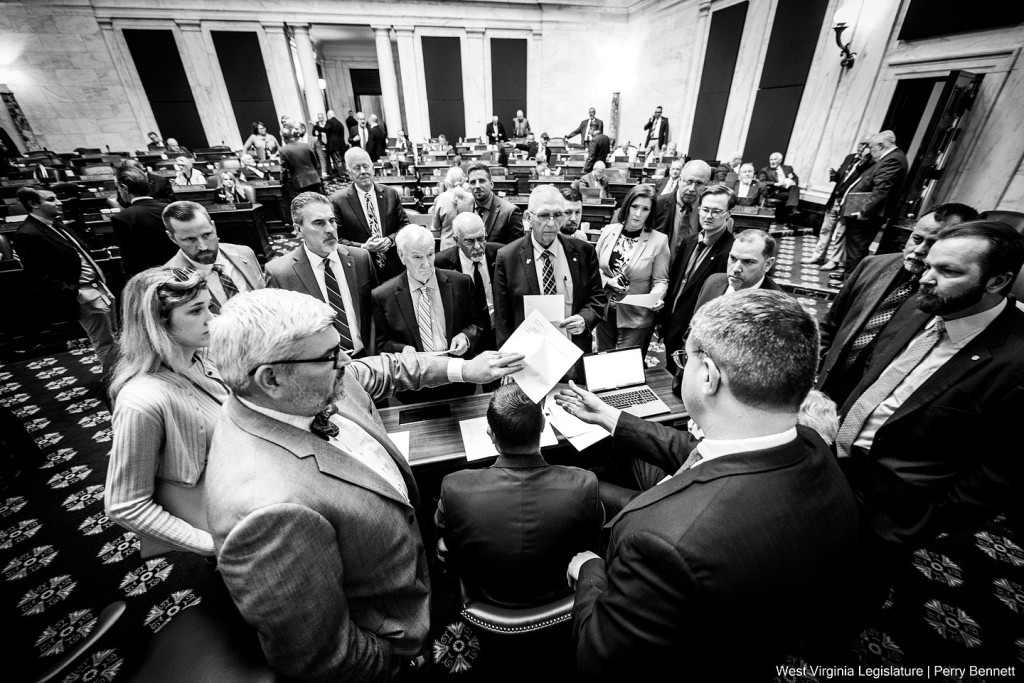
3) However, Speaker Roger Hanshaw is not happy about it. “We will remember,” he told reporters Amelia Knisely and Lori Kersey of West Virginia Watch. Hanshaw was referencing Gov. Morrisey’s decision to recruit and campaign for a slate of his own candidates against sitting Republican delegates during the primary. Several members of Hanshaw’s leadership team fell victim, including Finance Chairman Vernon Criss. Remember when Gov. Justice tried to bully the House into a tax cut a few years ago? They voted it down down 0-100 to make a point. We might be in store for more of that.
4) Gov. Morrisey’s decision to get heavily involved in primary races paid off in a few places and not in others. For example, it paid off in the Parkersburg area and not in the Greenbrier Valley. I think it correlates to the governor’s popularity (or lack thereof) in those certain regions. His favorability was high enough in Parkersburg to knock off his adversaries Vernon Criss and Scot Heckert. But his favorability is low enough in the Greenbrier Valley that it seemed to help the candidates he opposed–Sen. Vince Deeds and Del. Ray Canterbury. Though he doesn’t see it this way, Morrisey did both of them a political favor by getting involved.
5) But what will the macro impact of the primary election be? Further Republican fracture. Which means we all lose. The Senate Republicans were already separated into three factions that didn’t even meet regularly during the legislative session. Morrisey largely aligns with the current Senate leadership team, but they did lose one member last night. Might a new Senate President be on the horizon? Possibly, but anyone will struggle with so many factions. In addition, the House Republicans will now join the ranks of the Senate by taking delegates away from Hanshaw’s ruling majority and adding new members to the pro-Morrisey faction. I expect all these factions, especially when they have to work together and with the governor, to lead to even more gridlock. It reminds me of when there’s a small backup on the highway, leading people to slow down and merge lanes…which only backs up traffic further.
6) All the negative campaigning surely drove down turnout. People are absolutely sick of it. So they vote with their feet and just ignore the whole process.
7) Am I the only one who finds it ironic that Republican legislators, lobbyists, and campaign managers are suddenly so upset about negative campaigning? It seems to me that they’re only upset because they’re on the receiving end this time. Morrisey and company used the same tactics against them that they’ve used against Democrats for over a decade now to build a supermajority. It wasn’t a problem then. Why is it now? But I am also hopeful that this will be the impetus for positive change. Perhaps we can finally find common ground against ridiculous political attacks which have no impact on governing but determine entire elections.
8) And speaking of governing, the real effect of this primary race is on the judicial branch of government. Voters rejected both of Morrisey’s appointments to the Supreme Court–Gerald Titus and Tom Ewing, both of whom were highly respected jurists. (Full disclosure: I’ve worked with Ewing on multiple occasions in the past and found him to be a real bright spot on the bench; he will be missed.) While there was no mudslinging in those races, there was an awful lot of positive advertising, and the candidate with the most name recognition seems to have won. I don’t like to see races won because of popularity any more than I like to see races won based on party affiliation alone. Those judicial races will have a huge impact in the years to come, and it seems that Democrats and Independents did show up to the polls to cast their votes in those races, even if they didn’t have many contested partisan primaries on their ballots. Will these elections lead to a check and balance by the judiciary against the legislative and executive branches?
9) Last but certainly not least, I was interested to see so many close races for delegate. Several races, including that of Daniel Linville, will go to a recount and perhaps eventually to court as only a few votes separate the Republican incumbent and challenger. In a day and age when lots of folks feel like their vote doesn’t count, multiple races decided by a single digit number of votes reminds us that every vote does count.
That’s the view from the Back Pew. May God bless each of you!
Stephen Baldwin is the Publisher of RealWV, a Presbyterian pastor in Greenbrier County, and the former WV Senate Minority Leader.